Home & Kitchenware
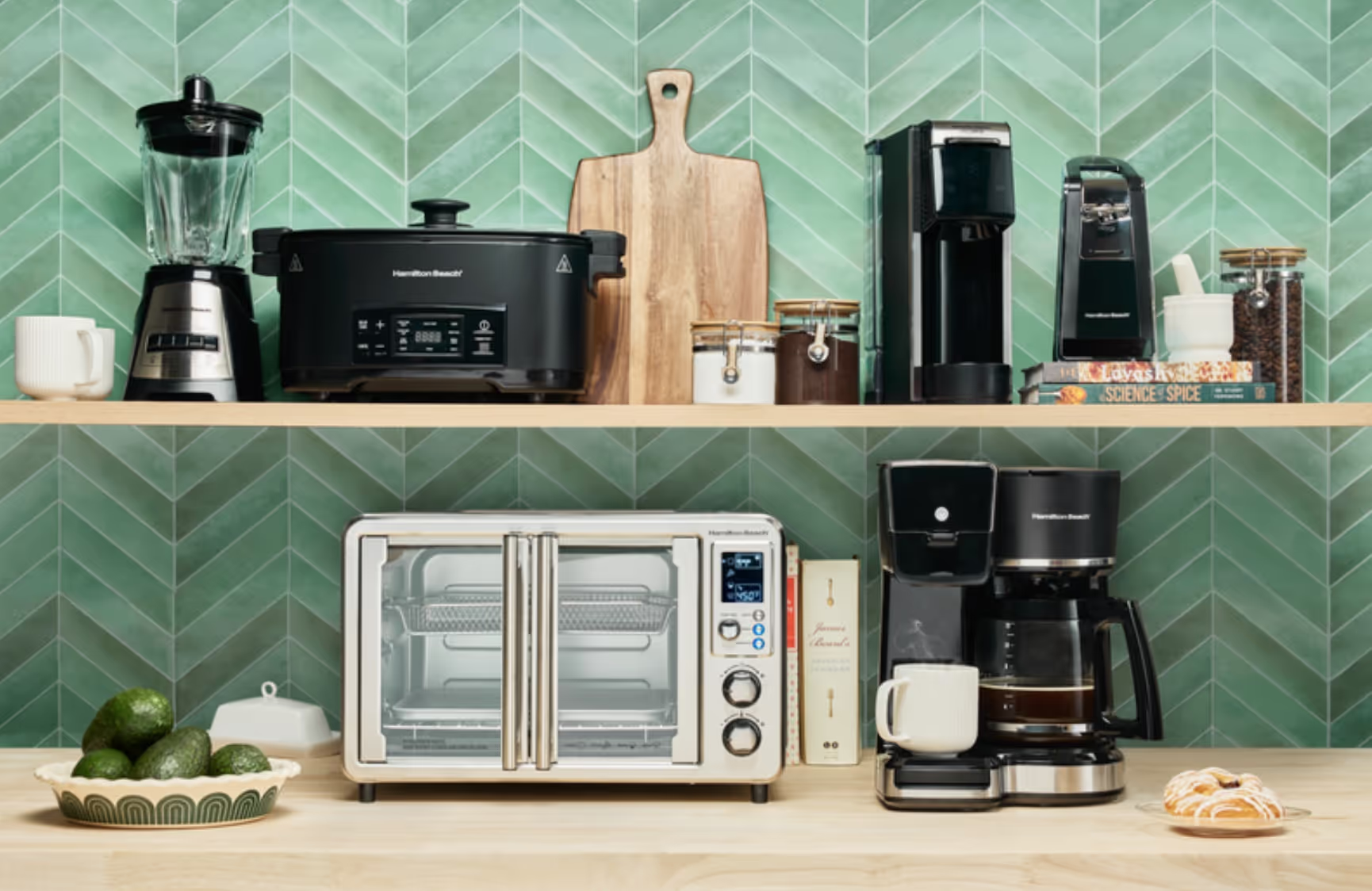

Home & Kitchenware: Capturing High-AOV Categories with Visual Storytelling
The home and kitchenware category encompasses some of Amazon's highest-revenue product categories, from kitchen appliances and cookware to home decor and organization solutions. With average order values significantly higher than many categories, home products demand sophisticated photography, lifestyle imagery showing products in aspirational settings, and detailed specifications that answer every potential objection before purchase.
Our home category expertise includes kitchen appliances (small appliances, cookware, bakeware, gadgets), home organization (storage solutions, closet systems, garage organization), furniture and decor (accent furniture, lighting, wall art, textiles), and home improvement (tools, hardware, smart home devices). We understand how to merchandise these visually-driven categories where aesthetics matter as much as functionality.
Whether you're scaling a kitchen gadget brand on Amazon with compelling A+ Content, expanding home decor into Target Plus with brand-aligned positioning, or building premium direct-to-consumer channels through Shopify, our team brings the creative and operational expertise to drive sustainable growth.
Home & Kitchenware Services


FAQ
For kitchenware products with multiple colors and sizes, use a single parent ASIN with child variations rather than separate listings. A 6-color × 4-size product becomes one parent with 24 child ASINs. Reviews and ranking authority compound on the parent, while shoppers pick their preferred variant on a single page. The mistake brands make is creating separate listings per color or size, which dilutes review velocity and search ranking. Variation themes for kitchenware should follow Amazon’s category template (Size + Color is standard); custom themes get rejected. For new launches, start with 2–3 highest-demand variants and add complexity as the review base compounds, launching 24 variants simultaneously delays review accumulation on any single variant.
Kitchenware return rates run 10–18% on Amazon, higher than supplements (3–5%) and electronics (8–12%), lower than apparel (20–30%). Returns split: 40–50% from defects (chips, dents, broken handles), 20–30% from size/capacity mismatch (buyers expected larger or smaller), 15–20% from color/finish disappointment versus listing imagery, 10–15% from arrived-damaged shipping issues. Reducing returns: invest in protective packaging (often the highest-leverage fix), publish detailed dimensional callouts with comparison context (mug shown next to a coffee bean for scale), and use lifestyle imagery showing actual product color under standard household lighting.
Kitchenware peaks in Q4 (October–December) for gift-driven purchases. Bakeware, gift sets, premium cookware, and themed novelty items see 2–3x baseline demand. A secondary peak hits January–February for "kitchen reset" and meal-prep-driven categories. Summer (June–August) is lowest demand for cooking-heavy categories but peaks for outdoor entertaining (drinkware, serving, grilling accessories). Plan inventory at FBA 60 days ahead of each peak (FBA by August 1 for Q4, by November 15 for January reset), and budget 35–45% of annual ad spend in Q4 alone.
Food-contact kitchenware (cookware, bakeware, utensils, food storage) must comply with FDA 21 CFR for the specific material (silicone, stainless steel, ceramic, plastic), and California Proposition 65 if applicable. Amazon requires Children’s Product Certificates for kitchenware marketed to children (sippy cups, kids’ plates, child-themed bakeware). Products containing PFAS, BPA, lead, cadmium, or melamine require additional substantiation and California Prop 65 warnings. Glass and ceramic items must pass California lead/cadmium limits. Non-compliant listings get suppressed within 24–72 hours of detection. Third-party lab certification from ISO 17025-accredited labs is the protective baseline.
Compete with Amazon’s private-label kitchenware (Amazon Basics, Solimo) on three differentiators: (1) material grade and durability — show specific gauge thickness, material certifications, or warranty terms private label doesn’t offer; (2) design distinction — color or pattern variations, premium finishes (matte black, brushed copper) that private label rarely offers; (3) lifestyle context — owned audience or recipe content that builds category authority. Price at a 30–60% premium with a defensible quality story. Brands that try to match Amazon Basics on price always lose because Amazon’s COGS visibility is structural. They know your supplier’s pricing.
Yes. A+ Content drives 8–14% conversion lift in kitchenware versus listings without it, slightly above category average. Effective kitchenware A+ Content combines: (1) lifestyle imagery showing the product in actual use (food cooking, table setting, hands handling); (2) comparison charts when you have multiple sizes/variants; (3) material spec callouts that address durability concerns; (4) care instructions and dishwasher safety information; (5) brand-story panel for premium positioning. Skip generic "we make great products" copy. Kitchenware buyers want function specifics and aesthetic confidence, not brand sentiment.