Instacart Marketplace Management

Grocery and CPG Digital Transformation
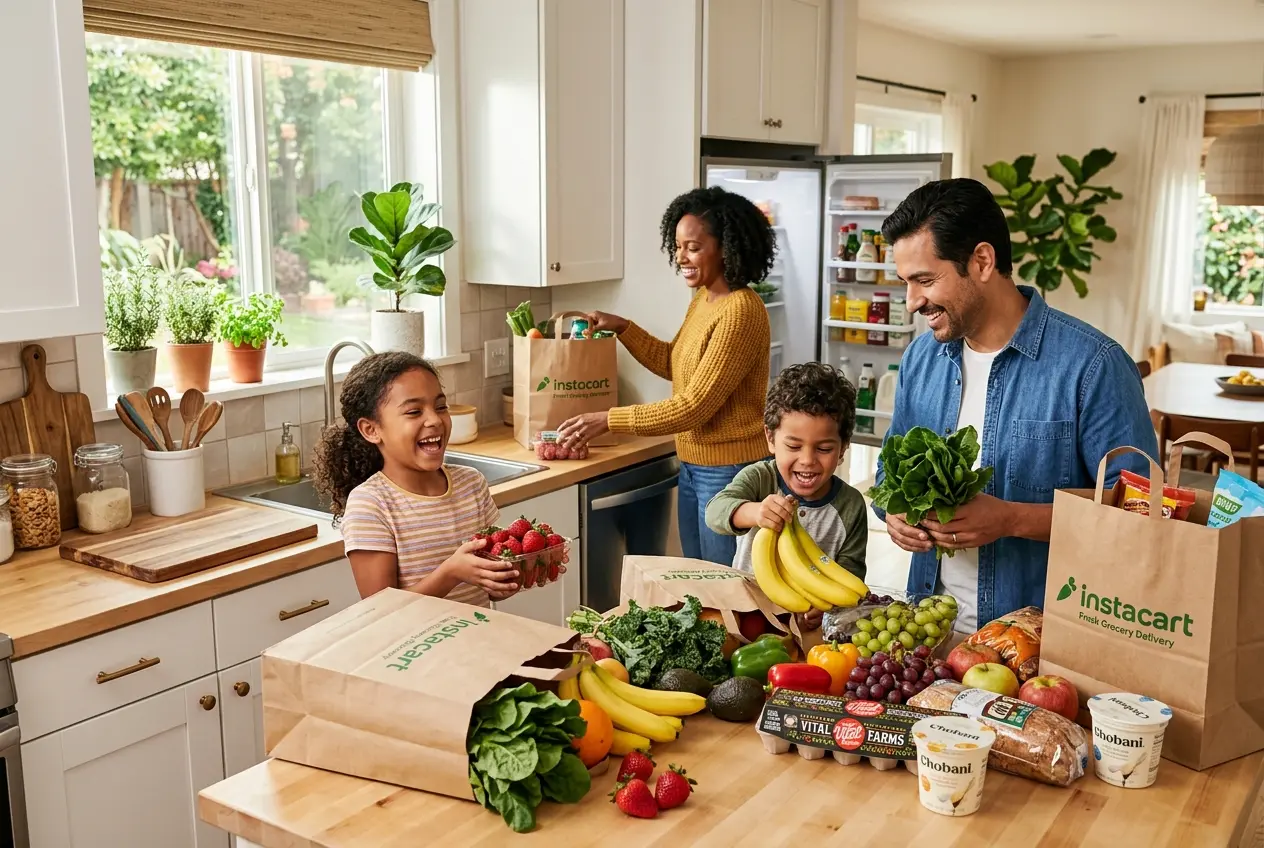
Instacart has become the dominant platform for grocery and CPG brands to reach consumers digitally, processing 7.7+ million orders daily across 85% of top US cities. For food, beverage, and consumer packaged goods brands, Instacart represents the digital shelf - where consumers who historically shopped physical grocery stores now discover, compare, and purchase products online.
The platform connects brands with shoppers across multiple retailers simultaneously. A single Instacart listing can drive sales through Kroger, Safeway, Costco, CVS, and dozens of other retailers, multiplying distribution without individual retailer negotiations. Instacart Ads enable brands to promote products at the moment of purchase intent, with featured product placements, sponsored search results, and display ads that drive immediate basket additions.
Our Instacart specialists bring deep CPG category expertise to marketplace management. We optimize product discoverability across multi-retailer catalogs, develop promotional strategies that align with retailer-specific events, and manage Instacart Ads campaigns that balance brand awareness with direct sales conversion. For emerging food and beverage brands, we provide guidance on retailer partnerships and distribution strategies that maximize Instacart's reach.
Instacart Marketplace Services


FAQ
To advertise a CPG brand on Instacart, run Sponsored Product ads through Instacart Ads Manager (self-serve for smaller brands) or Instacart’s enterprise sales team for larger spends. Instacart serves shoppers buying from grocery retailers like Kroger, Wegmans, Sprouts, and Publix. You need to be a participating CPG brand with SKUs already stocked at Instacart-partnered retailers. Instacart can’t sell what its retailer partners don’t carry. Most CPG brands start at $5K–$15K/month and scale based on attribution clarity.
Three main formats: (1) Sponsored Products — keyword-targeted ads on search results pages within the Instacart app; (2) Featured Product — display ads on category and homepage placements; (3) Shoppable Display — banner-style ads with click-to-cart functionality. As of 2024, Instacart added video and CTV inventory through Carrot Ads (the off-platform extension) but most brand spend stays on Sponsored Products because attribution is cleanest there.
4–8x ROAS for established CPG brands in commodity categories (snacks, beverages, household). 2–4x for emerging brands or premium categories where conversion is lower. Above 10x usually means you're under-spending on a high-intent audience and could scale further. Below 2x means you're either bidding on the wrong keywords or competing in a category where Instacart shoppers don't decide based on ads (highly habitual categories like coffee or specific brands of soda).
Yes. Instacart powers eCommerce for 1,400+ retailer banners in North America. When you advertise on Instacart, your ads appear on every retailer's storefront within Instacart, so a single campaign reaches Kroger.com shoppers, Wegmans Instant Delivery shoppers, and Publix Quick Picks shoppers simultaneously. The exception: some retailers have negotiated retailer-exclusive ad inventory that isn't available to all advertisers. For most CPG brands, the multi-retailer reach is the biggest reason to choose Instacart Ads over individual retailer media networks.
For most categories, yes. Typically 30–60% lower CPC for equivalent intent keywords. Drivers: Instacart has fewer advertisers per query than Amazon (less bid pressure), and Instacart's auction mechanism rewards relevance more aggressively than Amazon's. The CPC advantage doesn't translate to lower CAC if your conversion rate is also lower. Many brands find Instacart conversion is 50–70% of Amazon for the same SKU because Instacart shoppers are deeper into a planned shopping mission and less impulse-driven. The right comparison is CAC, not CPC.
Carrot Ads is Instacart's white-label ad platform for retailers. It lets retailers like Wakefern, GoPuff, and Schnucks run their own retail media networks powered by Instacart's tech. From a CPG brand perspective, Carrot Ads expands the reach of Instacart Ads beyond the Instacart app into retailer-owned digital storefronts. Most brands don't need to think about Carrot Ads as a separate buy. Instacart's standard Ads Manager increasingly delivers across both Instacart-branded and Carrot-powered retailer surfaces.
Sponsored Products appear as native search results, same format as organic listings, keyword-triggered, lowest friction to convert. Shoppable Display ads are larger banner-style placements (homepage, category page, post-checkout) with explicit "add to cart" functionality and richer creative. CPMs on Shoppable Display are 3–5x higher than Sponsored Products, but reach is broader and creative impact is more memorable. Most Instacart strategies put 70–85% of budget on Sponsored Products and 15–30% on Shoppable Display for awareness/consideration plays.