How to Fix Amazon Creative Mistakes That Are Costing You
You’ve dialed in your ad spend. Now, discover how to turn expensive clicks into compounding organic rank.
March 18, 2026
12:00 EST



Welcome everyone 1. I'm Jason Landro 1. I'm one of the founders of Nectar, we're a digital marketing agency with a focus on Amazon and today we're going to be talking about strategic creative, so how to really build and optimize your content for Amazon and marketplaces and take a data-driven approach and I'm joined by the great Kathleen Sheaban, let her introduce herself 1.
Thanks Jason 1. So yes my name is Kathleen Sheaban, I'm the director of creative strategy here at Nectar 1. I've been with Nectar for a bit over a year and a half now but I've been in the industry and e-commerce for a bit over a decade doing everything from some ad strategy as well as then a focus on content strategy and planning 1, 2. Really a focus on how we can make the creative that we have whether it is on Amazon or on your D to C function in the best way possible to convert the customers coming in and really here at Nectar that's something that is foundational to everything that we do on the creative services team is making sure that the creative is not just updated for the sake of looking great but is really strategic so love my job love my work great team to work with here at Nectar and yeah I have been working both in-house and agencies and in companies as well doing content strategy for this period of time so I'm really happy to be here today thanks Jason 2, 3.
Yeah and Kathleen is awesome and she also spearheads a lot of the strategy for the accounts that we for the brands that we work with so we're just gonna dive right in we're gonna talk about main images and titles today the hot topic Rufus AI and SEO and how you should be thinking about approaching it one evaluating whether your content is optimized for Rufus and then how to make adjustments so it so it is we're seeing a lot yeah it's hard to quantify how much is running through how much shopping is running through AI but there's obviously an emphasis and it's much easier to search for products that way so I think even if you're you know you're not gonna go and overhaul every single one of your listings you should start thinking about it as you're building your listings at a minimum we'll get into listing graphics and brand stores and then leave an opportunity for questions feel free to leave questions in the chat as we're going along we'll try to address them and then we'll also reserve time at the end to answer questions 3-5.
So diving into the main images and titles 5. So, obviously I always analogize when you're shopping on a marketplace to, it's like if you were to go into a grocery store and look for Caesar salad dressing, and when you walked up, it was just a wall in front of you of Caesar salad dressings, which is not how it's curated in store and store, it's curated by brand 5, 6. Typically, so there's a natural break 'cause the groups of products within a brand stand out 6. Obviously there's slotting and placement on the shelf, which is a huge differentiator, but it's visually overwhelming, right 6? 'Cause you look for, in this case, magnesium supplement and they're just all the same 6. So how do you, it's all the same product 6. So how do you stand out from the other brands 6? That's one aspect 6. And then the other aspect is how do you, making sure that you show up in search to begin with for relevant terms 6, 7. So I think that is the foundation when you think about that context from like a shopper first perspective as opposed to a brand perspective is really helpful 7. What are some of the basics, Kathleen, that you think brand should be paying attention to when they're trying to maximize their visibility in search and click the right 7?
Yeah, I mean, I like to talk about this first because I find that brands will right away jump to they're listing their PDP and talk about how they want to refresh that or change the infographics, the A plus, but we often forget that this is how customers are first seeing the products on Amazon 7, 8. So it's really important, as you said, to not forget the power of really optimizing those main images 8. Also the fact that a majority of people are shopping on mobile as well 8. So the titles, they see only the first few characters of the titles, like around 50 characters on the title 8. So it's really important that we're differentiating the product in that short period of time that we're really being clear about what it is too 8, 9. It's amazing how often you don't see the simple fact of what it is 9. And also to understand what your digital competition really looks like with in that space 9. So we talk a lot about optimizing for search when it comes to sponsored products and your target strategy for advertising 9. But you really need to make sure that your content is aligned with that ad strategy too 9. So you have the right terms in the front of the title that you're trying to dominate on for that category 9. And you're really coordinating between content and advertising so that those will come up in a really effective way 10. And you have an understanding of what that competition is that's gonna be next to you a lot of the time and how you're standing out against them 10.
So some specific things like in this example here, there are some titles that are being specific about how much of something you're getting 10. Magnesium is a very saturated category 10. So and it can all sound very similar, look very similar 10. So little details about the quality of your main image, the specific call-outs of what you're offering like high absorption for instance, is gonna make a huge difference in your click-through rates just to make sure you're getting, whether it's organic or it's sponsored, you're getting the right traffic to your listing and maximizing that as much as you can 10, 11.
Yeah, and even kind of for more nuanced analysis, I think the companies that factor in e-commerce to product and packaging development can see a significant advantage as you look here 11. Yeah, like Thorn, I think maybe inadvertently has disadvantaged themselves by having white product, you know, that's, or the packaging that is predominantly white, which is getting washed out on a white background 11, 12. It's harder to see, it doesn't catch your eye 12. You know, thinking about all these variables, especially the more mature your business is, can have a huge impact on your e-com business 12. Now obviously, you know, you can't go, Thorn's not going to necessarily rebrand just because their products don't stick out on the main images, but there's things you can do, like introducing the packaging that we see in the mobile example, the second one to help give the image more contrast when you are at a disadvantage 12, 13.
So again, you really wanna take a shopper first mentality 13. I think that's where a lot of brands go wrong 13. Like if you're shopping for magnesium, what do you care about as a consumer 13? And that's a lot of the research that we do 13. What are consumers saying in terms of the questions they're asking, the reviews they're leaving, what do they care about when they're buying a product like this, and then we stack rank that information and determine where to put it 13, 14. And so the first level is, you know, the search results for now, that can change with AI and Rufus, but for now it's the search results 14. So that's your title, even your main image 14. So the one thing I always recommend to everyone, the one change is reframing around a customer-centric view instead of a brand-centric view 14. It's really easy when you're working for a brand company, I struggle with this with our own marketing to get lost in your own perspective because you're so immersed in it every day 14, 15. But I think that is a mistake that ultimately works against you when you really wanna be customer-centric 15.
Absolutely, you wanna be aware of what people know about your products too 15. And so if everybody knows, you know, magnesium, it's helpful for sleep, that might not be the first thing that you say in search 15. You wanna highlight what's actually different 15. Yeah, and this shows, I really like to emphasize with examples like this, just the large impact that reframing, refreshing, your main images can have on click-through rate and conversion rates on your listings 15, 16. So it's not just a matter of, I mean, Amazon has a lot of restrictions on what you can and cannot do in these images 16. You really need to have an image on white 16. There's only so much you can add 16. However, things like the angle of the product, the color, the quality of the image itself, adding a little bit of movement or dynamic nature of the composition of the image can have a huge impact on your click-through rates, especially in categories where sometimes you have some pretty poor images from competitors that you're going up against, or maybe you have some offshore sellers 16, 17. It's a really great way to really elevate the premium nature of your product 17. Be accurate about what they're getting, but also put it in literally a good light when it comes to high-quality images 17.
This is an example from Chucket that we've done in the last year or two 17. And, you know, here we saw an average conversion rate increase of 27% just from these changes 17. So really makes a big difference to make these kinds of changes to your images 17, 18. And it really looks different in different categories, what that could be, but being creative here about composition and making it really, really accurate 18. You know, some categories like, for instance, you know, the shiny metal on some of the products, like the pans can be really hard to do accurately or the microwave 18. It's really important to have really high-quality imagery here though, that is accurate and gets people excited to click through and learn more 18. So I can't under-emphasize this enough that oftentimes this is not an area that people spend a lot of time on, but it can make a big difference to collaborate with the traffic you're bringing through with advertising, which is mostly just showing your main image in your title in the way we use sponsored product ads on Amazon 19. So really important to do this well 19.
Yeah, and I think the other call out is it can have an impact on your conversion rate 19. That's what we saw 19. We did that new photography for Chucket 19. The amount of the impact was very surprising to me, and obviously it'll be dictated in part by where you're coming from 20. Like you can see if we go back that objectively, oops, sorry, their content was pretty poor in terms of reflecting the accuracy of the color of the product, it was doing it in the disservice, right 20? So you might not be coming from that place necessarily 20. I think the point is, you can also, we recommend like having a pushing boundaries 20. Amazon lets brands get away with a lot in terms of main images in a lot of categories 20. We don't recommend starting with your best selling products, but trying to fit tier in your low tier in some categories, testing different images, maybe some text overlays that push boundaries, and then trying to work up if it's working, also looking what other people in the category are doing, and then having a fully compliant version ready 21. Amazon ultimately is about the customer experience, and so as long as you're not doing anything inappropriate, I think it's something that you can test, especially for other people in the category you're doing it 21.
But even if you're not going to test any text overlays, just having more accurate photography is going to go a long way to getting consumers excited about the product 22. And when I say accurate, I mean lighting color, because it's going to look higher quality, it's going to look better as you can see here 22. And the more premium you are, in my opinion, the more this will matter, because consumers don't get to, they go off for premium products, they're getting going off the reviews and the content 22. And so if you're selling a premium product and your content is not premium, you're kind of negatively, you're actively working against yourself in terms of customer trust or subconscious trust, and you don't want to do that, obviously 22, 23.
Yeah, so the next topic that we have is a hot topic is Rufus AI and SEO 23. I'll let Kathleen kind of give an overview here 23.
Yeah, there's so much data coming in now that influences SEO and Rufus is a really big element of this 23. It's becoming more and more sophisticated 23. We see more and more people utilizing within the space 23. I think we're all getting more used to utilizing question queries as we're learning information 24. We're doing research on products and that's starting to be reflected on Amazon too with Rufus 24. However, I like to frame going into conversations about Rufus and SEO that at the same time that we're optimizing for all this data that we have access to now 24. We have to remember that we're trying to create a compelling human centered story at the same time 24. So one of the things that we really like to do through our creative strategy process is being sure that we're looking at all of that data 24, 25. We're looking at what are people searching for 25? What is resonating in terms of phrasing and use cases within the category 25? What are top searched Rufus questions and queries, things like that 25. But at the same time, we want to have the correct tone of voice for your brand, especially the more premium you are 25. We want to be differentiating you 25. We want to be compelling and emotive as well, really kind of acknowledging the real impact that products can have in a positive way on people's lives 25, 26. So it's important to balance that with the data that you have 26. Blend the product differentiators with also your brand story 26.
Oftentimes, a lot of the partners that we work with, they have a real strong brand legacy that sometimes is not very well established on Amazon 26. They just assume people, oh, yes, they recognize our brand, but that can be a big factor in conversion rates as well 26. So we don't want to forget those core elements 26. In order to get into Rufus a little bit, we wanted to show some example of the kind of Rufus analysis that we do is quite detailed to get into evaluating where a given product is landing in terms of Rufus optimization 26, 27. We have created a machine learning model to help to do some of this initial optimization scoring over a course of looking at a lot of different inputs that go into play 27. Different phrasing that is used or not used that leads into the score 27. And then we take that from the basic data level and then our strategists, copywriters, SEO strategists will look at this and combine that with keyword research and figure out where we're going to place certain phrases, certain use cases to be able to fully optimize and increase these Rufus AI scores 27, 28.
So one example here, this one is from the pet category with a blue buffalo product 28. We tend to see an average of around 80% Rufus optimization 28. We want it to be, there's really no reason why you can't be 95 to 100% 28. There's certain very straightforward things that Rufus is looking for 28. So we would like to see all the products that we work with and there's no reason why you can't do this for your own brand is to increase the discoverability, the visibility of your products within Rufus 28, 29. And really be competitive against other big brands out there that might have been refining for this already 29. And also you can really just increase conversion rates by building trust through these other elements of search that people are utilizing more as well 29.
So some examples from this particular listing that are working well is that if we look here on the next slide pulled out some screenshots through their infographics titles, bullet points, the brand story, all of this gets scanned by Rufus 29, 30. It's not just copy 30. So you anything that you put into an image also can be scanned and analyzed by Rufus AI 30. So it's valuable across the board for any element that you include 30. And through this particular listing, you're noticing that there's some strong audience specifications 30. They speak directly to senior dog food 30. They speak directly to the consumer's interest around wholesome ingredients 30. They give specific information around that 30. And a lot of what Rufus is looking for is the specificity is looking for the specific elements of, you know, the fact that the senior dog food is really formulated for the kind of nutritional needs with specific examples 31. Also, there's clear problem solving 31. And also, there's some elements where it's just being really direct about the input that you're getting from the product 31. So highlighting here, for instance, the direct target demographic of the dog food, you know, whether you're selling, you know, appliance, for instance, within within the Amazon space 31, 32. It's addressing, you know, what kind of home environment is this for 32? Is this more for commercial food production 32? Is this for, you know, the home cook 32? How easy is it to use various elements like that 32?
So there's just fun ways to make the content more relatable 32. And that's exactly what Rufus is also looking for is the specific answers to questions that people might be asking 32. It doesn't mean that you have to have a Q&A or frequently asked question section like here on the right that they have 32. You don't have to literally answer the question like an answer, but you can incorporate some detailed information in here so that you get a higher score on relatability 33. And this is a little bit of a breakdown to give you some concrete examples of what I'm talking about 33. When I say Rufus is looking for a very specific phrasing, they're looking for things like interested in 33. So, for instance, the copy speaks to owners wanting wholesome limited ingredients 33. It specifically mentions that in this particular listing 33. There's a couple of other instances where they're talking about interest based vocabulary 34. And so in that particular area, this listing passes because there's a number of instances where they're being specific 34.
Where there's, for instance, some opportunity for improvement is more around the functionality aspect here on the top left used for a specific function 34. So, for instance, this listing could be improved with that more mention of like the outcomes that you see in the reviews 34. As part of the reason why we do a lot of review analysis, both of the listings that we're optimizing and your competitive listings is to ensure that we are not just speaking to what we think is great about the products, but what customers are really resonating with 34, 35. So, focusing more on the benefits and the outcomes than the features 35. If you have a particular, you know, new technology, for instance, what is the real outcome and the real benefit, the functional benefit of that to the customer 35? Things like in this case, you know, it's helping with dogs to recover, for instance 35. There's more we could say about the health outcomes of this particular dog food to bring that out to life 36. And we can get inspiration from that often from the reviews and the real customer experiences or even highlighting their reviews directly in the content itself 36.
Another area where they particularly didn't score highly on was used with complimentary items 36. There's oftentimes people ask Rufus, you know, can I utilize, you know, this, this sheet on this size of bed 36? Is there a pillowcase that goes with it 36? There's like a lot of questions around how products work together 37. And that's often we this probably one of the areas we see a fail on the most often across the analysis we do is around a complimentary item 37. So, you know, reviewers will often state things like I mix this with their wet food or I add beef broth or, you know, different elements like that for this category is relevant 37. We see this across the board in different categories like how can I use this product maybe with another product 37? If you have complimentary products you're selling within your catalog 37. You definitely want to bring that to light somewhere in the content so that Rufus is not suggesting another brand's product when someone is asking a question like this 38.
Yeah, and I think this goes back to also your research, you know, you want to make sure that you understand how consumers are buying products like yours and then building content that is responsive to that 38. And that's where it's not all about features 38. It's also about use 38. And so, you know, we I think companies and brands need to evolve their e-commerce content process to account for AI search because this isn't only relevant to Amazon's AI search, but it's also relevant to chat GPT and Gemini and so on 38, 39. Yeah, it's like help me find dog food without grain or help me find dog food with a senior dog or for a picky eater 39. That's how people are searching, which is is a slight difference 39. And, you know, it's not just about a keyword or sometimes, you know, it's help me find, you know, dog food for a senior dog who doesn't like this 39. You're introducing some negative term 39. So the way search has worked historically has not been that way 40. So that's not how consumers have searched 40. So the way consumers are searching is evolving the way you built content has to evolve with it 40. If you want to, you know, continue to index higher and prove your indexing 40.
One question we just got, which is a good question for Bretton is Rufus prioritizing the content 40. Any kind of way, for instance, is it looking at bullets and title first than images and a plus content 40?
Yeah, the answer to that is that I am not aware of any kind of prioritization 40. What we've been told by Amazon is that they're looking at every element that you have, including even back end search terms 41. And they're scraping everything from top to bottom 41. So, you know, sometimes we get questions from brands about, you know, will it really help for Rufus 41? If I put a like a complimentary mention of a use of a product in the back end, because it's not one of the most common uses 41. The answer is yes, like if you put it anywhere, they're going to scrape and find it 41. So we haven't learned of any, like particular emphasis, like you need to make sure to have X in your title, if that's the most important thing for your product 41, 42. I think it comes down to prioritization and messaging hierarchy more for the sake of the customer to find it on their own 42. When it comes to Rufus AI, it looks everywhere very quickly and efficiently 42. When it comes to the human being, it can be harder to define and find those things 42. So that's really where the messaging hierarchy comes in 42. We would prioritize some of that core information earlier on 42. That's a great question 42.
So just a couple more things on Rufus and then we'll move on to some more of that conversion based conversation around the graphics 43. This is highlighting in more detail some of these areas for that particular dog food listing that could use more optimization 43. There's like a 27% gap with this particular product 43. That is a significant area of improvement that you could do 43. You can see from some of the examples here that we're talking about really being specific copy that mentions things like maintaining energy requirements or talking about specific times of days or routine or seasonal needs that a product might fulfill 43, 44. So these are all areas that can be really helpful and again, inspiration can often come from reviews 44. Even if it's off Amazon, you have a database of your own customers there and kind of how they interact with products 44. Especially if you're launching new on Amazon, that can be a great way to start to get some insight 44. But really avoiding generalized language is probably the biggest thing you can do when it comes to Rufus optimization 44.
Alright, so we want to spend a little bit of time on listing graphics just because this is really where the conversion comes into play 44, 45. As soon as you get to a listing, you see the infographics or listing carousel images, people call it different things, those are really where you're gonna get that further down the funnel, that decision to purchase the product, especially on mobile where it gets harder to get down to A+ 45. A+ is still extremely important, especially provide more details and education, but you're gonna start that customer journey more with the infographics at the top of the page 45. So it's really really important that here we are identifying what are those core messaging elements that we need to get across 45, 46. We need to really make sure that your branding is strong, that you're coming across as a product legitimately from your brand 46. So the the templates, the visual elements, the consistency of your visual design across your listings can make a big impact on that, and then also just being really clear about what you're getting, how it's different from the competition out there, and you know the reason why we're showing just four images here when you often have a lot more in an image stack is because the the engagement is a lot higher on those first two to four images in your image stack 46, 47. So make sure that you're not hiding some of that core information about your product, maybe on image six or seven, that everything that really needs to be conveyed, it needs to be prioritized from the first couple of images so that it's really clear what you're getting and what the benefits are, and some of these other elements we've been talking about, inspiration from your reviews, things like that 47.
So this is an example, Olivia Garden in the beauty space, premium beauty space, you know showing you how they have a lot of great information here on the left to begin with in terms of talking about their products, their technology, some clear product imagery as well, but what was lacking is drawing the eye to a particular part of the page, being really clear about what one message per infographic and also prioritizing that information, literally coming up with a messaging hierarchy in order of importance, and having a more branded experience so that this really feels premium, it feels elevated, it's appropriate for their category, and we're educating in a way that reflects the target demographic, that people that really want to elevate their home beauty routines, these are products that are also used in salons, but you can have at home and kind of have a similar experience, so that needed to be reflected in the visual presentation as well as in the messaging that is conveyed throughout these images 48, 49.
Here's another example from a totally different category, and this is a nice one to talk about because there's a lot of great information here, and connecting back to that first slide that we showed with the magnesium category is very saturated, often in CPG or supplement space, that is the case, and one of the things that really stood out here is they already perform really well doctors best within this category, but there's core elements that most people shopping within supplements already are aware of, so for instance the benefits of magnesium, that was one of the first images that they had on their image stack, but what was not talked about is the differentiators, the absorption rate, that why are they lysinate, specifically there's so many different types of magnesium, what are the benefits and the results of going with this particular product, and so that's really what we reoriented everything towards in terms of messaging, hierarchy, visual hierarchy, and contrast between images as well so they don't kind of all blend together, and really making the differences stand out in terms of what you're getting from one versus another product, and this really had an impact not only on conversion rate of the listing, but also on efficiency of ads, because we found that the spend that was going towards these listings was converting at a higher rate as well, click-through rates, we optimized the main images as well as on the listing itself, because the product listing, you didn't have to guess that much, you're making it easy for customers to make a decision and speaking directly to the benefits that they're going to get 49-52.
So I think one of the things that I also want to mention before we move on to brand stores is just that this is also where you want to make sure you're aligning with your traffic and your target demographic, coming in from your advertising efforts, whether it is your keyword targeting strategy or if you're doing DSP, what those audiences look like, if you're bringing in audiences that are say in-market for crates for dogs, you want to make sure that the content is reflecting that demographic in a relatable way as well 53, 54. So that's partially why we look at reviews, but sometimes the reviews are not actually aligned with the target demographic that your brand would like to see, maybe you're not reaching out to the biggest demographic you could, so there's ways to make it more relatable and expandable outside of just one demographic, maybe a wider age range or maybe there's some education that you could provide that would help convince someone who's less familiar with a category and wants to try something a little bit better, like upgrade 54, 55. And so you need to be really conscious and connect the dots between the ad traffic and who you're converting within the page as well 55.
All right, so a few little things about Brandstore 55. There's so much that we could talk about here, Jason 55. I feel like this is such a big topic, we could spend a whole hour talking about Brandstore's alone 55. So we'll see what we can pull out a few little nuances for the next few minutes 55.
Yeah 55. There's a lot that you can do with Brandstore's, so one place on Amazon, there's no sponsored ads, you get to control the whole merchandising experience 55, 56. And so there's a huge benefit to putting effort in 56. The more traffic you're getting generally, the more you're going, more benefit you're going to see 56. Amazon's own data shows that they have a higher average order value and per order when they're optimized than your account as a whole 56. So it's a really good place to do intentional merchandising 56. And we have a really methodical process about how we identify the opportunities and curate them 56. So I'll let Kathleen through that quickly 56.
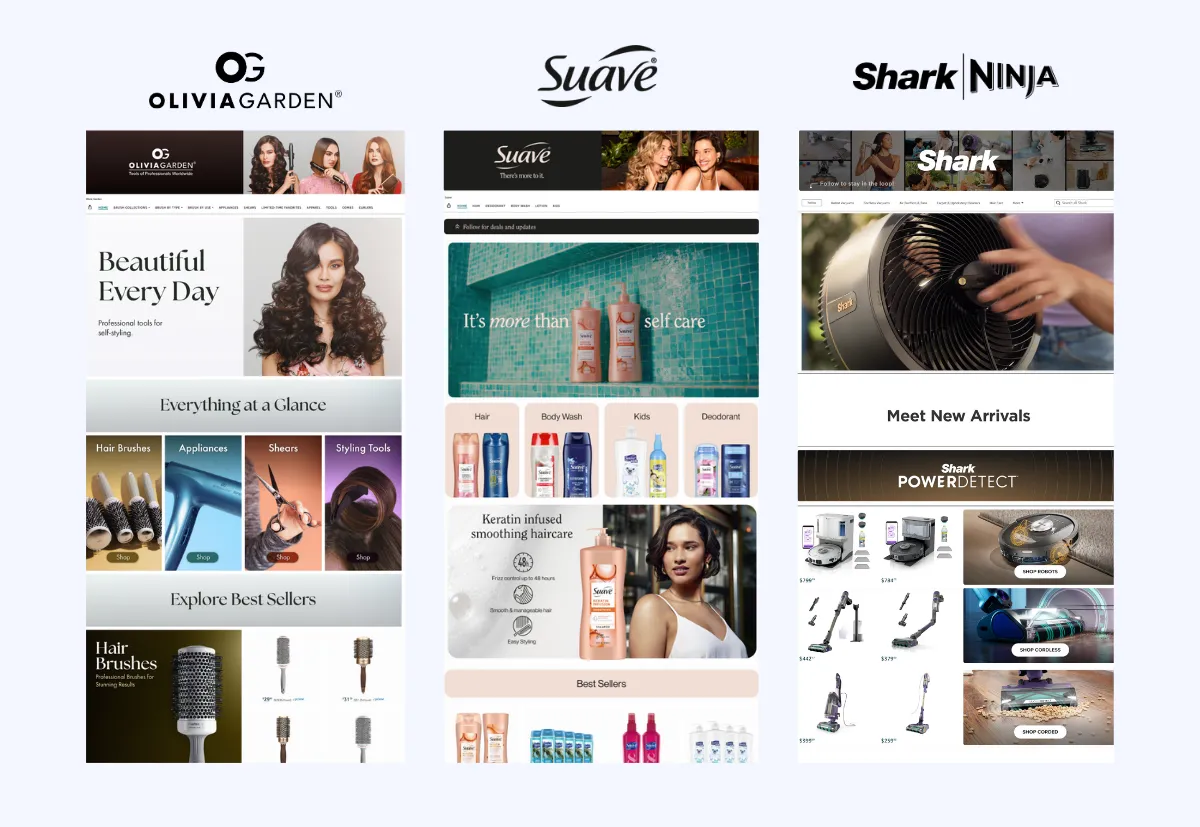
Yeah, I think this is one of the most underutilized spaces within I mean, it's a place where you don't have any competitive advertising 56, 57. You can really hone in on your catalog offerings 57. We look at post-performance analysis of historical performance of your Brandstore 57. We also will look at the traffic patterns 57. We can also utilize AMC data to see how customer journey is affecting, you know, are they coming to the store or the PDPs before they're converting 57? What are they looking at 57? Those are all elements that go into the planning for the structure of redesign of a store 57. And, you know, it depends a lot on the type of category and how large your catalog is 58. For a brand like Ninja, I mean, obviously they have many products across many categories 58. So one of the things that was really important is balancing product merchandising and shopability with also category navigation that's easy on mobile 58. So this is something that comes up over and over again with a lot of brands that we work with that we are they're underutilizing the homepage where all of your organic traffic is landing 58, 59. And you really want to make it easy, especially on mobile where that menu kind of disappears at the top 59. It's harder to click through a long menu 59. Consolidate those sub pages a lot as much as you can because you see a drop off very quickly of traffic 59. And then in your design flow, it is really balancing that product education, engagement, you know, including motion and video and looking at what is the merchandising strategy for the seasonal elements of your store for different times of year 59. What products do you need to make visible and shoppable 59.
And all of these elements need to align with your ad strategy 60. I mean, if we look at this next example, shoes for cruise are really different, a different category, but they also have many different SKUs 60. And here they have ad strategy different times of year with different sub categories 60. They'd have a lot of different industries that they service 60. So this was a matter of making sure that the sub pages structure also aligns with when they're driving ad traffic for just say the hospitality industry, where do they land, how can they get educated about the full offering of shoes for cruise, not just the maybe the one shoe that they want to find 60, 61. At the same time, they need to be able to find and shop for quickly and easily their top selling products 61. So this included hours of really looking into the data of how do we balance product education with shop ability, navigation 61. All of those pieces come together to really make a store that is going to be easy to use, easy to find and also to increase dwell time, average order value, these really important metrics that will ultimately be able to grow your brand 61, 62. If you're not if you're not seeing really strong results from your store, there's probably some of these core elements of the merchandising, the shop ability, the product education that are missing 62.
And in line with what Kathleen has said, you know, there's a lot of brands feel like they need to build out sub pages for every single category 62. And that's just the data almost always says that's a mistake, especially as your catalog, the larger the catalog you have, because you can see in the store insights, the sales and traffic by page 62, 63. And once you start to get over 10 pages, you'll see there's a dramatic drop off in traffic and sales on many pages to the point where you should question why they exist 63. You know, when it's like hundreds of views a month and poultry sales 63. What's the point you'd be better off folding some of those pages in together so that people can browse them all at once 63. You know, Amazon has introduced a search function into the store so it's a good idea to have your cat, you know, all your categories and products be shoppable somewhere 63. But that doesn't mean they all need their own dedicated pages 64. You need to balance shop ability and conversion with discoverability 64. And, you know, again, the object is to sell more, not be a catalog 64. So you really want to keep that in mind as you're building your store 64. And often, you know, if you have one already looking at the data is a great starting point to inform you of what's working, what could be changed and improved 64.
You know, we look at the store insights, we look at the sales of business reports or retail analytics 64. We're looking at brand registry data 65. We're looking at information that our brand partners are providing us 65. We interview them about their objectives 65. And then I think the other really important point is your homepage should be driving a majority of the sales 65. So I go, you know, if you see it driving 50, 60, 70% of the sales is not a bad thing because customers want it to be easy 65. So if you see that it's really low, that's a problem 65. It's a big problem that you need to fix 65. So there's definitely some kind of guardrails that you want to follow 65. And the more that you're doing off Amazon, the more that you typically see more traffic you see on your brand store 66. So it can be a lot of, yeah, if you're doing a lot of advertising off Amazon, typically makes sense to invest more and more in your store 66. And here are just some examples of a few different stores that we've done 66. We have many more on our website as well 66. But seen a lot of great results in optimizing these stores 66. And I don't think that they'll be free of sponsored ads forever 66. So to me, this is a great thing to, great lever to pull while they are ad free 66, 67. So you should take advantage 67.
So we have a few minutes left 67. Sorry, anything you want to add, Kathleen, on brand stores 67?
No, no, that sounds great 67. Yeah, let's go to questions 67.
Yeah, so we have one question 67. And please, if anybody else has some questions, submit them 67. What are your thoughts about AI tools generating listing image graphics 67? Kathleen, you want to take that first 67? I have some thoughts 67.
Yeah, I can take a little bit of that first 67. There's no reason why we can't use AI efficiencies for some content creation 67, 68. Like we're talking a lot about being very strategic here, looking into a lot of research, spending time on messaging hierarchy, etc 68. That is really important for your top sellers 68. That's really important for the products that are driving the majority of your sales 68. You really want to make sure that you take the time to do that right 68. You're not being generalized, like I said, with Rufus AI you need to be specific 68. But when it comes to the rest of the tail of your catalog, those lower tiered items, those items that might be in subcategories that are not your main bread and butter, then absolutely there are ways, some ways that we can be more efficient with taking some guidelines 68, 69. I wouldn't just do it with no guidance 69. One of the things that we do is we develop systems to create more efficient AI generated creative where we're inputting brand guidelines where we have style inputs 69. It's quite sophisticated 69. It actually does pull in also review analysis and other elements to make the AI output accurate, to also make sure that the core image of your product itself is not being generated by AI, but you're feeding that into there so that it's accurate because it's very important on Amazon 69, 70. It doesn't add extra pieces to your product that aren't actually there 70. The quality control is still important, but there are certainly ways to set up systems to generate this efficiently across those lower tier items in your catalog 70.
Yeah, and I would add AI is exciting for content generation 70. I'm obviously active on LinkedIn and I see a lot of people doing these lead gen magnets where they say, "Oh, you can create these things in simple steps." 70 And if you actually start to look at their images, many of them, that they use as examples 70, 71. They're off in terms of sizing and scale 71. There's obvious mistakes 71. And the reality is that you can set it up better and then you still have to take time re-prompting 71. And so there's a business question to this 71. How long is it going to take you to create the graphics you want that are acceptable with AI versus how much would I pay a designer to do the exact graphics I want and what would that cost be in time investment 71? Typically, you're willing to sacrifice more on the mid-tier and bottom of your catalog or compromise more in terms of the quality that you would accept 71, 72. And so that's where, to me, AI content generation can be more useful, acceptable 72. It also depends on the size of your company and brand and objectives, but it's a decision matrix at this point 72. It's not as straightforward as, "It's great for everyone." 72 It's not binary 72. And for SMBs, it's probably a lot more useful than large men market and enterprise at this point 72. The capabilities will continue to evolve 72, 73. I think infographics will be the first thing that will be able to be seamlessly created with AI through and through 73. But as you're still now trying to stitch content together, I think A+ modules, it's very difficult because you have five or seven modules that you have to create and have to be integrated 73. So the more setup work you can do in terms of the brand guidelines and building templates inside whatever AI tools you're using, whether that's nano-banana or something else, the better outputs you're going to get 73. But again, it's all process and time investment, and that has to be balanced with having a designer do it 73, 74. But that's a great question 74.
Another question is, "Do you think the first thing, and this is from Maria, do you think the first thing we should create in Amazon is brand store before A+ content and brand story?" 74 Great question 74. I would answer that as, "No." 74 That if you're getting started on Amazon, the PDPs are the most important thing 74. Amazon clearly has a binary rating for content scoring system 74. If you are lacking essential or basic content modules, you're getting dinged for that in their algorithm 74, 75. For anybody that's in SaaS, you can get these IDQ PDP scoring reports 75. And so part of that is, do you have the basic content, like a brand story A+ certain amount of images in the carousel on every page, PDP 75? So I would say that it's all about discoverability, Kathleen, before you branch out into a brand store, which is much less visible than your PDP 75.
Yep, I agree 75. That's why we also intentionally talked first about titles, main images, and copy, because that's really your foundation that's going to get you indexing organic ranking 75. If you are not working your organic ranking from a copy's perspective, it's going to be really hard to grow organically with ads 75, 76. So those two need to be working hand-in-hand together, the advertising strategy, targeting strategy on certain keywords, and your copy 76. And you need to do that on your top hero products first before you're really going to get any traffic to your store 76. You have to spend a lot of money to get sponsored brand traffic to your store if you don't have some organic traffic coming there 76. And then the other thing is that the brand story is actually one of the biggest drivers of organic traffic to your brand store 76, 77. So I would say that we always tell our partners that it's important to align the brand store strategy and sub pages with your brand story, linking and make sure that you're linking to all of your top sub pages, make sure that's optimized 77. So I would even say, as you're optimizing your top PDPs, the brand story kind of comes next and giving a guideline, a path towards an organic link to the brand store 77. Because otherwise, that little link under your title on Amazon, a lot of people don't even realize is there for organic traffic 77, 78. So it's important to get your PDP down first 78.
Now take the last question we have so far, which is easiest 78. This is being, and it's from Kaylee, this is being recorded and sent out 78. So try to take two more questions from Zara, utilize the AI storefront builder, think it's in beta 78. I personally have not 78. Kathleen, who's our team used it at all 78?
We haven't used it that much because it tends to then go off from our strategy 78. So we're very intentional and strategic, and build something that is not very intentional 78, 79. So with how important it is to be very nuanced about how you're placing your products, and the Amazon cannot know some of your objectives just based off of only the sales and the data there 79. That's why we do a lot of listening to what the brand's objectives are to get the strategy in line with the ultimate goals 79. It's not just a matter of existing data that AI can scrape and then build something to be effective with 79. So we find that there's some limitations to that 79. It might be a good place to start if you have nothing, but we need to be more intentional about it ultimately if you're trying to maximize your growth 80.
Yeah, and I'll actually kind of dovetail off of what Kathleen just said 80. If you don't have video, if you don't have graphics, if you don't have a store, these AI tools are great for that 80. You should use them as long as you feel like the outputs are not damaging your brand 80. Because it is better to have something than nothing again as long as it's furthering the interest of your brand 80, 81. And you will have to answer that question for yourself or implement it and test it 81. But for example, brand stores on Amazon index very highly in Google's organic search for branded terms because Amazon has such a high domain authority 81. So having a brand store is great because you'll likely index pretty high on Google, whereas you might not otherwise, or might just be your website and maybe something else that isn't as relevant 81. So if you don't have a brand store, you don't have the resources to create one using AI or eventually when Amazon rolls it out for everyone, the AI store builder is a good idea 81, 82.
So the last question is a good one 82. Is there any value in following a brand store anymore 82? So for context, there used to be a lot more that you could do when they introduced the following feature with more targeted email messages 82. I think that there's still some functionality potentially around targeting for ads and brand tailored promotions 82. I'd have to double check 82. So I would say the answer is yes 82. But Amazon originally, I think, gave you more ability to message, but they clearly are factoring that in to what, you know, Amazon does a ton of emailing 82, 83. And the bigger you get, you can actually enter into marketing agreements with Amazon where they will potentially email, do email marketing on behalf of you, or if you're a new strategic brand they want, they can email as part of the launch 83. So there's a lot of marketing that happens by Amazon 83. Everybody heard about Amazon pulling out of Google ads, but that's like just a very small fraction of the marketing that they do 83, 84. They have entire social media marketing departments, emailing, etc 84. So at a minimum, you have everything to gain, nothing to lose by getting people to follow your brand store 84. Because Amazon just wants people to buy as much as possible 84. If someone, if a customer is following a brand store, that is a signal to Amazon that the customer is interested in buying products from your brand 84. So they are likely doing some automated marketing to the customer 84. I would say that's at a minimum 84. And then it's my understanding there's still some functionality around brand store followers 84, 85. Kathleen, do you have anything to add there 85?
No, I think you covered it 85. And it's possible they introduce more in the future and bring back some more functionality 85. So if you have more followers, you'll be able to leverage that better 85.
So we appreciate everyone joining today 85. We'll be continuing to do these webinars 85. Our intent is to really be very, very tactical and give you value 85. That being said, if you feel like we can help you further something with your brand, don't hesitate to reach out to us on our website or reach out to Kathleen or me on LinkedIn to talk about how we can potentially help 85, 86. And I want to thank Kathleen today for joining 86. It was excellent 86. Thanks for being on 86.
Lots of fun to talk about these things 86. Thanks, Jason 86.
Have a good one, everyone 86. Thanks 86.
Creative That Makes Amazon Traffic Convert
Getting the click is only half the job. What shoppers see next, on your PDP, A+ content, and brand store, plays a major role in whether they buy.
Join this webinar to learn how stronger Amazon creative can improve conversion, sharpen product positioning, and get more from your media spend. We’ll share lessons from content optimization work across brands including Colgate, Hoover, SharkNinja, Suave, and Olivia Garden.
The Nectar Effect
What You’ll Learn in This Session
How creative affects performance on Amazon
See how content shapes conversion, price perception, and shopper confidence.
Where the biggest content gaps usually sit
Learn how to spot weak points across images, A+ content, brand stores, and messaging consistency.
How to prioritize what to fix first
Focus on the updates most likely to improve performance first, instead of redesigning everything at once.
How to connect creative and media strategy
See how better alignment between campaigns and content creates a stronger shopper journey.
Who This Webinar Is For
- Ecommerce and performance leaders responsible for Amazon growth
- Retail media teams looking to improve performance beyond bidding
- Brands scaling in Ecommerce that want stronger conversion from existing traffic
Session Format
Live webinar (30–45 minutes)
Real-world examples and frameworks
Time for questions at the end
Replay available after the session
What you get by Attending
- 1The creative-driven loop that triggers Amazon’s ranking algorithm
- 2Proven design frameworks for high-converting A+ and storefronts
- 3Premium brand positioning to justify price and defend market share
Who's Talking
Jason is the Co-Founder and Co-CEO of Nectar. With deep expertise in retail media and Amazon sales operations, along with creative, Jason helps brands break through growth ceilings by shifting their focus from top-line vanity metrics to highly profitable, incremental market share gains.
Kathleen is Nectar's Director of Creative Strategy, where she combines analytical rigor with creative direction on every client account. She holds a master's degree in publishing, has over a decade of international experience in messaging and cross-cultural communication, and now focuses on Amazon advertising and content specifically on using performance data to sharpen creative decisions. A Swiss-American-Canadian who was raised across multiple cultures, she brings an operator's mindset and a rare global perspective to the cross-market creative challenges ecommerce brands face today.
.svg)