How to Analyze Ecommerce Data for Higher Conversion Rates
.webp)
Every American e-commerce manager knows the challenge of turning raw platform data into real sales growth. Defining the right key performance indicators is the foundation for measuring and optimizing every step of your online business. Harvard Business School emphasizes tracking metrics across the awareness, consideration, and decision stages for focused improvement. This guide shows how a strategic KPI framework, combined with robust Amazon and Shopify data analysis, drives higher conversion rates.
Quick Summary
Key PointExplanation
1. Define clear e-commerce KPIs
Establish specific metrics to measure and improve your online store’s performance.
2. Collect data from Amazon and ShopifyUse platform tools to gather customer behavior and sales data for insights.
3. Cleanse and organize datasetsEnsure data integrity by removing duplicates and standardizing formats for analysis.
4. Apply advanced analytics techniques
Utilize predictive analytics and conversion funnel analysis to uncover performance trends.
5. Validate insights for conversion
Implement testing methods to confirm the effectiveness of your conversion strategies.
Step 1: Define key performance indicators for ecommerce
Defining clear key performance indicators (KPIs) is the critical first step in driving your e-commerce strategy. By establishing precise metrics, you can track your online store’s performance and make data-driven decisions that directly impact your conversion rates.
Successfully defining KPIs requires ongoing refinement. Start with these foundational metrics, but be prepared to adapt your tracking as your business evolves and new measurement technologies emerge.
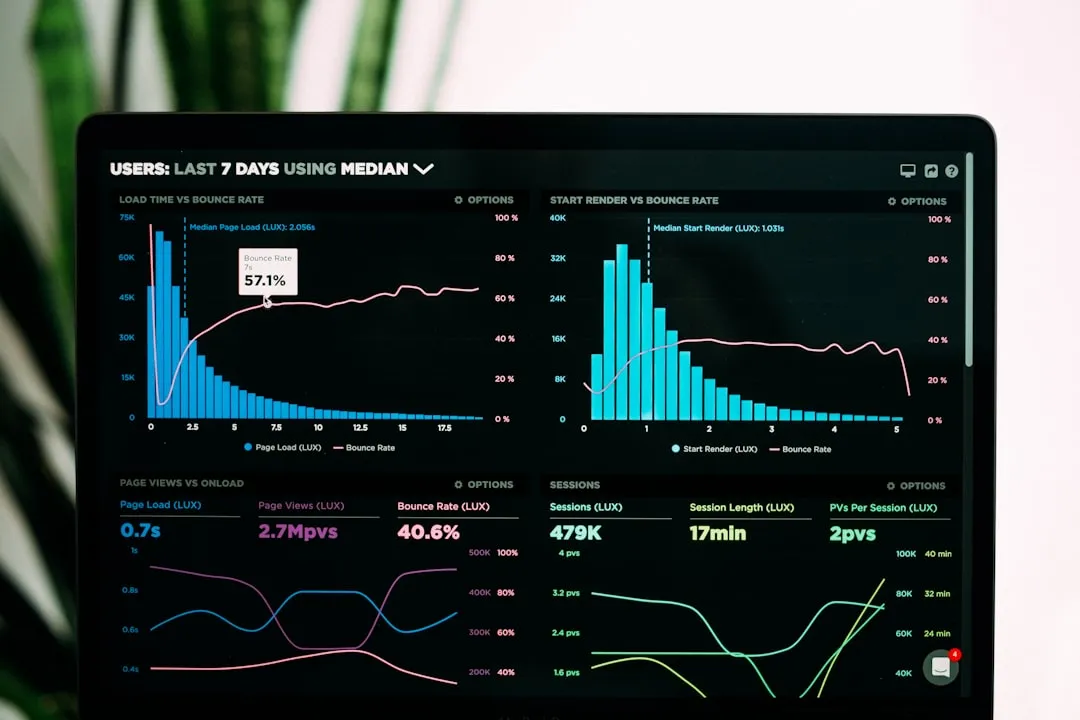
Pro tip: Create a dynamic dashboard that tracks your most critical KPIs in real-time, allowing instant visibility into your e-commerce performance.
Step 2: Gather data from Amazon and Shopify platforms
Collecting comprehensive data from your e-commerce platforms is essential for understanding customer behavior and driving strategic improvements. Shopify’s built-in analytics tools provide a robust starting point for extracting valuable insights about your online business performance.
Remember that data collection is an ongoing process. Regularly updating and reviewing your metrics will help you stay ahead of market trends and customer preferences.
Pro tip: Schedule automated weekly data exports to create a consistent historical record of your e-commerce performance metrics.
Step 3: Cleanse and organize ecommerce datasets
Transforming raw e-commerce data into actionable insights requires a meticulous approach to data cleansing and organization. Data management standards emphasize the critical importance of maintaining data integrity throughout your analysis process.
Consistent data maintenance is not a one-time task but an ongoing process. Develop a routine for regular data audits and updates to ensure your analytics remain precise and valuable.

Pro tip: Implement automated data validation scripts that flag inconsistencies and standardize your datasets in real-time.
Step 4: Apply analytic methods to uncover performance trends
Uncovering meaningful performance insights requires a strategic approach to data analysis that goes beyond surface-level metrics. Big data analytics applications provide powerful techniques for transforming raw numbers into actionable business intelligence.
Successful analytics is an iterative process. Continuously refine your analysis methods, adapt to new data trends, and remain flexible in your approach to uncovering meaningful performance insights.
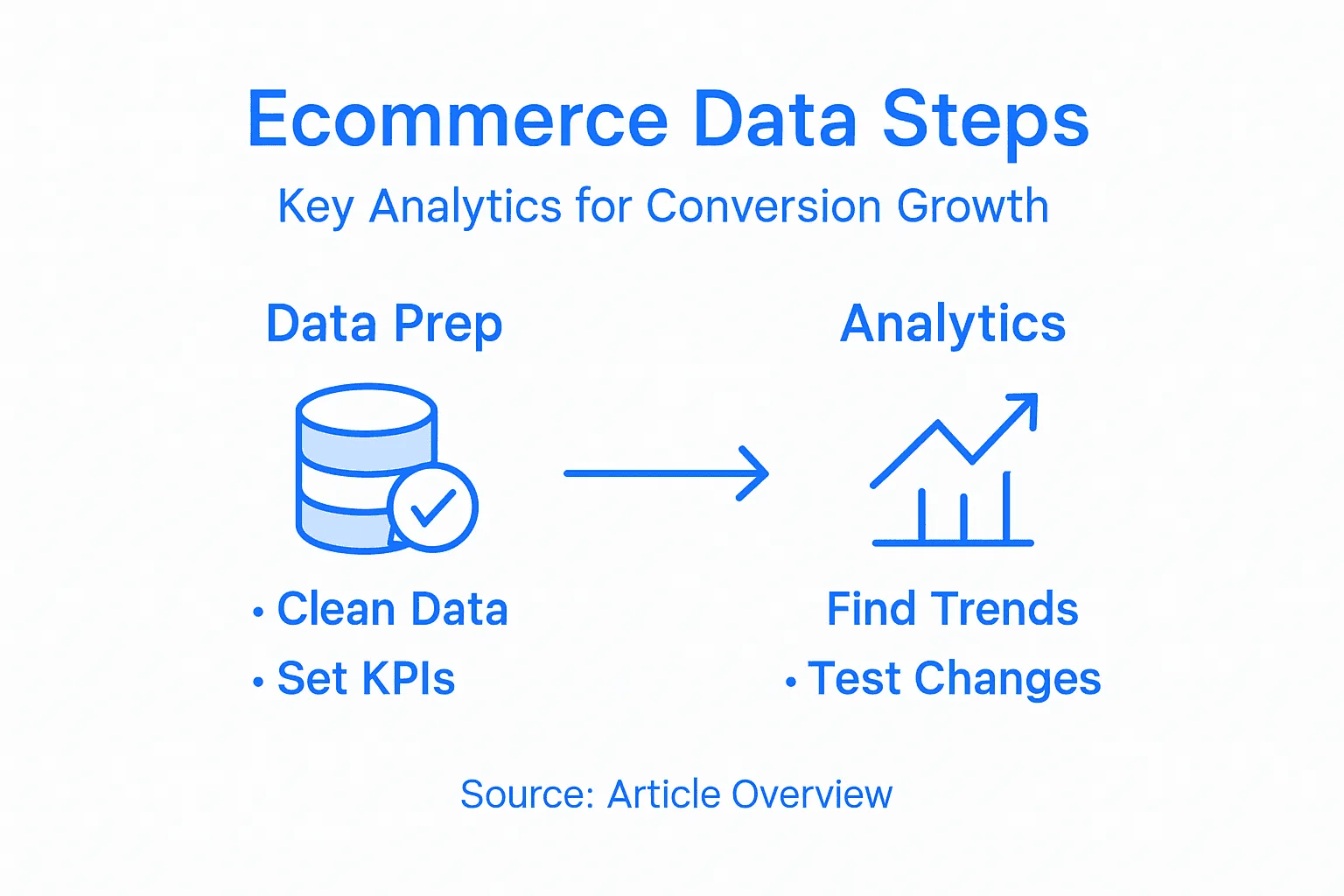
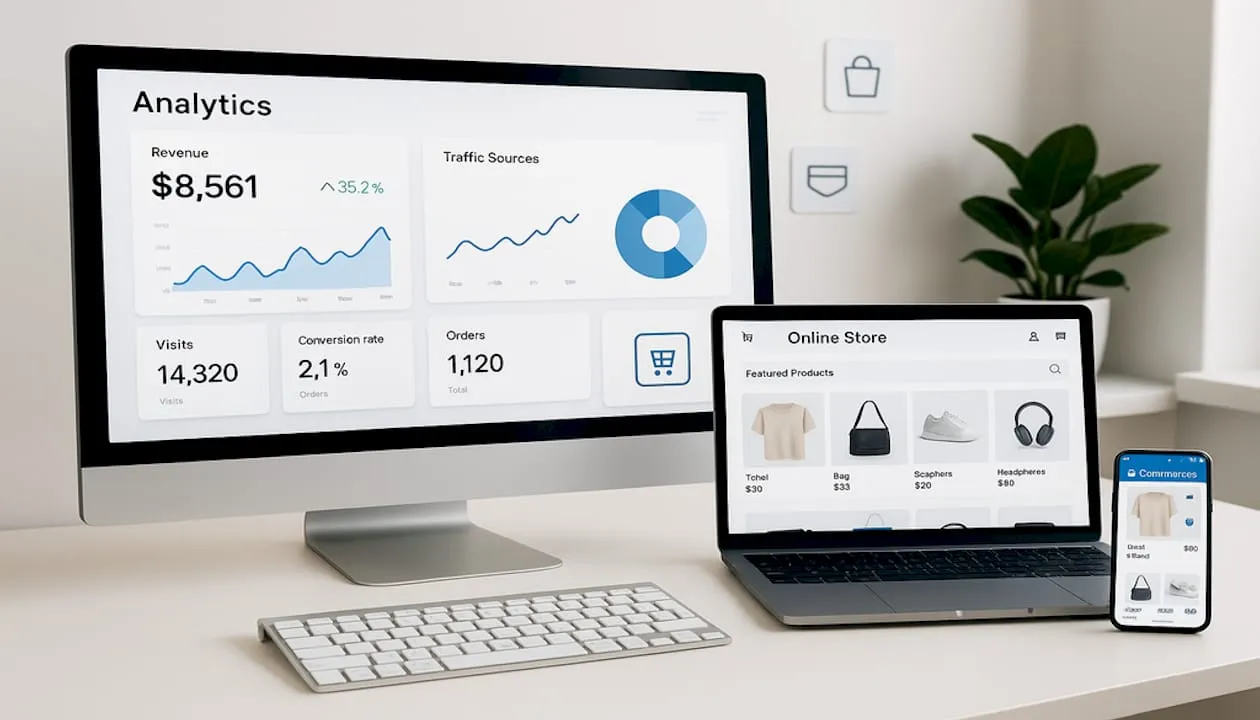
Pro tip: Create dynamic dashboards that automatically update key performance indicators, enabling real-time strategic decision-making.
Step 5: Validate insights to refine conversion strategies
Validating your e-commerce insights is crucial for transforming raw data into meaningful performance improvements. Conversion rate benchmarking provides a systematic approach to testing and confirming your strategic hypotheses.
Remember that validation is an ongoing process. Continuously test, measure, and refine your approaches to stay ahead of changing market dynamics and customer preferences.
Pro tip: Develop a standardized validation framework that automatically flags statistically significant variations in your conversion performance.
Unlock Higher Conversion Rates with Expert Ecommerce Data Analysis
If analyzing ecommerce data to boost conversion rates feels overwhelming, you are not alone. The article highlights how defining KPIs, gathering platform data, cleansing datasets, and validating insights are crucial yet complex steps. Many brands struggle to transform raw numbers into clear, actionable strategies that drive real growth. Pain points like inconsistent data, ineffective tracking, and uncertain decision-making can stall your progress.
At Nectar, we specialize in harmonizing creative expertise with powerful analytics to solve these very challenges. Our proprietary iDerive platform dives deep into your Amazon, Walmart, and Shopify data delivering granular insights that fuel smarter scaling. Combine that with full-funnel management and impactful content creation and you get a proven formula for turning underperforming listings into high-converting storefronts.
Ready to stop guessing and start growing? Discover how our fully managed ecommerce solutions align perfectly with the rigorous analysis methods covered in the article. Explore how Nectar can elevate your brand’s performance today by visiting our homepage.

Take the first step to refining your conversion strategies with confidence. Learn more about our approach to ecommerce growth at Nectar and start transforming your data into lasting profits now.
Frequently Asked Questions
What are the key performance indicators to analyze for higher e-commerce conversion rates?
To analyze for higher e-commerce conversion rates, focus on key performance indicators like conversion rate, average order value, and cart abandonment rate. Start by measuring these metrics over a defined period, such as monthly, to identify trends and areas for improvement.
How can I effectively gather data from my e-commerce platforms?
You can effectively gather data by utilizing the analytics tools provided in your e-commerce platforms. Begin by exporting sales reports and customer behavior metrics from your dashboard to create a comprehensive dataset for analysis.
What steps should I take to cleanse and organize my e-commerce data?
To cleanse and organize your e-commerce data, first assess for duplicate entries or incomplete records. Normalize your data formats and ensure consistency across metrics to prepare it for analysis.
How do I apply analytics methods to uncover performance trends in e-commerce?
You should apply analytics methods such as predictive analytics and conversion funnel analysis to uncover performance trends. Track user journey stages and segment customer behaviors to identify drop-off points that need addressing.
What validation techniques can I use to ensure my insights lead to improved conversion strategies?
Use validation techniques such as A/B testing and statistical significance analysis to ensure your insights are actionable. Running controlled experiments will help you confirm the effectiveness of your conversion strategies and make necessary adjustments to improve outcomes







































































.webp)