How to Increase Ecommerce ROI with Data and Creative
.webp)

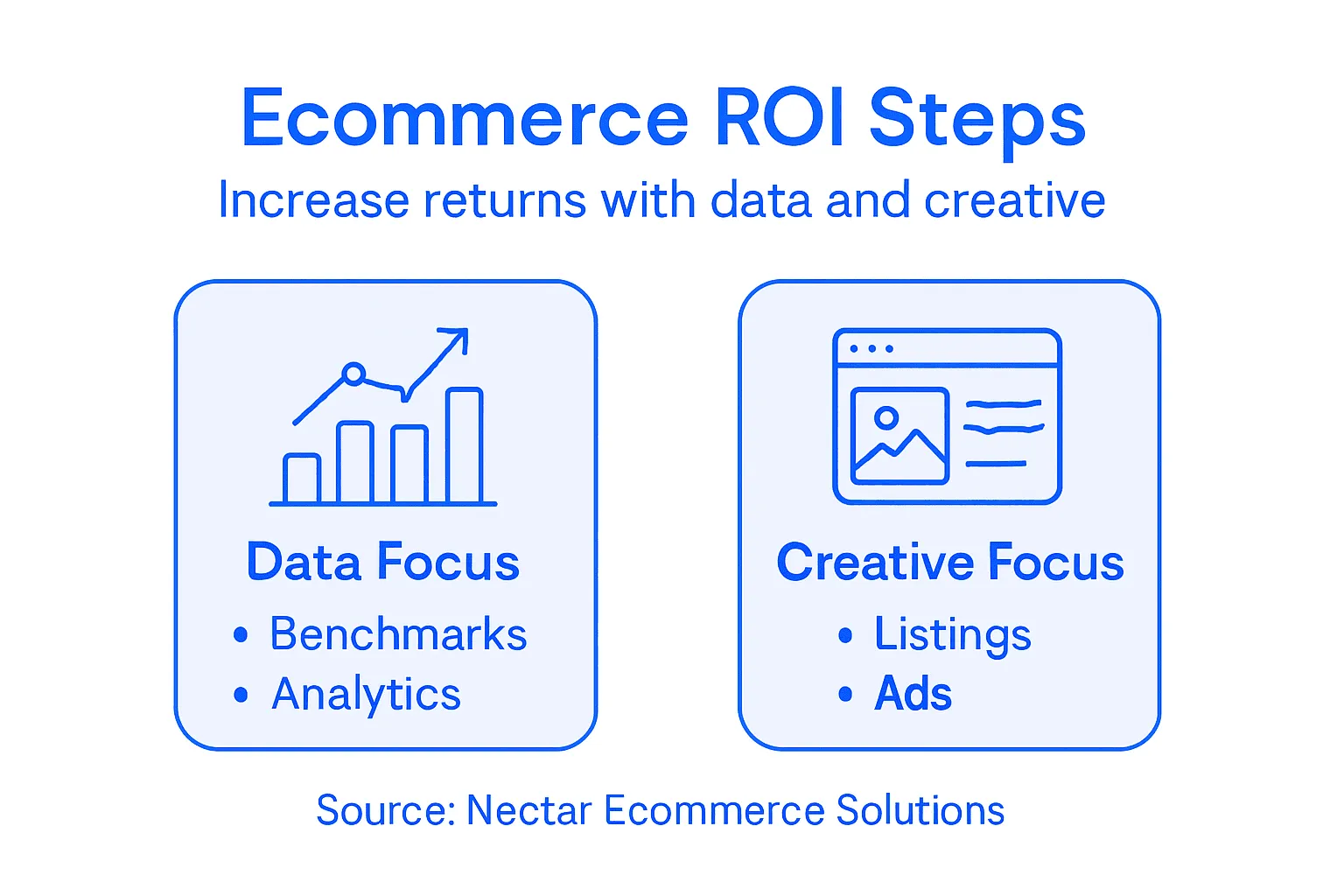
Every American e-commerce manager knows the pressure to prove measurable returns on every strategy. Success today depends on moving beyond gut feelings and embracing a unified, data-driven approach. Using advanced analytics and creative optimization with platforms like Amazon, Walmart, and Shopify, you can transform basic channel reporting into a strategic powerhouse. Discover actionable methods to establish data-driven ROI benchmarks and elevate product listings for smarter growth decisions that drive real business impact.
Quick Summary
Key InsightExplanation
1. Establish Data-Driven Benchmarks
Create accurate ROI benchmarks using comprehensive data collection and performance metrics.
2. Optimize Product Listings Creatively
Use high-quality images and persuasive descriptions to enhance product visibility and emotional engagement.
3. Implement Advanced Advertising Strategies
Use precise targeting techniques and multichannel approaches to improve advertising effectiveness.
4. Integrate Analytics for Ongoing Improvement
Use systematic analytics to derive actionable insights and continuously enhance business strategies.
5. Verify and Refine Performance Metrics
Regularly analyze and validate performance results to make informed strategic adjustments.
Step 1: Establish Data-Driven ROI Benchmarks
Establishing data-driven ROI benchmarks is crucial for transforming your ecommerce performance from guesswork to strategic precision. By leveraging advanced analytics and comparative performance metrics, you can create a robust framework for measuring and improving your business outcomes.
To build accurate benchmarks, start by integrating comprehensive data collection methods. This means connecting your ecommerce platforms, advertising channels, and performance measurement dashboards to create a unified view of your business metrics. Research indicates that small ecommerce retailers can increase revenues by 3.6% simply by implementing more sophisticated analytics tracking. These dashboards allow you to track key performance indicators like conversion rates, customer acquisition costs, average order value, and lifetime customer value across different channels and product lines.
Next, compare your performance against industry standards using benchmarking resources. Organizations like the American Productivity and Quality Center (APQC) provide extensive performance indicators that can help you understand how your metrics stack up against competitors. By analyzing these comparative metrics, you can identify specific areas for improvement and set realistic, data-driven goals for your ecommerce strategy.
Pro Tip: Create a monthly dashboard review process where you compare your current performance metrics against your established benchmarks and make incremental optimization strategies.
Here’s a summary of key ecommerce performance metrics and their business relevance:
MetricWhat It MeasuresStrategic Business ImpactConversion Rate% of visitors making a purchaseReveals sales funnel effectivenessAverage Order ValueAverage transaction sizeDirectly affects total revenueAcquisition CostCost per new customerDetermines marketing ROILifetime Customer ValueRevenue per customer over timeGuides retention strategiesEngagement RateInteraction with site/contentIndicates user interest levels
Step 2: Optimize Product Listings with Creative Assets
Optimizing your product listings with strategic creative assets is essential for capturing customer attention and driving conversions in the competitive ecommerce landscape. By leveraging advanced visual and descriptive techniques, you can transform your product presentations into compelling sales tools.

Begin by implementing machine learning optimization strategies that analyze and enhance your product imagery and descriptions. Modern algorithms can help extract key features that make your listings more attractive and discoverable. Focus on high-quality images that showcase your product from multiple angles, highlighting unique features and benefits. Use professional photography that demonstrates product functionality, scale, and context. Your visual assets should tell a story that connects emotionally with potential buyers and clearly communicates the product’s value proposition.
Next, craft product descriptions that combine technical details with persuasive storytelling. Utilize the American Marketing Association’s recommended techniques for targeted messaging that speaks directly to your ideal customer. Break down complex information into easily digestible bullet points, emphasizing key benefits and differentiators. Include specific use cases, customer testimonials, and clear value statements that help shoppers understand exactly why your product meets their needs.
Pro Tip: Conduct A/B testing on your product images and descriptions to systematically identify which creative assets generate the highest engagement and conversion rates.
Compare structured and creative optimization for product listings:
ApproachCore ActionsPrimary OutcomeBusiness BenefitData-DrivenApply ML for image analysisMore discoverable listingsHigher organic trafficCreative StorytellingUse testimonials and use casesStronger emotional engagementImproved conversion rates
Step 3: Activate Advanced Advertising Strategies
Advanced advertising strategies are essential for transforming your ecommerce marketing from generic outreach to precision targeted campaigns that drive substantial revenue growth. By implementing sophisticated data-driven approaches, you can dramatically improve your return on advertising spend and customer acquisition efficiency.

Start by exploring digital advertising measurement techniques that go beyond traditional metrics. Modern advertising requires a nuanced approach that connects individual ad impressions directly to customer behavior and sales outcomes. Implement retargeting campaigns that track customer interactions across multiple platforms, creating personalized ad experiences that feel timely and relevant. Utilize dynamic ad formats that adapt in real time based on user preferences, browsing history, and previous purchase behaviors.
Next, develop a multichannel advertising strategy that leverages different platforms and ad types. This means combining search engine marketing, social media advertising, streaming platform ads, and marketplace sponsored listings to create a comprehensive approach. Focus on creating cohesive messaging that maintains brand consistency while tailoring the specific presentation to each platform’s unique audience and technical specifications. Use advanced analytics to continuously monitor performance, quickly pivoting strategies that are not delivering optimal results and doubling down on high performing ad variations.
Pro Tip: Allocate 10% of your advertising budget to experimental campaigns that test emerging ad technologies and audience targeting techniques.
Step 4: Integrate Analytics for Continuous Improvement
Integrating analytics into your ecommerce strategy is critical for transforming raw data into actionable insights that drive sustainable growth. By establishing a systematic approach to performance measurement and optimization, you can create a dynamic feedback loop that continuously refines your business strategies.
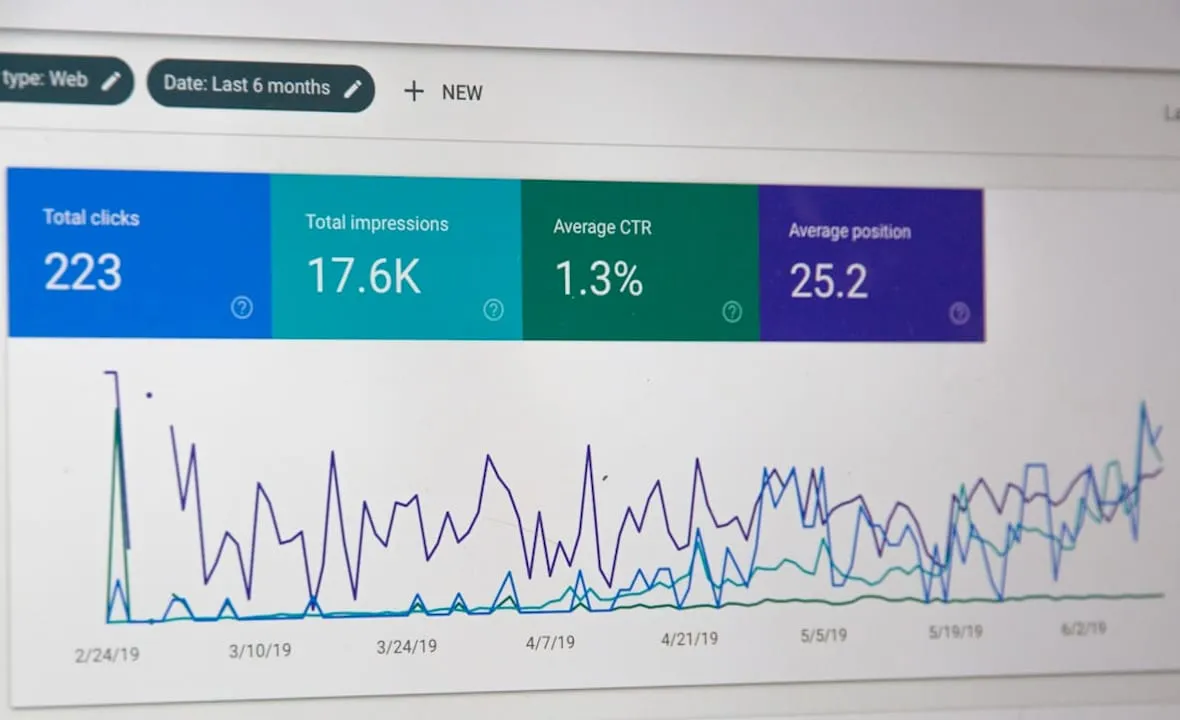
Begin by implementing marketing analytics frameworks that model customer behaviors and facilitate precise performance tracking. This means developing a comprehensive dashboard that captures key performance indicators across multiple dimensions such as customer acquisition cost, conversion rates, average order value, and lifetime customer value. Use advanced statistical techniques to segment your data, identifying patterns and opportunities that are not immediately visible through surface level analysis. Create predictive models that allow you to anticipate market trends and customer preferences before they become mainstream.
Establish a robust testing infrastructure that enables rapid experimentation and iterative refinement. This involves setting up controlled experiments where you can test different marketing strategies, product presentations, pricing models, and customer engagement approaches. Develop a culture of continuous learning where every data point becomes an opportunity for strategic improvement. Implement regular review cycles where cross functional teams analyze performance metrics, share insights, and collaborate on developing innovative solutions to emerging challenges.
Pro Tip: Create a monthly analytics review meeting where your team discusses key performance insights and brainstorms actionable strategies for optimization.
Step 5: Verify Results and Refine Key Actions
Verifying results and refining key actions represents the critical final stage of your data-driven ecommerce optimization strategy. This process transforms raw performance data into meaningful strategic adjustments that can significantly impact your bottom line and competitive positioning.
Begin by conducting a comprehensive analysis of your ecommerce website performance metrics to understand how different design elements and strategies influence customer behavior. Develop a systematic approach to comparing expected outcomes with actual results, identifying both successful tactics and areas requiring immediate improvement. Pay special attention to key performance indicators such as conversion rates, customer engagement metrics, bounce rates, and average time spent on product pages. Use statistical analysis techniques to determine which variables have the most significant impact on your overall business performance.
Implement a rigorous validation process that goes beyond surface level metrics. This means creating controlled experiments where you can isolate specific variables and measure their direct impact on customer behavior and revenue generation. Develop a framework for continuous improvement that allows you to quickly adapt strategies based on empirical evidence. Create cross functional feedback loops that enable rapid communication and implementation of insights across marketing, product development, customer service, and sales teams.
Pro Tip: Establish a quarterly strategic review process where you comprehensively audit your performance data and realign your business strategies based on the most recent analytical insights.
Unlock Your Ecommerce Potential with Data-Driven Creative Solutions
Increasing ecommerce ROI requires more than just basic analytics or appealing visuals alone. The article highlights challenges such as establishing precise ROI benchmarks, optimizing product listings with compelling creative assets, and activating advanced advertising strategies that connect directly to customer behavior. You need a partner that understands how to blend data science and creative storytelling seamlessly to boost conversion rates, maximize customer lifetime value, and efficiently lower acquisition costs.
At Nectar, we specialize in transforming these exact pain points into growth opportunities. Our fully managed ecommerce services combine cutting-edge data insights powered by our proprietary iDerive analytics platform with high-impact creative solutions including professional photography and design to make your product listings irresistible. Whether you sell on Amazon, Walmart, or Shopify, our end-to-end approach ensures your campaigns reach the right audience with precision and scale. Experience how integrating sophisticated analytics with creative optimization can elevate your brand’s performance and secure measurable ROI.
Ready to transform your ecommerce outcomes with a proven data and creative partnership

Discover how Nectar can help you scale smarter and increase your market share today. Visit Nectar Ecommerce Solutions to learn more and get started on elevating your ROI now.
Frequently Asked Questions
How can I establish data-driven ROI benchmarks for my ecommerce business?
Start by integrating all your ecommerce platforms and advertising channels to create a unified dashboard for performance metrics. Regularly review and compare these against industry standards to set realistic goals that can guide your strategies.
What key performance indicators should I focus on to improve my ecommerce ROI?
Focus on metrics such as conversion rate, average order value, and customer acquisition cost. By closely monitoring these indicators, you can identify areas needing improvement and adjust your tactics accordingly for better results.
How do I optimize product listings to increase conversions?
Enhance your product listings by using high-quality images and persuasive descriptions that highlight key features and benefits. Regularly conduct A/B tests on these elements to identify which combinations drive the highest engagement and conversion rates.
What advanced advertising strategies can enhance my ecommerce ROI?
Implement dynamic ad formats and retargeting campaigns tailored to user behavior. This personalized approach can significantly boost your ad relevance, leading to higher conversion rates and improved return on advertising spend.
How can I integrate analytics for ongoing optimization in my ecommerce strategy?
Develop a comprehensive analytics framework that captures essential performance data across various channels. Set up regular review cycles to analyze this data and make informed adjustments to your marketing tactics and product strategies.
What steps should I take to verify results and refine my ecommerce strategies?
Conduct a detailed analysis of key website performance metrics to compare expected outcomes with actual results. Create a structured review process that allows for quick adjustments based on empirical feedback, focusing on continuous improvement.









































































.webp)