Why Ecommerce Partners Matter for Enterprise Brands
.webp)

Finding the right partners can mean the difference between stagnant online sales and truly scalable growth for American brands selling on Amazon or direct to consumer. Complex digital ecosystems call for more than basic vendor relationships. By tapping into specialized ecommerce partners, you gain access to critical technological, operational, and market access capabilities that strengthen your digital strategy, deliver supply chain efficiency, and help you stay ahead of consumer trends.
Key Takeaways
PointDetails
Ecommerce Partnerships Enhance Growth
Strategic alliances with specialized partners drive operational efficiency, market responsiveness, and innovation for enterprise brands.
Types of Partnerships Matter
Understanding diverse partnership models—such as strategic alliances, joint ventures, and licensing agreements—enables brands to tailor strategies for digital growth.
Core Benefits Include Risk Mitigation
Effective partnerships distribute risk, optimize resources, and accelerate access to cutting-edge technologies, crucial for maintaining competitive advantage.
Robust Partner Evaluation is Essential
Implementing thorough partner assessments, including technological compatibility and compliance checks, ensures alignment and long-term strategic success.
Defining Ecommerce Partners for Enterprise Brands
Enterprise brands operate in increasingly complex digital ecosystems that demand strategic partnerships to drive online growth. Ecommerce partners represent specialized entities that provide critical technological, operational, and market access capabilities for companies seeking to expand their digital sales channels. Comprehensive digital ecosystems require sophisticated collaborative approaches that go beyond traditional vendor relationships.
Understanding the strategic value of these partnerships means recognizing how they contribute substantive expertise and resources beyond basic transactional interactions. Successful enterprise brands view ecommerce partners as collaborative extensions of their internal capabilities, not simply external service providers. These partnerships enable brands to access specialized technologies, expand market reach, and accelerate digital transformation strategies.

Pro tip: Conduct thorough due diligence by evaluating potential ecommerce partners against specific performance metrics, technological compatibility, and alignment with your brand’s long-term growth objectives.
Types of Ecommerce Partnerships Explained
Enterprise brands can leverage multiple partnership models to enhance their digital commerce strategies. Strategic partnership frameworks offer sophisticated approaches for expanding market capabilities and driving growth across digital channels.
Partnership collaboration models range from transactional exchanges to transformational ecosystems. Advanced enterprise brands increasingly seek partnerships that provide more than traditional service interactions. These sophisticated collaborations enable companies to pool expertise, access specialized technologies, and create integrated solutions that drive competitive advantage.
Below is a summary of ecommerce partnership types and their strategic contributions:
Partnership TypeUnique Value DeliveredTypical Use CaseStrategic AllianceShared resources and expertiseExpanding market reachJoint VentureShared financial risk and rewardsLaunching new ecommerce initiativesCo-Marketing ArrangementJoint branding and customer accessIncreasing customer acquisitionLicensing AgreementTechnology or IP sharingRapid platform integrationTechnology Integration PartnershipCombined tech infrastructureEnhancing backend capabilities
Pro tip: Evaluate potential ecommerce partnerships by assessing not just immediate operational benefits, but also long-term strategic alignment and potential for mutual innovation and growth.
Core Benefits for Mid-Sized and Enterprise Brands
Enterprise brands increasingly recognize the transformative power of strategic ecommerce partnerships. Supply chain collaboration strategies deliver substantial competitive advantages that extend far beyond traditional transactional relationships, enabling businesses to reimagine their digital growth potential.
Ecosystem partnership frameworks enable enterprise brands to transcend traditional limitations. By connecting with technology providers, consultants, and specialized service partners, companies can create integrated solutions that drive scalability, unlock new revenue streams, and maintain a competitive edge in rapidly evolving digital marketplaces.
Pro tip: Develop a comprehensive partner evaluation matrix that assesses not just immediate capabilities, but also long-term strategic alignment, technological compatibility, and potential for joint innovation.
Key Roles and Responsibilities of Partners
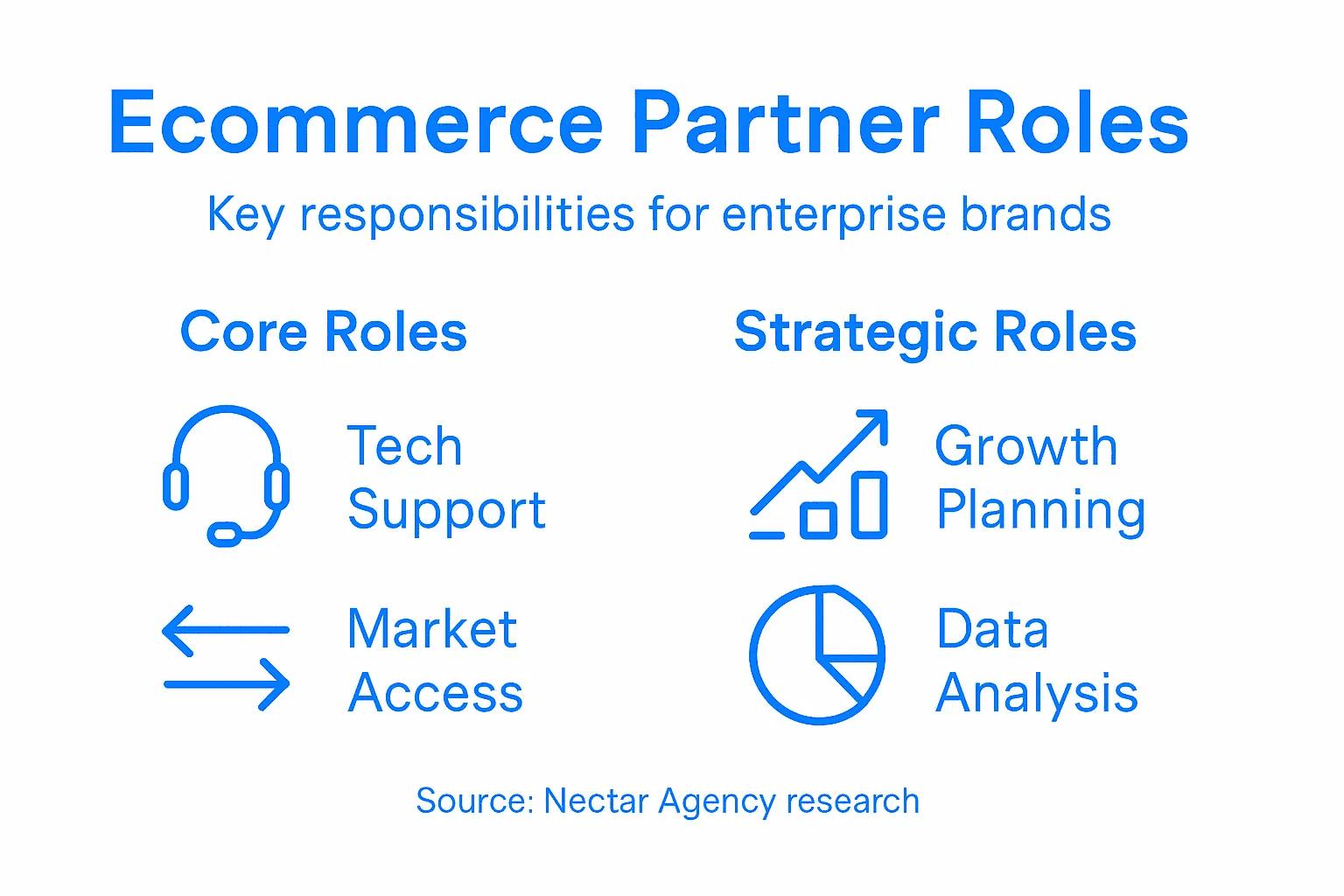
Ecommerce partnerships demand precise role definition and strategic alignment across multiple functional domains. Comprehensive partner responsibilities encompass far more than traditional transactional interactions, requiring nuanced expertise and collaborative infrastructure.
Ecommerce team structural frameworks reveal the complex interdependencies required for successful digital commerce partnerships. Each partner brings specialized capabilities that collectively create a robust ecosystem, enabling enterprise brands to navigate increasingly complex digital marketplaces with agility and strategic precision.
Pro tip: Establish clear communication protocols and performance metrics upfront to ensure alignment and accountability across all partner roles and responsibilities.
Risks, Challenges, and Choosing the Right Partner
Navigating the complex landscape of ecommerce partnerships requires a strategic approach to risk management and partner selection. Digital ecosystem challenges present multifaceted obstacles that demand sophisticated evaluation and proactive mitigation strategies for enterprise brands.
Cross-border ecommerce partnership complexities require enterprise brands to conduct comprehensive due diligence. Successful partner selection involves evaluating technological capabilities, understanding potential vulnerabilities, and establishing clear communication protocols that enable rapid adaptation to emerging market challenges.
Unlock the Full Potential of Strategic Ecommerce Partnerships
Enterprise brands face complex challenges like technological compatibility, market responsiveness, and operational efficiency when working with ecommerce partners. The article highlights the importance of selecting partners that offer more than basic service by emphasizing strategic alignment, innovation, and risk mitigation. If you aim to transform your ecommerce approach and accelerate growth across platforms like Amazon, Walmart, and Shopify, addressing these pain points with expert support is critical.
Nectar is a premier, fully managed ecommerce agency that specializes in turning these challenges into competitive advantages. By combining high-impact creative services and data-driven advertising through our proprietary iDerive analytics platform, Midi-sized and enterprise brands gain granular insights and full-funnel management. This approach helps you scale smarter, maximize ROI, and build resilient partnerships tuned for success. Learn how Nectar navigates complex digital ecosystems to drive profitable growth on our main website.
Explore how Nectar’s capabilities align with the strategic frameworks and operational roles detailed in the article by visiting Nectar’s homepage. Discover the difference of working with an ecommerce partner that shares your long-term vision and drives innovation every step of the way.
Elevate your ecommerce strategy by partnering with experts who understand the nuances of enterprise digital commerce. Take the next step today.
Looking to overcome the risks and challenges of ecommerce partnerships while maximizing growth

Visit Nectar to see how our fully managed ecommerce services can transform your brand’s digital presence and market share.
Frequently Asked Questions
What are ecommerce partners?
Ecommerce partners are specialized entities that provide essential technological, operational, and market access capabilities to enterprise brands seeking to enhance their digital sales channels.
Why are ecommerce partnerships important for enterprise brands?
Ecommerce partnerships enable enterprise brands to access specialized technologies, expand market reach, optimize resources, and accelerate digital transformation strategies, thereby driving significant online growth.
What types of ecommerce partnerships exist?
Key types of ecommerce partnerships include strategic alliances, joint ventures, co-marketing arrangements, licensing agreements, and technology integration partnerships, each serving unique purposes in enhancing digital commerce strategies.
What should enterprise brands consider when choosing an ecommerce partner?
When selecting an ecommerce partner, brands should evaluate technological compatibility, alignment with long-term growth objectives, potential for mutual innovation, and the overall strategic fit between both organizations.








































































.webp)