How marketplace trend monitoring drives e-commerce growth
.webp)

TL;DR:
- Effective marketplace trend monitoring involves tracking dynamic signals like ROAS, CPC, and conversion rates over time to prevent surface-level growth from masking underlying efficiency declines. Most brands fail by relying solely on reporting rather than establishing structured, real-time data systems focused on high-impact SKUs and competitive insights. Implementing disciplined, prioritized monitoring frameworks enables brands to make timely decisions, optimize spend, and sustain profitable growth across multiple platforms.
Revenue can look healthy while your business is quietly losing ground. ROAS slides, CPC climbs, and conversion rates drift downward, yet the dashboard still shows green because total sales are up. This is one of the most dangerous traps in e-commerce: confusing topline growth with operational health. As marketplace performance diverges over time, affecting spend efficiency, conversion, and cost dynamics, brands that rely on surface metrics alone are flying blind. Active trend monitoring is what separates brands that scale profitably from those that grow themselves into margin problems.
Key Takeaways
| Point | Details |
|---|---|
| Monitor deeper, not broader | Focusing on the highest-impact SKUs and signals returns greater profits than monitoring every product equally. |
| Build structured dashboards | Dashboards that combine platform metrics, pricing intelligence, and alerts enable real-time, actionable decisions. |
| Prioritize competitive intelligence | Like-for-like comparisons and Buy Box analysis produce more accurate insights on price and performance, avoiding misleading data. |
| Rethink surface-level benchmarks | Top-line growth can hide declining efficiency—diagnose underlying drivers behind trends before scaling budgets. |
What does it mean to monitor marketplace trends?
Most marketing and e-commerce teams think of trend monitoring as checking weekly sales numbers. That is not monitoring, that is reporting. Real marketplace trend monitoring means tracking the interconnected signals that determine whether your growth is healthy or hollow.
Effective monitoring captures:
-
ROAS and ACOS movement over rolling time windows, not just current period snapshots
-
CPC trends by campaign type, keyword cluster, and product category
-
Conversion rate shifts at the listing level, including the impact of creative, pricing, and content changes
-
Search rank and share on category-defining queries
-
Inventory and velocity metrics that signal demand acceleration or stall-out before it shows in revenue
“Monitoring marketplace trends replaces guesswork with measurable, data-driven decisions across spend, conversion, and cost on each platform.” This is the 2026 Amazon vs. Walmart benchmark report’s core case for why passive oversight simply is not enough.
Without this structure, teams react to last month’s data when the market has already moved. Brands optimizing for marketplace optimization need to treat their analytics stack as a live intelligence system, not a post-mortem tool. The role of analytics in sustainable growth is exactly this: catching micro-shifts before they become macro-problems.
One concrete scenario: a home goods brand running 40 active ASINs sees flat revenue month over month. Without trend monitoring, the team assumes stability. But a closer read reveals that two hero SKUs are carrying the load while eight mid-tier products have seen conversion rates drop by 15% over six weeks. Ad spend on those eight is up. Net margin is shrinking. Revenue is masking a structural problem that trend monitoring would have surfaced weeks earlier.
Key metrics and dashboards: Amazon, Walmart, and beyond
Understanding which metrics to watch is one thing. Knowing how each platform surfaces them, and which signals matter most commercially, is where most teams fall short.
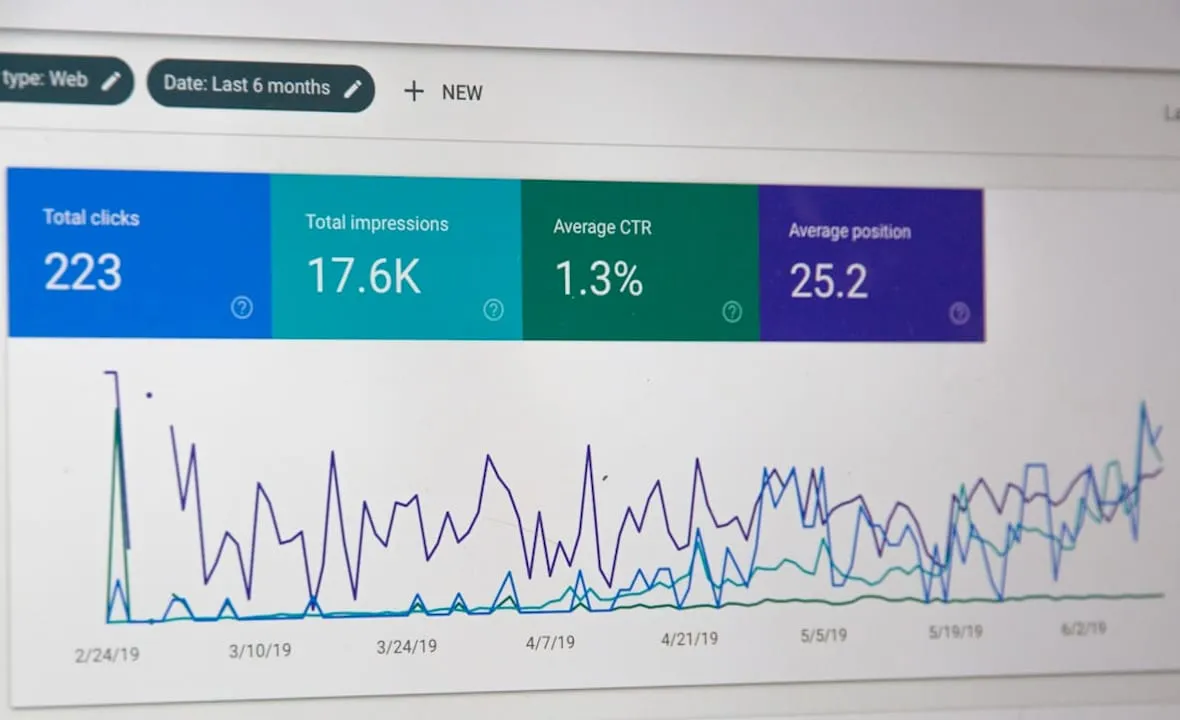
Amazon’s Brand Analytics and Search Query dashboards break out impressions, clicks, cart adds, purchases, and conversion rates over time. These are not vanity metrics. Cart-add rate versus purchase rate, for example, reveals friction in the conversion funnel that neither your ad reporting nor your P&L will show you. A high cart-add but low purchase rate almost always points to a pricing, trust, or listing quality issue that you can actually fix.
Here is a comparison of what each major platform exposes for trend monitoring purposes:
| Metric | Amazon | Walmart | Target (Plus) |
|---|---|---|---|
| Search term share | Brand Analytics (Search Query Performance) | Advertising analytics | Limited, third-party tools |
| Conversion rate | Available at ASIN level | Available at item level | Seller-specific reporting |
| CPC trends | Campaign Manager | Walmart Connect dashboard | Roundel reporting |
| Pricing visibility | Competitive pricing alerts | Price match notifications | Seller portal |
| Inventory velocity | FBA restock analytics | WFS replenishment reporting | Vendor-specific tools |
| Review velocity | Product review dashboard | Item review reporting | Third-party only |
Walmart’s advertising dashboard has matured significantly in the past two years, and teams that are still treating it as a secondary signal are missing competitive intelligence on a channel where performance marketing ROI can outperform Amazon in specific categories. Understanding how to read performance metrics across both platforms simultaneously is a real differentiator.
The practical step for most teams is to build a unified view across platforms. Pull the five core e-commerce data conversion metrics into a shared dashboard and set trend windows at 7, 30, and 90 days. Comparing only current-period snapshots misses directional shifts entirely.

Pro Tip: Do not just track your own metrics. Set up Brand Analytics tracking on your top three competitor ASINs in your primary category. Watching their search query share movement tells you where market demand is shifting before it affects your own numbers.
Structured monitoring for pricing and competition: Building actionable intelligence
Platform dashboards give you your own data. Competitive pricing intelligence gives you market context. Without the second layer, you are optimizing in a vacuum.
Cross-marketplace pricing dashboards require three functional layers to work properly: data ingestion, transformation with product matching, and an analytics and alerting layer. This architecture sounds technical, but even a lean team can implement a simplified version using existing tools. The key is building it deliberately, not improvising.
Here is what a structured pricing intelligence data model looks like at the SKU level:
| Field | Example value | Purpose |
|---|---|---|
| Internal SKU ID | HG-2241-BLK | Unique brand identifier |
| Amazon ASIN | B09XMPL123 | Platform-specific match |
| Walmart Item ID | 8847251 | Platform-specific match |
| Listed price | $34.99 | Base comparison point |
| Effective price (post-promo) | $29.99 | True consumer price |
| Shipping/delivery fee | $0 (Prime) / $5.99 | Total landed cost for buyer |
| Buy Box holder | Brand / 3P seller | Competitive displacement flag |
| Price change date | 2026-04-15 | Trend tracking timestamp |
A step-by-step process for building competitive pricing intelligence:
-
Catalog your top 20% of SKUs by revenue. These warrant the most rigorous monitoring. Use your sales data to rank them, not gut feel.
-
Map each SKU to its cross-platform equivalents. This is the hardest step. Disciplined product mapping is critical because comparing the wrong products produces misleading intelligence. Match by UPC, GTIN, or detailed attribute comparison.
-
Ingest pricing data daily at minimum. Manual checks every few days miss dynamic repricing events that can last just hours but suppress your Buy Box share significantly.
-
Layer in total landed cost. A competitor’s lower list price on Walmart may actually be more expensive than yours when shipping fees are included. Competitive price analysis frameworks that ignore delivery cost produce flawed recommendations.
-
Set threshold alerts. A 5% or greater price move by a major competitor on a high-revenue SKU should trigger an automatic notification to your pricing or category lead.
-
Review and act weekly. Intelligence without action is just information. Build a standing weekly review process where pricing data feeds into listing, promotion, and ad bid decisions.
The biggest pitfall teams encounter here is ignoring Buy Box dynamics. On Amazon especially, Buy Box optimization is not just about price. Fulfillment method, seller metrics, and inventory depth all factor in. A brand can be the cheapest listed seller and still lose the Buy Box to a third-party reseller with better fulfillment scores.
Pro Tip: Build a “Buy Box displacement log” that records every instance where your brand is not winning the Buy Box on your own ASINs. Track frequency, duration, and the winning seller. Within 30 days, you will see patterns that reveal whether this is a pricing, inventory, or account health issue.
Prioritizing what to watch: SKU selection and resource allocation
Watching everything is not monitoring. It is noise collection. Teams that try to track every SKU equally end up with dashboards full of data and no clear action path. The solution is deliberate prioritization.
Trend monitoring should prioritize SKUs most likely to drive revenue, competitive dynamics, and volatility rather than attempting to cover all products equally. The four signals that should drive your SKU prioritization framework are:
-
Revenue impact: Your top revenue-generating SKUs need the tightest monitoring cadence, full stop. A 3% conversion rate dip on a $2M SKU is a $60,000 annualized problem.
-
Demand and share influence: Some SKUs serve as category entry points. Customers who search your primary category keyword and land on a specific product are brand discovery traffic. These need monitoring even if their direct revenue is moderate.
-
Competitive overlap: SKUs where you are in direct head-to-head competition with well-funded brands require more frequent pricing and share checks than SKUs you effectively own.
-
Price volatility: Categories prone to frequent repricing events, consumer electronics, seasonal goods, and health products, demand more frequent checks than stable categories.
The 70/20/10 resource allocation model applies directly here. Allocate 70% of your monitoring attention and tooling budget to your top revenue and share-driving SKUs. Give 20% to emerging products with growth signals. Reserve the remaining 10% for experimental or tail SKUs. This is not about ignoring lower-tier products. It is about recognizing that evenly distributed attention is a recipe for mediocre outcomes across the board.
The efficiency gains from focused monitoring are real. Brands that tighten their monitoring focus to the highest-impact SKUs consistently report faster identification of spend inefficiency, better alignment between advertising investment and competitive position, and clearer signals for inventory planning. Trying to monitor 300 SKUs with the same intensity as 30 will dilute your team’s ability to act on what matters most.

Why most teams get marketplace trend monitoring wrong (and how to do it right)
Here is an uncomfortable truth: most brands are not bad at collecting marketplace data. They are bad at knowing what to do with it.
The temptation after reading frameworks like the ones above is to build more dashboards, add more metrics, and increase monitoring cadence on everything. That is exactly the wrong direction. The brands we work with that achieve the sharpest growth do not watch more. They watch less, but with higher fidelity and tighter decision loops.
Benchmarks can appear positive, but execution-level issues like declining efficiency require deeper diagnostic monitoring, not just bigger budgets. We see this consistently: a brand’s category ROAS looks acceptable against industry benchmarks, so leadership sees no problem. But underneath, three underperforming campaigns are dragging efficiency down while two top performers carry the average. The benchmark masks the structural issue.
Manual monitoring persists because it feels controllable. Pulling numbers into a spreadsheet gives teams a sense of engagement with the data. But manual processes create a dangerous lag between when performance changes and when teams respond. In a marketplace environment where competitor repricing, algorithm changes, and sponsored ad auctions shift daily, a week-old spreadsheet is not intelligence. It is history.
The shift to structured monitoring does not require a six-figure data infrastructure investment. It requires discipline: define your tier-one SKUs, set clear threshold alerts, and build a weekly decision cadence around what the data is telling you. Start with five metrics that directly connect to profit and share, not twenty that feel comprehensive but generate noise.
The biggest lever for sustainable marketplaces in retail strategy success is not more data. It is the ability to translate segmented, prioritized signals into fast, targeted decisions. Brands that build this muscle outperform their peers, regardless of budget size.
Accelerate smarter growth with Nectar’s proven marketplace solutions
Effective trend monitoring is not a one-time setup. It is an ongoing discipline that requires the right tools, the right structure, and the expertise to act on what the data reveals.

At Nectar, our proprietary iDerive analytics platform does exactly this at scale, giving brands the granular visibility needed to catch efficiency declines early, monitor competitive pricing dynamics, and allocate spend where it actually drives growth. Whether you are scaling on Amazon, expanding on Walmart, or managing a multi-platform portfolio, our fully managed approach connects trend intelligence directly to execution. Explore our full suite of brand growth services and see how data-driven monitoring translates into measurable ROI.
Frequently asked questions
What are the risks of not monitoring marketplace trends?
Brands that skip structured monitoring risk missing hidden efficiency declines, losing competitive pricing position, and overspending on underperforming SKUs before the revenue impact becomes visible. As the 2026 Amazon vs. Walmart benchmark report notes, marketplace performance can diverge over time in ways that require responsive, ongoing monitoring to catch early.
How often should you update trend dashboards for platforms like Amazon or Walmart?
Daily updates are ideal for active SKUs and high-velocity categories, with weekly reviews as a baseline minimum. The 2026 Amazon vs. Walmart benchmark report emphasizes that real-time monitoring enables brands to pressure-test incremental spend for efficiency before waste compounds.
What KPIs should marketing teams prioritize when watching marketplace trends?
Prioritize conversion rates, ROAS and ACOS, CPC, average order value, brand share on primary search queries, and like-for-like pricing against key competitors. Brand Analytics dashboards on Amazon surface conversion rates, impressions, cart adds, and purchases as the core KPI set to watch over time.
How does multi-seller complexity impact price monitoring?
Product mapping errors and Buy Box variations make true like-for-like price comparisons difficult, especially when multiple sellers list on the same ASIN. The Competitive Price Index framework advises disciplined product mapping as the foundation of any accurate competitive intelligence system.
Is manual marketplace monitoring ever sufficient?
For a handful of tier-one SKUs with stable competitive environments, manual checks can work as a short-term measure. But as cross-marketplace dashboard methodology outlines, structured architectures and SKU prioritization are necessary for any brand that needs timely, scalable, and actionable monitoring.
Recommended



































































.webp)