{
"@type": "Article",
"image": {
"url": "https://csuxjmfbwmkxiegfpljm.supabase.co/storage/v1/object/public/blog-images/organization-10884/1776398569189_Ecommerce-manager-reviewing-analytics-in-home-office.jpeg",
"@type": "ImageObject",
"caption": "Ecommerce manager reviewing analytics in home office"
},
"author": {
"url": "https://thinknectar.com",
"name": "Thinknectar",
"@type": "Organization"
},
"@context": "https://schema.org",
"headline": "Why invest in branded content: lasting growth for e-commerce",
"publisher": {
"url": "https://thinknectar.com",
"name": "Thinknectar",
"@type": "Organization"
},
"inLanguage": "en-US",
"articleBody": "Discover why branded content drives lasting e-commerce growth, with data on 53% organic traffic, $42:$1 email ROI, and how to build a strategy that compounds in value.",
"description": "Discover why branded content drives lasting e-commerce growth, with data on 53% organic traffic, $42:$1 email ROI, and how to build a strategy that compounds in value.",
"datePublished": "2026-04-17T04:12:04.170Z"
}
Why invest in branded content: lasting growth for e-commerce
.webp)


MetricPaid Media OnlyBranded Content AddedOrganic traffic shareLow (under 20%)High (40-60%+)Customer acquisition costRising annuallyDecreasing over timeEmail engagement rateIndustry avg ~21%Branded list avg ~35%Repeat purchase rateLowerSignificantly higher
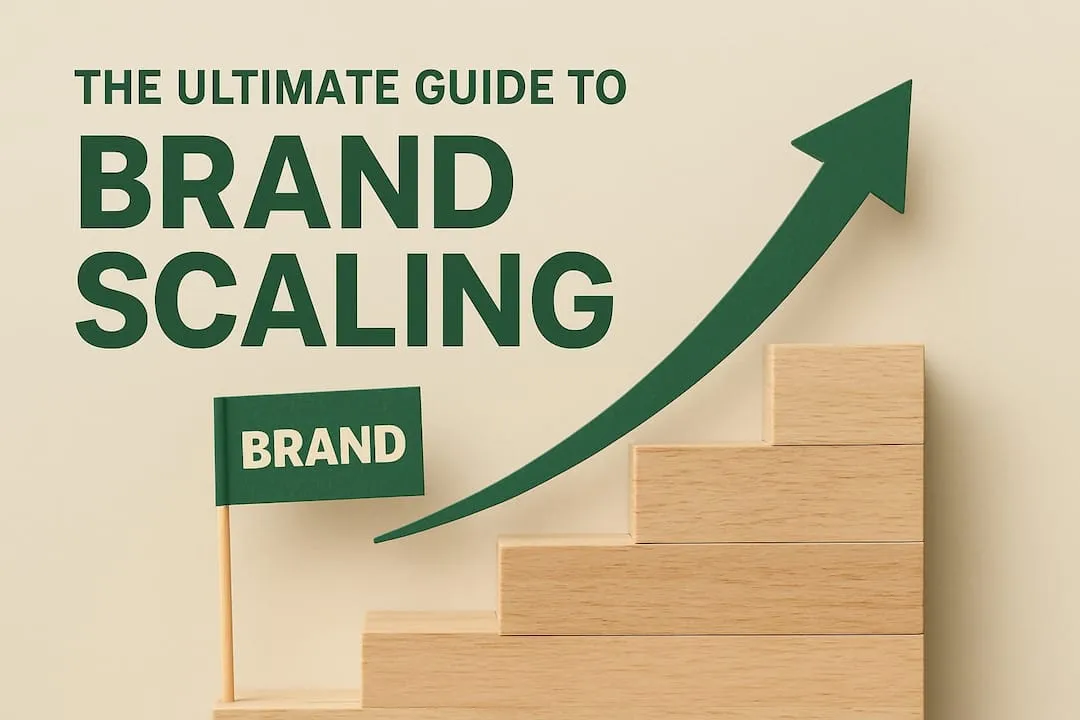
Most marketing directors running e-commerce brands have a paid ads budget dialed in with precision. Yet organic search drives 53% of all e-commerce traffic, which means more than half your potential customers arrive through channels that paid media alone cannot capture. Branded content is the engine behind that organic growth, but it remains chronically underfunded compared to performance advertising. This article breaks down what branded content actually is, what the data says about its revenue impact, how it stacks up against paid ads, and how to build a strategy that compounds in value every quarter.
Key Takeaways
PointDetailsOrganic traffic dominanceOver half of e-commerce traffic comes from organic, making branded content a core growth driver.Long-term brand trustBranded content outperforms ads for building trust and sustainable customer relationships.Strategic budget shiftsMore enterprise brands are increasing budgets for owned content, reflecting measurable ROI.Compounding content valueWell-executed branded content acts as a lasting asset, multiplying returns over time.
What is branded content and why does it matter?
Branded content is not a banner ad, a sponsored post, or an influencer unboxing video. It is original content that carries your brand’s voice, perspective, and values while delivering genuine value to your audience. Think in-depth buying guides, behind-the-scenes product stories, educational video series, and editorial blog content that earns attention rather than buying it.
Here’s where most directors get tripped up. They confuse branded content with:
Branded content is different because it centers your brand as the author of something genuinely useful or interesting. A customer who reads your guide on how to choose the right mattress for back pain remembers your brand long after the article ends. That is a fundamentally different relationship than someone who clicked an ad, bought once, and forgot your name.
“Branded content drives higher engagement and sales in e-commerce through SEO, trust-building, and organic traffic.”
This matters because trust is the actual currency of repeat purchase behavior. A shopper who trusts your brand’s expertise is far more likely to return, refer others, and resist switching to a competitor on price alone.
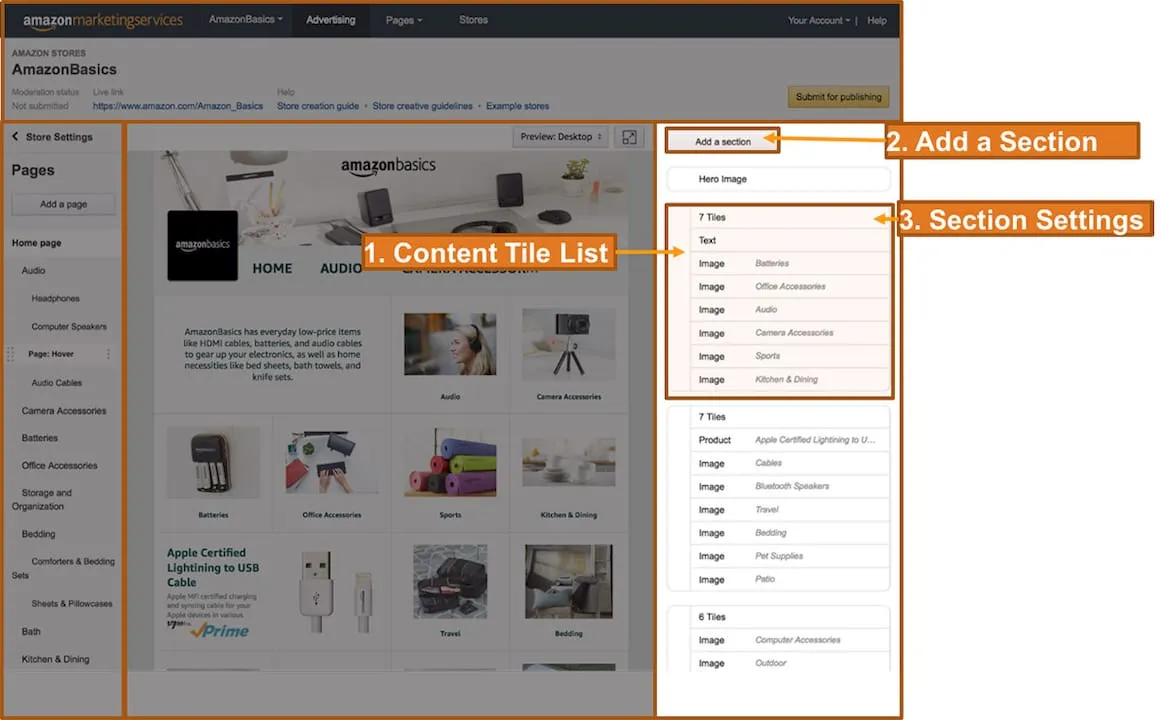
Authentic brand storytelling in ecommerce is what separates brands that grow sustainably from those that constantly fight for margin on paid channels. And when you explore the full spectrum of types of ecommerce content available, the range of branded formats is much wider than most teams currently use. Organic discovery through search is the long-term payoff. Every well-optimized content asset you publish works for you around the clock without ongoing media spend.
Business case: Revenue, engagement, and budget impact
Once you understand what branded content is, it’s time to examine its proven business value and shifting budget priorities.
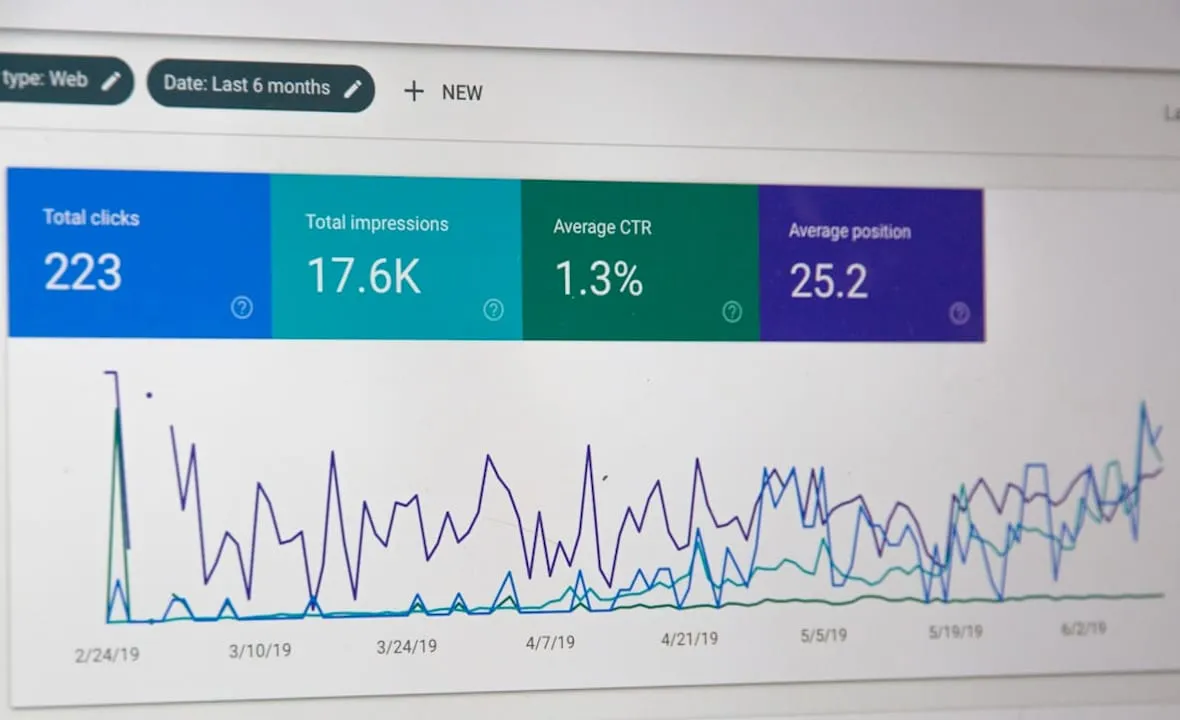
The numbers are hard to dismiss. Organic search accounts for 53% of e-commerce traffic, and email marketing returns $42 for every $1 spent. Both channels depend on branded content to perform. Without compelling, brand-consistent content, email click-through rates drop and organic rankings stagnate.
Enterprise brands are catching on fast. According to recent research, 68% rate their content marketing as effective, 61% have improved their strategies in the last year, and owned media budgets have grown by 32%. These are not vanity signals; they reflect a real reallocation away from rented media toward assets brands actually own.
Key performance benchmarks for branded content investment:
MetricPaid Media OnlyBranded Content AddedOrganic traffic shareLow (under 20%)High (40-60%+)Customer acquisition costRising annuallyDecreasing over timeEmail engagement rateIndustry avg ~21%Branded list avg ~35%Repeat purchase rateLowerSignificantly higher
The business case builds in four stages:
The role of social commerce is also expanding, and branded content feeds social algorithms better than promotional posts because it is designed to be engaging rather than transactional.
Statistic callout: Brands that invest consistently in owned content reduce customer acquisition costs by an estimated 30-50% over a three-year horizon compared to brands that rely primarily on paid channels.
Branded content vs performance advertising: A strategic comparison
Now that the business case is clear, a strategic comparison of branded content with performance advertising reveals where each approach fits.
Performance advertising is good at one thing: generating immediate, measurable response. A well-built Google Shopping campaign or Meta retargeting sequence can deliver ROAS between 2.6 and 4.1x in the short term. That is genuinely valuable for clearance events, product launches, or seasonal peaks. Nobody is saying cut your ad budget.
But the problem is that 93% of executives view long-term branding as essential to sustainable growth, yet most brands still allocate the majority of marketing budgets to performance. The result is a portfolio that generates short-term revenue while slowly eroding brand equity.
DimensionPerformance advertisingBranded contentTime to resultsDays to weeksMonths to yearsCost over timeIncreases with competitionDecreases as assets compoundCustomer relationshipTransactionalTrust-basedOrganic reachNoneGrows continuouslyFunnel fitBottom funnelFull funnelChannel dependencyPlatform-dependentOwned and portable
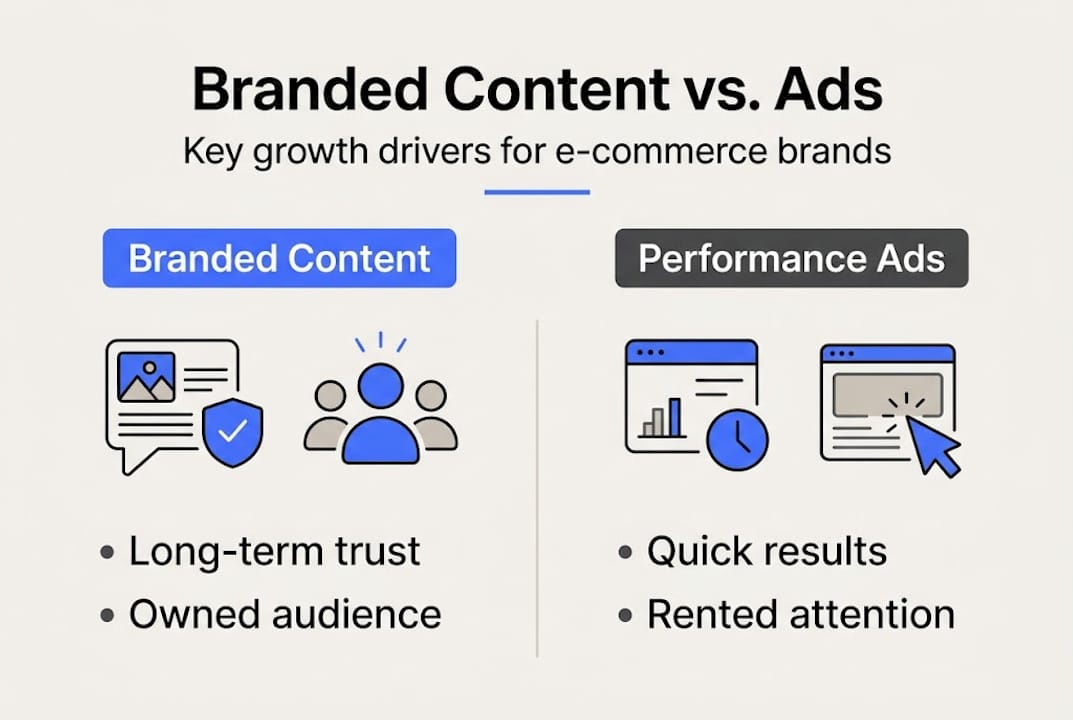
Performance ads are rented attention. The moment you stop paying, the traffic disappears. Branded content is owned attention. A guide published today can drive qualified traffic five years from now without a single additional dollar spent.
Pro Tip: Allocate at least 25-30% of your total marketing budget toward branded content. Use performance ads to amplify what content already proves is resonating, not to replace content’s role in building organic reach.
Smart brands use performance marketing for e-commerce to capture demand that branded content creates. This is a complementary relationship, not a competition. And data-driven advertising insights can tell you which content themes generate the highest-value customers, helping you invest more deliberately in what works.
How to build an effective branded content strategy
Understanding both sides, you’re ready to move from concepts to execution: here’s how to build an effective branded content strategy.
Most brands fail at branded content not because they lack ideas, but because they lack a repeatable system. Here’s the framework that drives compounding results:
Pro Tip: Ecommerce videography is one of the highest-impact branded content formats available right now. A well-produced product story video can lift conversion rates by 20-30% on listings and compound in value through organic video search.
Common pitfalls include publishing inconsistently, creating content that is too promotional, and failing to repurpose assets across formats. A single well-researched article can become a video script, an email series, a social carousel, and an FAQ section. That kind of leverage is where smart content strategy pays off.
The hidden value most brands overlook
Here’s the uncomfortable truth: most brands treat branded content like a campaign. They sprint for a quarter, see modest early results, and shift budget back to paid ads because the ROAS comparison looks unfavorable. This is exactly the wrong mental model.
Branded content is an asset, not an expense. Every piece of quality content you publish adds to a library of trust equity that compounds silently in the background. The brands that dominate organic search in 2026 started investing in content two or three years ago. The ones who keep waiting are handing that ground to competitors.
The deeper miss is in what traditional ROI models don’t capture. When a customer finds your brand through a trusted editorial piece, they arrive with a fundamentally different disposition than someone who clicked a retargeting ad. They are more loyal, more likely to refer others, and more resistant to competitive offers. That lifetime value delta rarely shows up in a 30-day ROAS report, but it is very real.
Building long-term brand trust through owned content is not soft strategy. It is the most defensible growth asset an e-commerce brand can build. And even large, sophisticated brands underestimate how deeply content for brand growth reshapes customer economics over time.
Commoditized content, generated just to fill a calendar, stunts this process. Authentic storytelling that reflects genuine brand values and customer understanding is what earns the trust that drives compounding returns.
Bring your brand strategy to life
Scaling branded content effectively requires more than a content calendar. It takes integrated creative production, SEO strategy, and distribution built around your specific brand and marketplace positioning.
Nectar’s brand growth services are designed to help mid-sized and enterprise e-commerce brands build content programs that actually compound in value. From in-house photography and videography to full-funnel strategy across Amazon growth optimization and Shopify solutions, Nectar brings the creative and analytical firepower to turn your brand’s story into a growth engine. If you’re ready to stop renting attention and start owning it, explore what a fully managed content and marketplace strategy looks like for your brand.
Frequently asked questions
How is branded content different from native advertising?
Branded content focuses on storytelling and delivering genuine value to readers, while native advertising appears as sponsored placements designed for direct response. Branded content builds trust and organic engagement over time, whereas ads are optimized for short-term clicks.
What ROI can e-commerce brands expect from branded content?
Results vary by channel and investment level, but email marketing returns $42 for every $1 spent when supported by strong branded content, and organic traffic compounds in value without ongoing media cost.
What channels work best for branded content distribution?
Owned blogs, email newsletters, social media, and on-site editorial experiences consistently generate the strongest long-term results. Owned media budgets have grown 32% at enterprise brands because these channels perform.
How much should enterprise brands invest in branded content?
Many enterprise brands now direct over 30% of budgets to owned content, a figure that reflects both its effectiveness and its strategic role in reducing paid media dependency.
Is branded content effective for short sales cycles?
Branded content strengthens trust and brand recall even in short purchase cycles, but it performs best when paired with performance ads that capture ready-to-buy demand. Performance ads offer quick ROAS while branded content builds the long-term trust that makes those ads more effective.
Recommended
.png)