{
"@type": "Article",
"image": {
"url": "https://csuxjmfbwmkxiegfpljm.supabase.co/storage/v1/object/public/blog-images/organization-10884/1776220923419_Woman-online-shopping-on-tablet-at-home.jpeg",
"@type": "ImageObject",
"caption": "Woman online shopping on tablet at home"
},
"author": {
"url": "https://thinknectar.com",
"name": "Thinknectar",
"@type": "Organization"
},
"@context": "https://schema.org",
"headline": "Shoppable media: driving e-commerce sales growth in 2026",
"publisher": {
"url": "https://thinknectar.com",
"name": "Thinknectar",
"@type": "Organization"
},
"inLanguage": "en-US",
"articleBody": "Learn how shoppable media compresses the purchase funnel and drives e-commerce sales across TikTok, Instagram, and CTV with strategies that actually convert.",
"description": "Learn how shoppable media compresses the purchase funnel and drives e-commerce sales across TikTok, Instagram, and CTV with strategies that actually convert.",
"datePublished": "2026-04-15T02:44:55.630Z"
}
Shoppable media: driving e-commerce sales growth in 2026
.webp)

TL;DR:
- Shoppable media enables seamless purchasing within digital content, shortening the purchase funnel and improving ROI.
- TikTok outperforms Instagram for impulse buys under $50, while Instagram suits higher-value purchases.
- Successful shoppable strategies require integrated content, accurate data, and close measurement to drive sales.
TikTok Shop US sales hit $15.82 billion in 2025, growing 108% year over year. That number alone should reframe how you think about social commerce. For too long, shoppable media has been treated as a supplementary channel, something to test when budgets allow. But brands that still hold that view are ceding real revenue to competitors who understand that shoppable media compresses the purchase funnel, shortens the path from discovery to checkout, and creates closed-loop measurement that traditional ads simply cannot match. This article breaks down what shoppable media actually is, which platforms perform best, how to build a strategy around it, and what risks to watch for.
Key Takeaways
| Point | Details |
|---|---|
| Shoppable media streamlines sales | Interactive content on platforms like TikTok, Instagram, and CTV allows for direct purchasing with fewer steps. |
| Platform selection matters | Matching your products and audience to the right shoppable channel boosts conversion and ROI. |
| Hybrid strategies drive growth | Combining social, CTV, and user-generated content multiplies impact and covers more of the sales funnel. |
| Measure with first-party data | Closed-loop attribution and robust first-party data are crucial to optimizing shoppable campaigns. |
| Balance opportunity with caution | Mitigate risks like pay-to-play bias and over-commercialization by focusing on authentic engagement and content integration. |
What is shoppable media and how does it work?
Shoppable media is interactive digital content that lets a consumer buy a product without leaving the platform where they discovered it. No redirects, no friction, no abandoned carts caused by extra steps. The entire transaction happens inside the content experience itself.
Shoppable media enables direct purchases within content, compressing the purchase funnel and allowing for closed-loop measurement. That last part matters enormously for marketing managers who need to prove ROI. When a shopper buys directly from a video or a livestream, you can tie that sale back to a specific piece of content, a specific audience segment, and a specific spend level.
The core mechanics that make this possible include:
- Embedded product links that appear inside videos, images, or live broadcasts
- Product tags on social posts that open a native checkout flow
- Payment integrations that store card details so checkout takes seconds
- Retail media overlays on Connected TV (CTV) that let viewers buy with a remote or a second-screen prompt
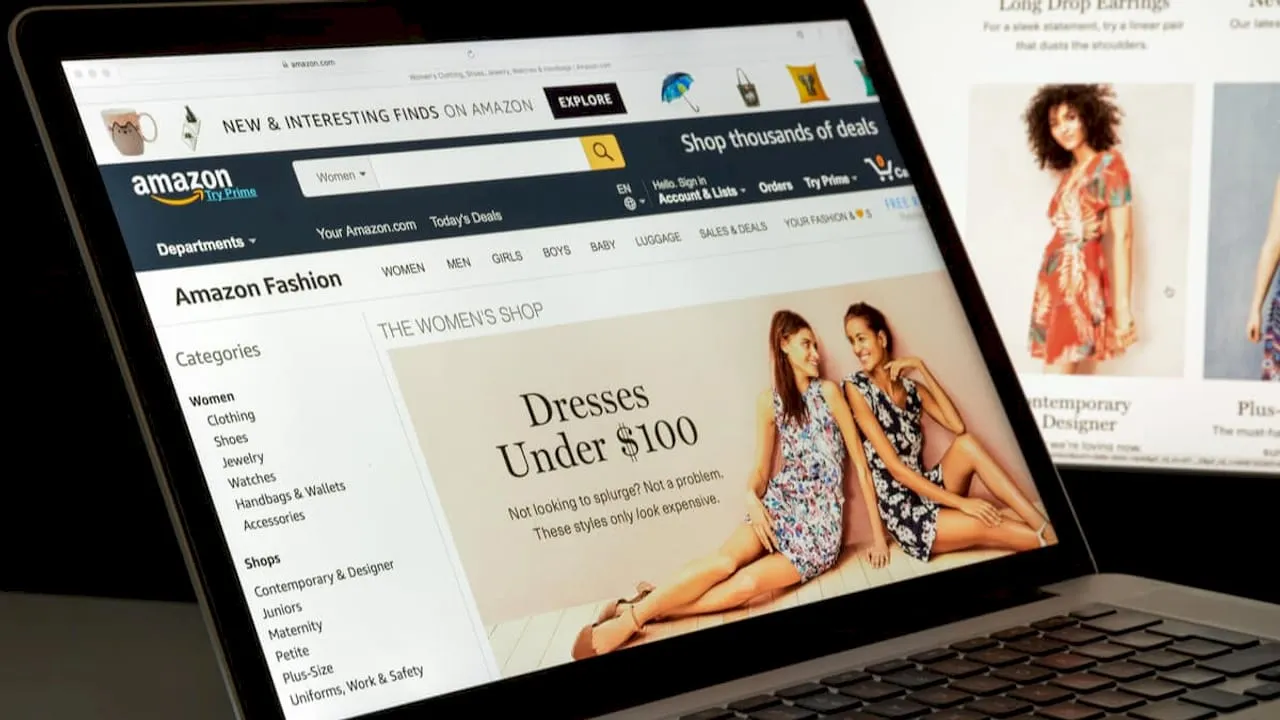
The key channels for shoppable media right now span social platforms like TikTok and Instagram, video-driven commerce through livestreams and short-form video, CTV placements, and retail media networks like Amazon and Walmart.
| Channel | Primary format | Checkout location |
|---|---|---|
| TikTok Shop | Short video, livestream | In-app native |
| Instagram Shopping | Feed, Reels, Stories | In-app native |
| Connected TV (CTV) | Streaming ad overlays | QR code or second screen |
| Retail media (Amazon/Walmart) | Sponsored content, video | On-platform checkout |
Each channel serves a different role in the funnel. Understanding that distinction is what separates brands that scale shoppable media from those that just experiment with it.
Platform breakdown: Comparing TikTok, Instagram, and CTV shoppable success
Not all shoppable platforms are equal, and the differences are significant enough to change your entire content and budget strategy. Let’s look at what the data actually shows.
TikTok Shop averages a 4.7% conversion rate, nearly double Instagram Shopping’s 2.3%. TikTok dominates for products priced under $50, where impulse buying is strongest. Instagram, by contrast, performs better for considered purchases above $100, where shoppers want to browse a brand’s aesthetic and feel confident before buying.

CTV shoppable ads tell a different story. CTV shoppable ads deliver 18% purchase rates among 18 to 34 year olds, with NBCUniversal benchmarks showing up to 73% higher conversion compared to standard video ads. The lean-back viewing environment, combined with high intent signals, makes CTV a powerful upper-funnel driver that closes faster than most marketers expect.
| Platform | Avg. conversion rate | Best for | Price range sweet spot |
|---|---|---|---|
| TikTok Shop | 4.7% | Impulse, discovery | Under $50 |
| Instagram Shopping | 2.3% | Considered, aspirational | Over $100 |
| CTV shoppable | Up to 18% (18-34) | Brand awareness to purchase | Broad |
Pro Tip: Don’t pick one platform and ignore the others. Use TikTok to drive volume on lower-priced SKUs, Instagram to build brand equity for premium lines, and CTV to reach audiences that are hard to find on social. These channels work better together than in isolation.
For brands exploring TikTok for e-commerce, the platform’s algorithm rewards authentic content over polished production, which actually lowers the creative barrier for testing. Meanwhile, social commerce strategies on Instagram benefit from strong visual identity and consistent posting cadence.
Maximizing shoppable media: Strategies for e-commerce brands
Knowing where each platform excels is only half the job. Here is how to build a shoppable media strategy that actually drives measurable sales lift.
- Start with platform-product fit. Match your product price point and category to the right channel before spending a dollar on content production.
- Map your conversion flow. Audit every step from content impression to completed purchase. Eliminate any friction point that requires the shopper to leave the platform.
- Build a UGC pipeline. User-generated content solves scale and resource gaps that high production costs create. Partner with micro-creators to generate a constant stream of authentic shoppable content.
- Layer in first-party data. Use your customer list and purchase history to build intent-based audiences on each platform. Retargeting warm audiences through shoppable formats consistently outperforms cold prospecting.
- Test hybrid campaigns. Run CTV to build awareness, then retarget those viewers with TikTok or Instagram shoppable ads. Full-funnel sequences like this reduce cost-per-acquisition significantly.
“The brands winning at shoppable media aren’t just running more ads. They’re building content ecosystems where every piece of content has a clear purchase path attached to it.”
38% of US ad buyers now prioritize shoppable advertising placements, which means competition for high-intent placements is rising fast. Waiting to build your shoppable infrastructure puts you behind brands that are already optimizing their second and third iterations.
The most common pitfall is prioritizing reach over intent. A million impressions on a shoppable post mean nothing if the audience has no purchase intent. For brands investing in DTC digital marketing, intent targeting and leveraging social commerce data together is what separates efficient spend from wasted budget.
Measurement, integration, and the future of shoppable media
Strategy without measurement is guesswork. Here is what to track and how to connect shoppable media to your broader retail data.
Key metrics every e-commerce marketing manager should monitor:
- Conversion rate per placement: Not just overall, but by content type, creator, and audience segment
- Engagement per impression: Are people pausing, tapping, or clicking? Low engagement signals a content problem, not a platform problem
- Closed-loop attribution: Link every sale back to its originating content piece using platform-native tracking plus your own first-party data layer
- Cost per acquired customer: Compare this across shoppable and non-shoppable placements to quantify the channel’s real value
Commerce conversions remain flat at 2 to 4% despite increasing spend, which highlights the critical need for commerce-grade placements near the actual point of sale rather than generic awareness inventory.
“The measurement gap is where most shoppable media investments lose credibility internally. If you can’t connect a shoppable impression to a sale, you can’t justify the budget next quarter.”
Looking ahead, AI, video-first formats, and cross-device privacy are the three forces reshaping shoppable media. AI will personalize product recommendations within content in real time. Video will remain the dominant format across every channel. And privacy-safe cross-device measurement will become the new standard as third-party cookies disappear entirely.
Brands investing in data-driven measurement now will have a structural advantage. Those already running Amazon full-funnel campaigns understand how closed-loop attribution works in practice, and that same discipline applies directly to shoppable social. A strong Amazon PPC strategy also provides a useful data foundation for identifying which product categories convert best, informing your shoppable social content priorities.
Risks, limitations, and how to navigate them
Shoppable media carries real risks that can erode both budget and brand trust if left unmanaged. Here is what to watch for and how to respond.
Commerce media risks distorting discovery, with 70% of search results now paid placements, which favors large brands with deep pockets and makes organic visibility harder for mid-sized players. This is a structural challenge, not just a tactical one.
The main risks to manage:
- Discovery distortion: Pay-to-play dynamics mean smaller brands must be smarter about targeting, not just louder about spending
- Over-saturation: Too many shoppable ads in a feed or stream trains audiences to ignore them, reducing effectiveness over time
- Technical complexity: Integrating product catalogs, payment systems, and inventory data across multiple platforms is genuinely hard
- Content cost creep: Maintaining a high volume of fresh shoppable content is expensive without a scalable production model
“CTV in particular requires restraint. Viewers tolerate interruptions for great content, not for poorly timed product overlays that break the viewing experience.”
Middleware solutions solve technical integration challenges by connecting your product catalog to multiple shoppable platforms without custom development for each one. On the content side, creating engaging video content through a UGC creator network keeps production costs manageable while maintaining the authenticity that shoppable audiences respond to.
For brands building on Shopify for shoppable experiences, the platform’s native integrations with TikTok and Instagram significantly reduce the technical lift required to get shoppable commerce running.
The real role of shoppable media—and what most brands overlook
Here is the uncomfortable truth we see repeatedly: brands launch shoppable media campaigns with real enthusiasm, then quietly deprioritize them when early results look flat. The problem is rarely the channel. It’s the absence of a connected strategy underneath it.
Shoppable media is not a standalone tactic. It is a surface layer that only performs well when it sits on top of strong product content, accurate inventory data, a clear brand narrative, and a measurement framework that can actually capture what’s happening. Brands that chase the newest platform feature without fixing those foundations will always underperform.
The other thing most brands miss is that beyond campaign metrics, shoppable media generates intent signals that are genuinely valuable for understanding your customer. Which products get tapped? Which creators drive purchases versus just views? That behavioral data should be feeding back into your product development and media planning, not sitting unused in a platform dashboard.
Success in shoppable media comes from treating it as an integrated system, not a campaign format.
How Nectar drives better outcomes with shoppable media
Shoppable media works best when creative, data, and distribution are aligned from the start. That alignment is exactly what Nectar builds for mid-sized and enterprise brands across Amazon, Walmart, and Shopify.
Nectar’s in-house creative team produces shoppable-ready video and photography built to perform on TikTok, Instagram, and CTV. The iDerive analytics platform connects impression data to actual sales, giving you the closed-loop attribution that justifies every dollar spent. From profitable brand growth planning to Shopify strategy execution and Amazon optimization, Nectar manages the full shoppable media stack so your team can focus on scaling what works.
Frequently asked questions
What makes shoppable media different from regular e-commerce ads?
Shoppable media lets consumers purchase directly from content without leaving the platform, eliminating the redirect friction that causes drop-off in traditional ad funnels. Standard e-commerce ads drive traffic to a website; shoppable media closes the sale inside the content itself.
Which shoppable platforms deliver the best e-commerce conversion rates?
TikTok’s 4.7% conversion rate makes it the strongest performer for impulse purchases under $50, while Instagram’s 2.3% rate reflects its strength with higher-value, considered buying decisions. CTV shoppable ads reach younger audiences with strong purchase intent at scale.
How can brands measure the impact of shoppable media?
Closed-loop attribution ties each sale back to the specific content piece and audience that drove it, using platform-native tracking plus first-party data for accuracy. Tracking conversion rate, engagement per impression, and cost per acquired customer together gives you a complete performance picture.
What are the biggest risks with shoppable media?
Commerce media distorts discovery by favoring brands with the largest paid budgets, making organic reach harder for mid-sized players. Over-commercializing content also risks training audiences to disengage, which reduces long-term platform effectiveness.
How can marketers scale shoppable content without excessive costs?
Middleware handles technical integration across platforms without custom development, while a structured UGC creator program keeps content volume high and production costs low. Authentic creator content also tends to outperform polished brand-produced video on TikTok and Instagram.
Recommended
.png)