Step by Step Amazon Ads Setup for Higher ROI Campaigns
.webp)
Every missed click or wasted ad dollar on Amazon feels like a lost opportunity for e-commerce teams under pressure to drive real sales. With competition among American brands as fierce as ever, campaigns built on guesswork can quickly eat into profits. By focusing on strong account readiness, precise targeting, and consistently high-quality creative assets, you can create a foundation for profitable ad campaigns that actually move the needle on revenue and ROI.
Quick Summary
Key InsightExplanation1. Ensure Account ReadinessReview product listings, inventory, and seller metrics before launching ads to maximize campaign success.2. Target Audience PreciselyDefine clear demographics and interests for your products to reduce wasted ad spend on unqualified clicks.3. Monitor Campaign PerformanceRegularly track key metrics like conversion rate and ACoS to optimize and adjust bids for better ROI.4. Optimize Ads CreativelyCreate high-quality images and compelling ad copy to boost conversion rates and maintain brand consistency.5. Continuously Refine StrategiesRegularly analyze performance data and adjust campaigns based on identified winners and underperformers.
Step 1: Assess Amazon Advertising Account Readiness
Before launching any campaigns, you need to determine whether your account is truly ready for advertising success. This step involves evaluating your product listings, inventory situation, and overall account health to avoid wasting budget on preventable issues.
Start by reviewing your product listing quality. Amazon’s algorithm rewards well-optimized listings with better visibility, so take time to examine your titles, bullet points, descriptions, and images. Poor-quality listings will drain your ad budget without converting clicks into sales.
Next, check your inventory levels for any items you plan to advertise. Running ads for products with low stock is a recipe for disappointment. You’ll drive traffic but lose potential sales when inventory runs out, which damages your conversion rate and wastes spend.
Examine your seller metrics and account standing. If your order defect rate is high, your return rate is elevated, or you have outstanding customer service issues, address these first. Amazon penalizes accounts with poor metrics, and no amount of advertising budget will overcome underlying account problems.
Verify your payment and shipping settings are correct. Confirm that your bank account is verified, your payment methods are active, and your shipping settings match your actual fulfillment capabilities. A suspended payment method will kill your campaigns mid-flight.
Consider your pricing strategy in relation to competitors. Run a quick competitive analysis to ensure your prices are in a reasonable range. If you’re significantly overpriced, ads will generate clicks but minimal conversions, destroying your ROI.
Review your business fundamentals by assessing factors like customer purchase behavior patterns and your current position in your category. Understanding where customers are in their buying journey helps you set realistic expectations for what advertising can achieve.
Create a simple checklist:
Inventory is stocked for at least the next 2-3 months
Once you’ve confirmed these basics are solid, your account is ready to move forward with confidence. Skipping this step often leads to campaigns that drain budget without delivering results.
Pro tip: Document your current metrics (conversion rate, average order value, return rate) before launching ads, so you can accurately measure advertising impact and calculate true ROI later.
Step 2: Configure Targeting and Budget Parameters
Now that your account is ready, it’s time to set up your targeting parameters and budget allocation. This step determines who sees your ads and how much you’re willing to spend to reach them, which directly impacts your campaign profitability.
Start by defining your target audience. Think about customer demographics, interests, and buying behaviors that align with your products. Are you targeting parents with young children, fitness enthusiasts, or budget-conscious shoppers? The more specific you are, the less wasted spend you’ll have on unqualified clicks.
Use Amazon’s built-in targeting options to narrow your reach. You can target by keywords, product categories, competitor products, or customer interests. Begin with keyword targeting for exact match and phrase match terms relevant to your products. This reduces spend on irrelevant searches.
Consider negative keywords to prevent your ads from showing on searches that won’t convert. If you sell premium dog food, exclude budget-related terms that indicate price-sensitive shoppers. This simple step saves thousands over time.
Now focus on your budget allocation strategy. Aligning budget with audience segmentation ensures you’re not overspending on low-performing segments or underfunding high-opportunity areas. Start with a modest daily budget you’re comfortable testing with, then scale based on performance.
Smart targeting combined with realistic budget limits is the foundation of profitable Amazon advertising.
Break down your budget across different campaign types:
Here’s a quick reference comparing Amazon advertising campaign types and their typical objectives:
Campaign TypeTypical GoalAudience ReachBudget Allocation (Suggested)AutoDiscover new keywordsBroad audience15-20%Exact MatchMaximize conversionHigh-intent shoppers50-60%Phrase MatchBalanced reach and relevanceRelevant but wider audience20-30%Product TargetingCompetitive targetingSpecific competitor products10-15%
Set your daily budget conservatively at first. If you have $100 daily to spend, don’t allocate it all to one campaign. Spread it across multiple campaigns so you can test what works without depleting your budget in hours.
Establish bid strategies aligned with your goals. If you’re launching a new product and need volume, bid more aggressively. If you’re optimizing an established listing for profitability, bid conservatively and focus on highly relevant keywords.
Review your bid amounts weekly. Too high and you’ll burn cash on expensive clicks. Too low and your ads won’t get impressions. Start at a moderate bid, then adjust based on your conversion rate and target ACoS (Advertising Cost of Sales).
Define your target ACoS before launching. If your product margin is 40%, aim for an ACoS of 20-25% to maintain healthy profitability. This becomes your benchmark for adjusting bids and pausing underperforming keywords.
Pro tip: Start with a tighter budget and narrower targeting, then expand once you find profitable keyword combinations, rather than launching with maximum spend across broad audiences.
Step 3: Build Creative Assets and Campaign Structure
Your targeting and budget are set. Now you need to create the actual ads and organize your campaigns strategically. This step separates mediocre campaigns from high-performing ones because creative quality and campaign organization directly influence conversion rates and profitability.

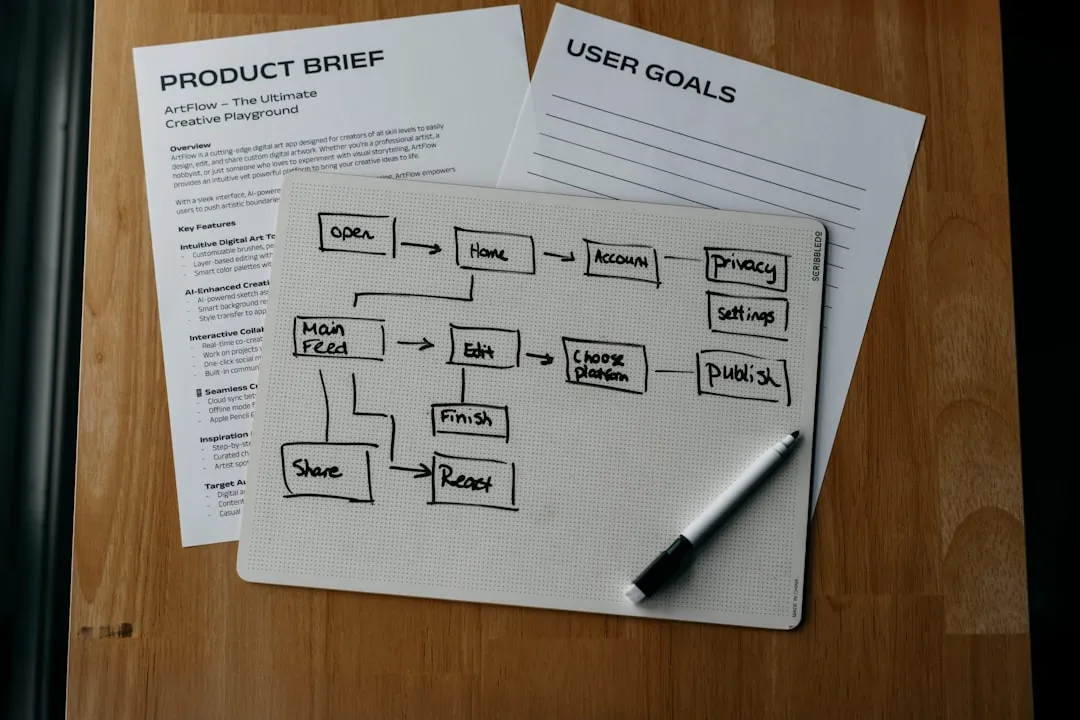
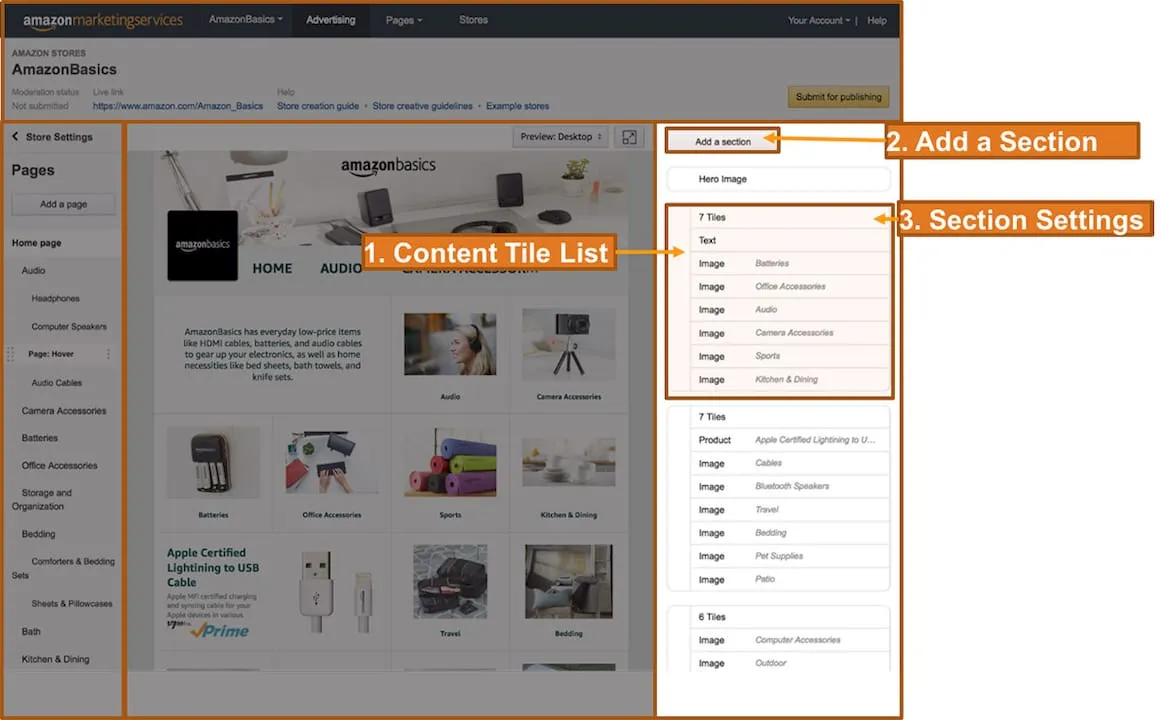
Start by understanding your campaign structure. Organize campaigns by product category, brand, or customer intent rather than throwing everything into one massive campaign. Separate campaigns let you control budgets, bids, and messaging for different audience segments.
Within each campaign, create ad groups around specific keyword themes. If you’re selling kitchen gadgets, create one ad group for blenders, another for food processors. This organization helps you write targeted ad copy that matches customer search intent.
Now focus on creative asset quality. Your product images are your primary creative in Amazon ads. Use high-resolution photos showing your product from multiple angles, in use, and with lifestyle context. Poor images kill conversion rates regardless of how well-targeted your ads are.
Consider crafting compelling ad copy that speaks directly to customer pain points and benefits. Instead of generic descriptions, highlight what makes your product different. If your dog treats are grain-free, lead with that benefit in your copy.
Strong creative assets combined with thoughtful campaign structure eliminate wasted spend on poorly organized campaigns.
Build your campaign hierarchy strategically:
Create multiple ad variations within each ad group. Test different headlines, descriptions, and feature focuses. Amazon will automatically show the highest-performing ads more often, so variation helps you discover what resonates with your audience.
Write benefit-driven headlines that solve customer problems. Instead of “Premium Dog Treats,” try “Grain-Free Dog Treats That Stop Digestive Issues.” Specificity drives clicks from qualified buyers.
Maintain brand consistency across all ads. Use the same tone, visual style, and core messaging. Customers should recognize your brand immediately whether they’re seeing ads on Amazon, social media, or search results.
Include social proof elements in your creative when possible. Mention awards, certifications, or user ratings. Third-party validation builds trust and increases conversion rates significantly.
Test your landing experience. When customers click your ad, they should land on a relevant product page with matching messaging. Misalignment between ad copy and landing page kills conversions.
Pro tip: Organize campaigns and ad groups using a consistent naming convention (like “Brand_Category_Audience”) from day one, so scaling and analyzing performance becomes exponentially easier as your account grows.
Step 4: Launch Campaigns and Monitor Performance
Your campaigns are built and ready. Now comes the critical phase: launching them live and tracking their performance meticulously. This step determines whether your setup translates into actual sales and profitable growth.
Before hitting launch, do a final quality check. Review your campaign settings, bid amounts, daily budgets, and targeting parameters one more time. A small error now can cost thousands in wasted spend before you catch it.
Start with a soft launch on a limited budget. Don’t deploy your entire monthly budget on day one. Launch with 25-30% of your planned spend, monitor results for 3-5 days, then scale up gradually as you validate performance.
Once live, focus on defining KPIs aligned with your marketing goals so you can measure success accurately. Your KPIs should include conversion rate, ACoS, return on ad spend (ROAS), and total sales attributed to advertising.
Launch campaigns conservatively, then scale aggressively once you prove profitability.
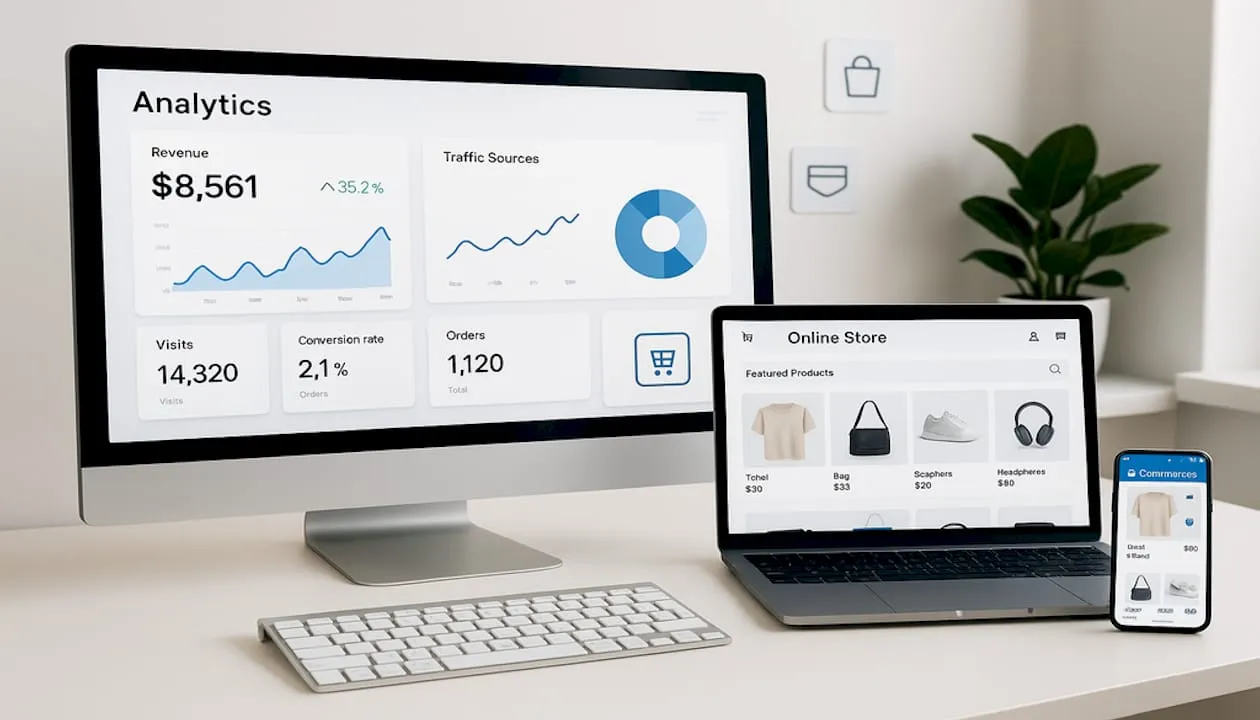
Set up your monitoring dashboard immediately. Check these metrics daily during the first two weeks:
To help you optimize campaign outcomes, here is a summary of key metrics and their business impact:
MetricWhat It MeasuresBusiness ImpactConversion RatePurchases per clickIndicates ad effectivenessACoSAd cost as sales percentShows profitability thresholdROASRevenue per ad dollarGauges return on investmentCTRClicks per impressionMeasures ad relevanceAverage Order ValueRevenue per transactionAffects total campaign profit
Monitor your keyword performance closely. Some keywords will convert at 15% while others sit at 2%. Identify your winners and losers within the first week so you can pause underperformers before they drain your budget.
Watch your bid adjustments carefully. If a keyword is getting zero impressions, it’s being outbid. If it’s getting tons of clicks but no conversions, your bid might be too aggressive. Make small adjustments (10-15%) every 2-3 days based on performance data.
Track daily spend velocity. If your daily budget is $100 but you’re only spending $40 per day, your bids might be too conservative or your targeting too narrow. Adjust accordingly.
Implement a continuous feedback loop by analyzing campaign data weekly and making tactical adjustments. Pause keywords with ACoS above your target, increase bids on high-performing keywords, and test new keyword variations based on search term reports.
Review your search term reports regularly. These show exactly what customers searched before clicking your ads. Use this insight to add high-performing terms as exact match keywords and add poor performers as negative keywords.
Set a review cadence of weekly for the first month, then bi-weekly once campaigns stabilize. Consistent monitoring catches problems early before they become expensive.
Pro tip: Export your campaign data to a spreadsheet weekly and calculate actual ROAS by product to identify which items are driving profitable sales versus which are just consuming budget without return.
Step 5: Verify Results and Optimize for Maximum ROI
Your campaigns have been running for several weeks. Now it’s time to analyze the data thoroughly and optimize aggressively. This step separates profitable campaigns from money-losing ones through rigorous measurement and continuous refinement.
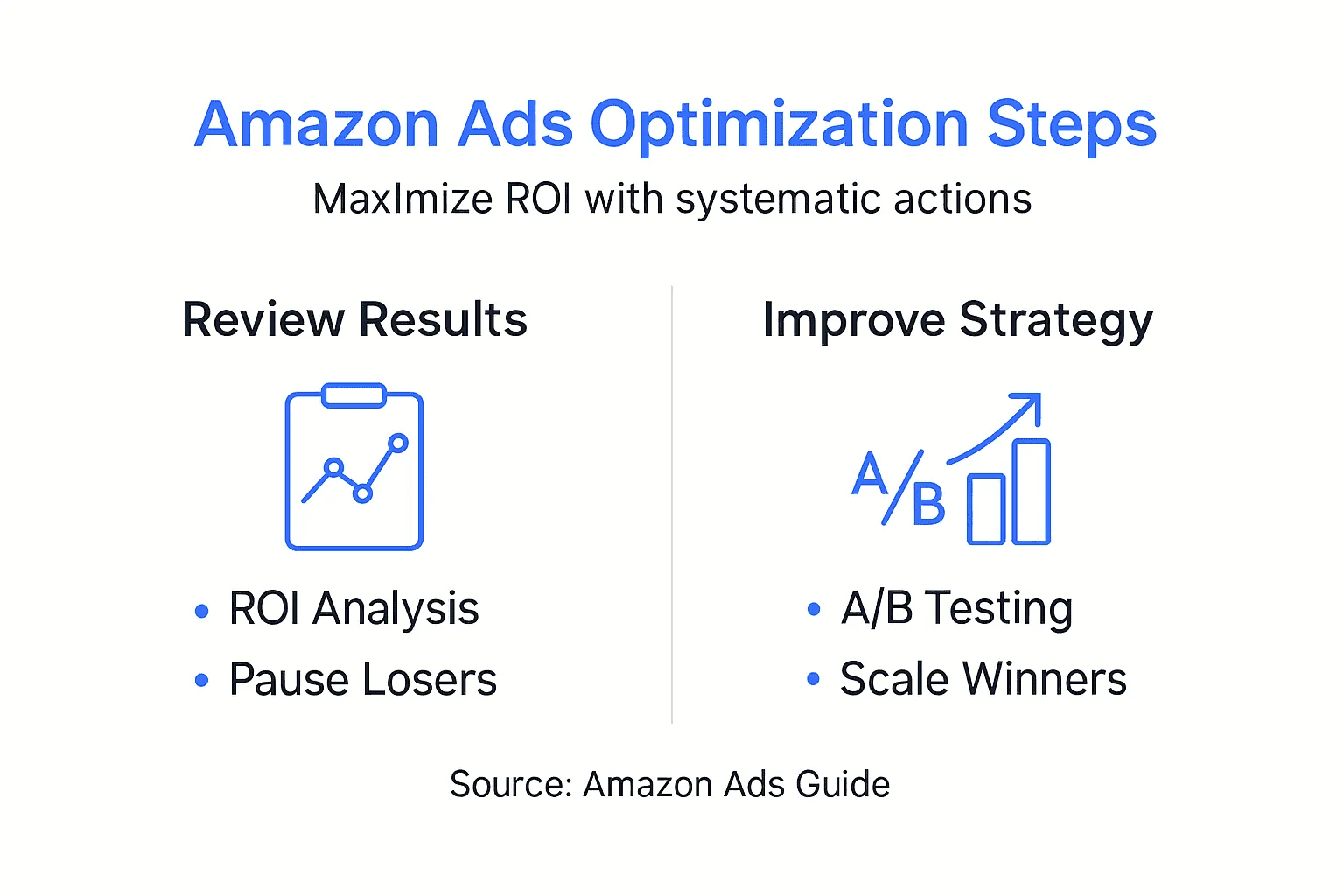
Start by calculating your actual ROI. Take total revenue generated from ads, subtract your advertising spend, then divide by advertising spend and multiply by 100. If you spent $5,000 and generated $20,000 in attributed sales, your ROI is 300%.
Compare your actual performance against targets. Did your campaigns hit your target ACoS? Are you achieving your desired ROAS? Where did reality diverge from your plan? Understanding these gaps helps you identify what’s working and what needs adjustment.
Use attribution modeling to understand which campaigns are driving actual revenue versus just getting clicks. Some keywords might have high volume but low conversion quality. Others convert well but cost too much per sale.
ROI optimization starts with honest data analysis and the willingness to pause what doesn’t work.
Analyze performance by segment:
Identify your winners and losers definitively. If a keyword has 50+ clicks and zero conversions, pause it. If a campaign consistently hits ROAS above 5X, increase its budget significantly. Make decisions based on statistically significant data, not hunches.
Implement aggressive optimization by pausing underperforming keywords and reallocating budget to winners. Test new keywords similar to your best performers. Increase bids on high-conversion keywords by 20-30% to capture more market share.
Run A/B tests on different elements systematically. Test new product images versus old ones. Test different ad copy variations. Test longer-tail keywords versus short-tail. Let one variable change at a time so you can measure what actually impacts results.
Adjust your bid strategy based on time of day and day of week data. If customers convert better on weekends, bid higher Friday through Sunday. If Tuesday mornings are slow, reduce bids then.
Review your negative keywords monthly. Add search terms that consistently don’t convert. Remove negative keywords that are accidentally blocking profitable searches. This ongoing refinement prevents wasted spend.
Scale your winning campaigns dramatically. If you’ve found campaigns with 4X ROAS, double their budget. If they maintain profitability at higher spend, double again. Profitable campaigns can often sustain much higher budgets.
Document your optimization decisions and their impact. Track what changes you made, when you made them, and how they affected performance. This creates institutional knowledge and helps predict future outcomes.
Pro tip: Create a monthly optimization checklist: review search term reports, pause bottom 20% of keywords by conversion rate, increase bids 15% on top 20%, test 3-5 new keyword variations, and reallocate 10% of budget from lowest-performing to highest-performing campaigns.
Unlock Your Amazon Ads Potential With Expert Support
Navigating the complex steps of Amazon ad setup can feel overwhelming especially when you need to balance optimized listings creative assets and targeted budget strategies to maximize ROI. This article highlights critical challenges like maintaining competitive pricing managing inventory quality organizing campaigns and analyzing detailed performance metrics — key pain points that many sellers face without expert guidance.
Partnering with Nectar means tapping into a fully managed e-commerce agency that blends high-impact creative services with advanced data-driven advertising techniques powered by the proprietary iDerive analytics platform. Whether you are struggling with launching structured campaigns improving conversion rates or scaling profitable keyword targeting Nectar’s team delivers granular insights and holistic Amazon ad management designed to transform your listings into high-converting storefronts.
Take control of your Amazon advertising journey today. See how Nectar’s proven approach can eliminate wasted spend and accelerate growth for your brand by visiting our website. Explore tailored solutions that align perfectly with the strategic steps outlined here at Nectar’s homepage and learn more about driving higher ROI campaigns on Amazon through expert service at Nectar’s main page.

Ready to boost your Amazon advertising results with a proven partner that understands every crucial detail from targeting to creative to measurement? Contact Nectar now for a full-service solution that helps you scale smarter faster and more profitably.
Frequently Asked Questions
How do I check if my Amazon Advertising account is ready for campaigns?
Before launching campaigns, evaluate your product listings, inventory levels, seller metrics, and account health. Ensure titles are optimized, inventory is stocked for 2-3 months, and your seller rating is above 4.5 stars for the best results.
What should I include in my budget allocation strategy for Amazon Ads?
Allocate your budget across different campaign types based on their goals. For example, dedicate 50-60% of your budget to exact match campaigns aimed at high-intent shoppers, and adjust according to performance metrics weekly.
How do I create effective ad groups for my Amazon Ads?
Organize your ad groups by specific keyword themes related to your products. If you’re advertising kitchen gadgets, separate your ad groups for blenders and food processors to craft more targeted and relevant ad copy.
What key performance indicators (KPIs) should I monitor after launching my campaigns?
Focus on tracking metrics like conversion rate, Advertising Cost of Sales (ACoS), and return on ad spend (ROAS). Set up a monitoring dashboard to check these metrics daily in the first two weeks to fine-tune performance.
How can I optimize my Amazon Ads for maximum return on investment?
Regularly analyze your campaign data to identify underperforming keywords and reallocating budget to your highest performers. For instance, pause keywords with high click rates but low conversions and increase bids on those with a positive return.
What steps should I take during the soft launch of my Amazon Ads campaign?
Start with a conservative budget, allocating only 25-30% of your planned monthly spend. Monitor campaign performance closely for the first few days to validate effectiveness before scaling up budget allocation.
.png)