{
"@type": "Article",
"image": {
"url": "https://csuxjmfbwmkxiegfpljm.supabase.co/storage/v1/object/public/blog-images/organization-10884/1774659991743_E-commerce-manager-updating-unified-brand-workflow.jpeg",
"@type": "ImageObject",
"caption": "E-commerce manager updating unified brand workflow"
},
"author": {
"url": "https://thinknectar.com",
"name": "Thinknectar",
"@type": "Organization"
},
"@context": "https://schema.org",
"headline": "Omnichannel strategy: 5 growth tactics for e-commerce brands",
"publisher": {
"url": "https://thinknectar.com",
"name": "Thinknectar",
"@type": "Organization"
},
"inLanguage": "en-US",
"articleBody": "Learn how omnichannel strategy differs from multichannel, what technologies you need, and how brands use it to drive measurable revenue growth across channels.",
"description": "Learn how omnichannel strategy differs from multichannel, what technologies you need, and how brands use it to drive measurable revenue growth across channels.",
"datePublished": "2026-03-28T01:06:44.193Z"
}
Omnichannel strategy: 5 growth tactics for e-commerce brands
.webp)

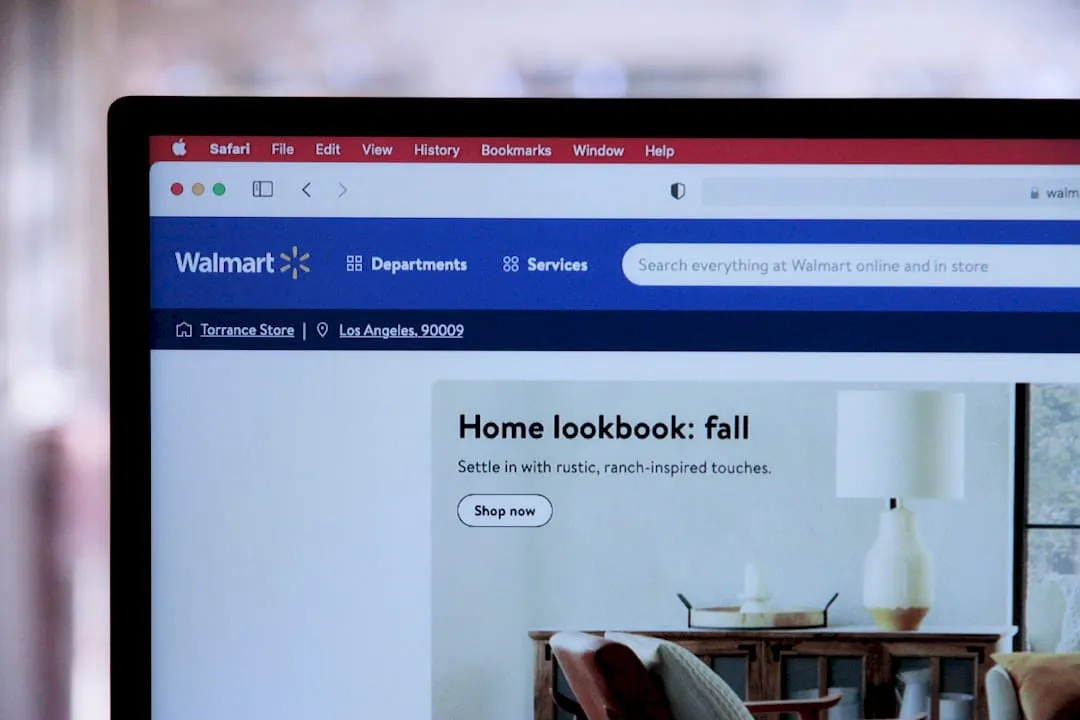
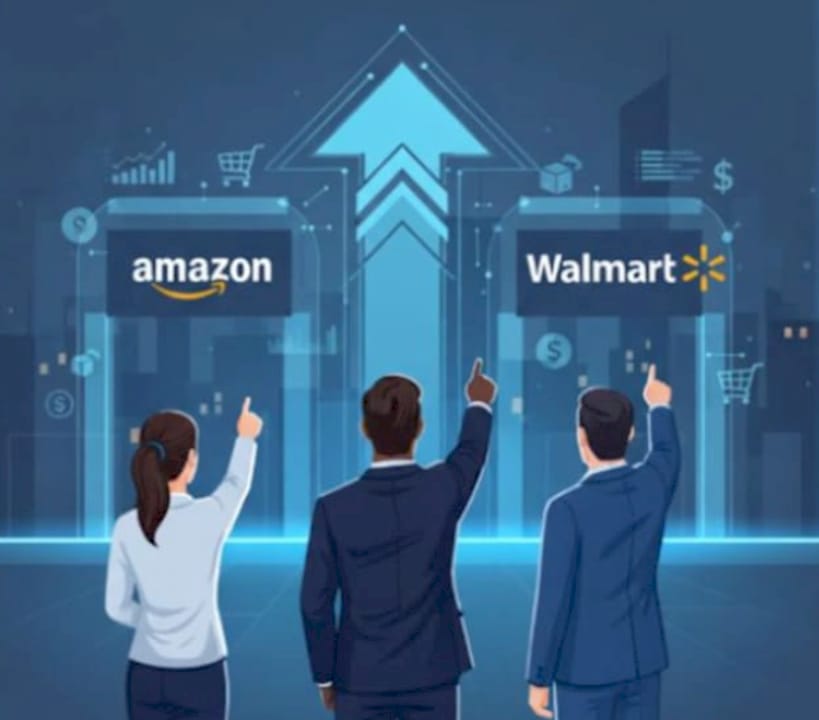
Most e-commerce brands believe that selling on Amazon, Walmart, and their own Shopify store simultaneously makes them omnichannel. It does not. Being present on multiple platforms is multichannel. Omnichannel is something fundamentally different, and the gap between the two approaches directly determines whether your brand builds loyal, high-lifetime-value customers or simply chases one-time transactions across scattered touchpoints. This guide breaks down exactly what omnichannel strategy means, what it requires technically and operationally, and how brands are using it to generate measurable revenue growth in 2026.
Key Takeaways
| Point | Details |
|---|---|
| True omnichannel is unified | An omnichannel strategy means seamless customer experience, not just presence on many sales channels. |
| Integrated tech is critical | Companies need unified data, inventory, and systems like OMS and CDP to deliver omnichannel excellence. |
| Growth is proven | Brands have achieved significant revenue and retention boosts with well-executed omnichannel strategies. |
| Stepwise implementation works | Rolling out omnichannel with a phased, data-first approach maximizes success and scalability. |
| Expert support accelerates results | Specialized guidance and case studies can fast-track omnichannel transformation for e-commerce brands. |
Clarifying omnichannel vs. multichannel strategy
With that misconception addressed, it is essential to see precisely how omnichannel diverges from familiar multichannel approaches.
Multichannel means your brand sells in several places. Each channel operates somewhat independently, with its own inventory logic, customer data, and support queue. You reach more people, but those people experience your brand differently depending on where they find you. That inconsistency is the core problem.
Omnichannel commerce means every touchpoint, whether it is a product listing on Amazon, a retargeting ad on social media, or a post-purchase email, connects to a single, unified customer experience. The customer feels like they are interacting with one brand, not several disconnected storefronts.
Here is a direct comparison to make this concrete:
| Dimension | Multichannel | Omnichannel |
|---|---|---|
| Primary goal | Reach and visibility | Retention and lifetime value |
| Data structure | Siloed per channel | Unified across all touchpoints |
| Inventory view | Channel-specific | Centralized, real-time |
| Customer experience | Inconsistent | Seamless and personalized |
| Technology focus | Channel tools | CDP and OMS integration |
The strategic implication is significant. As multichannel vs. omnichannel research confirms, multichannel is effective for quick reach, while omnichannel drives retention and lifetime value. The transition between the two typically requires a Customer Data Platform (CDP) to unify customer records and an Order Management System (OMS) to synchronize inventory and fulfillment.
For brands ready to move beyond basic channel expansion, our omnichannel ecommerce guide covers the full strategic picture in detail.
Key differences to internalize:
-
Multichannel prioritizes channel count; omnichannel prioritizes experience consistency
-
Multichannel data stays in silos; omnichannel data flows into a single customer profile
-
Multichannel is easier to launch; omnichannel is harder to build but far more profitable long-term
Core elements of an effective omnichannel strategy
Knowing the differences, let’s break down the essential components every successful omnichannel effort must include.
The foundation is unified data and inventory. Before you design a single customer journey, every product, every SKU, and every customer record needs to live in one place. Without this, you cannot deliver consistent pricing, accurate availability, or personalized recommendations across channels. This is not optional. It is the prerequisite for everything else.

Once your data is centralized, you design journeys across three phases: discovery, purchase, and support. According to the omnichannel strategy framework, effective implementation requires unifying data and inventory, designing these end-to-end journeys, orchestrating through an OMS, and making loyalty programs channel-agnostic. A customer who discovers your product on Instagram, researches it on your Shopify store, and buys it on Amazon should feel like that entire path was intentional and smooth.

Here is how the core components map to business outcomes:
| Component | What it does | Business impact |
|---|---|---|
| CDP | Unifies customer data across channels | Personalization and segmentation |
| OMS | Synchronizes inventory and fulfillment | Fewer stockouts, faster delivery |
| Channel-agnostic loyalty | Rewards customers regardless of where they buy | Higher repeat purchase rate |
| Unified support | Single view of customer history for agents | Lower resolution time, higher NPS |
| Payment unification | Consistent checkout experience everywhere | Reduced cart abandonment |
For payment unification specifically, these payment gateway tips are worth reviewing before you select your tech stack.
Building this infrastructure also requires your team to think differently about data-driven ecommerce and how analytics inform cross-channel decisions. Retention, in particular, depends on using that data to personalize post-purchase communication, which connects directly to ecommerce retention strategies that keep customers coming back.
Pro Tip: Do not add new sales channels until your data infrastructure is solid. Scaling channels on top of fragmented data amplifies inconsistency, it does not fix it.
How omnichannel drives measurable growth: Case studies and industry results
Equipped with the core elements, let’s see how these strategies translate to real business outcomes.
The numbers are hard to ignore. Pittarello, a European footwear retailer, achieved a 58% increase in online revenue after implementing an OMS-driven omnichannel strategy. That is not a marginal improvement. It is a structural shift in how the business generates revenue.
“Omnichannel is not a technology project. It is a customer experience project that happens to require technology.” This distinction matters because brands that treat omnichannel as an IT initiative often miss the customer-facing outcomes that actually drive growth.
The KPIs that improve most consistently across omnichannel retail examples include:
-
Revenue growth: Unified inventory and seamless checkout reduce friction and lost sales
-
Customer retention: Personalized, consistent experiences increase repeat purchase rates
-
Support cost reduction: A single customer view means faster resolution and fewer escalations
-
Net Promoter Score (NPS): Customers who feel recognized across channels rate brands significantly higher
-
Lifetime value (LTV): Loyalty programs that work across channels extend the customer relationship
Brands that win at omnichannel share a few common characteristics. They invest in data infrastructure before channel expansion. They treat loyalty as a cross-channel asset, not a single-platform perk. And they measure success at the customer level, not the channel level.
For a concrete example of what this transformation looks like in practice, our brand store transformation case study shows how a brand moved from a static catalog to a high-converting omnichannel storefront. The marketing strategies for ecommerce that support this kind of growth are also worth reviewing. And if Shopify is part of your stack, understanding why Shopify works for enterprise brands will help you position it correctly within your omnichannel architecture.
Implementing your omnichannel strategy: Step-by-step framework
To turn these results into reality, here is a proven framework you can apply in your own brand.
The implementation sequence that consistently produces results follows five steps. Each one builds on the last, so skipping ahead creates gaps that surface later as customer experience failures.
-
Centralize customer and product data. Audit every data source your brand uses, CRM, marketplace seller accounts, Shopify analytics, ad platforms, and consolidate them into a CDP. This is your single source of truth. Without it, personalization is guesswork.
-
Map end-to-end customer journeys for every channel. Document how a customer discovers, evaluates, purchases, and seeks support for your products on each platform. Identify the gaps where the experience breaks down or feels disconnected. These gaps are your highest-priority fixes.
-
Integrate and orchestrate your OMS and payment gateways. Your OMS needs to see all inventory in real time and route orders intelligently based on location, stock levels, and fulfillment speed. Consistent payment gateway integration across channels reduces checkout friction significantly. Proper inventory management for ecommerce is what makes this step work at scale.
-
Train teams and establish unified support processes. Your customer service team needs a single view of every customer interaction, regardless of which channel it originated from. This requires both technology and process change. Build playbooks that reflect the omnichannel experience you are promising customers.
-
Launch, monitor, and optimize cross-channel performance. Set KPIs at the customer level, not the channel level. Track retention rate, LTV, and NPS alongside channel-specific metrics. Use this data to continuously refine journeys and reallocate budget toward what works.
Pro Tip: Run a pilot on one customer segment or one product category before rolling out omnichannel changes brand-wide. A contained pilot surfaces integration issues without disrupting your entire operation.
The brands that execute this framework successfully are not necessarily the ones with the biggest budgets. They are the ones that sequence these steps correctly and resist the temptation to scale channels before the data foundation is ready.
Next steps: Embed omnichannel growth in your brand
You have learned the what and the how. Now here is how to take the next step on your omnichannel journey.
Building a true omnichannel operation requires expertise across data infrastructure, inventory orchestration, marketplace management, and customer experience design. Most mid-sized and enterprise brands have strong capabilities in some of these areas but gaps in others. Those gaps are where growth stalls.
Nectar works with brands at exactly this stage. Whether you need to expand your presence across Amazon, Walmart, and Shopify, or you need a partner to manage the full-funnel complexity that omnichannel demands, our brand growth services are built for this. Our marketplace expansion management solution gives you the operational infrastructure to scale across channels without sacrificing the consistency that makes omnichannel work. If you are ready to move from multichannel presence to genuine omnichannel growth, let’s talk.
Frequently asked questions
How is omnichannel different from multichannel in ecommerce?
Omnichannel delivers retention and lifetime value through a unified customer experience, while multichannel simply means selling in multiple places without connecting those experiences. The difference is integration, not channel count.
What technologies do I need for an omnichannel strategy?
A CDP and OMS are the two most critical platforms, enabling unified customer data and synchronized inventory across all touchpoints. Payment gateway integration rounds out the core tech stack.
What metrics improve most with omnichannel strategy?
Revenue, customer retention, and repeat purchase rate typically see the largest gains. Pittarello’s 58% online revenue increase after OMS implementation is one of the clearest documented examples of this impact.
How quickly can brands see results from omnichannel investments?
Brands with unified platforms and orchestrated processes often see measurable improvements within months of full data and inventory integration, especially in retention and support efficiency metrics.
Does omnichannel strategy work for both B2C and B2B?
Yes. The core principle, delivering a seamless, consistent customer experience across all touchpoints, applies equally in B2C and B2B environments where buyers interact across multiple channels before making a purchase decision.
Recommended






















































.webp)