Structuring Ecommerce Ad Budgets for Optimal Growth
.webp)

Allocating ad budgets often feels like a juggling act, especially when your brand relies on Amazon and Shopify for sales growth. Choosing the right channels and tracking performance matters because every dollar counts. By connecting your business objectives with customer behavior and using performance budgeting to guide your decisions, you create a strategy that aligns resources with results. This approach supports smarter spending and helps you make adjustments that drive measurable outcomes.
Quick Summary
Key InsightExplanation1. Define clear business goalsEstablish specific objectives to inform channel selection and strategy. Different goals require different advertising approaches.2. Allocate budget based on performanceMonitor and adjust your budget according to channel performance metrics like ROAS and CPA for optimal results.3. Develop targeted audience segmentsTailor ad messages to specific customer demographics and behaviors for improved relevance and conversion rates.4. Implement robust tracking systemsUse analytics to measure success. Focus on conversion rates and CPAs to understand campaign effectiveness.5. Continuously optimize advertising effortsRegularly assess campaign performance to adapt strategies and improve return on investment as conditions change.
Step 1: Assess business goals and ad channels
Before you spend a single dollar on ads, you need clarity on what you’re actually trying to achieve. This assessment phase determines everything that comes next—channel selection, budget allocation, and your entire ad strategy. Get this wrong, and you’re throwing money at platforms that don’t serve your business.
Start by defining your specific business objectives. Are you trying to drive immediate sales, build brand awareness, capture new customers, or increase customer lifetime value? These goals aren’t interchangeable, and they point you toward different channels.
Define your primary goal first. If you want quick sales from high-intent shoppers, Amazon and Shopify are your lanes. If you’re building awareness with cold audiences, other channels become relevant. The clearer your goal, the more precise your channel strategy becomes.
Next, understand your target customer. Who are they? Where do they shop online? What problem does your product solve for them? Market research helps identify target customers and competitive positioning, which directly informs where you should advertise. You can’t choose the right channels without knowing who you’re reaching.
Your business goals and customer behavior should align perfectly with your channel selection. If they don’t match, you’re fighting uphill.
Don’t assume every popular channel fits your business. Evaluate each potential channel against your actual goals and customer profile. A brand selling to price-sensitive bargain hunters plays a different game than a premium brand targeting affluent buyers. Each requires different platforms and different strategies.
Once you’ve mapped your goals to customer behaviors and potential channels, you’re ready to set your budget framework. This foundation prevents scattered spending and ensures every dollar works toward outcomes that actually matter to your business.
Here’s a quick comparison of major ad channels and their best-fit business goals:
ChannelIdeal Business GoalAudience CharacteristicsAmazonImmediate salesHigh-intent, product-focused buyersShopifyCustomer lifetime valueExisting/repeat customersFacebook AdsBrand awarenessBroad, cold audiencesGoogle AdsNew customer acquisitionSearching for solutions/productsInstagram AdsVisual product promotionYounger, trend-driven shoppers
Pro tip: Document your top three business goals and the single most important metric for each one—this becomes your north star for budget allocation and prevents drift as campaigns run.
Step 2: Allocate budget based on performance data
Once your campaigns are live, data starts telling you exactly where your money works hardest. This is where most brands miss the opportunity. They set a budget and leave it alone, hoping for the best. You’re going to do something smarter: let performance guide your allocation decisions.

Gather baseline performance metrics from your first 1-2 weeks of campaigns. You need to track conversion rates, cost per acquisition (CPA), return on ad spend (ROAS), and click-through rates across each channel and campaign. These numbers become your foundation for intelligent reallocation.
Performance budgeting means using performance information to guide budget decisions1/en/pdf), and this principle applies directly to your advertising strategy. Channels performing above your target metrics deserve increased investment. Underperformers need either optimization or reduction.
The best-performing channels often deserve 2-3x more budget than average channels. Data shows you where growth lives.
Many managers fear cutting budgets from struggling campaigns, but this is where you find efficiency. A campaign spending $2,000/month to generate $4,000 in revenue is stealing from a campaign generating $12,000 in revenue from $2,000 spend. Your job is recognizing this and moving money where it actually returns value.
Reallocation isn’t a one-time event. This becomes your monthly or even weekly habit. As seasons change, products shift, and markets evolve, your budget allocation should flex with actual performance, not assumptions.
Pro tip: Create a simple spreadsheet tracking each channel’s performance metrics weekly, then color-code performers (green), underperformers (red), and borderline (yellow) to make reallocation decisions instantly.
Step 3: Implement creative and targeting strategies
Your budget only matters if the ads themselves work. Two brands can spend identical amounts and see completely different results based on their creative quality and targeting precision. This step is where you transform budget allocation into actual revenue.
Start by building audience segments based on your customer data. Who are your best customers? What demographics do they share? What problems do they have? Targeted advertising utilizes demographic data to reach specific audience segments, and this directly impacts your ad relevance and conversion rates. The more specific your targeting, the fewer wasted impressions you pay for.
Next, develop creative variations for each audience segment. A repeat customer needs a different message than someone seeing your brand for the first time. Cold audiences respond to benefit-driven creative. High-intent shoppers want proof points and social proof.
Quality creative directly impacts your campaign performance and justifies your budget investment. Test at least 3-5 creative variations per segment to find what resonates. This means different headlines, images, videos, or angles for different people.
The best creative for your audience won’t resonate with everyone. That’s okay. You’re optimizing for customers who actually convert, not vanity metrics.
Many managers confuse “creative they like” with “creative that sells.” Your job is finding which ads generate revenue, not which ones win design awards. Test ruthlessly, measure honestly, and allocate budget toward the creative that actually moves customers to purchase.
Pro tip: Build a creative calendar tracking test start dates, variations, and results so you can identify patterns in what works across seasons and product types.
Step 4: Track results with analytics platforms
Without proper tracking, you’re flying blind. You can’t optimize what you can’t measure, and you can’t make smart budget decisions without data. This step connects your spending to actual business outcomes through analytics.
Start by setting up conversion tracking across all your ad channels. You need to know exactly which ads led to purchases, not just clicks or impressions. Google Analytics tracks website traffic and user engagement metrics that show you the full customer journey from ad click to purchase.
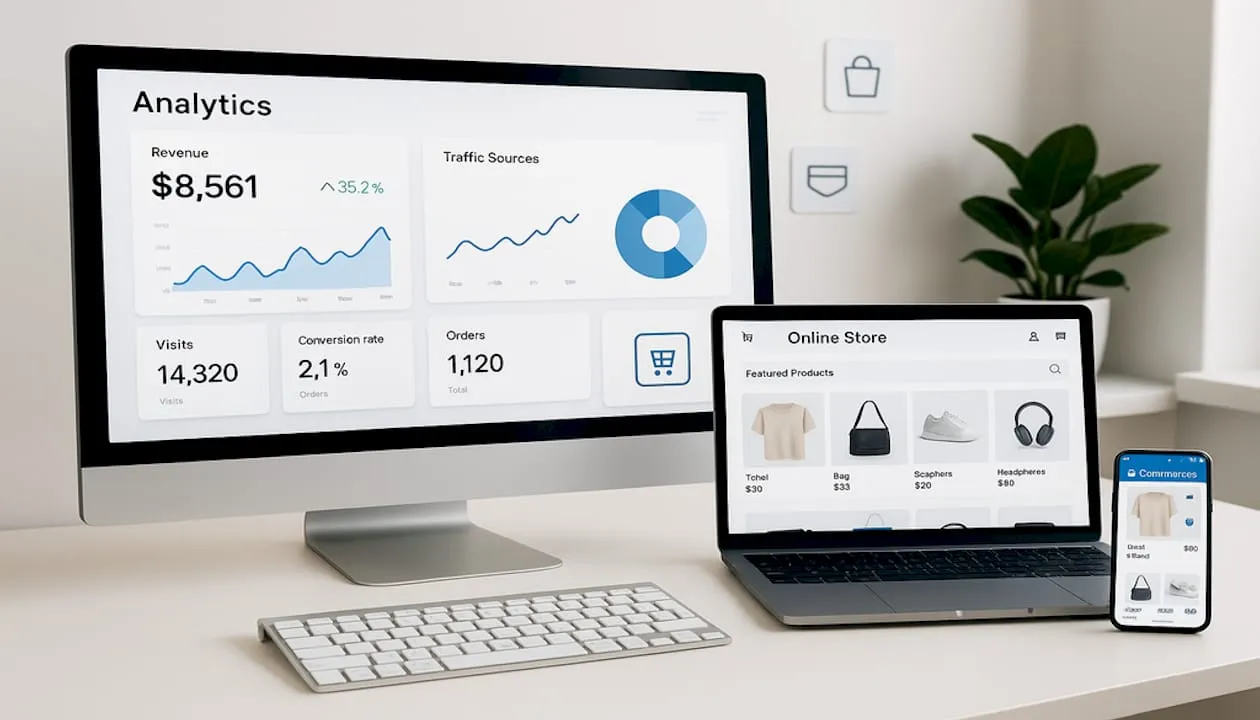
Set up channel-specific dashboards so you can see performance at a glance. Amazon has its own reporting. Shopify has native analytics. Facebook and Google have conversion tracking pixels. Each platform shows different data, so don’t rely on just one view of your performance.
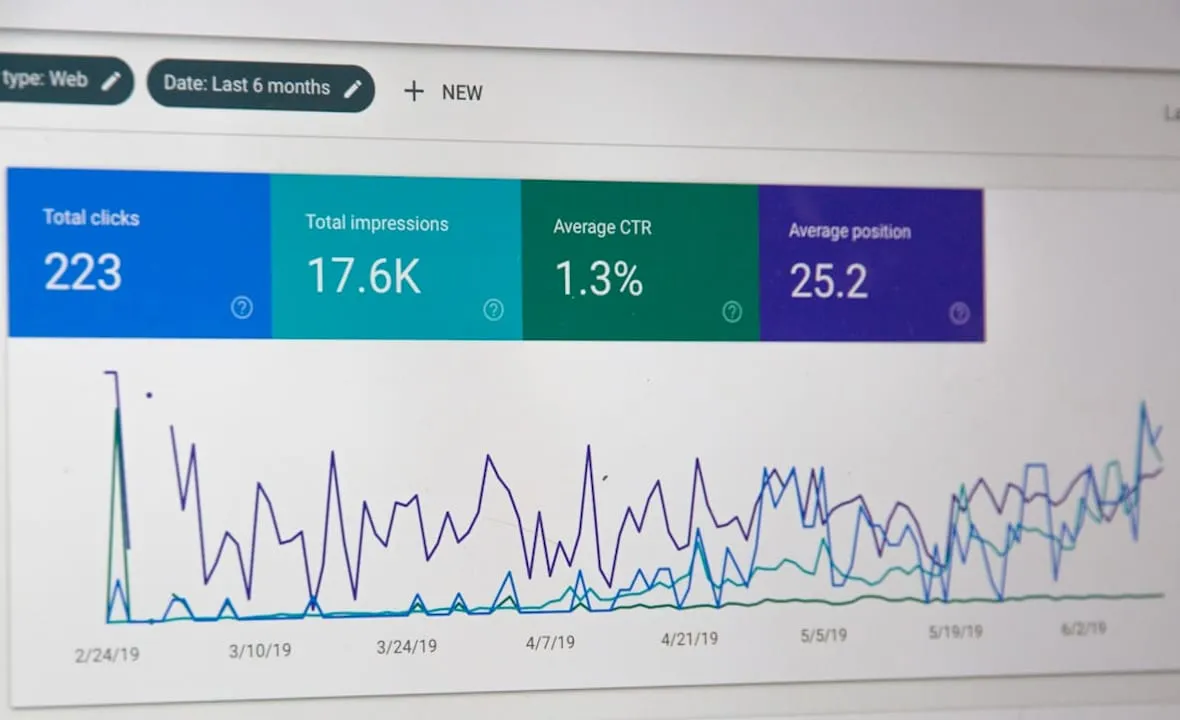
The real power comes from using analytics to identify trends and support decision-making. You’re looking for patterns, not just daily fluctuations. A campaign might have a slow Monday but strong weekend performance. Track weekly and monthly trends to spot real patterns.
Numbers don’t lie. If an ad channel isn’t delivering your target metrics, the data will show it clearly. Trust the data, not your gut.
Many managers get overwhelmed by analytics dashboards. You don’t need every metric. Pick 3-5 key metrics that align with your business goals and watch those obsessively. Everything else is noise.
To help guide ongoing optimization, here’s a summary of key analytics metrics and their business impact:
MetricWhat It MeasuresBusiness ImpactConversion RatePercentage of visitors who purchaseReveals ad and site effectivenessCost per AcquisitionSpend per new customerTracks profitabilityReturn on Ad SpendRevenue per dollar spentEvaluates channel efficiencyAverage Order ValueTypical transaction sizeIndicates upsell/cross-sellCustomer Lifetime ValueTotal value over timeGuides long-term strategy
Pro tip: Create a weekly performance report template with your key metrics, then schedule 15 minutes every Monday morning to review results and flag anything requiring budget adjustments.
Step 5: Verify budget effectiveness and optimize
You’ve been running campaigns for weeks. Now comes the critical moment: determining whether your budget is actually working. This verification step separates successful brands from those throwing money at ads without real impact.
Calculate your return on investment (ROI) first. Take total revenue from ads minus total ad spend, then divide by total ad spend. If you spent $10,000 and generated $40,000 in revenue, your ROI is 300%. This number matters more than any vanity metric.

Compare your actual results against your original targets. Did you hit your cost per acquisition goal? Is your return on ad spend meeting expectations? Are you acquiring customers at a price that allows for profit? If the answer to any of these is no, you have optimization work to do.
Verifying effectiveness means focusing investments on data-related activities that improve efficiency and outcomes. This isn’t about gut feelings or campaign performance that “looks good.” It’s about quantified results tied to your business goals.
Next, optimize underperforming areas with precision. If your conversion rate is too high but CPA is too low, you might have bid optimization issues. If your CPA is perfect but you’re not getting enough volume, you need more budget or expanded audiences. Different problems need different solutions.
Optimization is continuous. What works today might need tweaking next month as market conditions shift and customer behavior evolves.
Many managers treat optimization as a one-time event. The most successful brands treat it as an ongoing process. Small improvements compound. A 10% improvement in conversion rate this month plus a 15% improvement in ad relevance next month creates momentum.
Pro tip: Set a monthly optimization meeting where you review the previous month’s performance against targets, identify the top 3 underperforming areas, and assign specific tests for the upcoming month.
Optimize Your Ecommerce Ad Budget with Expert Support
The challenge of structuring ecommerce ad budgets to align with clear business goals and data-driven performance can quickly become overwhelming. This article highlights crucial pain points such as aligning budget allocation with metrics like CPA and ROAS, crafting targeted creative strategies, and continuously optimizing based on granular analytics. If you find yourself questioning whether your ad spend truly delivers measurable growth or if your campaigns lack the precise insights needed to scale smarter, you are not alone.
Nectar specializes in transforming these challenges into growth opportunities. By combining high-impact creative services including in-house photography and videography with sophisticated advertising strategies driven by our proprietary iDerive analytics platform, we provide mid-sized to enterprise brands with the tools to turn underperforming campaigns into high-converting storefronts across Amazon, Walmart, and Shopify. Don’t let your budget float aimlessly in unmeasured channels. Take control with Nectar’s full-funnel management solutions that ensure every advertising dollar directly contributes to your business goals and measurable ROI.

Ready to put your ecommerce ad budget to work where it matters most? Discover how Nectar’s data-driven approach can help you optimize performance, amplify conversions, and maximize growth. Visit Nectar today to get started and experience the power of precision marketing tailored to your brand’s unique goals.
Frequently Asked Questions
How do I assess my business goals when structuring an ecommerce ad budget?
Start by clearly defining specific objectives, such as driving sales, building brand awareness, or acquiring new customers. Document your top three goals and the most important metric for each, so you can effectively align your budget with your priorities.
What factors should I consider when selecting ad channels for my ecommerce budget?
Evaluate factors like sales velocity requirements, customer acquisition cost tolerance, audience behavior, budget size, and product type. Ensure that your selected channels match both your business goals and customer profiles to maximize ad effectiveness.
How can I use performance data to allocate my ecommerce ad budget?
After campaigns launch, gather baseline performance metrics such as conversion rates and return on ad spend. Based on this data, reallocate 10-20% of your budget from underperforming campaigns to top performers to optimize overall ad efficiency.
What types of audience segments should I create for my ecommerce ads?
Develop audience segments such as high-intent shoppers, cart abandoners, and repeat customers to tailor your messaging. Create variations of your ads for each segment and track performance to improve conversion rates and reduce wasted impressions.
What key metrics should I track to measure my ecommerce ad budget effectiveness?
Focus on metrics including conversion rate, cost per acquisition, return on ad spend, and customer lifetime value. Regularly review these metrics to identify trends and make data-driven decisions for budget adjustments and optimization strategies.
How often should I optimize my ecommerce ad campaigns?
Make optimization a continuous process by tracking performance weekly or monthly. Regularly audit underperforming areas and assign specific tests to improve these campaigns to ensure sustained growth and efficiency in your ad spending.
.png)