{
"@type": "Article",
"image": {
"url": "https://csuxjmfbwmkxiegfpljm.supabase.co/storage/v1/object/public/blog-images/organization-10884/1776656084342_Marketing-manager-reviewing-ad-creatives-audit.jpeg",
"@type": "ImageObject",
"caption": "Marketing manager reviewing ad creatives audit"
},
"author": {
"url": "https://thinknectar.com",
"name": "Thinknectar",
"@type": "Organization"
},
"@context": "https://schema.org",
"headline": "Optimize ad creatives for higher ROI: e-commerce guide",
"publisher": {
"url": "https://thinknectar.com",
"name": "Thinknectar",
"@type": "Organization"
},
"inLanguage": "en-US",
"articleBody": "Learn how to optimize ad creatives across Amazon, Walmart, and Shopify for higher ROAS, stronger CTR, and better conversion rates with this platform-specific guide.",
"description": "Learn how to optimize ad creatives across Amazon, Walmart, and Shopify for higher ROAS, stronger CTR, and better conversion rates with this platform-specific guide.",
"datePublished": "2026-04-20T03:40:39.560Z"
}
Optimize ad creatives for higher ROI: e-commerce guide
.webp)

TL;DR:
Optimized ad creatives significantly increase return on ad spend across platforms.
Conduct data-driven audits and build platform-native, targeted creatives for better performance.
Continuous testing and understanding customer insights are key to creative excellence and ROI growth.
Most e-commerce marketing managers are sitting on a budget leak they cannot see. Ad spend flows out, impressions stack up, but conversions stay flat because the creatives themselves are doing the heavy lifting wrong. Optimized ad creative is not a design preference. It is a measurable revenue lever. Sponsored Brands on Amazon delivered 19% higher ROAS than Sponsored Products during Cyber 5 2025, and that gap did not come from bigger budgets. It came from smarter creative decisions. This guide walks you through every step, from auditing what you already have to building platform-native assets, running tests, and fixing the mistakes that silently drain ROI across Amazon, Walmart, and Shopify.
Key Takeaways
| Point | Details |
|---|---|
| Audit before optimizing | Regularly assess current ad creatives and set clear, measurable goals for each platform. |
| Tailor for each marketplace | Design assets that meet the unique specs and best practices of Amazon, Walmart, and Shopify to boost engagement and ROI. |
| Test and iterate constantly | Use data-driven testing and rapid iteration to refine creatives for peak performance. |
| Avoid common pitfalls | Sidestep typical mistakes by focusing on clarity, brand fit, and platform native formats. |
| Invest in brand story | Go beyond surface tweaks with creative ideas that resonate deeply with your target audience. |
Assess your creative assets and set clear objectives
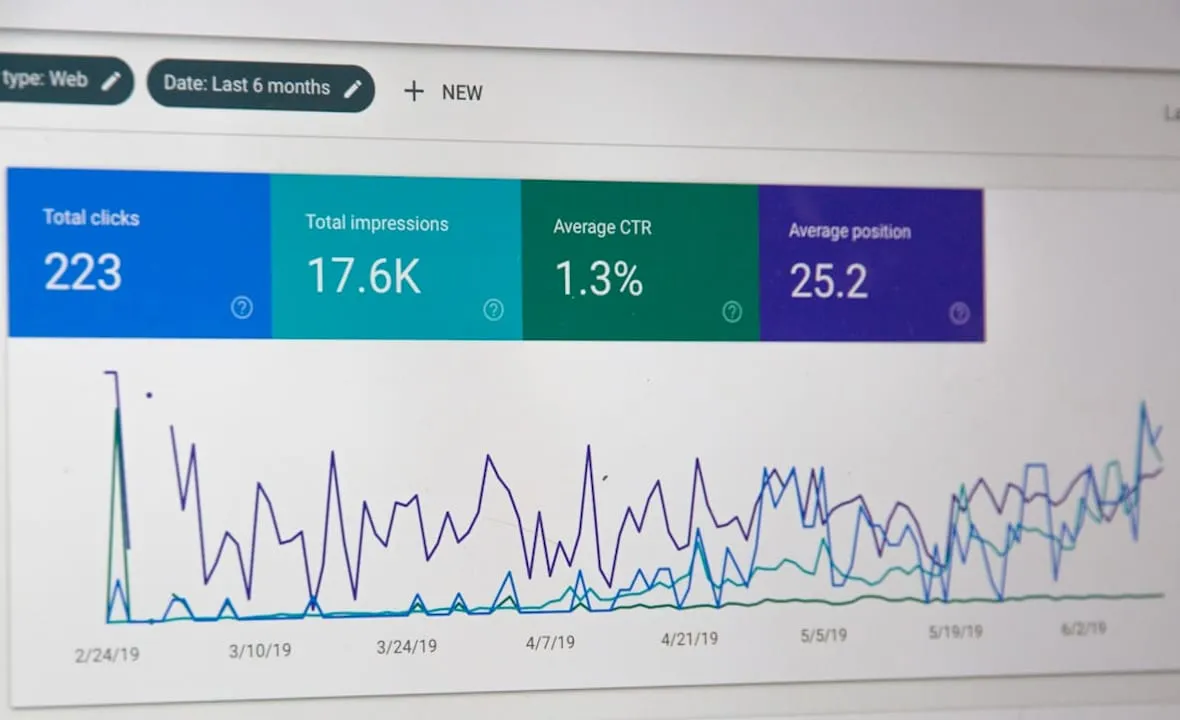
Before you can fix anything, you need a clear picture of what is actually underperforming. A creative audit is not about taste. It is about data. Pull performance reports from each platform and sort your creatives by three core metrics: ROAS (Return on Ad Spend), CTR (click-through rate), and conversion rate. These three numbers tell you whether your creative is winning attention, earning clicks, and actually closing sales.
Start by listing every active ad format across Amazon, Walmart, and Shopify. Sponsored Products, Sponsored Brands, display banners, video ads, and carousel units all need to be reviewed separately. Flag any creative with a CTR below your category benchmark or a conversion rate that has dropped more than 10% in the past 60 days. These are your first targets.
Platform differences matter more than most managers expect. Amazon shoppers are in hunt mode, searching with intent. Walmart shoppers skew value-conscious and respond strongly to price framing. Shopify audiences are often reached at the top of the funnel through social retargeting, making brand storytelling more important. Your creative objectives need to reflect those differences, not be copy-pasted across all three.
| Platform | Primary format | Key spec | Creative goal |
|---|---|---|---|
| Amazon | Sponsored Brands / video | 1200x628px, MP4 under 500MB | Drive consideration and click-through |
| Walmart | Display and search banners | 970x250px, 300x250px | Emphasize value and availability |
| Shopify | Dynamic ads, carousels | 1:1 or 4:5 ratio for social | Build brand awareness and retarget |
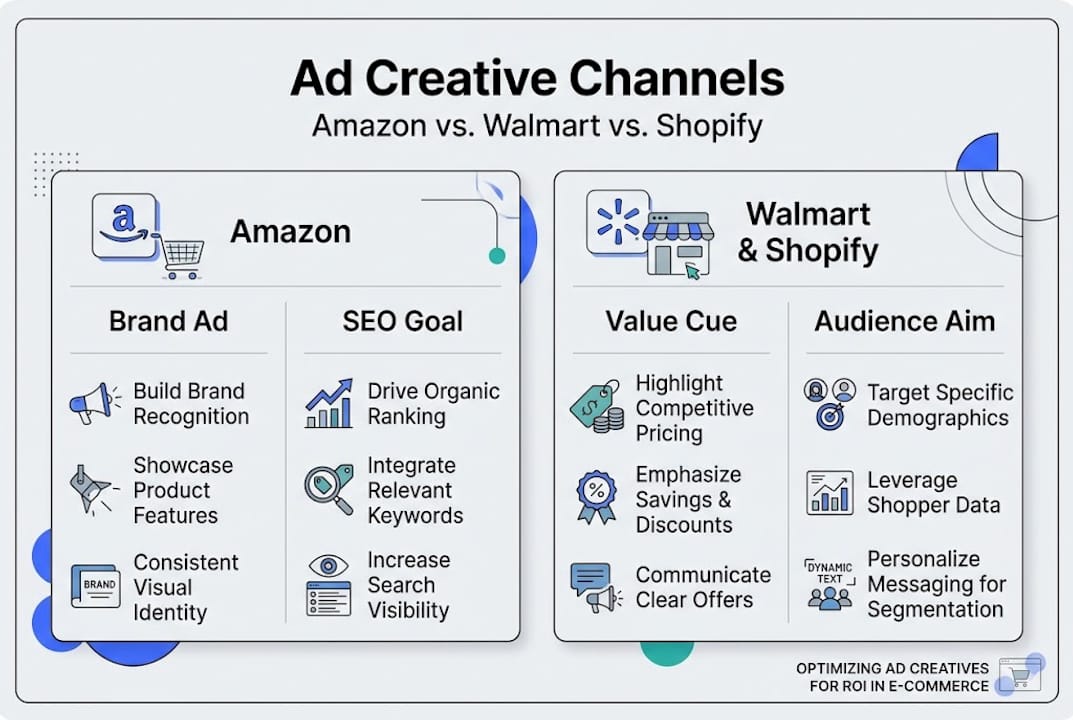
Aligning creative goals to Amazon SEO for visibility is a smart parallel move. Strong organic visibility and paid creative reinforce each other. Similarly, setting up a clean Shopify advertising workflow before launching new creative tests saves time and reduces wasted spend.
Pro Tip: Use each platform’s native analytics dashboard to sort creatives by lowest CTR before you greenlight any new production. Knowing which assets are already failing saves you from scaling the wrong message.
Design and build platform-specific ad creatives
Once your audit is complete and your goals are set, the real build begins. Generic creatives that run across all platforms without adaptation are one of the most common sources of wasted ad spend. Platform-native design is not optional. It is the baseline.

For Amazon, high-res lifestyle images and prominent logos drive up to 20% higher engagement, and benefit-focused headlines outperform feature lists consistently. Amazon shoppers are comparing products at speed. Your creative needs to answer their core question in under two seconds: why this product over every other option on the page?
For Walmart, lean into price anchoring and availability signals. Walmart’s shopper base responds to clear value cues. Clean backgrounds, legible pricing callouts, and recognizable brand marks outperform busy lifestyle scenes in most categories.
For Shopify, dynamic ads built using Shopify Audiences let you serve hyper-relevant creative to audiences segmented by purchase behavior. The Shopify store optimization layer matters here too because landing page quality directly affects conversion from paid creative.
Here is a practical sequence for reworking existing creatives:
-
Pull your worst-performing creative from the audit.
-
Identify whether the problem is visual (low CTR) or message-based (low conversion after click).
-
Rebuild the visual using platform specs and native design patterns.
-
Rewrite the headline using the top customer benefit, not a product feature.
-
Add a single, clear call-to-action that matches shopper intent on that platform.
-
Check Amazon storefront conversion tips for layout best practices before publishing.
“The difference between a creative that earns attention and one that gets skipped is almost never the budget behind it. It is whether the message speaks to what the shopper already wants.”
Pro Tip: Build modular creative template libraries for each platform. Separating the visual layer from the copy layer lets your team swap headlines and images independently, cutting production time by 40% or more on future iterations.
Test and optimize creatives through data-driven iteration
Building great creatives is only half the job. Testing them systematically is what separates brands that grow from brands that plateau. Most teams run A/B tests too casually, without isolating variables or running tests long enough to reach statistical significance.
Set up your tests with one variable changed at a time. If you test a new image and a new headline simultaneously, you will not know which change moved the needle. Isolate the variable. Run the test for at least two weeks, or until you have enough impressions to trust the data.
Here are the creative variables worth testing in order of typical impact:
-
Main image or video thumbnail: This drives CTR more than any other element.
-
Headline copy: Benefit-first versus feature-first framing often produces 15 to 20% CTR swings.
-
Call-to-action wording: “Shop now” versus “See all options” can shift conversion rates meaningfully.
-
Creative format: Static images versus short-form video, especially on Amazon.
-
Color and contrast: Background color changes alone can shift visibility in feed placements.
| Test variable | Metric to watch | Suggested test duration |
|---|---|---|
| Main image | CTR | 14 days minimum |
| Headline | Conversion rate | 14 to 21 days |
| CTA text | Add-to-cart rate | 14 days minimum |
| Format (static vs. video) | ROAS | 21 days minimum |
The Laura Geller case study is a strong reference point here. Shopify Audiences boosted ROAS by 6% and cut customer acquisition costs by 15% through more targeted creative delivery. That kind of outcome is replicable when testing is paired with precise audience segmentation.
If you are running ads across multiple platforms, linking your testing learnings to dynamic ad targeting strategies gives you a compounding advantage. Insights from Shopify audience tests often translate into better targeting decisions on Amazon as well. A better Shopify ROI workflow ensures your test cycles feed directly into budget decisions.
Troubleshoot common mistakes and maximize creative impact
Even experienced marketing teams repeat the same creative mistakes. Recognizing them early means less wasted budget and faster recovery.
The most common pitfall is over-complexity. Creatives that try to say too many things say nothing effectively. A shopper viewing a Sponsored Brand ad on Amazon has roughly 1.5 seconds to process it. Three headlines, two logos, and a lifestyle scene compete with each other for attention. None of them win.
Symptoms of failing creatives include:
-
CTR below 0.5% on Amazon Sponsored Products (category average is typically 0.5 to 1.5%)
-
Bounce rates above 70% from paid Shopify traffic, which often signals a disconnect between the ad creative and the landing page
-
Conversion rates declining despite stable or increasing ad impressions
-
Low video completion rates on Amazon video ads, suggesting the first three seconds are not compelling
-
Flat ROAS after creative refresh, meaning the new visual did not address the real problem
Benefit-focused headlines and video ads build trust on Amazon more effectively than product-specification copy. When conversion is lagging, checking your headline framing is often the fastest fix available. Use our ad listing optimization checklist to run a structured review before making changes blindly.
Here are the non-negotiable rules for maximum creative impact:
-
One message per creative. Focus on the single strongest benefit.
-
Match the ad format to the placement, not to what is easiest to produce.
-
Write CTAs that reflect shopper intent at that stage of the funnel.
-
Test before scaling. Never increase budget behind an untested creative.
-
Audit each platform independently. Walmart creative that works will not automatically work on Amazon.
If conversion rates on Amazon are persistently low after creative improvements, there may be a listing-level problem. Resources on how to boost Amazon conversion rates can help you separate creative issues from product page issues.
Pro Tip: Schedule a formal creative audit every quarter. Platform algorithms, ad formats, and consumer behavior shift faster than most annual review cycles can track. Staying 90 days ahead of those changes is how top brands protect their ROAS.
A new creative mindset: what most marketers miss about ad optimization
Here is the uncomfortable truth: most creative optimization programs are really just mechanical substitution. Swap the image. Change the headline color. Run a new A/B test. Repeat. That loop keeps teams busy, but it rarely produces the step-change results brands are actually chasing.
The marketers who consistently outperform their category are not just running tighter tests. They are asking a different question entirely. Instead of “which version of this creative performs better,” they ask “does this creative actually reflect how our customer thinks about this problem?” That shift in framing changes everything.
Real creative differentiation comes from understanding the emotional logic behind a purchase, not just the functional specs of a product. A brand that connects its ad creative to a genuine customer insight will outperform a brand running perfectly optimized visuals with no real point of view. Every time.
Iterative team collaboration is what makes this sustainable. When creative, analytics, and media buying teams share learnings in real time rather than in quarterly reports, creative quality compounds. The Amazon Advertising for Brand Growth framework reinforces this: brand story and performance data are not separate disciplines. They feed each other.
Invest in the story first. The creative execution follows.
Accelerate your ad creative optimization with Nectar
The steps above give you the framework. But executing creative optimization across Amazon, Walmart, and Shopify simultaneously, while managing campaigns, testing cycles, and platform specs, is a full-time operation.
Nectar’s fully managed approach covers every layer of that process. Our Amazon growth optimization team builds and tests high-converting creatives powered by iDerive analytics, so every decision is grounded in real performance data. Our Shopify solutions team handles dynamic ad builds and audience targeting for measurable ROI lifts. And our Walmart creative services team understands exactly how that platform’s shopper behavior demands a different approach. If you are ready to stop guessing and start scaling, connect with our team for a creative audit.
Frequently asked questions
What are the most important metrics for optimizing ad creatives?
ROAS, CTR, and conversion rate are your three core metrics. Sponsored Brands delivered 19% higher ROAS than Sponsored Products on Amazon during Cyber 5 2025, showing how much creative format and quality affect these numbers directly.
How often should ad creatives be updated on Amazon, Walmart, or Shopify?
Review and refresh creatives at least every quarter, or immediately when conversion rates decline more than 10%. Benefit-focused headlines and video tend to sustain performance longer than static image-only formats.
Does creative optimization really improve ROI?
Yes. Optimized creatives have delivered 19% higher ROAS on Amazon and Shopify Audiences cut CAC by 15% while lifting ROAS by 6%, showing measurable, documented impact across platforms.
Which creative elements have the biggest impact on performance?
High-quality visuals and video drive CTR. Benefit-focused headlines drive conversion. High-res lifestyle images and prominent logos alone increase Amazon ad engagement by up to 20%, making visual quality the highest-leverage starting point.
Recommended



























































.webp)