Role of Inventory Management – Driving E-Commerce Growth
.webp)

Stockouts can disrupt sales, while excess inventory ties up valuable cash flow for any American brand selling on Amazon or Shopify. Inventory management is more than tracking products—it is a strategic solution for balancing supply, demand, and cost across broad regions and unpredictable consumer trends. This guide breaks down the fundamentals of inventory management, covering critical inventory types, proven strategies, and the practical steps e-commerce managers need to minimize stockouts, optimize cash flow, and streamline operations.
Key Takeaways
PointDetailsImportance of Inventory ManagementInventory management is essential for optimizing product stock, directly influencing cash flow and customer satisfaction.Types of InventoryE-commerce brands must manage raw materials, work-in-progress, and finished goods to ensure operational efficiency.Key StrategiesDeploy strategies like Just-in-Time and Economic Order Quantity to minimize costs and enhance agility in inventory management.Avoiding Common MistakesPrevent issues like stockouts by using accurate demand forecasting and automated inventory tracking systems.
Defining Inventory Management for E-Commerce Brands
Inventory management represents a critical operational strategy for modern e-commerce brands, focusing on systematically tracking, controlling, and optimizing product stock levels to meet customer demand efficiently. At its core, inventory management transforms raw material and finished product tracking into a strategic business advantage.
Successful inventory management requires brands to balance multiple complex factors. Effective inventory strategies involve sophisticated techniques like demand forecasting, stock level optimization, and data-driven decision making. E-commerce brands must develop agile approaches that can quickly adapt to market fluctuations, seasonal trends, and unpredictable consumer behaviors.
The goal of inventory management extends beyond mere stock tracking. It directly impacts critical business metrics such as cash flow, operational efficiency, and customer satisfaction. By implementing robust inventory control systems, brands can minimize storage costs, reduce stockout risks, and ensure consistent product availability.
Pro tip: Implement a real-time inventory tracking system that integrates sales channels, warehouse management, and predictive analytics to maintain optimal stock levels and prevent revenue loss.
Essential Inventory Types for Online Sellers
Online sellers must understand the intricate landscape of inventory management, which encompasses multiple critical inventory types that impact business operations and financial performance. Types of inventory management are fundamental to developing a robust e-commerce strategy that balances supply, demand, and operational efficiency.
Successful online sellers recognize that effective inventory management goes far beyond simple tracking. It requires making complex decisions about inventory deployment, replenishment timing, and strategic stock allocation to minimize costs while ensuring consistent product availability.
Strategic inventory management transforms potential operational challenges into competitive advantages for e-commerce businesses.
Pro tip: Develop a comprehensive inventory tracking system that provides real-time visibility across all inventory types, enabling precise forecasting and rapid adaptation to market changes.
Core Inventory Management Systems and Strategies
E-commerce brands require sophisticated inventory management systems that go beyond basic tracking to drive operational excellence and profitability. Advanced inventory management strategies integrate technological tools, data analytics, and strategic approaches to optimize stock control and minimize operational risks.
Successful inventory management transforms data into a strategic asset, enabling businesses to make proactive, informed decisions about stock levels and procurement.
Technological integration plays a crucial role in modern inventory management. By combining software solutions with advanced analytics, e-commerce brands can create dynamic systems that adapt to changing market conditions and customer demands.

Pro tip: Invest in an inventory management system that offers machine learning capabilities, enabling predictive insights and automated decision-making for stock optimization.
Here’s a comparison of common inventory management strategies and their business impact:
StrategyCore PrincipleBusiness ImpactJust-in-Time (JIT)Receive goods as neededReduces holding costs, increases agilityEconomic Order Quantity (EOQ)Optimize order sizeBalances inventory and purchasing costsABC ClassificationPrioritize by valueFocuses resources on most important stockRisk ManagementPrepare for disruptionsSafeguards against supplier issues and delays
How Inventory Management Impacts Cash Flow and Sales
E-commerce brands live and die by their ability to effectively manage inventory and its direct relationship to financial performance. Inventory management practices critically influence an organization’s cash flow, sales continuity, and overall financial health.
Effective inventory management transforms idle stock from a financial burden into a strategic asset that drives profitability and growth.
Maintaining the delicate balance between overstocking and understocking requires sophisticated analytical approaches. By leveraging data-driven strategies, e-commerce brands can optimize their inventory investment, reduce unnecessary expenses, and create a more responsive and agile business model.
Pro tip: Implement a dynamic inventory management system that provides real-time tracking and predictive analytics to proactively manage stock levels and cash flow.
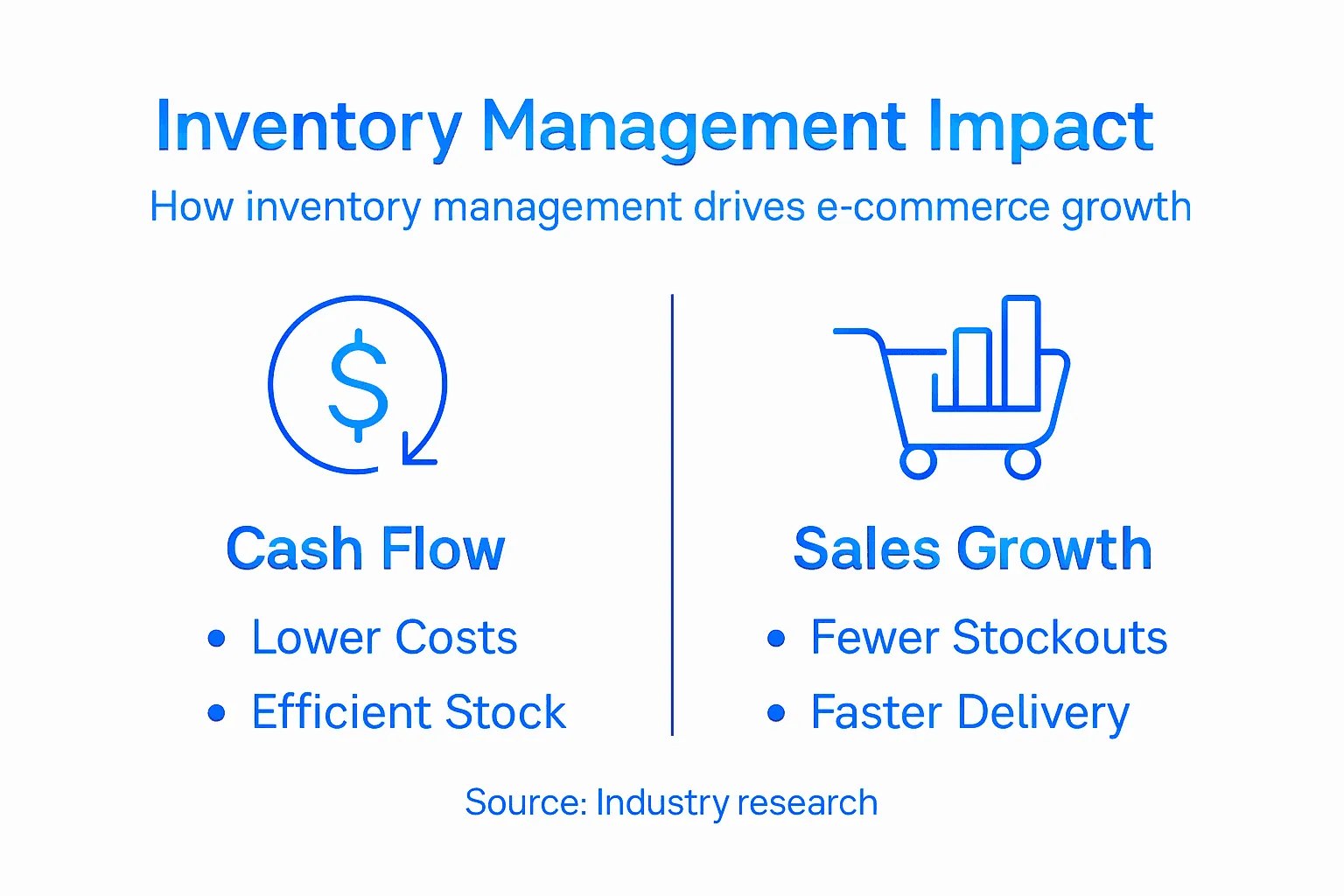
A summary of key financial metrics influenced by inventory management:
MetricWhat It MeasuresImportance for E-CommerceInventory Turnover RatioStock sales speedReveals efficiency of inventory useCash Conversion CycleTime from purchase to cashIndicates liquidity and operational speedWorking CapitalAvailable operational fundsEnsures day-to-day business stabilityGross Profit MarginInventory profit levelsShows profitability and cost control
Avoiding Stockouts, Overstock, and Common Mistakes
E-commerce brands face significant challenges in maintaining optimal inventory levels, with stockout risks threatening sales performance. Balancing inventory requires a sophisticated approach that prevents both excess stock and product unavailability.
Effective inventory management is less about perfect prediction and more about creating adaptive, responsive systems that can quickly adjust to market changes.
Understanding the financial implications of inventory mismanagement is crucial. Overstocking ties up capital and increases storage costs, while stockouts directly impact revenue and customer satisfaction. Successful e-commerce brands develop nuanced strategies that maintain a delicate balance between availability and efficiency.
Pro tip: Create a dynamic inventory management dashboard that provides real-time alerts for potential stockout or overstock conditions, enabling proactive decision-making.
Empower Your E-Commerce Growth Through Smarter Inventory Management
The challenge of balancing stock levels to avoid costly overstock or damaging stockouts directly impacts your sales continuity and cash flow. This article highlights the critical role of precise inventory tracking, demand forecasting, and safety stock strategies in driving e-commerce success. If you are striving to convert your inventory insights into higher profitability and market share, aligning your operational strategy with powerful creative and data-driven advertising is essential.
At Nectar, we understand that just managing inventory is not enough to maximize growth. By integrating advanced analytics with compelling creatives and full-funnel management, we help brands unlock the full potential of their e-commerce listings. Our proprietary iDerive analytics platform complements your inventory management efforts with granular insights, allowing you to anticipate demand shifts and optimize stock allocation across Amazon, Walmart, and Shopify.
Start transforming your inventory challenges into scalable opportunities now. Experience how Nectar’s fully managed services can turn your underperforming storefront into a high-converting engine of growth.

Ready to elevate your e-commerce strategy with data-driven excellence and creative power? Visit Nectar and discover how to drive smarter growth through synchronized inventory and advertising solutions. Explore more at https://thinknectar.com and get started on winning the market share you deserve.
Frequently Asked Questions
What is inventory management in the context of e-commerce?
Inventory management in e-commerce is the systematic tracking, controlling, and optimizing of product stock levels to efficiently meet customer demand. It encompasses managing raw materials, work-in-progress, and finished goods to maximize operational efficiency and customer satisfaction.
How does effective inventory management impact cash flow for e-commerce businesses?
Effective inventory management reduces carrying costs, improves liquidity, prevents revenue loss due to stockouts, and enhances operational efficiency, ultimately transforming idle stock into a strategic asset that drives profitability and growth.
What are common inventory management mistakes to avoid in e-commerce?
Common mistakes include inaccurate demand forecasting, reliance on manual tracking instead of automated systems, neglecting safety stock, and inconsistent communication with suppliers. These errors can lead to stockouts or overstock situations, negatively impacting sales and customer satisfaction.
What strategies can e-commerce brands implement to avoid stockouts and overstock?
E-commerce brands can implement strategies such as advanced forecasting techniques, real-time inventory tracking systems, establishing clear reorder points, developing flexible supplier relationships, and leveraging predictive analytics to maintain optimal inventory levels.
.png)