{
"@type": "Article",
"image": {
"url": "https://csuxjmfbwmkxiegfpljm.supabase.co/storage/v1/object/public/blog-images/organization-10884/1774756221255_Businesswoman-reviewing-ad-platform-spend-in-office.jpeg",
"@type": "ImageObject",
"caption": "Businesswoman reviewing ad platform spend in office"
},
"author": {
"url": "https://thinknectar.com",
"name": "Thinknectar",
"@type": "Organization"
},
"@context": "https://schema.org",
"headline": "How to manage ad spend across Amazon, Walmart, Shopify",
"publisher": {
"url": "https://thinknectar.com",
"name": "Thinknectar",
"@type": "Organization"
},
"inLanguage": "en-US",
"articleBody": "Learn how to allocate, monitor, and optimize ad spend across Amazon, Walmart, and Shopify with proven frameworks that protect ROAS and drive profitable growth.",
"description": "Learn how to allocate, monitor, and optimize ad spend across Amazon, Walmart, and Shopify with proven frameworks that protect ROAS and drive profitable growth.",
"datePublished": "2026-03-29T03:50:23.210Z"
}
How to manage ad spend across Amazon, Walmart, Shopify
.webp)

Managing ad spend across three distinct platforms simultaneously is one of the most demanding challenges facing e-commerce marketing directors today. Without a structured approach, budgets fragment, attribution breaks down, and ROAS quietly erodes while your team scrambles to explain the numbers. The problem intensifies during seasonal peaks, when mismanaged ad spend compounds losses at enterprise scale. This guide gives you a clear, actionable framework for allocating, monitoring, and optimizing ad spend across Amazon, Walmart, and Shopify so every dollar works harder.
Key Takeaways
| Point | Details |
|---|---|
| Budget smartly | Apply the 70/20/10 rule or 80/20 split to maximize returns from proven campaigns while fueling ongoing growth. |
| Unify your data | Integrate performance information from all platforms for a true measure of ad effectiveness and ROI. |
| Test and optimize | Continually segment, test, and refresh your spend and creative to stay ahead. |
| Adapt for scale | Align budgets with inventory, audit technology, and account for seasonality to avoid wasted spend and stockouts. |
Assessing prerequisites and setting your baseline
Before you realign a single dollar of media budget, you need to confirm that your foundational systems are actually ready to support that decision. Skipping this step is how brands end up scaling waste instead of scaling results.
Start by defining whether your current objective is growth or profitability. These goals require different budget postures. A growth objective tolerates higher spend and lower short-term ROAS to capture market share. A profitability objective demands tighter efficiency targets and stricter bid controls. Knowing which mode you are in shapes every allocation decision downstream.
Next, run through this systems checklist before touching your budgets:
-
Campaign tracking: Are all campaigns tagged and firing correctly across platforms?
-
Inventory and sales integration: Is your ad platform connected to live inventory data?
-
Attribution model: Have you selected a consistent attribution window across Amazon, Walmart, and Shopify?
-
Reporting cadence: Do you have a weekly reporting rhythm that surfaces anomalies fast?
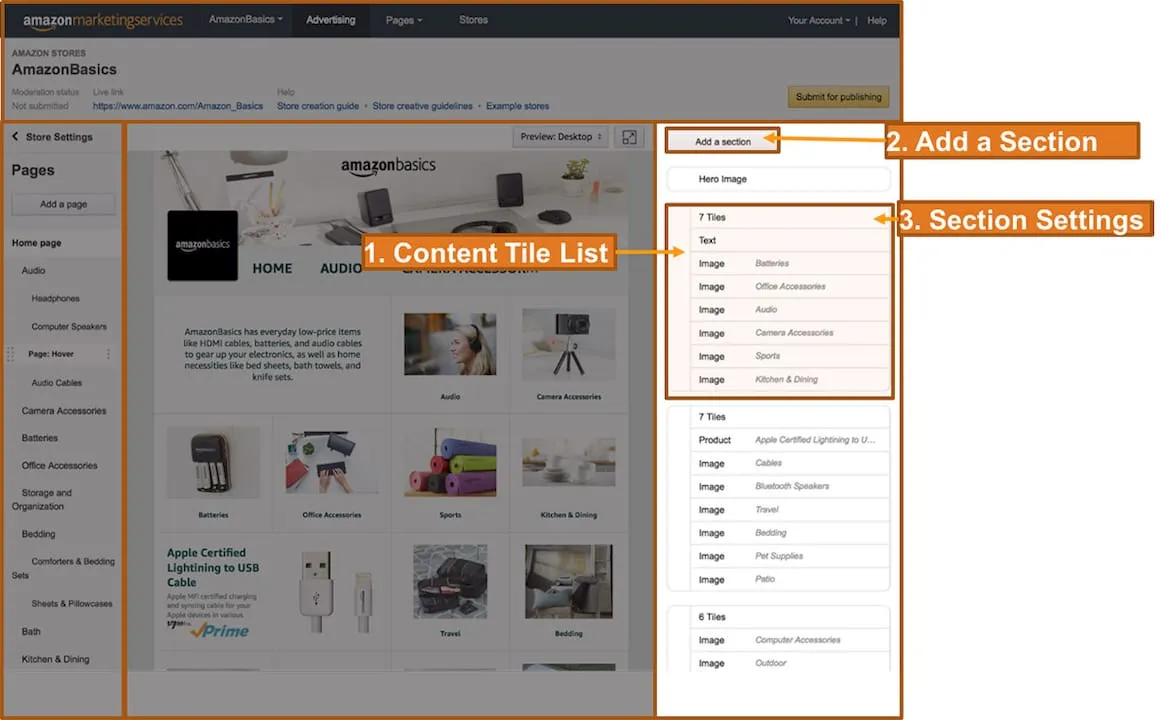
Integrating Shopify, Amazon, and Walmart data offers true ROI measurement, which is impossible when each platform lives in its own reporting silo. A well-structured Shopify advertising workflow and a solid understanding of omnichannel ecommerce principles are both prerequisites, not optional upgrades.
| Prerequisite | Why it matters | Status check |
|---|---|---|
| Unified attribution model | Prevents double-counting conversions | Confirmed or not |
| Live inventory feed | Stops spend on out-of-stock SKUs | Connected or not |
| Cross-platform dashboard | Enables apples-to-apples ROAS comparison | Built or not |
| Defined KPI targets | Anchors optimization decisions | Documented or not |
Pro Tip: If your attribution windows differ between platforms (for example, 7-day on Amazon and 30-day on Shopify), your ROAS comparisons will be misleading. Standardize before you scale.
Choosing your ad spend framework: 70/20/10 vs. 80/20 rule
Once baseline systems are established, the next critical decision is how to divide your budget for maximum impact. Two frameworks dominate high-performing e-commerce brands, and both are worth understanding before you commit.

The 70/20/10 and 80/20 rules work like this: allocate 70 to 80 percent of your ad budget to proven, high-converting campaigns, 20 to 30 percent to testing and emerging audiences, and 10 percent to entirely new channels or experimental formats. This structure protects your core revenue while creating a disciplined pipeline for growth.
Here is how to apply each framework by platform:
-
Amazon: Prioritize Sponsored Products with your proven ASINs in the 70 to 80 percent bucket. Use Sponsored Brands and Sponsored Display for the testing allocation.
-
Walmart: Walmart Connect campaigns tend to have lower CPCs but also lower search volume. Weight your proven spend toward high-velocity SKUs and use the test budget to explore Walmart’s offsite display options.
-
Shopify: Your proven spend should go toward retargeting and high-intent audiences. Use the test allocation for prospecting campaigns on Meta or Google that feed your Shopify funnel.
| Framework | Proven spend | Test spend | New channel |
|---|---|---|---|
| 70/20/10 | 70% | 20% | 10% |
| 80/20 | 80% | 20% | 0% |
| Best for | Balanced growth | Conservative scaling | Aggressive expansion |
Pro Tip: The 80/20 rule suits brands in a profitability phase. The 70/20/10 rule suits brands actively expanding into new platforms or audiences. Match the framework to your current objective, not last quarter’s results. For a deeper look at structuring ad budgets by campaign type, the principles apply across all three platforms.
Building omnichannel visibility: Integrate performance data for true ROI
After selecting a budget split strategy, you need total visibility across all platforms to optimize return. Without it, you are making allocation decisions based on incomplete information.

Omnichannel integration is essential for evaluating real ROI, especially as Walmart excels in offline lift that never appears in digital dashboards. If you are only measuring what happens inside each platform’s native reporting, you are missing a significant portion of the actual return your spend is generating.
Common integration hurdles and how to solve them:
-
Siloed platform data: Use a centralized business intelligence tool or Nectar’s iDerive platform to pull Amazon, Walmart, and Shopify data into one view.
-
Inconsistent SKU naming: Standardize product identifiers across platforms before building any cross-channel report.
-
Attribution conflicts: Agree on a single attribution model and apply it consistently, even if it means overriding platform defaults.
-
Delayed data syncs: Build reporting pipelines that refresh at least daily so you can catch spend anomalies before they compound.
“The brands that win at omnichannel are not the ones with the biggest budgets. They are the ones who can see the full picture fastest and act on it.”
AI and automation tools are no longer optional at enterprise scale. When you are managing hundreds of campaigns across three platforms, manual bid adjustments simply cannot keep pace with market changes. Understanding what is omnichannel ecommerce at a structural level helps you build the right data architecture from the start.
Execution: Segmenting, scaling, and testing your spend
With a unified data view, execution becomes data-driven and far more adaptive. Here is how to make it happen.
Segment your budget by campaign purpose, not just by platform. Group campaigns into three buckets: defense (protecting branded terms and existing customers), offense (conquesting competitors and acquiring new customers), and growth (testing new formats, audiences, or channels). This segmentation makes it far easier to diagnose performance problems and reallocate quickly.
Here is a step-by-step process for managing test budgets alongside proven spend:
-
Set a fixed test budget as a percentage of total spend (10 to 20 percent is the standard range).
-
Define a clear success metric and minimum run time before evaluating any test campaign.
-
Run tests in parallel with proven campaigns, never in place of them.
-
Promote winning tests into the proven bucket only after they hit your ROAS threshold for two consecutive weeks.
-
Kill underperformers at the end of each defined test window without exception.
Creative fatigue is one of the most underestimated causes of declining ROAS. Rotating 10 to 15 creatives weekly and maintaining a rigorous testing cadence prevents audience burnout and keeps click-through rates healthy. Brands that treat split testing in e-commerce as a continuous process rather than a one-time event consistently outperform those that set campaigns and forget them. For a practical walkthrough, see how to run split testing for ecommerce success across your catalog.
Key stat: Brands that allocate a dedicated test budget and rotate creatives systematically report significantly more stable ROAS during high-competition periods compared to those running static campaigns.
Advanced controls: Managing inventories, seasonality, and platform nuances
Even the best execution can fail if you ignore outside forces and operational details. Two variables consistently derail otherwise well-structured ad programs: inventory and seasonality.
Inventory-aware bidding is non-negotiable at scale. If you are running full-budget campaigns on SKUs that are three weeks from a stockout, you are paying to acquire customers you cannot serve. Connect your inventory management system to your ad platforms and set automated rules to reduce bids or pause campaigns when stock drops below a defined threshold.
Seasonality requires forward planning, not reactive adjustments. Q4 CPC spikes of up to 50 percent are well-documented across Amazon and Walmart. If you wait until October to adjust your budgets, you are already behind. Build a seasonal calendar that maps platform-specific events (Prime Day, Walmart Deals, Black Friday, Cyber Monday) to budget increases and creative refreshes planned at least six weeks in advance.
-
Amazon: Increase budgets 2 to 3 weeks before Prime Day and Q4 peak. CPCs rise fast and inventory sells through quickly.
-
Walmart: Walmart’s in-store and online integration means offline demand signals can shift digital performance. Watch both.
-
Shopify: Your DTC channel often benefits from halo effects during Amazon and Walmart peak periods. Do not reduce Shopify spend during these windows.
“Brands that audit their MarTech stack before peak season consistently outperform those that discover tool limitations mid-campaign.”
Pro Tip: Conduct a technology audit every quarter. Confirm that your bid management tools, data connectors, and reporting dashboards can handle the volume spikes that come with peak season. Knowing how to maximize PPC efficiency and following proven ecommerce ad budget structuring principles will keep your program resilient when competition peaks. For broader context, these ecommerce marketing tips reinforce the same seasonal discipline.
Monitoring, optimizing, and troubleshooting: Closing the loop
Now that your strategy is in motion, continuous oversight and rapid iteration will ensure results compound over time. The brands that sustain strong ROAS are not the ones with the best initial setup. They are the ones with the tightest feedback loops.
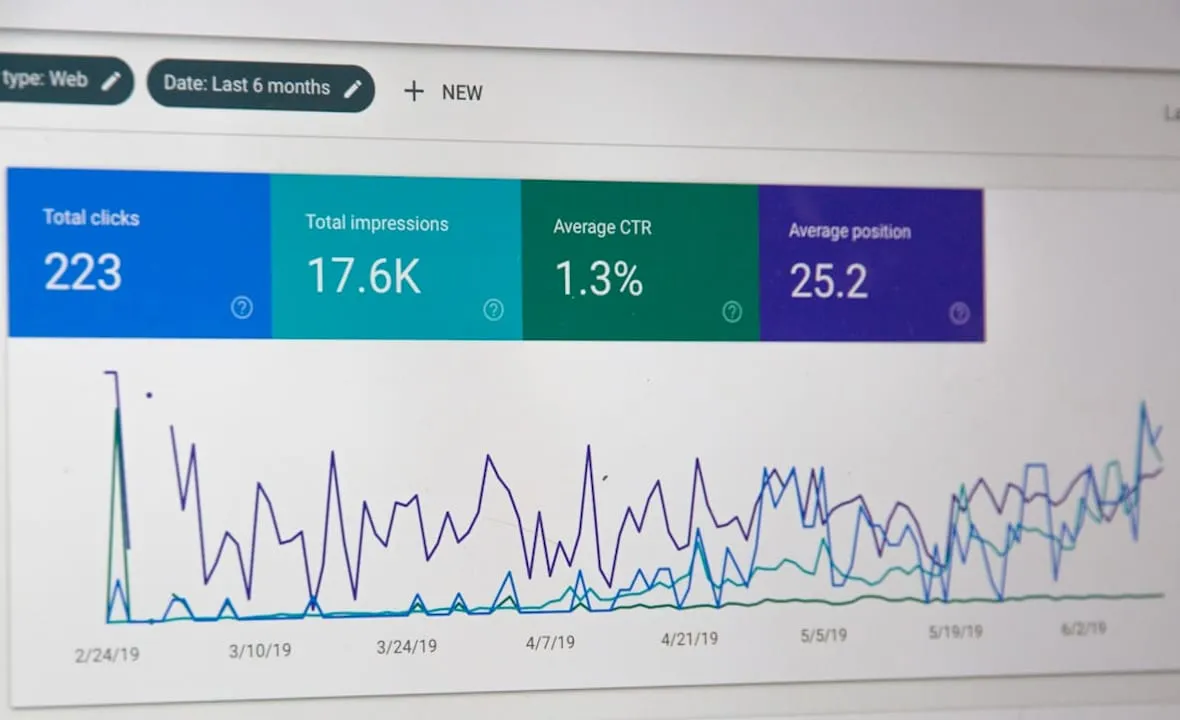
Focus your monitoring on three core metrics: ROAS (and specifically marginal ROAS, which tells you the return on your next incremental dollar), share of voice across key search terms, and inventory levels tied to your top-spending campaigns.
Here is a practical optimization cadence:
-
Weekly: Review ROAS by campaign segment, flag any creative with declining CTR, and check inventory levels on top-spend SKUs.
-
Monthly: Reassess budget allocation across the 70/20/10 or 80/20 framework, promote or kill test campaigns, and review attribution data for anomalies.
-
Quarterly: Conduct a full channel audit, update your seasonal calendar, and evaluate whether your current framework still matches your business objective.
Common troubleshooting scenarios and fast fixes:
-
Falling ROAS: Check for creative fatigue first, then bid inflation, then audience overlap between campaigns.
-
Stockout-triggered waste: Implement automated pause rules tied to inventory thresholds immediately.
-
Underperforming creative: Pull it from rotation within 48 hours and replace with a tested variant.
Pro Tip: Review your ad spend optimization case study examples regularly to benchmark your own performance against real outcomes. Avoiding the most common Amazon PPC mistakes is often as valuable as implementing new tactics.
Accelerate your ad spend impact with Nectar’s expertise
With your new ad spend management skills, scaling is within reach, and specialized expertise can help you move even faster. Applying these frameworks manually across Amazon, Walmart, and Shopify simultaneously is a significant operational lift, even for experienced teams.
Nectar partners with mid-sized and enterprise brands to streamline every layer of this process, from budget architecture and campaign execution to creative production and cross-platform analytics through the iDerive platform. Whether you need to fix a fragmented ad program or scale a high-performing one, Nectar’s brand growth services are built for exactly this challenge. Explore Amazon growth optimization and Shopify solutions to see how a fully managed approach accelerates results. Reach out for a free audit and find out where your current spend is leaving money on the table.
Frequently asked questions
How often should ad spend allocation be reviewed for ecommerce brands?
Review allocation weekly for critical adjustments and monthly for broader strategic shifts to ensure alignment with performance and inventory. Quarterly reviews should address framework-level decisions and seasonal planning.
What’s the best way to split ad spend across new and proven campaigns?
Allocate 70 to 80 percent of your budget to proven campaigns and 20 to 30 percent to testing and new growth channels for sustainable, compounding results.
How do you avoid overspending on ads with seasonal or inventory constraints?
Tie campaign budgets to live inventory and forecasted demand, and reduce spend when stock levels are low. Q4 CPC spikes of up to 50 percent make proactive planning essential, not optional.
Why is omnichannel data integration critical for managing ad spend?
Integrating platform data across Amazon, Walmart, and Shopify reveals comprehensive ROI that no single platform’s native reporting can show, enabling smarter allocation decisions across every channel.
Recommended



































































.webp)