Why minimizing churn is critical for ecommerce success
.webp)
TL;DR:
High customer churn severely impacts ecommerce growth and profitability through loss of revenue and increased acquisition costs.
A retention-first approach enhances lifetime value, reduces marketing expenses, and fosters organic growth via referrals.
Effective churn reduction requires data analysis, personalized engagement, operational improvements, and organizational commitment.
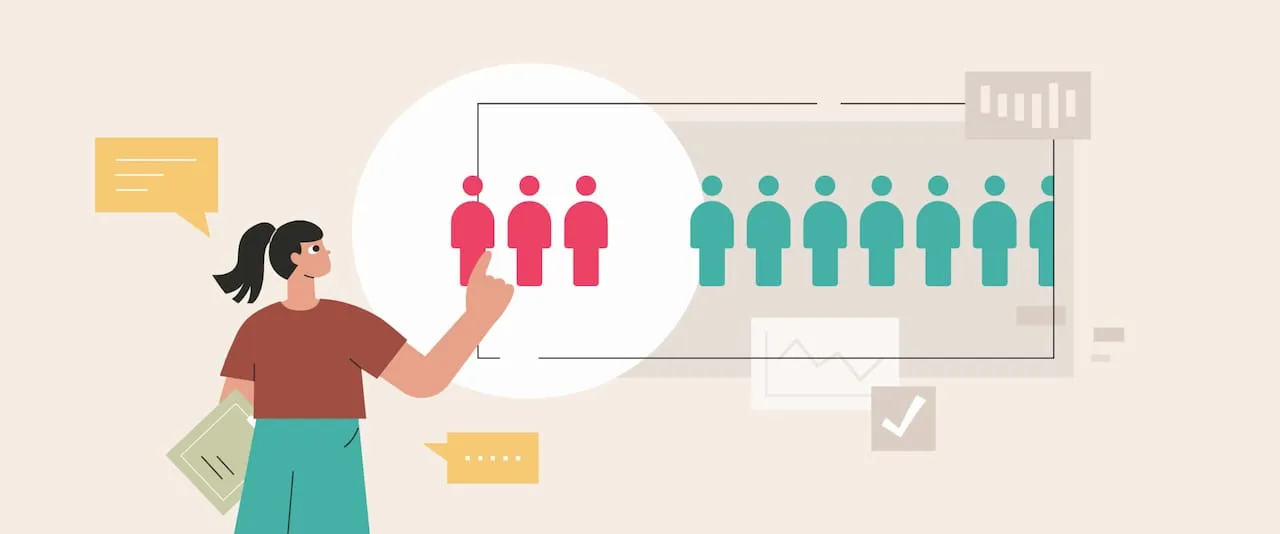
Most ecommerce brands spend the majority of their marketing budgets chasing new customers while quietly hemorrhaging existing ones. The math here is brutal: if you’re acquiring 500 new customers per month but losing 400 to churn, your growth is an illusion. Customer churn, the rate at which buyers stop purchasing from your brand, is one of the most destructive forces in ecommerce, yet it rarely commands the same boardroom urgency as acquisition. This guide breaks down exactly what churn is, why it compounds into catastrophic losses, and what the most effective retention strategies look like in practice.
Key Takeaways
| Point | Details |
|---|---|
| Churn kills growth | Unchecked churn silently erodes profits and undermines long-term ecommerce success. |
| Retention pays off | Retaining customers is far more profitable than chasing constant acquisition. |
| Measure and act | Regularly track churn and implement targeted strategies to minimize it. |
| Sustainable advantage | Leading brands build a compounding advantage by making customer retention a strategic focus. |
Understanding churn in ecommerce: What, why, and how to measure
Churn, in its simplest form, is the percentage of customers who stop buying from you over a given time period. In subscription businesses, this is straightforward: a customer cancels, and that’s a churn event. In ecommerce, it’s more nuanced. A shopper who bought twice last year and went silent for eight months might be churned, or they might just be between purchase cycles. Setting the right window for your category matters enormously.
There are two primary types of churn you need to track:
-
Customer churn rate: The percentage of buyers who don’t make another purchase within your defined repurchase window.
-
Revenue churn rate: The percentage of revenue lost from churned customers, which accounts for the fact that not all customers spend equally.
Both metrics tell different stories. A high-volume brand with thin margins will feel revenue churn more acutely than customer count churn. Understanding which one drives your P&L is the first step toward applying useful ecommerce retention strategies.
How to calculate churn rate
The basic formula for customer churn rate:
Churn Rate = (Customers Lost During Period / Customers at Start of Period) × 100
| Period start customers | Customers lost | Churn rate | Remaining customers |
|---|---|---|---|
| 10,000 | 300 | 3.0% | 9,700 |
| 10,000 | 800 | 8.0% | 9,200 |
| 10,000 | 1,500 | 15.0% | 8,500 |
At 3%, the business retains almost its full base. At 15%, it’s losing nearly one in six customers every single period. When you compound that loss across quarters, the gap between those two scenarios becomes enormous very quickly.
The most common measurement mistakes include using too short a window for your category (comparing a seasonal product brand to a daily consumables brand doesn’t work), ignoring inactive customer segments, and conflating one-time buyers with lapsed repeat buyers. When you properly analyze ecommerce data with segmentation, churn suddenly becomes much more actionable than a single blended number.
“Most ecommerce businesses underestimate the compounding effect of churn on lifetime value and growth.”
That compounding effect is exactly why churn deserves its own dedicated measurement cadence, not a once-per-year review. Savvy brands track cohort-level retention month over month, watching for the precise moment customers disengage. The benefits of customer retention show up not just in revenue, but in inventory efficiency, marketing ROI, and even operational predictability.
The high cost of churn: How lost customers harm profits and growth
Once you understand churn, it’s clear why ignoring it is a threat. Here’s how churn turns into lost revenue and opportunity.
Acquiring a new customer typically costs five to seven times more than retaining an existing one. That’s not a platitude, it’s a financial reality that compounds when churn is high. Every lost customer represents not just lost future revenue, but also the wasted acquisition cost already spent to win them. If your customer acquisition cost (CAC) is $45 and your average order value is $60, a customer who churns after one purchase barely breaks even before you account for product cost, fulfillment, and overhead.
Here’s what revenue trajectory looks like across churn rate scenarios over 12 months, starting from a base of $1,000,000 in monthly recurring revenue:
| Churn rate | Month 1 revenue | Month 6 revenue | Month 12 revenue | Annual revenue lost |
|---|---|---|---|---|
| 2% monthly | $1,000,000 | $886,000 | $785,000 | ~$1.3M |
| 5% monthly | $1,000,000 | $735,000 | $540,000 | ~$3.9M |
| 10% monthly | $1,000,000 | $531,000 | $282,000 | ~$7.4M |
The difference between 2% and 10% monthly churn isn’t a minor operational concern. It’s the difference between a scaling business and one that has to run twice as hard on acquisition just to stay flat.
Here are four ways churn cascades into deeper business damage:
-
Marketing efficiency collapses: When scaling with retention isn’t prioritized, every dollar spent on ads has to work harder to replace lost customers, not grow the base.
-
Lifetime value projections fall apart: Predictive models built on inflated LTV assumptions fail, leading to overbidding on acquisition.
-
Brand credibility erodes: Churned customers are more likely to leave negative reviews or simply recommend competitors.
-
Profitability windows shorten: When customers leave before they’ve repurchased two or three times, most brands never recoup their acquisition investment.
“Retention is what allows CAC to pay back and creates compounding effects in ecommerce profitability.”
Leveraging retail technology for retention is one underutilized path to reversing this damage. Loyalty infrastructure, personalization engines, and post-purchase communication platforms all serve to close the gap between a one-time buyer and a loyal advocate.
Pro Tip: To get a true picture of your unit economics, calculate LTV minus CAC, then subtract the implied cost of churn based on your retention rate. Most brands discover they’re operating with a far thinner real margin than their headline numbers suggest. Use this number as your north star when boosting ROI through retention improvements.
Why acquisition alone isn’t enough: The retention-first philosophy
Knowing the heavy costs of churn, let’s examine why simply acquiring more customers is not a sustainable solution.

The default growth playbook for most ecommerce brands goes like this: invest heavily in paid social, scale Google Shopping, test new acquisition channels, and measure success by new customer volume. It’s an approach that feels productive because it produces visible numbers, new orders, new names in the database. The problem is that a leaking bucket filled faster is still a leaking bucket.
Here’s the core tension:
-
Short-term acquisition focus produces revenue spikes, inflated CAC, and high pressure on margins.
-
Long-term retention focus compounds customer value, lowers effective CAC over time, and builds a foundation of predictable revenue.
The brands that sustain growth for years, rather than quarters, almost universally shift their thinking toward data-driven growth strategies that treat existing customers as a core asset rather than a cost center to be replaced.
“Even in aggressive growth phases, a retention plan is essential for sustainable payback on CAC and long-term customer compounding.”
Consider two brands at the same revenue level. Brand A spends 80% of its marketing budget on acquisition and 20% on retention. Brand B flips that ratio. After two years, Brand B will typically show higher LTV per customer, lower blended CAC, and stronger word-of-mouth referral volume because its happy, retained customers are doing part of the acquisition work organically.
The compounding benefits of a retention-first philosophy include:
-
Higher LTV per cohort: Customers who return two or three times spend significantly more per visit than first-time buyers.
-
Referral amplification: Loyal customers refer at rates up to four times higher than occasional buyers.
-
Margin expansion: Retained customers buy with less discounting pressure because they already trust the brand.
-
Predictable revenue forecasting: High retention creates stable baselines that make planning and inventory management far more accurate.
Pro Tip: If your new-to-returning customer ratio sits above 70/30 in favor of new, it’s time to audit your retention spend. Brands in healthy retention posture typically see a 50/50 or better split. Use data-driven marketing approaches to identify which cohorts are most likely to return and invest there first.
Optimizing payment workflows is one practical operational step that often gets overlooked in retention discussions. Payment friction at checkout is a silent churn trigger, and removing it can meaningfully improve repeat purchase rates.
Proven strategies to minimize ecommerce churn effectively
Embracing retention is step one. Now, let’s get practical with proven tactics to minimize churn in your ecommerce business.
The most effective approach to reducing churn starts with knowing why customers are leaving. Too many brands jump straight to loyalty programs and email campaigns without diagnosing the root cause. The framework follows three stages: data analysis, customer feedback, and segment-level personalization.
Step 1: Analyze behavioral data by cohort. Look at purchase frequency drop-offs, category abandonment, and session behavior changes. Customers who churn rarely disappear suddenly. They disengage gradually, and data exposes that trajectory early.

Step 2: Layer in direct feedback. Post-purchase surveys, NPS tracking, and win-back email responses all give you qualitative signal that raw transaction data misses. Understanding why someone stopped purchasing is often more valuable than knowing when they stopped.
Step 3: Segment your at-risk customers. Not all at-risk customers are the same. Strong retention frameworks separate customers by risk level, product category, purchase frequency, and channel of origin. A one-size-fits-all retention campaign will underperform versus targeted outreach by a significant margin.
Step 4: Build personalized outreach sequences. An at-risk customer who bought premium skincare needs a different re-engagement message than one who purchased a one-time gift item. Personalization here means segment-specific offers, relevant product recommendations, and timing matched to their natural repurchase cycle.
Step 5: Implement high-impact retention touchpoints. The highest-leverage moments are onboarding (first 30 days after purchase), post-purchase follow-up sequences, loyalty milestone communications, and proactive service outreach triggered by behavior signals.
Top-performing ecommerce brands use ongoing churn monitoring and multi-layered engagement strategies rather than reactive win-back campaigns launched only after customers have already gone cold.
Common pitfalls to avoid when fighting churn:
-
Discounting as the only retention lever: Repeated discounts train customers to wait for sales and erode margin without building loyalty.
-
Ignoring the first purchase experience: The onboarding window is your highest-leverage retention moment and most brands underinvest in it.
-
Treating all churned customers equally: Some customers are worth aggressive win-back investment; others are low-LTV buyers best replaced.
-
Failing to create a churn review cadence: Churn reduction requires ongoing analysis, not one-time campaigns.
Improving checkout experience is another high-return area often underestimated in its effect on repeat purchase intent. Friction at the point of purchase can accelerate churn before a customer even fully becomes loyal.
Pro Tip: Set up a monthly churn review that examines cohort retention curves, at-risk customer counts by segment, and win-back campaign performance. Use tools like your ESP’s behavioral triggers and a platform like Nectar’s data for retention to automate signals and surface the right insights at the right time. You’ll catch churn before it happens, not after it damages your numbers. Consider also using maximizing sales with retention frameworks during peak seasons, when churn risks actually spike due to influx of lower-intent buyers.
Rethinking churn: The uncomfortable truth most brands ignore
Most churn guides give you tactics. Improve onboarding. Add loyalty points. Send a win-back email. All of that works, and you should absolutely do it. But the brands that truly solve churn do something fundamentally different: they treat customer retention as a cultural priority, not a campaign type.
The uncomfortable reality is that most churn problems are leadership problems first. When leadership celebrates new customer acquisition metrics in every all-hands meeting but never mentions retention rate, the entire organization learns what actually matters. Product teams don’t optimize for returning customers. Creative teams don’t build for loyalty. Customer service gets underfunded. And churn quietly compounds.
The brands winning long-term are the ones where retention owns a seat at the strategy table alongside acquisition. Where churn data informs product roadmaps, not just email schedules. Where a rise in churn triggers cross-functional reviews, not just a campaign adjustment. These are the real-world growth lessons that separate durable businesses from brands that spike and fade.
Churn, viewed correctly, is one of the best continuous improvement signals available to an ecommerce brand. It tells you exactly where your product, experience, or communication is falling short. Brands that use it as a learning engine rather than a vanity metric to minimize and move past are the ones that build genuinely loyal customer bases over time.
Take your retention strategy further with Nectar
If you’re ready to change the churn story in your business, here’s how Nectar can help.
Understanding churn is one thing. Building the systems, creative, and analytics infrastructure to actually reduce it is another challenge entirely.
Nectar’s fully managed approach to ecommerce growth combines the data depth of our iDerive analytics platform with hands-on retention strategy across Amazon, Walmart, and Shopify. We identify where your customers are disengaging, build the creative and campaign infrastructure to win them back, and establish the measurement cadence to keep churn in check permanently. Whether you need Shopify optimization to reduce post-purchase friction or a full-funnel retention overhaul, our brand growth services are built to compound your customer base, not just stabilize it.
Frequently asked questions
What is customer churn in ecommerce?
Customer churn is the percentage of shoppers who stop buying from your brand during a set period, undermining long-term growth if left unchecked.
How can I identify why my customers are churning?
Analyze customer data, purchase behavior, and gather feedback to pinpoint sources of dissatisfaction and at-risk segments. Effective tactics used by retail businesses to reduce churn rates often begin with better data segmentation rather than new campaigns.
Why is minimizing churn more effective than focusing only on customer acquisition?
Minimizing churn increases lifetime value and profits while making marketing investments more efficient over time. As retention research shows, CAC payback and compounding effects only materialize when customers stay long enough to repurchase.
What is a good churn rate for ecommerce brands?
A churn rate below 5% annually is considered strong, but the ideal rate depends on your industry, average order frequency, and customer type.
What are the first steps to reducing churn in my ecommerce business?
Start by measuring your churn accurately, segmenting at-risk customers, and deploying targeted retention strategies. Actionable strategies for increasing retention always begin with a clear baseline measurement before any campaigns are launched.
Recommended































































.webp)