{
"@type": "Article",
"image": {
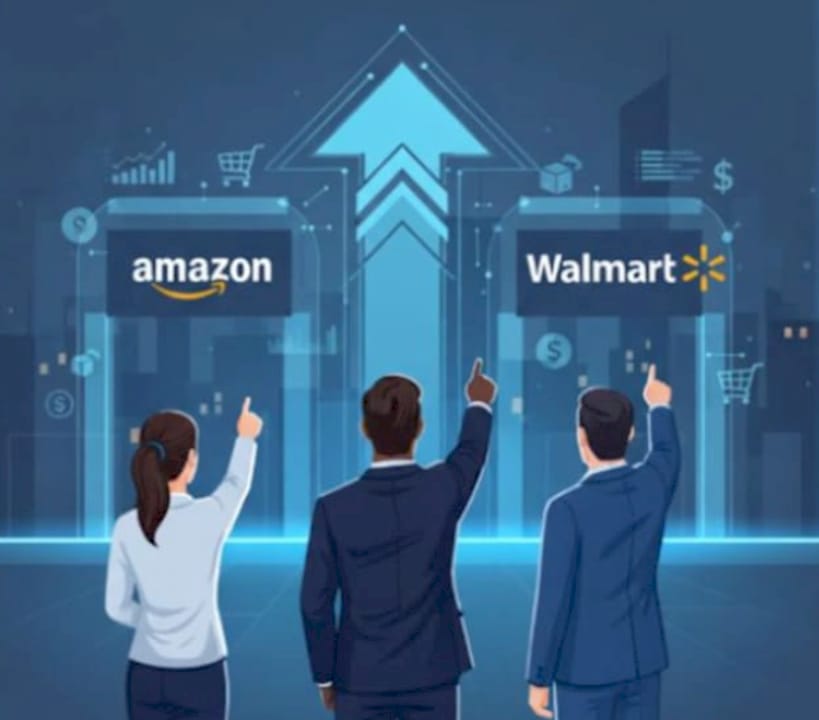
"url": "https://csuxjmfbwmkxiegfpljm.supabase.co/storage/v1/object/public/blog-images/organization-10884/1773451742278_Ecommerce-managers-discussing-omnichannel-strategy-map.png",
"@type": "ImageObject",
"caption": "Ecommerce managers discussing omnichannel strategy map"
},
"author": {
"url": "https://thinknectar.com",
"name": "Dan Katona's Organization",
"@type": "Organization"
},
"@context": "https://schema.org",
"headline": "What is omnichannel ecommerce? A 2026 guide for growth",
"publisher": {
"url": "https://thinknectar.com",
"name": "Dan Katona's Organization",
"@type": "Organization"
},
"inLanguage": "en-US",
"articleBody": "Learn what omnichannel ecommerce means in 2026, how it differs from multichannel selling, and practical steps to integrate Amazon, Walmart, and Shopify for measurable brand growth.",
"description": "Learn what omnichannel ecommerce means in 2026, how it differs from multichannel selling, and practical steps to integrate Amazon, Walmart, and Shopify for measurable brand growth.",
"datePublished": "2026-03-14T01:29:31.366Z"
}
What is omnichannel ecommerce? A 2026 guide for growth
.webp)

Ecommerce isn’t just about selling on a single website. Treating sales channels as separate silos leaves massive revenue on the table and frustrates modern shoppers who expect seamless experiences. Omnichannel ecommerce integrates platforms like Amazon, Walmart, and Shopify into a unified strategy. This guide breaks down exactly how to implement this approach for measurable brand growth in 2026.
Key Takeaways
- Unified customer experience: Omnichannel creates seamless shopping journeys across all platforms and touchpoints.
- Strategic platform integration: Combining Amazon, Walmart, and Shopify with centralized data drives significantly higher conversion rates.
- Data-driven personalization: Unified customer data enables highly targeted marketing and improves cross-channel retention.
- Technology requirements: Centralized inventory, order management, and analytics platforms are non-negotiable for success.
- Measurable business impact: Omnichannel strategies increase Customer Lifetime Value (CLV) and accelerate total revenue growth.
What is Omnichannel Ecommerce and Why It Matters
Multichannel ecommerce means selling through multiple platforms (Amazon, Walmart, Shopify) but managing each independently. Omnichannel ecommerce takes it further by unifying inventory, customer data, and messaging. If a customer adds an item to their Shopify cart but completes the purchase on Amazon, omnichannel systems recognize them as the same person.
In 2026, modern shoppers expect this consistency. They want the same pricing, product information, and brand experience whether they are on mobile, desktop, or a marketplace. Research consistently shows that customers who engage across multiple channels have a higher lifetime value and purchase more frequently than single-channel shoppers.
Tip: Start by mapping your customer journey across all existing channels to identify gaps where the user experience breaks down or data gets lost between platforms.
Key Components of Effective Omnichannel Ecommerce
Building a successful omnichannel strategy requires a specific operational foundation:
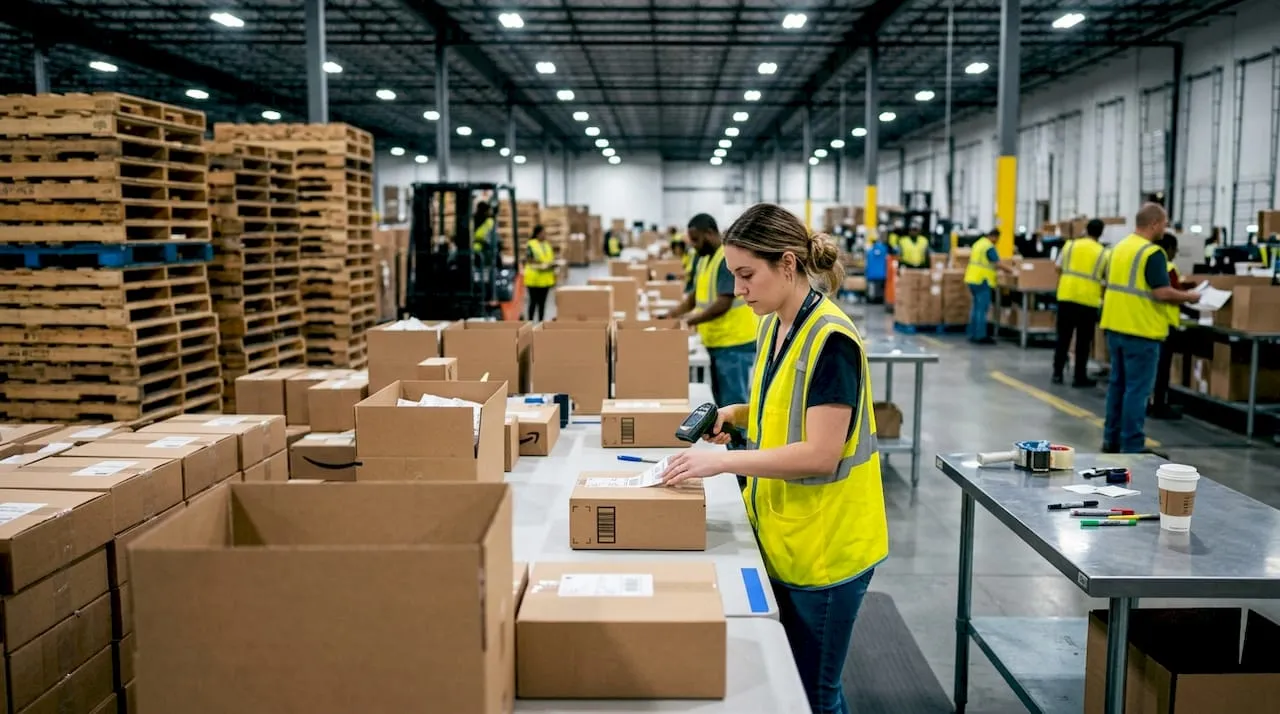
- Centralized Inventory Management: You need real-time visibility across all channels. When an item sells on Walmart, your Shopify store must instantly reflect the updated quantity to prevent costly stockouts.
- Unified Customer Data: Your systems must aggregate behavior, purchase history, and preferences from every touchpoint into a single view to enable personalization at scale.
- Consistent Branding: Product descriptions, imagery, and value propositions must align perfectly across Amazon, Instagram, and your direct-to-consumer (DTC) site.
- Integrated Customer Service: Support teams must have access to a complete customer history, regardless of whether the shopper is asking about an Amazon order or a Shopify return.
Platform Capabilities at a Glance
- Amazon: Offers massive reach, powerful API integrations, and robust advertising (Sponsored Ads, DSP), but heavily limits direct customer data export.
- Walmart: Provides real-time feeds, competitive sponsored products, and a rapidly growing analytics suite.
- Shopify: Delivers complete ownership of customer data, native inventory control, and highly customizable reporting via its app ecosystem.
Tip: Invest in a robust Product Information Management (PIM) system early to maintain consistency as your catalog grows.
Omnichannel vs. Multichannel: The Core Differences
Many brands confuse these approaches. Here is exactly how they differ across critical business operations:
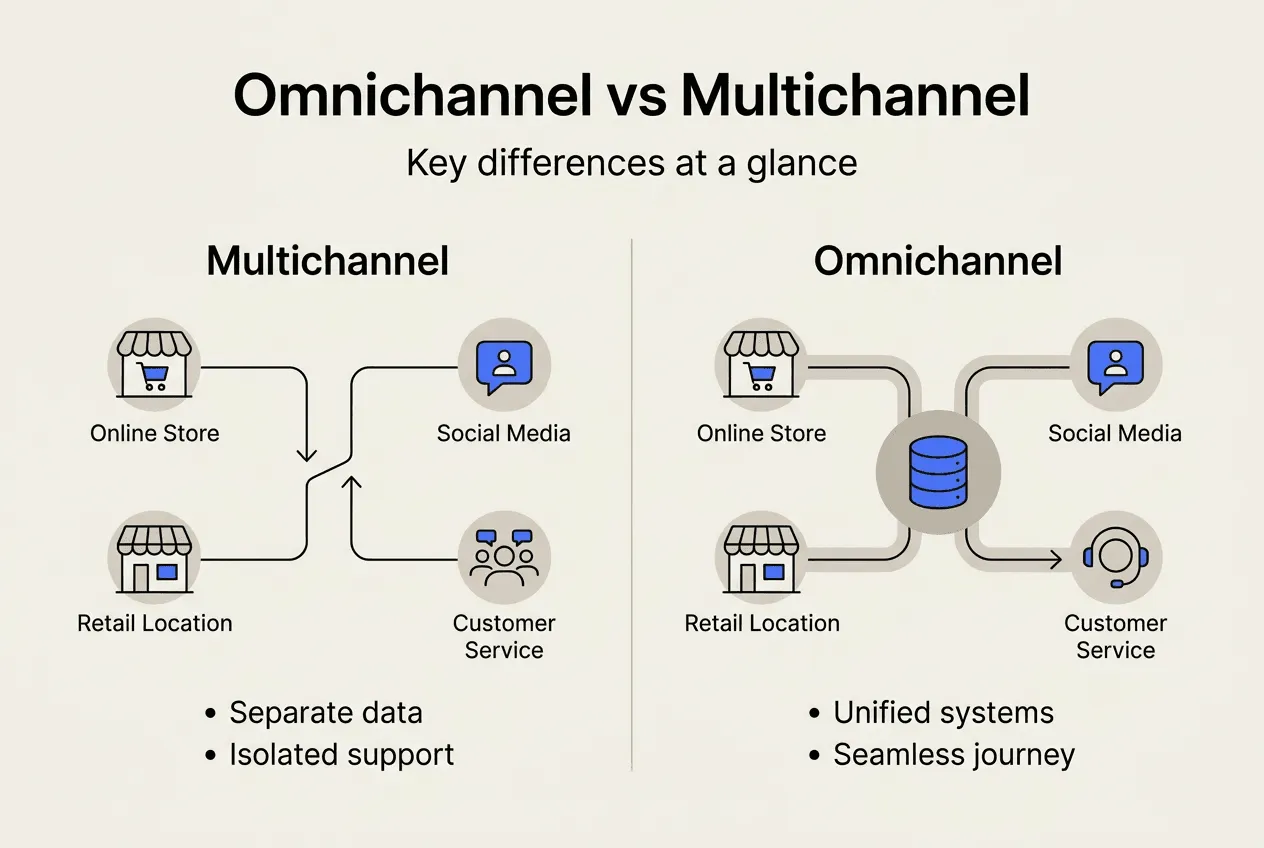
- Data Management: Multichannel uses separate, fragmented databases for each platform. Omnichannel relies on a single source of truth for all customer and inventory data.
- Customer Experience: Multichannel often results in inconsistent pricing and disjointed experiences. Omnichannel provides a seamless, continuous journey across all touchpoints.
- Inventory Visibility: Multichannel risks overselling due to independent stock tracking. Omnichannel utilizes real-time synchronization.
- Marketing Approach: Multichannel runs isolated, channel-specific campaigns. Omnichannel utilizes behavior-triggered messaging based on the user's total interaction history.
- Customer Recognition: Multichannel treats a returning buyer as a "new customer" if they switch platforms. Omnichannel recognizes a single, unified identity everywhere.
While multichannel is easier to set up initially, managing hundreds of SKUs without integration quickly creates operational nightmares. For mid-sized to enterprise brands, the upfront technology investment of omnichannel pays for itself through efficiency and scaled growth.
Practical Steps to Implement Your Strategy
- Assess your channel portfolio: Focus your resources on the platforms that align with your target audience and yield the highest lifetime value.
- Unify your systems: Integrate inventory and customer data using APIs to link Shopify, Amazon, and Walmart to a central data warehouse.
- Standardize your branding: Create strict brand guidelines for tone and imagery. Use templates to enforce consistency at scale.
- Shift your KPIs: Stop looking at last-click, channel-specific metrics. Monitor total customer lifetime value, cross-channel purchase patterns, and integrated revenue contribution.
- Adopt the 70/20/10 framework: Allocate 70% of resources to your highest-performing platform, 20% to emerging opportunities, and 10% to experimental channels.
Tip: Phase your implementation. Start by integrating inventory and order management before tackling complex customer data unification.
Enhance Your Omnichannel Growth with Expert Services
Implementing omnichannel ecommerce at scale demands specialized expertise. Nectar delivers comprehensive services for brand growth on Amazon, Walmart, and Shopify, combining high-impact creative with data-driven strategy.
Our approach integrates in-house photography, videography, and design with sophisticated campaign management powered by our proprietary iDerive analytics platform. This transforms underperforming listings into high-converting storefronts.
Whether you are looking to build the perfect shopping trip on Shopify by optimizing the user experience, or leverage DSP advertising to drive full-funnel conversions, partnering with specialists accelerates results and maximizes ROI across your entire ecosystem.
Frequently Asked Questions
What is the difference between omnichannel and multichannel ecommerce?
Omnichannel synchronizes customer data, inventory, and messaging in real time for a seamless journey. Multichannel sells across multiple platforms but manages each independently, resulting in fragmented data and customer experiences.
Which platforms are best suited for an omnichannel strategy?
Amazon, Walmart, and Shopify form the strongest foundation for 2026. Amazon provides massive scale, Walmart offers growing reach with competitive fees, and Shopify delivers total control over your brand and customer data.
How do you measure the success of an omnichannel strategy?
Track unified Customer Lifetime Value (CLV) and total cross-channel sales growth. Focus on holistic retention metrics rather than isolated, platform-specific revenue or last-click attribution.
How long does it take to implement?
Basic inventory and order integration typically takes 2 to 4 months. Achieving full omnichannel capability including unified customer data and marketing automation often takes 6 to 12 months using a phased approach.






















































.webp)