{
"@type": "Article",
"image": {
"url": "https://csuxjmfbwmkxiegfpljm.supabase.co/storage/v1/object/public/blog-images/organization-10884/1776481634654_E-commerce-manager-with-programmatic-ads-workspace.jpeg",
"@type": "ImageObject",
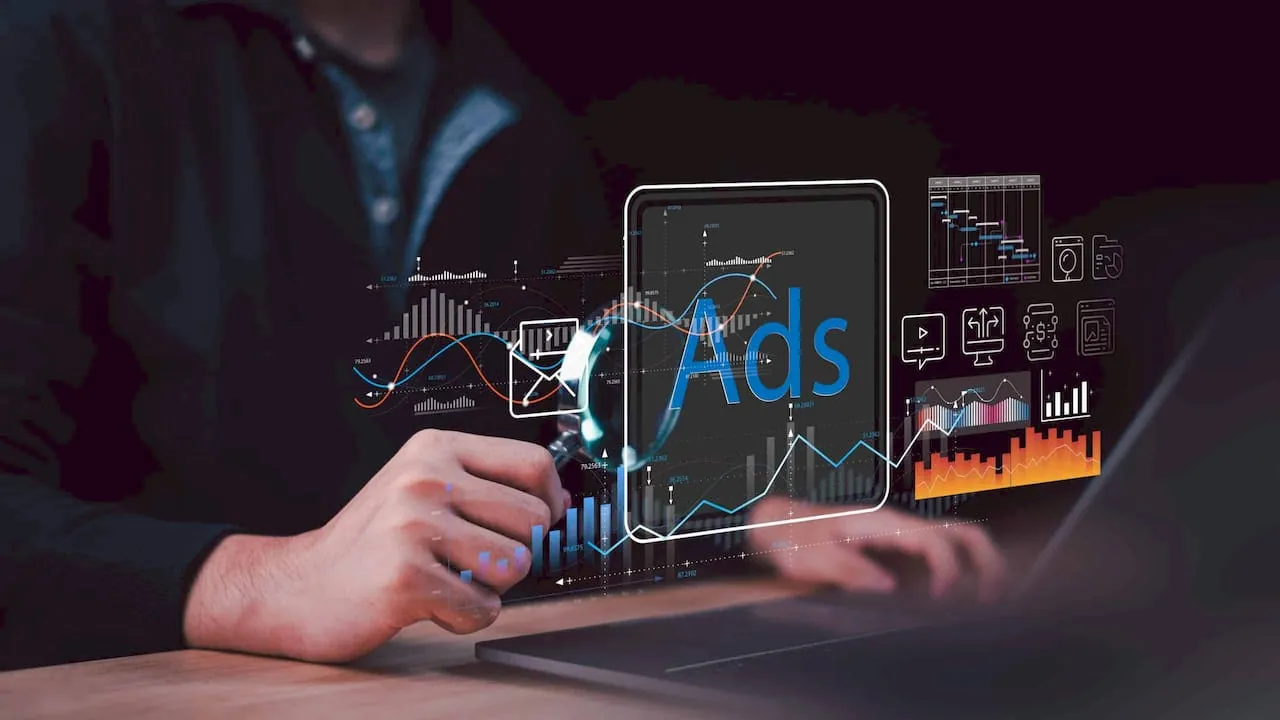
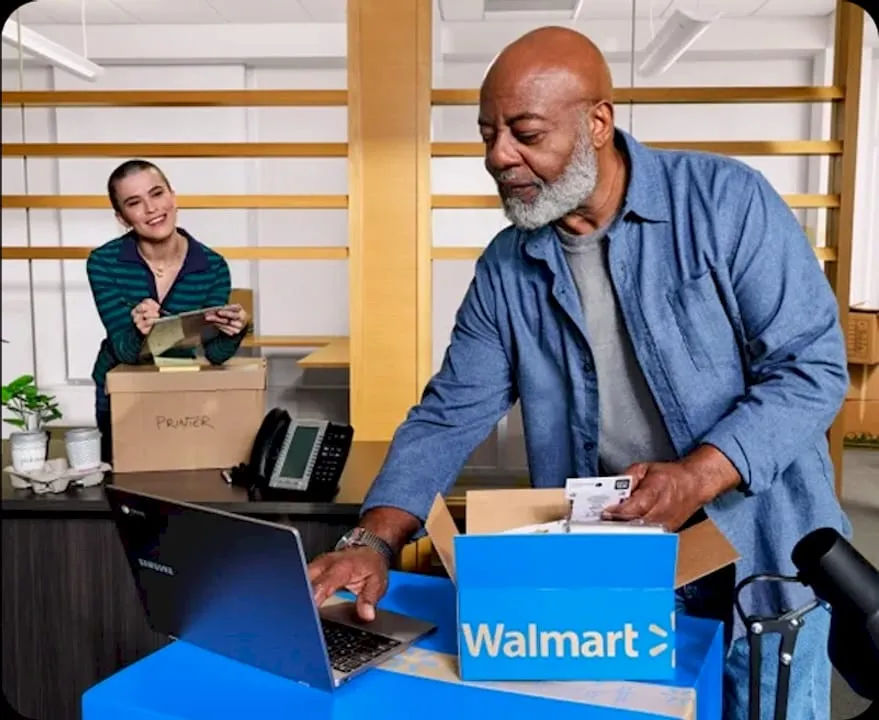
"caption": "E-commerce manager with programmatic ads workspace"
},
"author": {
"url": "https://thinknectar.com",
"name": "Thinknectar",
"@type": "Organization"
},
"@context": "https://schema.org",
"headline": "Why use programmatic ads? Boost ROI for e-commerce brands",
"publisher": {
"url": "https://thinknectar.com",
"name": "Thinknectar",
"@type": "Organization"
},
"inLanguage": "en-US",
"articleBody": "Discover why programmatic ads outperform traditional PPC for e-commerce brands. Learn how automation, real-time targeting, and data-driven bidding maximize your ROI.",
"description": "Discover why programmatic ads outperform traditional PPC for e-commerce brands. Learn how automation, real-time targeting, and data-driven bidding maximize your ROI.",
"datePublished": "2026-04-18T03:21:22.132Z"
}
Why use programmatic ads? Boost ROI for e-commerce brands
.webp)

TL;DR:
Programmatic advertising uses automation and real-time data to target shoppers precisely at scale.
It improves ROI through dynamic optimization, retargeting, and personalized creative delivery.
Most brands underestimate its accessibility, organizational fit, and ability to boost customer lifetime value.
Scaling an e-commerce brand on paid ads alone is getting harder. Clicks cost more, competition is fiercer, and the old playbook of manually managing keywords and bids simply cannot keep pace. Programmatic advertising changes that equation. It uses real-time automation, audience intelligence, and machine-driven bidding to place the right ad in front of the right shopper at exactly the right moment. For mid-sized and enterprise brands running campaigns across Amazon, Walmart, and Shopify, that precision is not a nice-to-have anymore. It is the difference between compounding growth and wasted budget.
Key Takeaways
| Point | Details |
|---|---|
| Automation powers precision | Programmatic ads use automation to deliver targeted, data-driven messages that outperform manual campaigns. |
| Boost ROI at scale | Brands see higher returns thanks to efficient bidding, smart targeting, and real-time optimization. |
| Better customer journeys | Personalized programmatic experiences move shoppers quickly from discovery to purchase and loyalty. |
| Start small, optimize fast | A pilot approach to programmatic campaigns helps e-commerce teams learn, adapt, and succeed rapidly. |
What are programmatic ads?
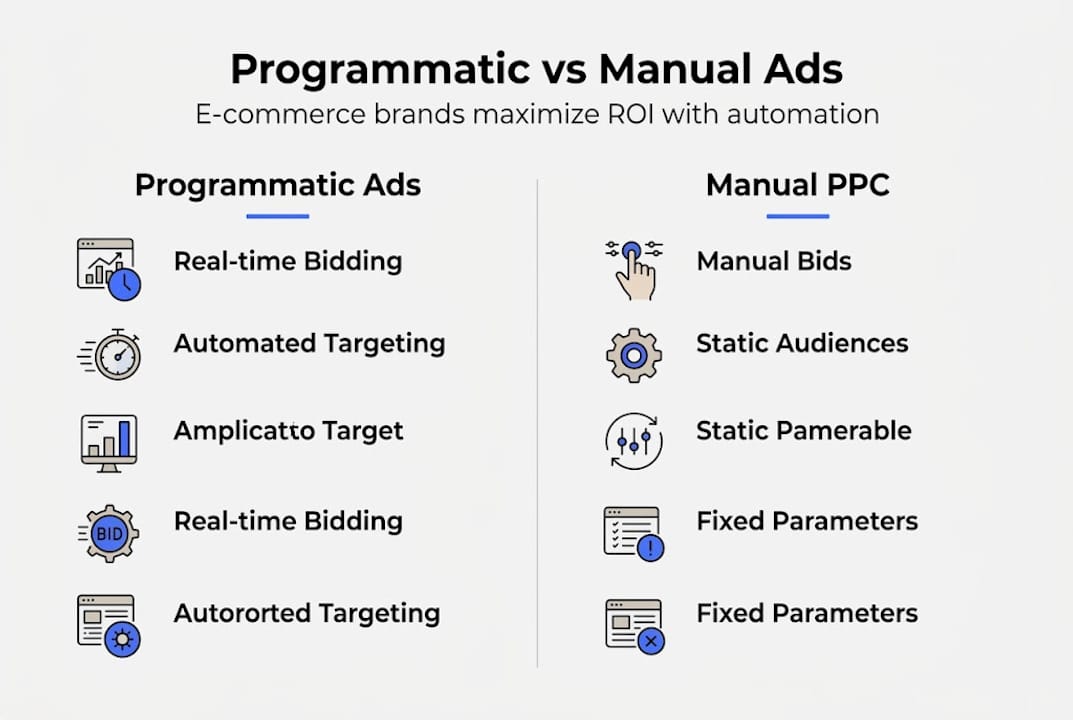
Programmatic advertising is the automated buying and selling of digital ad inventory using software, real-time data, and algorithms. Instead of negotiating placements manually with publishers, the entire process happens in milliseconds through an auction-based ecosystem. As dynamic ad targeting explains, programmatic ads use automation and real-time data to buy and target digital ads, removing the guesswork from media buying.
Three core components power this ecosystem:
-
Demand-side platform (DSP): The tool advertisers use to purchase ad impressions programmatically.
-
Supply-side platform (SSP): Publishers connect here to make their inventory available for auction.
-
Real-time bidding (RTB): The millisecond auction that matches an impression to the highest-value bid.
| Factor | Programmatic advertising | Traditional ad buying |
|---|---|---|
| Bidding | Automated, real-time | Manual negotiation |
| Targeting | Behavioral, intent, contextual | Demographic, keyword |
| Speed | Milliseconds | Days or weeks |
| Optimization | Continuous, AI-driven | Periodic, human-led |
| Scale | Near-unlimited inventory | Limited placements |
For your team, automation means fewer hours spent adjusting bids manually and more time spent on strategy. Creative testing, audience segmentation, and budget pacing all happen inside the platform, often without a single manual pull. The shift from reactive to proactive media buying is what makes programmatic genuinely different.
Pro Tip: Before launching your first programmatic campaign, audit your first-party data. Clean, segmented audience lists are the single biggest factor in early campaign performance. Launching without them is like building on sand.
The main benefits of programmatic ads for e-commerce
Once you understand the mechanics, the business case becomes obvious. Programmatic advertising delivers advantages that manual campaigns simply cannot match at scale.
The most immediate win is targeting precision. Data-driven advertising confirms that programmatic ads enable highly precise targeting that boosts conversion rates, reaching shoppers based on their actual purchase intent, browsing behavior, and demographic profile rather than assumed interests.
Here is what that translates to in practice:
-
Audience targeting: Reach shoppers by purchase history, on-site behavior, income bracket, and device type.
-
Speed to market: Launch a campaign and serve impressions in hours, not days.
-
Scalability: Expand reach across thousands of publishers and ad formats without adding headcount.
-
Dynamic optimization: Algorithms reallocate budget toward the highest-performing segments automatically.
-
Retargeting power: Ad retargeting brings back visitors who browsed but did not convert, often at a fraction of the cost of acquiring new traffic.
The ROI impact is real. Programmatic campaigns consistently outperform manual buying on cost-per-click because bidding algorithms factor in hundreds of signals simultaneously. A human buyer optimizing once a week cannot compete with software optimizing every single auction.
Personalization is another major lever. Programmatic systems can serve different creatives to different shopper segments within the same campaign. A returning customer who abandoned a cart sees a different ad than a first-time visitor who browsed your category page. That contextual relevance drives higher click-through rates and, ultimately, more revenue per dollar spent.

Programmatic ads vs. traditional PPC: Key differences
Traditional pay-per-click advertising still has a place in your mix. But understanding where it falls short helps you make smarter budget decisions.
E-commerce ad metrics research shows that programmatic platforms use AI to optimize ad delivery beyond basic keyword or demographic targeting, factoring in contextual signals, device behavior, and time-of-day patterns that manual PPC simply ignores.
| Dimension | Programmatic | Traditional PPC |
|---|---|---|
| Cost model | CPM, CPC, CPA (flexible) | Primarily CPC |
| Targeting depth | Behavioral, intent, contextual | Keyword, demographic |
| Execution speed | Real-time | Manual setup |
| Data use | First and third-party signals | Platform-limited |
| Creative flexibility | Dynamic, personalized | Static per ad group |
When to use each method:
-
Use traditional PPC when you need immediate search-intent capture on high-volume keywords with predictable CPC budgets.
-
Use programmatic when you want to build brand awareness, reach new audiences beyond search, and run personalized retargeting at scale.
-
Use a hybrid approach when your brand operates across multiple channels, because PPC efficiency tips suggest that combining both methods often reduces overall customer acquisition cost.
-
Favor programmatic for retention when you have enough first-party data to target existing customers with upsell or loyalty messaging.
For complex enterprise brands selling across Amazon, Walmart, and Shopify simultaneously, a hybrid model is almost always the right call. PPC captures high-intent search traffic. Programmatic builds the upper funnel, nurtures mid-funnel shoppers, and brings back lapsed customers. Together, they cover the full journey.
How programmatic ads drive visibility and sales
Theory is useful. Real results are better. Brands that have shifted meaningful budget toward programmatic consistently report measurable improvements in key performance indicators.
DSP advertising campaigns demonstrate that brands see significant lifts in CTR and sales when shifting to programmatic, with some retail brands recording double-digit percentage improvements in return on ad spend within the first 60 days.
The key drivers behind those results include:
-
Remarketing sequences: Structured ad journeys that move shoppers from awareness to purchase through progressively specific messaging.
-
Lookalike audiences: Programmatic platforms identify new shoppers who behave like your best customers, expanding reach without sacrificing relevance.
-
Dynamic creative optimization: The system automatically tests headlines, images, and offers, serving the top-performing combination to each segment.
-
Cross-device continuity: A shopper who browses on mobile and checks out on desktop receives a consistent, connected experience throughout.
Brands using DSP-powered programmatic campaigns have seen ROAS improvements of over 40% compared to search-only strategies, driven by precise audience layering and continuous creative optimization.
The retention angle is especially powerful. Remarketing in e-commerce is one of the highest-ROI tactics available because you are spending money on people who already know your brand. Programmatic makes that process systematic and scalable, not manual and ad hoc.
Pro Tip: Run a 30-day programmatic pilot focused entirely on your highest-value audience segment. Use it to benchmark CTR, ROAS, and new customer acquisition cost before scaling budget. This gives you clean data to justify the next investment.
Best practices to get started with programmatic advertising
Getting started does not require a massive budget or a dedicated in-house team. It does require a structured approach.
Follow these steps to reduce risk and accelerate early wins:
-
Set clear goals first. Define whether you are optimizing for awareness, consideration, or conversion before choosing a platform or format.
-
Build your audience segments. Use your CRM, pixel data, and purchase history to create layered audience groups before your campaign goes live.
-
Choose the right DSP. Amazon DSP, The Trade Desk, and DV360 each have distinct strengths. Match the platform to your primary sales channel and audience data availability.
-
Develop creative for each segment. Static banners underperform. Build modular creative assets that can be dynamically assembled for different audience profiles.
-
Connect your measurement stack. As e-commerce ad budget structure research confirms, proper budget structuring and regular performance tracking are crucial for programmatic success. Set up attribution before you spend your first dollar.
-
Review and iterate weekly. Programmatic campaigns improve with feedback. Adjust audience exclusions, creative rotation, and bid strategies based on real data, not assumptions.
Integration with your existing marketing stack matters more than most brands realize. Your email platform, CRM, and on-site analytics should all feed signals back into your programmatic campaigns. That data loop is what turns a good campaign into a great one.
For actionable e-commerce marketing tips beyond programmatic, a broader channel strategy that connects paid, organic, and owned media delivers the strongest compounding returns.
Pro Tip: Do not spread your pilot budget across every available format. Start with one ad format, one audience segment, and one conversion goal. Focused campaigns generate cleaner data and faster learnings.
Why most brands underestimate programmatic—our take
Here is the uncomfortable truth we see repeatedly: most brands assume programmatic advertising is either too complex or too expensive for their current stage. Both assumptions are wrong, and they are costing brands real money.
The actual barrier is not technology. DSPs have become remarkably accessible and most agencies, including ours, can get a campaign live within a week. The real challenge is process alignment. Brands that struggle with programmatic usually have fragmented data, inconsistent creative workflows, and no clear measurement framework. Those are organizational problems, not platform problems.
What we find most interesting, and most overlooked, is programmatic’s role in customer lifetime value. Most e-commerce teams obsess over top-of-funnel acquisition metrics and treat retention as an email-only job. That is a major missed opportunity. Programmatic excels at reaching lapsed customers, rewarding loyalty, and generating repeat purchases from your highest-value segments.
Our perspective on data-driven ads has always been that brands who iterate fastest gain a compounding advantage. Forget launching the perfect campaign. Start a focused pilot, collect real data, and optimize from there. The brands winning with programmatic right now are not the ones with the biggest budgets. They are the ones who started earlier and learned faster.
How Nectar amplifies programmatic ad performance for e-commerce brands
If you are ready to move beyond theory and put programmatic to work, partnering with specialists accelerates everything.
Nectar’s brand growth services cover the full programmatic stack, from audience strategy and DSP campaign setup to creative production and ongoing optimization. Our proprietary iDerive analytics platform gives your brand the visibility to see exactly where every ad dollar is working. Whether you are scaling on Amazon advertising solutions or building a direct-to-consumer audience through Shopify, we bring the data and execution depth to make programmatic a genuine growth engine. Explore our Shopify case studies to see how brands like yours have made the shift profitably.
Frequently asked questions
Are programmatic ads more cost-effective than manual PPC for e-commerce?
Yes, programmatic ads typically lower costs and improve ROI by automating bidding and targeting in real time. Programmatic reduces costs and boosts efficiency compared to manual methods by optimizing hundreds of auction signals simultaneously.
Can programmatic ads target specific e-commerce shopper segments?
Absolutely. Programmatic ads let you target audiences by purchase history, intent, demographics, and on-site activity with high precision. Granular targeting for ecommerce is one of programmatic’s defining strengths over traditional ad formats.
How quickly can you see results with programmatic advertising?
Results can appear within days if campaigns are set up correctly, but full ROI often emerges over a few weeks. Rapid performance adjustments are possible because programmatic platforms optimize in real time across every active impression.
What risks should e-commerce brands watch for in programmatic?
Brands should watch for poor audience segmentation, weak creative assets, and insufficient budget for the learning phase. Neglecting ongoing monitoring or skipping data-driven adjustments is the fastest way to burn budget without results.
Recommended















































.webp)