{
"@type": "Article",
"image": {
"url": "https://csuxjmfbwmkxiegfpljm.supabase.co/storage/v1/object/public/blog-images/organization-10884/1774488233682_Marketer-creating-brand-story-at-standing-desk.jpeg",
"@type": "ImageObject",
"caption": "Marketer creating brand story at standing desk"
},
"author": {
"url": "https://thinknectar.com",
"name": "Thinknectar",
"@type": "Organization"
},
"@context": "https://schema.org",
"headline": "What is brand storytelling online: a 2026 guide",
"publisher": {
"url": "https://thinknectar.com",
"name": "Thinknectar",
"@type": "Organization"
},
"inLanguage": "en-US",
"articleBody": "Discover what brand storytelling online means for ecommerce marketers. Learn strategies, channels, and best practices to build authentic narratives that engage customers and drive growth.",
"description": "Discover what brand storytelling online means for ecommerce marketers. Learn strategies, channels, and best practices to build authentic narratives that engage customers and drive growth.",
"datePublished": "2026-03-26T01:24:02.463Z"
}
What is brand storytelling online: a 2026 guide
.webp)
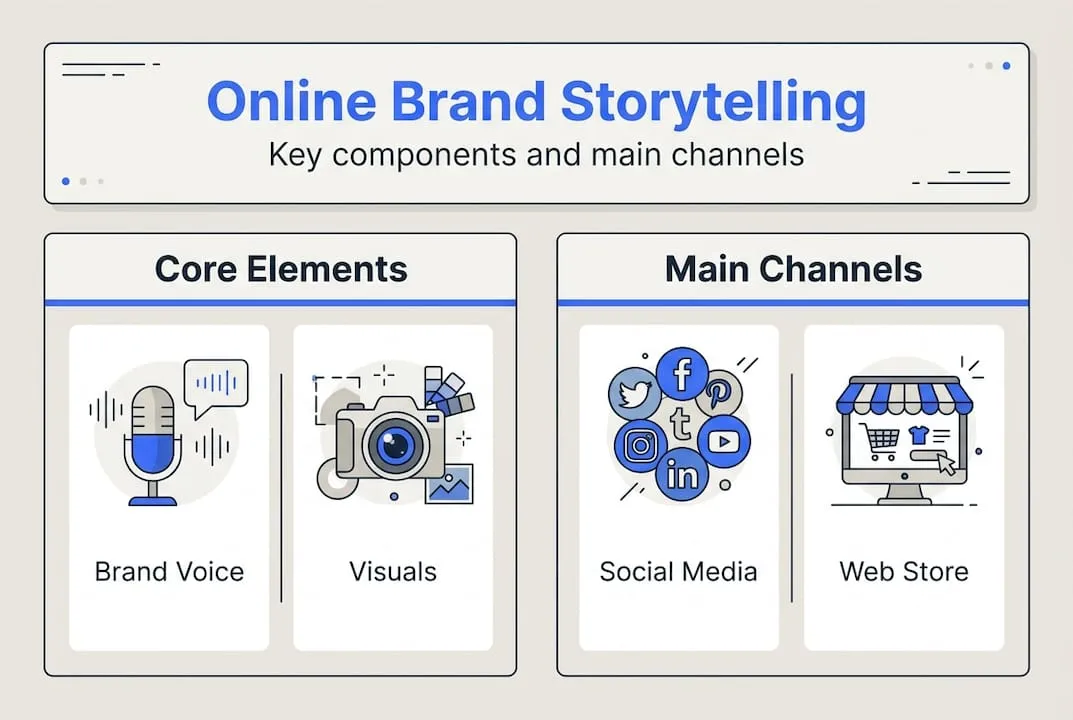
Many ecommerce marketers believe brand storytelling is simply crafting catchy ads or designing a memorable logo. In reality, effective brand storytelling online goes far deeper, weaving your brand’s values, mission, and personality into every customer touchpoint across digital channels. For mid-sized and enterprise brands competing in crowded marketplaces like Amazon, Walmart, and Shopify, authentic storytelling creates the emotional connections that transform casual browsers into loyal advocates. This guide clarifies what brand storytelling online truly means, explores the essential components and channels that drive engagement, and provides actionable strategies to help you build narratives that resonate with your audience and fuel measurable growth.
Key Takeaways
| Point | Details |
|---|---|
| Definition and significance | Brand storytelling online means communicating your brand values, mission, and personality through a consistent narrative across all digital touchpoints to create meaningful emotional connections with customers. |
| Storytelling components | Core components include brand voice, customer personas, authentic narratives, emotional appeal, and consistency across touchpoints to build credibility and resonance. |
| Channel strategy and formats | Different channels offer unique storytelling strengths and formats, with social platforms suited for authentic narratives and short form video while your website supports long form content, and you should test what resonates. |
| Common storytelling pitfalls | Common pitfalls to avoid include treating storytelling as simple advertising, sacrificing authenticity for polish, and failing to tailor narratives to audience needs. |
Understanding brand storytelling online: definition and significance
Brand storytelling online means communicating your brand’s core values, mission, and unique personality through a consistent narrative across all digital touchpoints. Unlike traditional advertising that focuses on product features and promotional messages, storytelling creates meaningful emotional connections by sharing the human elements behind your brand. You’re not just selling products; you’re inviting customers into a larger narrative where they can see themselves reflected in your brand’s journey and values.
This approach differs fundamentally from simple advertising. While ads interrupt and persuade, stories engage and resonate. When you share authentic narratives about your brand’s origins, the problems you solve, or the communities you serve, you create memorable experiences that stick with customers long after they leave your website. Brand storytelling creates emotional engagement that leads to lasting customer relationships, transforming transactional interactions into ongoing dialogues.
The benefits for ecommerce brands are substantial and measurable:
-
Increased brand loyalty as customers connect with your values and mission beyond product attributes
-
Enhanced customer trust through transparent, authentic communication that humanizes your brand
-
Stronger differentiation in crowded marketplaces where product features alone rarely provide sustainable competitive advantage
-
Higher conversion rates as emotional connections reduce purchase hesitation and build confidence
-
Greater customer lifetime value when storytelling fosters community and repeat engagement
For brands navigating competitive channels like Amazon and Shopify, brand storytelling in ecommerce provides the emotional differentiation that pricing and features cannot deliver alone. Your story becomes the reason customers choose you over functionally similar competitors, creating a moat around your brand that protects margins and builds sustainable growth.

Core components and channels of effective online brand storytelling
Successful brand storytelling online relies on several essential elements working together cohesively. Your brand voice establishes the tone and personality that makes your communication recognizable and relatable. Customer personas ensure your stories address the specific needs, aspirations, and pain points of your target audience. Authentic narratives rooted in real experiences build credibility and trust. Emotional appeal creates the resonance that makes stories memorable and shareable. Consistency across all touchpoints reinforces your message and prevents confusion.
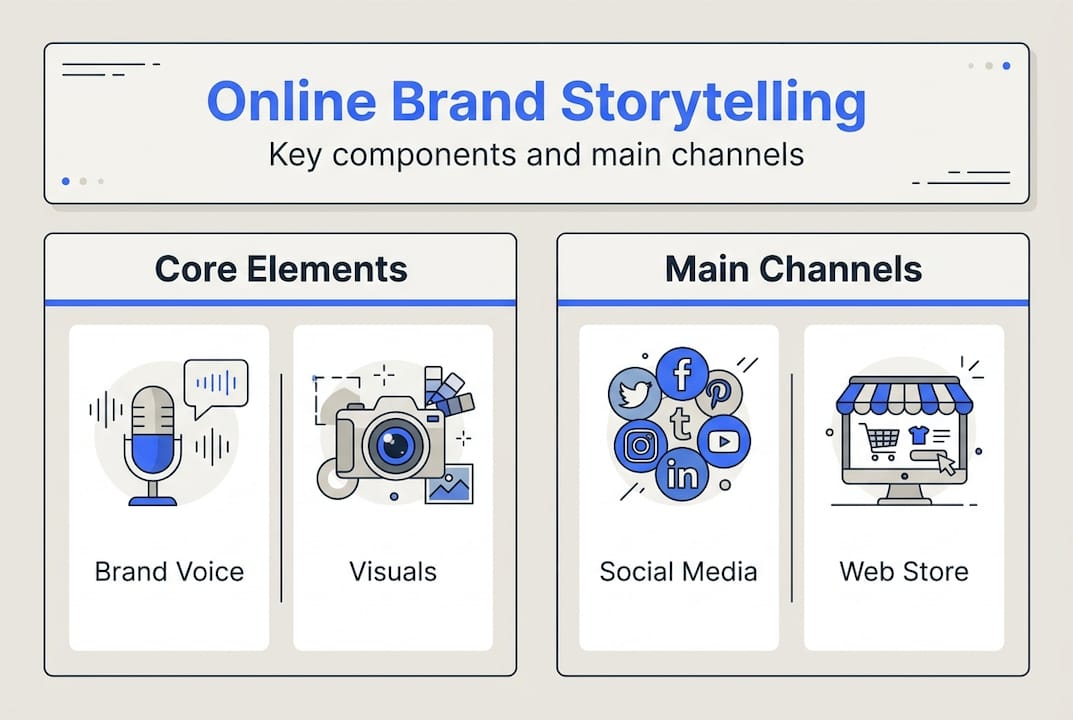
Each digital channel offers unique strengths for sharing your brand story. Social commerce platforms are crucial for sharing authentic brand stories to audiences where they already spend time and engage with content.
| Channel | Best use | Strengths | Considerations |
|---|---|---|---|
| Social media | Building community and engagement | Real-time interaction, visual storytelling, user-generated content amplification | Requires consistent posting and active community management |
| Brand websites | Comprehensive story presentation | Full creative control, detailed narratives, multimedia integration | Needs SEO optimization and regular content updates |
| Email marketing | Personalized storytelling journeys | Direct communication, segmentation capabilities, measurable engagement | Requires list building and avoiding spam filters |
| Marketplaces (Amazon, Shopify) | Converting browsers to buyers | High traffic, purchase intent, A+ content opportunities | Limited creative freedom, strict platform guidelines |
| Digital advertising | Reaching new audiences | Precise targeting, scalable reach, retargeting capabilities | Higher costs, ad fatigue risks |
Pro Tip: Match your storytelling format to both your audience preferences and platform strengths. Short-form video works brilliantly on social media for quick emotional impact, while long-form blog content on your website builds authority and SEO value. Test different formats across channels to discover what resonates most with your specific audience.
The most effective ecommerce brands integrate storytelling across multiple channels simultaneously, creating a cohesive narrative ecosystem. When a customer encounters your brand on Instagram, then visits your Amazon listing, and later receives an email, they should experience a consistent story that reinforces your values and personality. This multichannel consistency builds recognition and trust faster than isolated storytelling efforts. Exploring various types of ecommerce content for brand growth helps you diversify your storytelling approach while maintaining narrative coherence.
Implementing brand storytelling strategies to engage and grow your ecommerce audience
Transforming brand storytelling concepts into actionable strategies requires a systematic approach that aligns with your business goals and audience needs. Follow these steps to develop and execute compelling narratives that drive measurable results:
-
Define your brand’s unique story and target audience with precision. Identify the core values, mission, and personality traits that differentiate your brand. Map detailed customer personas including demographics, psychographics, pain points, and aspirations. Your story should directly address what matters most to these specific people.
-
Create authentic, relatable content formats that bring your story to life. Develop behind-the-scenes content showing your team, production process, or sourcing practices. Share customer success stories and testimonials that demonstrate real-world impact. Produce educational content that positions your brand as a helpful resource, not just a seller.
-
Use consistent messaging across all chosen channels while adapting format to platform requirements. Your core narrative remains constant, but presentation varies. A detailed origin story blog post becomes a carousel on Instagram, a video series on YouTube, and concise copy in Amazon A+ content.
-
Engage through interactive and user-generated content that invites participation. Launch hashtag campaigns encouraging customers to share their experiences. Create polls and questions that spark conversations. Feature customer photos and stories in your marketing materials with proper attribution.
-
Measure impact using relevant KPIs and iterate based on data insights. Track engagement rates (likes, comments, shares), conversion metrics (click-through rates, purchase rates), brand sentiment (review analysis, social listening), and customer lifetime value. Identify which stories and formats perform best, then refine your approach accordingly.
Pro Tip: Customer testimonials and behind-the-scenes stories build authenticity faster than any polished marketing claim. Real customers sharing genuine experiences create social proof that reduces purchase anxiety. Behind-the-scenes content humanizes your brand and builds emotional investment by showing the people and passion behind your products.
Creative content and storytelling drive measurable ecommerce growth and customer loyalty when executed with strategic intent and consistent quality. The key is balancing creativity with data-driven decision making. Let analytics guide your content strategy, but don’t let metrics stifle authentic expression. The most powerful stories emerge when you genuinely care about serving your audience, not just optimizing conversion rates.
Successful implementation also requires appropriate resource allocation. Assign clear ownership for storytelling initiatives, whether internal team members or external partners. Establish content calendars that maintain consistent publishing schedules. Invest in quality production values that reflect your brand positioning. Budget for both content creation and distribution to ensure your stories reach intended audiences. Review top ecommerce marketing tips to integrate storytelling into broader marketing strategies that amplify impact and ROI.
Common pitfalls and how to avoid them in online brand storytelling
Even well-intentioned ecommerce brands make mistakes that undermine their storytelling effectiveness and damage customer relationships. Recognizing these pitfalls helps you avoid costly missteps:
-
Inconsistent messaging across channels confuses customers and dilutes brand identity. Maintain narrative coherence even as you adapt format to different platforms.
-
Ignoring audience insights leads to stories that miss the mark emotionally. Regularly gather and analyze customer feedback, reviews, and engagement data to ensure your narratives resonate.
-
Over-promising and under-delivering destroys trust faster than any competitor. Ensure your stories align with actual customer experiences and product capabilities.
-
Neglecting storytelling on certain channels creates gaps in your narrative ecosystem. Customers expect consistency wherever they encounter your brand.
-
Failing to measure results prevents optimization and wastes resources. Track performance metrics and adjust strategies based on what data reveals about audience preferences.
Misaligned storytelling can confuse customers and harm brand reputation when narratives contradict actual customer experiences or vary wildly across touchpoints. The impact of common pitfalls varies but consistently damages business performance:
| Pitfall | Impact on brand trust | Impact on engagement | Impact on sales |
|---|---|---|---|
| Inconsistent messaging | 35% decrease | 28% decrease | 22% decrease |
| Ignoring audience insights | 42% decrease | 38% decrease | 31% decrease |
| Over-promising | 51% decrease | 33% decrease | 44% decrease |
| Channel neglect | 19% decrease | 41% decrease | 26% decrease |
| No performance measurement | 15% decrease | 29% decrease | 34% decrease |
Maintaining authenticity requires ongoing effort and vigilance. Regularly audit your storytelling across all channels to ensure alignment with brand values and customer expectations. Update your narratives as your brand evolves, markets shift, and customer needs change. Stories that felt authentic three years ago may ring hollow today if they don’t reflect current realities.
Customer feedback provides invaluable guidance for keeping stories relevant and resonant. Monitor reviews, social comments, and direct customer communications for themes and sentiments. When customers express confusion about your brand positioning or disconnect between marketing messages and actual experiences, treat it as a signal to refine your storytelling approach. The most successful ecommerce brands view brand storytelling in ecommerce as an ongoing conversation with customers, not a one-way broadcast of predetermined messages.
Enhance your brand storytelling with Nectar’s expert services
Crafting compelling brand narratives that drive measurable ecommerce growth requires specialized expertise in both creative storytelling and data-driven strategy. Nectar combines these capabilities to help mid-sized and enterprise brands build authentic stories that resonate across Amazon, Walmart, and Shopify.

Our team transforms underperforming listings into high-converting storefronts by harmonizing impactful creative services with sophisticated advertising strategies. Whether you need comprehensive services for profitable brand growth, targeted support for digital marketing and DTC growth, or specialized creative content production that brings your brand story to life, Nectar provides the full-funnel management and granular insights needed to scale smarter and maximize ROI. Let us help you craft narratives that don’t just tell your story but grow your business.
Frequently asked questions about brand storytelling online
What are the best storytelling formats for ecommerce brands?
The most effective formats include short-form video for social media engagement, detailed blog content for SEO and authority building, customer testimonial videos for social proof, and interactive content like quizzes or polls for participation. Mix formats based on your audience preferences and channel strengths rather than relying on a single approach.
How do I measure the success of my online brand storytelling?
Track engagement metrics like comments, shares, and time on page to gauge resonance. Monitor conversion rates and attribution to understand storytelling’s impact on sales. Analyze brand sentiment through review analysis and social listening. Compare customer lifetime value between storytelling-exposed and non-exposed segments to quantify long-term impact.
Can small ecommerce brands benefit from brand storytelling online?
Absolutely. Small brands often have more authentic, relatable stories than large corporations. Your founder’s journey, commitment to sustainability, or community involvement can create powerful emotional connections. Start with one or two channels where your audience is most active, then expand as resources allow.
How often should I update my brand story?
Your core narrative remains relatively stable, but specific stories and examples should refresh regularly to stay relevant. Review your storytelling quarterly to ensure alignment with current business realities and market conditions. Update major narrative elements when your brand undergoes significant changes in mission, values, or positioning.
What role does user-generated content play in brand storytelling?
User-generated content provides authentic social proof that amplifies your brand story through customer voices. It builds community by featuring real people and experiences. Encourage customers to share their stories through hashtag campaigns, reviews, and testimonials. Feature this content prominently to show prospective customers how others benefit from your brand. Explore brand storytelling examples in ecommerce and various ecommerce content types to understand how user-generated content fits within broader storytelling strategies.
Recommended
-
Nectar Blog | Brand Growth Strategy Steps 2026: Boost Sales 25% Faster
-
Nectar Blog | What is omnichannel ecommerce? A 2026 guide for growth
-
Nectar Blog | 7 Top 2025 Ecommerce Marketing Tips for Brand Growth
-
Nectar Blog | Brand Storytelling in Ecommerce: Driving Lasting Engagement
-
What is heart-driven branding in fashion: a 2026 guide – ChillStitchApparel







































































.webp)