The best Shopify subscriptions programs share five habits: they match the model to how customers actually use the product, they configure plans simply, they treat failed payments as a recovery workflow, they let subscribers manage their own orders, and they measure retention as closely as acquisition. Get those right and recurring revenue becomes a predictable engine instead of a leaky bucket. This guide walks through each habit for mid-market and enterprise brands selling physical products, plus the U.S. rules you need to check before you launch.
TL;DR
- Choose the model first (replenishment, curated box, membership or rental), then the tooling. The model decides everything downstream.
- Keep plans simple at launch: a few delivery frequencies, one clear discount, and a checkout that stays inside Shopify.
- Build payment recovery before you need it: smart retries, clear customer emails and a grace period before cancellation.
- Give subscribers a portal to skip, swap, pause and cancel. It lowers support load and tends to protect the relationship.
- Check federal and state auto-renewal rules before launch, and review them again every year. They are moving.
Start with the right subscription model
A subscription is only as good as the reason a customer has to keep it. Shopify’s own overview of subscription model types groups the options into four useful buckets: subscribe-and-save, curation, memberships and flexible or usage-triggered plans. Which one fits depends on your product.
Replenishment (subscribe-and-save)
This is the workhorse for goods people run out of: pantry items, coffee, personal care, supplements, pet food. The customer already has a reorder habit, and you are removing the friction of remembering. If your products are consumable and your repeat purchase rate is already healthy, start here.
Curated boxes
Curation sells discovery. It suits beauty, food, hobby and lifestyle brands with a wide catalog and a strong point of view. The value is the surprise and the editorial judgment, so the unit economics depend on your ability to keep the contents fresh without blowing up fulfillment complexity.
Memberships and access programs
Memberships bundle perks (free shipping, early access, member pricing) for a recurring fee. They work for brands with frequent buyers and a deep range, because the perks have to be worth the fee in the customer’s mind.
Rental and product-as-a-service
For gear that people need temporarily or want to try before owning (cameras, tools, camping equipment, baby equipment), rental plans swap ownership for recurring access. They add logistics for returns, inspection and refurbishment, so they suit brands with the operations to support them.
A practical test: ask what happens if the customer skips a month. If the answer is “they still have plenty of product,” a fixed monthly plan will churn. Offer longer intervals or a flexible schedule instead.

Configure plans so customers understand them
Most subscription setup mistakes are not technical. They are offers that confuse the buyer or margins nobody modeled.
Delivery frequency
Shopify’s selling plan documentation describes plans as a combination of a delivery frequency and a price adjustment, and notes that the adjustment can change after a set number of orders. That gives you real flexibility, but start with two or three frequencies that match actual usage. A coffee brand might offer every two and every four weeks. Adding six options rarely lifts conversion and complicates forecasting.
Discounts that protect margin
A flat percentage off every order is the default, and it is easy to explain. Because selling plans can change pricing after a number of orders, you can also use a deeper first-order incentive that steps down, or a loyalty reward that increases over time. Model both against your gross margin after shipping and payment fees before you publish. A discount that looks generous on the product page can erase the profit on small baskets.
Bundles and build-a-box
Bundles raise average order value and reduce the number of shipments per dollar of revenue. If you sell several complementary SKUs, let subscribers add one or two products to their next order from the portal. Keep the rules obvious: what is included, what happens when an item is out of stock and when the customer is billed.
Shipping and fulfillment
Shipping is where recurring margin quietly disappears. Run a quick audit of what each subscription box costs you to send by weight and zone, and decide whether free shipping is built into the discount or offered as a separate perk. A flat-rate shipping check is a useful way to see whether flat fees are costing you more than they save on your heavier or longer-distance orders. On the operations side, tell your warehouse or 3PL how subscription orders will batch, and give them a forecast. Subscription demand is far more predictable than one-off demand, which is a real advantage when you plan inventory.
The product page
The subscription option should be visible without scrolling, with the savings and the delivery cadence stated plainly beside the add-to-cart button. Our guide to the Shopify product page layout that converts covers how to place purchase options so they help rather than distract.
Choose a setup that stays inside your checkout
When you evaluate subscription tooling, you are really buying the system that owns the relationship after the first order. Shopify’s guide to subscription management software points to four areas to assess: checkout integration, payment recovery, customer portals and analytics. Use them as your scorecard.
- Checkout integration. A subscription that runs through the native Shopify checkout keeps the experience familiar, and it works with the customizations you already have. If you are on Shopify Plus, check that your plan is compatible with checkout extensibility.
- Plan flexibility. Can it handle prepaid plans, bundles, tiered discounts, skips, swaps and anchor dates without custom development? If your roadmap includes a second model, such as adding a membership, confirm it now.
- Payment recovery. Look for configurable retries, customer notifications and a defined outcome when retries run out.
- Self-service. The portal should cover everything a subscriber commonly asks support to do.
- Data access. You should be able to export subscriber data and connect it to your email, SMS, help desk and analytics stack. Subscription data that lives in a silo cannot inform your marketing.
- Reporting. At minimum, you need churn by cohort, subscriber lifetime value, skip and pause rates and recovered revenue.
Enterprise brands should also ask about API and webhook availability early. It decides how cleanly subscription events can flow into your warehouse and your retention marketing.
Treat failed payments as a workflow, not an accident
Some of your churn will never be a customer decision at all. A card expires, a bank flags a charge, funds run short. This involuntary churn is the most recoverable kind, but only if you have designed for it.
Retries
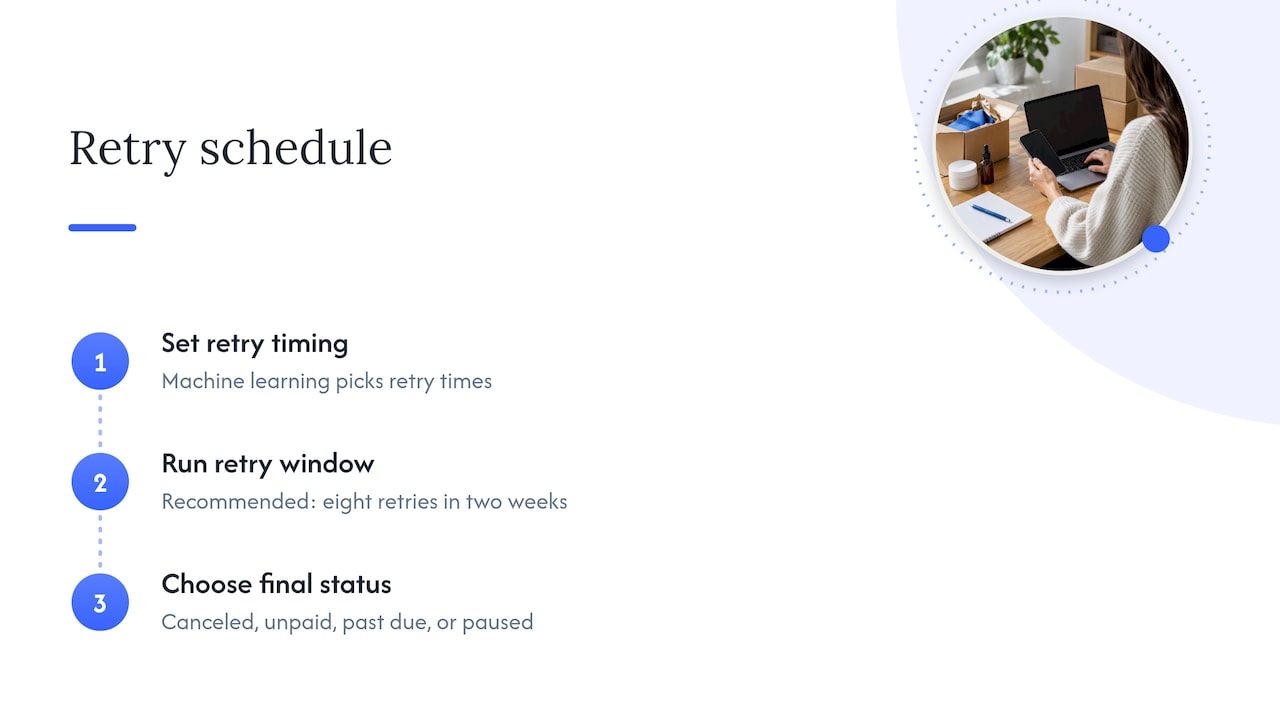
A good retry schedule spreads attempts over time instead of hammering a card repeatedly. Stripe’s documentation on automated payment retries describes a machine-learning approach that picks retry times, with a recommended default of eight retries within two weeks. After retries are exhausted, you can choose whether the subscription is canceled, marked unpaid, left past due or paused. Whatever tool you use, decide that last outcome deliberately.
Communication
Every failed charge should trigger a short, plain email (and SMS if the customer opted in) that says what happened and gives a secure link to update the card. Avoid alarmist language. The customer wants the product, so make fixing it a thirty-second task.
Grace periods
Pausing is usually kinder than canceling. A paused subscription keeps the customer’s plan and preferences intact, so coming back is one click. For higher-value plans especially, a grace period before suspension is worth the small delay in revenue.
Review the recovery numbers monthly
Track what share of failed charges you recover, how long recovery takes and which step in the sequence does the work. If the third email recovers nothing, rewrite it. If most recoveries happen after the customer updates a card through the portal, make that link more prominent.
Give subscribers control
Brands often fear that an easy cancel button will increase cancellations. In practice, a subscriber who can skip a month or swap a product has an option other than leaving. Shopify’s subscription guidance describes customer portals as the place where people pause, skip, swap, reschedule or cancel without contacting support, which reduces churn and lowers ticket volume.
A solid portal lets customers do all of the following on their own:
- Skip the next shipment or change the delivery date.
- Swap a product, flavor or size.
- Add a one-time item to the next order.
- Update the shipping address and payment method.
- Pause for a defined period.
- Cancel, with a short reason prompt and a clear confirmation.
Treat the portal as a product. Watch how many subscribers log in each month, which actions they take and where they drop off. Those behaviors tell you which plan options to simplify and which to add.
Make cancellation easy and useful
Place a few well-chosen alternatives in the cancellation flow: skip, pause, switch to a longer interval, or reduce quantity. Offer them without hiding the cancel option. Customers who feel trapped leave angry, and as the next section explains, hard-to-find cancellation is also a legal exposure.
Reduce churn and grow lifetime value
Once billing is stable, retention becomes the growth lever. A few practices consistently matter.
Win the first two orders
The early window is where most subscribers decide whether the product earns a place in their routine. Send an onboarding sequence that explains how to use the product, how to adjust the schedule and what to expect next. Our overview of retention marketing shows how to structure lifecycle messaging around those moments.
Segment by behavior
A subscriber who has skipped three times in a row needs a different message than one who just joined. Use skip, swap and portal activity to trigger tailored emails: a longer interval offer, a product suggestion or a reminder of how to adjust the next box.
Reward tenure
Step-down pricing, loyalty points or occasional free gifts for long-term members reinforce staying. Because selling plans can adjust price after a set number of orders, the mechanics are straightforward to set up.
Measure by cohort
Watch retention by signup month, by acquisition channel and by plan type. A channel that delivers cheap subscribers who churn in two months is not cheap. For more on why this matters, read why minimizing churn is critical for ecommerce success and the list of ecommerce retention strategies.
Launch, then iterate
You do not need a perfect program on day one. Launch with a focused offer, watch what customers click and skip, and refine. Shopify’s enterprise guide makes the same point through the advice of a subscription-business operator: get to market first, then iterate from measurement and feedback.
Know the U.S. rules before you launch
Subscription billing is a regulated area, and the rules differ by state. This is general information, not legal advice, and your counsel should review your flow before launch.
Federal baseline
The Restore Online Shoppers’ Confidence Act (ROSCA) is the federal statute the FTC enforces against online sellers. Its official FTC summary says sellers must disclose all material terms clearly and obtain the customer’s express informed consent before charging. For a subscription, that means the price, billing frequency, renewal and how to cancel should be clear at the point of purchase, and the customer should affirmatively agree.
The click-to-cancel rule is in flux
The FTC’s amended Negative Option Rule, known as click-to-cancel, was vacated by the Eighth Circuit on procedural grounds on July 8, 2025. According to a law firm client alert, the FTC has since signaled that it intends to revisit the rule. Do not read the vacatur as permission to make canceling hard. Build the flow as though a stricter rule will return.
State auto-renewal laws
Many states have their own automatic renewal laws, with requirements that vary on disclosures, confirmation emails, reminders before renewal and cancellation methods. Because you sell nationally, you should comply with the strictest state where you have customers. Before launch, verify:
- The disclosure language at checkout and the checkbox or other affirmative consent.
- A confirmation message after signup that restates the terms and the cancellation method.
- Whether any state you sell into requires renewal reminders, particularly for annual or prepaid plans.
- That the cancellation method is at least as easy as the signup method.
Review the list every year. Rules in this area have been changing quickly.
A practical launch checklist
- Pick one model and one hero product for the pilot.
- Set two or three delivery frequencies and one discount, with margin modeled after shipping and fees.
- Confirm native checkout, data export and integration with your email and SMS tools.
- Configure retries, failure emails and the end-of-retry outcome.
- Build and test the portal for skip, swap, pause, address, payment and cancel.
- Write the disclosures and confirmation email, and have counsel review them.
- Brief your fulfillment partner with a forecast.
- Set up cohort reporting for retention and recovered revenue before the first order ships.
Our perspective
Most brands treat a subscription launch as an app installation. We treat it as a growth system that has to connect to everything else you do on Shopify.
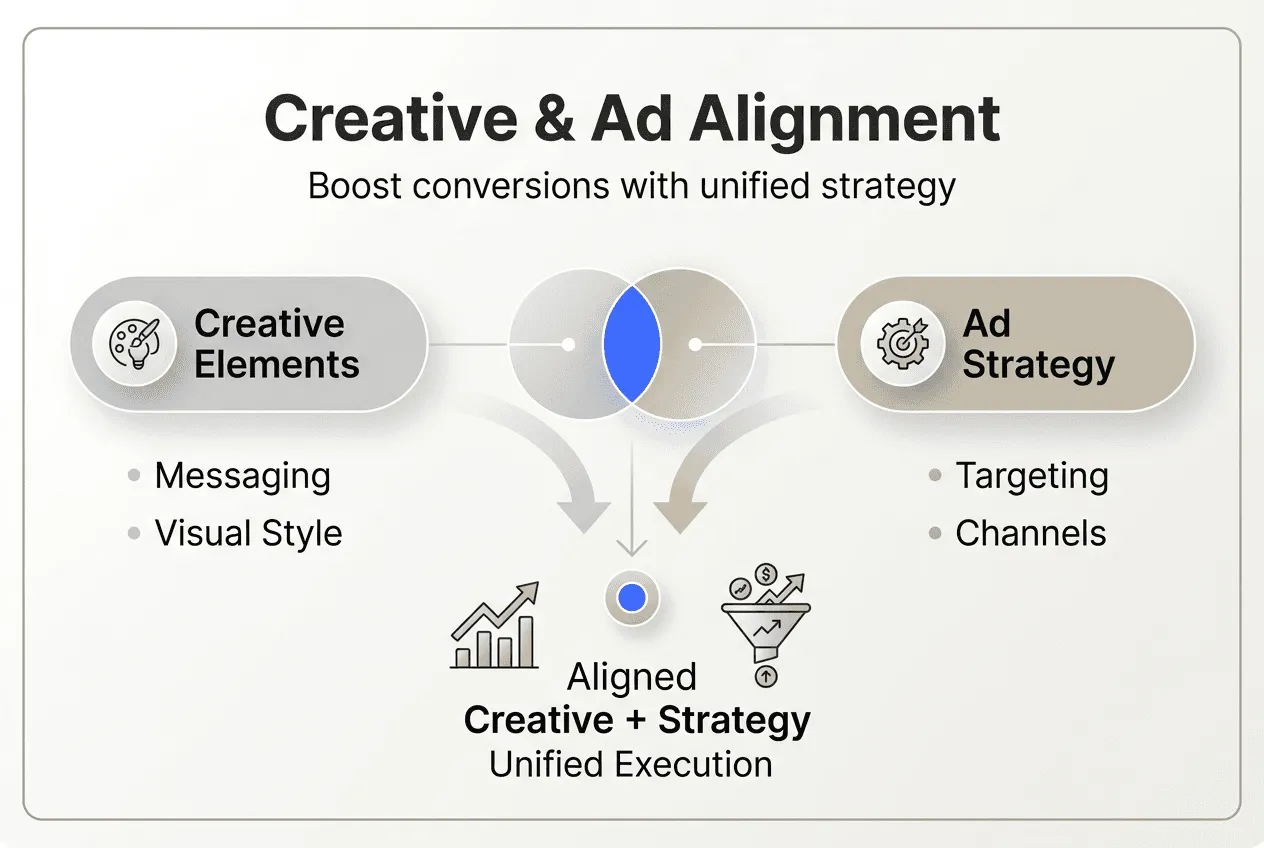
That means the subscription offer, the product page, the paid media that feeds it and the lifecycle messaging that keeps it alive should be designed together. A subscribe-and-save option on a page that does not convert will not rescue the page. A strong retention flow cannot fix the wrong audience coming in from ads.
This is why our approach combines creative, advertising and analytics in one team. We aim to bring in subscribers who fit the offer, present it clearly, and measure cohort retention and profit rather than top-line signups. Our iDerive analytics platform is built to unify data so you can see which channels deliver subscribers who stay.
If you are launching or rebuilding a subscription program, start with the unit economics and the retention plan. The tooling choice becomes much easier afterward.
Dan Katona
Build the program with Nectar
If you want a partner to connect your subscription offer with acquisition, creative and retention, our team manages Shopify growth for mid-market and enterprise brands. We handle the pieces that make a subscription program work: product page and creative production, paid social and search, lifecycle marketing and reporting.

See how our digital marketing and DTC growth services can bring in subscribers who stay, or start with a conversation at thinknectar.com. Pricing is scoped to your brand, so reach out for details.
FAQ
What products work best for Shopify subscriptions?
Consumables that customers replace regularly, such as coffee, pantry items, personal care products and supplements, are the most natural fit for subscribe-and-save. Brands with wide catalogs and a strong point of view can also succeed with curated boxes or memberships. Rental plans suit gear people need only for a while.
How many delivery frequencies should I offer?
Start with two or three that match real usage patterns, such as every two, four and eight weeks for a consumable. More options complicate forecasting and can slow the buying decision. Review skip and pause data after a few months and adjust.
How should I handle failed subscription payments?
Use a retry schedule spread across about two weeks, send clear emails with a secure card update link, and decide in advance what happens when retries run out. Stripe’s documentation describes a default of eight retries within two weeks and lets you choose to cancel, mark unpaid, leave past due or pause afterward. Pausing often makes it easier for a customer to return.
Should customers be able to cancel online?
Yes. Offer skip, pause and swap alternatives in the flow, but keep cancellation easy to find and complete. Federal law requires clear disclosure and express consent for online recurring charges, and many states have additional auto-renewal rules, so have counsel review your flow.
Do I need Shopify Plus for subscriptions?
Not necessarily, but enterprise brands often want the checkout control and integrations Plus provides. Our guide to what Shopify Plus is explains when the upgrade makes sense for a growing program.
Sources
- Subscription Model Types: 4 Ecommerce Examples, Shopify
- Manage subscription products on storefronts, Shopify developer documentation
- Ecommerce Subscription Management Software, Shopify Enterprise
- Automate payment retries, Stripe Documentation
- Restore Online Shoppers’ Confidence Act, FTC
- FTC moves to revive Click-to-Cancel rule following Eighth Circuit vacatur, Crowell
Recommended