{
"@type": "Article",
"image": {
"url": "https://csuxjmfbwmkxiegfpljm.supabase.co/storage/v1/object/public/blog-images/organization-10884/1775356544329_Manager-optimizing-Walmart-Marketplace-listings.jpeg",
"@type": "ImageObject",
"caption": "Manager optimizing Walmart Marketplace listings"
},
"author": {
"url": "https://thinknectar.com",
"name": "Thinknectar",
"@type": "Organization"
},
"@context": "https://schema.org",
"headline": "Walmart Marketplace best practices: optimize listings and sales",
"publisher": {
"url": "https://thinknectar.com",
"name": "Thinknectar",
"@type": "Organization"
},
"inLanguage": "en-US",
"articleBody": "Learn how to optimize Walmart Marketplace listings, meet performance metrics, and scale sales with proven best practices for e-commerce managers.",
"description": "Learn how to optimize Walmart Marketplace listings, meet performance metrics, and scale sales with proven best practices for e-commerce managers.",
"datePublished": "2026-04-05T02:35:59.912Z"
}
Walmart Marketplace best practices: optimize listings and sales
.webp)

TL;DR:
Walmart’s strict performance metrics require ongoing monitoring and proactive operational management.
Effective listing optimization on Walmart depends on structured data, price competitiveness, and high-quality images.
Continuous, living optimization processes are essential to sustain growth and avoid account suppression.
Selling on Walmart Marketplace sounds straightforward until you realize how unforgiving the platform actually is. Walmart’s performance standards demand sellers maintain cancellation rates below 2%, on-time delivery above 95%, and valid tracking above 99% or risk suppression. Meanwhile, shoppers expect the lowest price and the most accurate product information available. For e-commerce managers at mid-sized and enterprise brands, that combination of operational rigor and price sensitivity creates a high-stakes environment where small gaps compound quickly. This article breaks down exactly what it takes to win: from core metrics and listing optimization to fulfillment execution and advanced growth tactics.
Key Takeaways
| Point | Details |
|---|---|
| Meet every metric | Maintain top performance on cancellation, delivery, and tracking metrics to protect your Walmart Marketplace account. |
| Optimize for filters | Product attributes and filters matter most for Walmart search; complete these fields for better visibility and sales. |
| Leverage WFS advantages | Using Walmart Fulfillment Services can shield your brand from fulfillment-related performance alarms and boost customer experience. |
| Treat best practices as dynamic | Keep your playbook updated—constant adaptation and optimization are essential for sustained success on Walmart. |
Master Walmart’s core performance metrics
Walmart’s seller health framework is built around a set of non-negotiable thresholds. Miss them consistently, and you trigger seller alarms. Miss them badly enough, and Walmart suppresses or suspends your account. Understanding these key Walmart performance metrics is the first step toward building a resilient operation.
Here are the specific benchmarks every seller must hit:
| Metric | Required threshold |
|---|---|
| Order cancellation rate | Below 2% |
| On-time delivery rate | Above 95% |
| Valid tracking rate | Above 99% |
| Quick response rate | Above 95% |
| Refund rate | Below 6% |
These threshold metrics are not suggestions. Walmart monitors them in rolling windows, meaning a bad week can damage your standing even if your annual average looks fine. Sellers using Walmart Fulfillment Services (WFS) get some relief because Walmart controls the shipping process directly. Self-fulfilled sellers, however, carry the full operational burden.
Tips for exceeding each metric:
-
Order cancellation: Integrate your inventory management system directly with Walmart’s API to prevent oversells. Never list a SKU you cannot ship within your stated handling window.
-
On-time delivery: Use carrier integrations that auto-confirm shipments and flag delays before they become violations. Build in a one-day buffer during peak seasons.
-
Valid tracking: Upload tracking numbers the moment a label is generated, not when the package actually moves. Walmart counts the upload, not the first scan.
-
Quick response rate: Set up automated acknowledgment templates for common inquiries. Walmart measures response within 48 hours, but faster is always better.
-
Refund rate: Audit your listings for accuracy regularly. Most refunds stem from mismatched expectations set by poor product descriptions or images.
Pro Tip: Self-fulfilled sellers should treat 1-day handling as the baseline, not the goal. Proactively communicate carrier delays to Walmart’s seller support before a metric is flagged. Reactive fixes cost far more time than proactive communication.
Strong operational health is also the foundation for optimizing product listings effectively. Walmart’s algorithm rewards sellers who demonstrate reliability, so a clean performance record amplifies every listing improvement you make.
Optimize product listings for Walmart’s unique algorithm
Walmart’s search algorithm operates differently from Amazon’s. Where Amazon weighs conversion history and review velocity heavily, Walmart leans harder on price and structured data. Specifically, Walmart favors EDLP pricing (Everyday Low Prices), relies more heavily on filter attributes than Amazon, and limits content modules. That means your listing strategy must be rebuilt from the ground up, not copied from your Amazon catalog.
“Optimizing product attributes directly impacts search visibility on Walmart.”
Here are the top fields that drive visibility on Walmart:
-
Title: Lead with the primary keyword, brand name, and key differentiator. Keep it under 75 characters for clean display on mobile.
-
Key features (bullet points): Use all five available slots. Each bullet should address a specific shopper concern or use case, not just repeat the title.
-
Images: Walmart requires a minimum of one image but rewards listings with six or more high-resolution shots. Include lifestyle images and detail close-ups.
-
Price: Walmart’s Buy Box logic prioritizes the lowest landed price. If a competitor undercuts you by even a small margin, you lose the box.
-
Filter attributes: These are the fields shoppers use to narrow search results. Missing or inaccurate attributes make your product invisible in filtered searches.
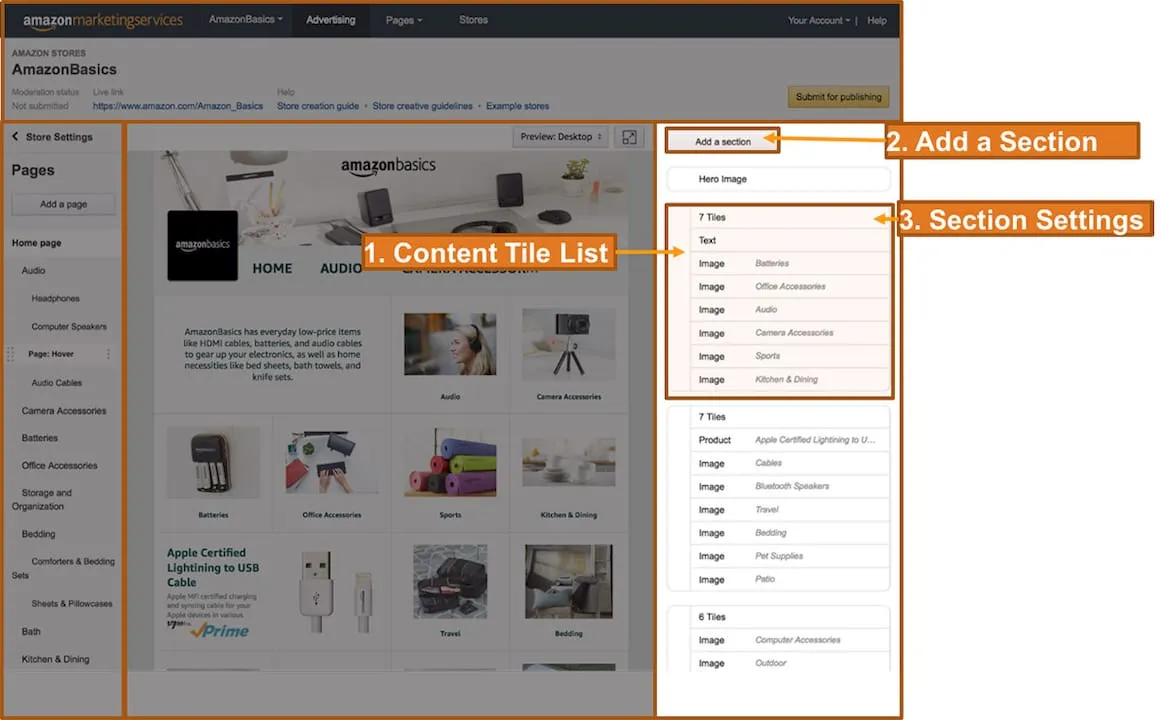
One of the biggest mistakes brands make is treating Walmart like Amazon with a different logo. Walmart has no A+ Content equivalent. There are no brand story modules or enhanced image carousels. Your structured data does the heavy lifting. Every attribute field you leave blank is a missed opportunity to appear in a filtered search.
Pro Tip: Use Walmart’s listing quality dashboard inside Seller Center weekly. It scores your listings and flags specific gaps, from missing attributes to low-resolution images. Prioritize fixes by traffic volume, not alphabetically.
For deeper guidance on listing optimization tips specific to Walmart, and to see how they connect to broader Walmart Marketplace strategies, it helps to approach each category with its own attribute map rather than a one-size-fits-all template.
Achieve near-perfect inventory and fulfillment execution
Even a perfectly optimized listing fails if the product is out of stock or ships late. Fulfillment execution is where many brands lose ground they worked hard to gain through listing improvements. The choice between WFS and self-fulfillment shapes nearly every operational decision you make.

WFS sellers are exempt from most performance alarms because Walmart controls the shipping process. Self-fulfilled sellers must deliver Amazon-like speed and proactively manage carrier delays to stay competitive.
| Factor | WFS | Self-fulfilled |
|---|---|---|
| Performance alarm exposure | Low (Walmart controls shipping) | High (seller owns all metrics) |
| Seller effort | Lower post-setup | Ongoing daily management |
| Speed advantage | 2-day badge eligible | Must match 1-day handling |
| Cost structure | WFS fees apply | Carrier and labor costs vary |
| Flexibility | Less control over returns | Full control over process |
For brands already operating at scale, WFS is often worth the fee structure because it removes the single biggest source of account risk. Self-fulfilled sellers must match 1-day handling and anticipate delays to remain competitive, which requires real investment in systems and carrier relationships.
Steps to prevent fulfillment issues:
-
Sync inventory in real time using an order management platform connected to Walmart’s API.
-
Set conservative inventory buffers during Q4 and promotional periods to avoid oversells.
-
Upload tracking numbers immediately upon label generation, before the carrier scans the package.
-
Monitor exception reports daily and contact Walmart seller support proactively when delays are anticipated.
-
Review your refund and cancellation data weekly to identify patterns before they become metric violations.
For brands managing inventory management on Walmart alongside other channels, a centralized inventory system is non-negotiable. Siloed stock management creates the oversell scenarios that trigger cancellations. Brands serious about expanding marketplace operations need infrastructure that treats Walmart as a first-class channel, not an afterthought.
Drive growth through advanced marketplace tactics
Once your operational foundation is solid and your listings are clean, the focus shifts to compounding growth. The brands that consistently win on Walmart are not just maintaining the baseline. They are actively testing, monitoring, and iterating.
Key growth levers to activate:
-
Automated repricing: Walmart’s Buy Box is extremely price-sensitive. Use a repricing tool that monitors competitor prices and adjusts yours within a margin floor to stay competitive without sacrificing profitability.
-
Review generation: Walmart’s review ecosystem is less mature than Amazon’s, which means a modest review count can still differentiate you. Use Walmart’s review accelerator program and post-purchase follow-up sequences.
-
Content refreshes: Revisit listings quarterly. Seasonal keyword shifts, new competitor entries, and Walmart algorithm updates all create opportunities to improve ranking.
-
Multi-marketplace synchronization: If you sell on Amazon or Shopify, align your content calendar so that creative assets and promotional timing work across all channels without cannibalizing each other.
-
Competitor monitoring: Walmart surfaces price and availability prominently. Track your top competitors weekly and respond to pricing moves before they cost you the Buy Box.
Pro Tip: Apply a 70/20/10 resource allocation strategy to your Walmart efforts. Spend 70% of your optimization time on proven tactics (listings, pricing, fulfillment), 20% on testing new approaches (new image formats, attribute experiments), and 10% on exploring emerging Walmart features before they become mainstream.
Brands already strong on Amazon often underestimate how different marketplaces in retail strategy behave at the platform level. A brand store setup that works brilliantly on Amazon needs significant rethinking for Walmart’s content constraints and shopper expectations. Treat each channel as its own discipline.
As brands must continually optimize listings and monitor performance with a test-and-learn approach, the teams that build this discipline early are the ones who scale sustainably.
Choosing and prioritizing your Walmart Marketplace playbook
Not every brand needs to tackle all four pillars simultaneously. Where you start depends on your current gaps, team size, and sales goals.
| Best practice area | Impact level | Effort required | Start here if… |
|---|---|---|---|
| Core performance metrics | Critical | Medium | Metrics are at risk or account health is flagged |
| Listing optimization | High | Medium | Visibility or conversion is below category average |
| Fulfillment execution | Critical | High | Cancellations or late shipments are occurring |
| Advanced growth tactics | High | Ongoing | Foundation is solid and you are ready to scale |
New entrants should start with performance metrics and fulfillment. Getting these right prevents account suppression before it happens. Brands with a strong Amazon presence should focus next on listing optimization, since the content differences between platforms are significant. Resource-light teams should prioritize WFS to reduce operational burden and free up capacity for growth work. Visit Walmart Marketplace solutions to explore how managed support can accelerate each of these areas.
A fresh perspective: Why Walmart best practices aren’t a checklist
Here is the uncomfortable truth most guides won’t tell you: following a best practices list is not a strategy. It is a starting point. The brands that struggle on Walmart are not usually the ones who never learned the rules. They are the ones who learned them once, implemented them, and then stopped paying attention.
Walmart adjusts its algorithm, updates its performance thresholds, and introduces new seller requirements on a rolling basis. A listing that scored 90% on the quality dashboard six months ago may score 70% today because Walmart added new required attributes to your category. An account that was healthy in Q2 can trigger alarms in Q4 simply because holiday volume exposed a carrier integration gap that was invisible at lower order volumes.
The brands winning on Walmart treat their playbook as a living document. They assign someone to monitor seller dashboards weekly, not quarterly. They review competitor pricing daily, not when a sales dip prompts a panic audit. Continuous marketplace optimization is not a project with a finish line. It is a permanent operating rhythm. Build that rhythm into your team’s workflow before you need it, not after a suppression event forces your hand.
Accelerate your Walmart Marketplace growth with expert help
Managing Walmart Marketplace at a high level requires more than a good checklist. It demands real-time data, category expertise, and the operational bandwidth to act on what you find.

Nectar’s fully managed Walmart optimization support combines proprietary analytics through the iDerive platform with hands-on listing management, performance monitoring, and advertising strategy. Whether you are launching on Walmart for the first time or trying to recover lost ground, our team handles the operational complexity so your brand can focus on growth. For brands managing multiple channels, our marketplace expansion help ensures Walmart fits into a coordinated, profitable multi-channel strategy. Let’s build something that scales.
Frequently asked questions
What performance metrics are most critical for Walmart Marketplace sellers?
Cancellation rate below 2%, on-time delivery above 95%, and valid tracking above 99% are Walmart’s most critical seller metrics. Missing any of these consistently puts your account at risk of suppression.
Does Walmart prefer WFS over self-fulfillment?
Yes. WFS exempts sellers from most performance alarms and typically provides advantages in shipping speed and account health that self-fulfilled sellers must work much harder to replicate.
How important are attributes and filters for Walmart Marketplace listings?
Extremely important. Walmart relies on filter attribute completeness to drive search relevance, meaning incomplete attributes make your product invisible in filtered results regardless of how strong your title or price is.
Can brands use the same listing strategies on Walmart as on Amazon?
Not fully. Walmart is more price-sensitive, limits content modules, and focuses more on structured filter data than Amazon does, requiring a distinct approach to listing creation and optimization.
What’s the best way to keep up with Walmart Marketplace changes?
Monitor your Seller Center dashboards weekly, subscribe to Walmart’s seller update communications, and build a quarterly listing audit into your team’s standard operating calendar.
Recommended