Creative Content Workflow for E-Commerce Teams in 2026
.webp)

TL;DR:
- A structured creative content workflow is essential for e-commerce teams to meet campaign deadlines and maintain brand consistency across platforms. Implementing clear stages, role definitions, automation, and AI integration helps streamline production, reduce rework, and prevent common pitfalls like version chaos and approval delays. Focusing on ownership and operational processes significantly improves content efficiency and scaling capabilities.
If your creative team is constantly firefighting, missing publish dates, or recycling old assets because no one has time to produce new ones, the problem usually isn’t talent or budget. It’s the absence of a structured creative content workflow. E-commerce brands running on ad-hoc processes pay for it in missed campaign windows, inconsistent brand presentation across Amazon, Walmart, and Shopify, and a team that burns out well before Q4. This guide breaks down how to build, execute, and optimize a workflow that actually holds up under the volume demands of modern e-commerce marketing.
Key takeaways
Point | Details
-
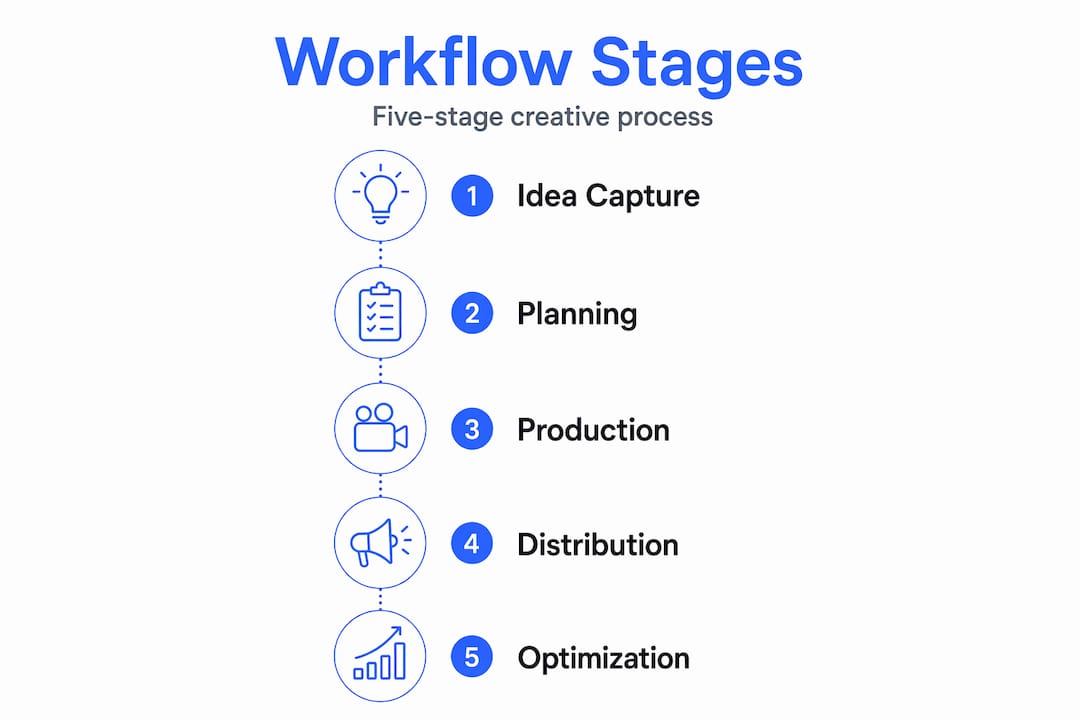
Workflow stages matter: The five-stage model of idea capture, planning, production, distribution, and optimization gives teams a repeatable pipeline that reduces inconsistency.
-
Role clarity cuts rework: Defining distinct responsibilities for writers, designers, reviewers, and publishers prevents duplicated effort and missed handoffs.
-
Parallel review saves weeks: Running feedback across departments simultaneously rather than sequentially can cut approval cycles from weeks to days.
-
AI reduces production time: Combining AI tools with human oversight shortens concept-to-output timelines dramatically without sacrificing brand consistency.
-
Metrics drive improvement: Tracking cycle times and running regular retrospectives is the only reliable way to find and fix recurring bottlenecks.
Building your creative content workflow foundation
Before you start scheduling shoots or assigning copy tasks, you need the infrastructure that makes a content creation process function at scale. Most mid-sized e-commerce teams skip this step. They jump straight to production and then wonder why nothing moves efficiently.
The five stages every team needs
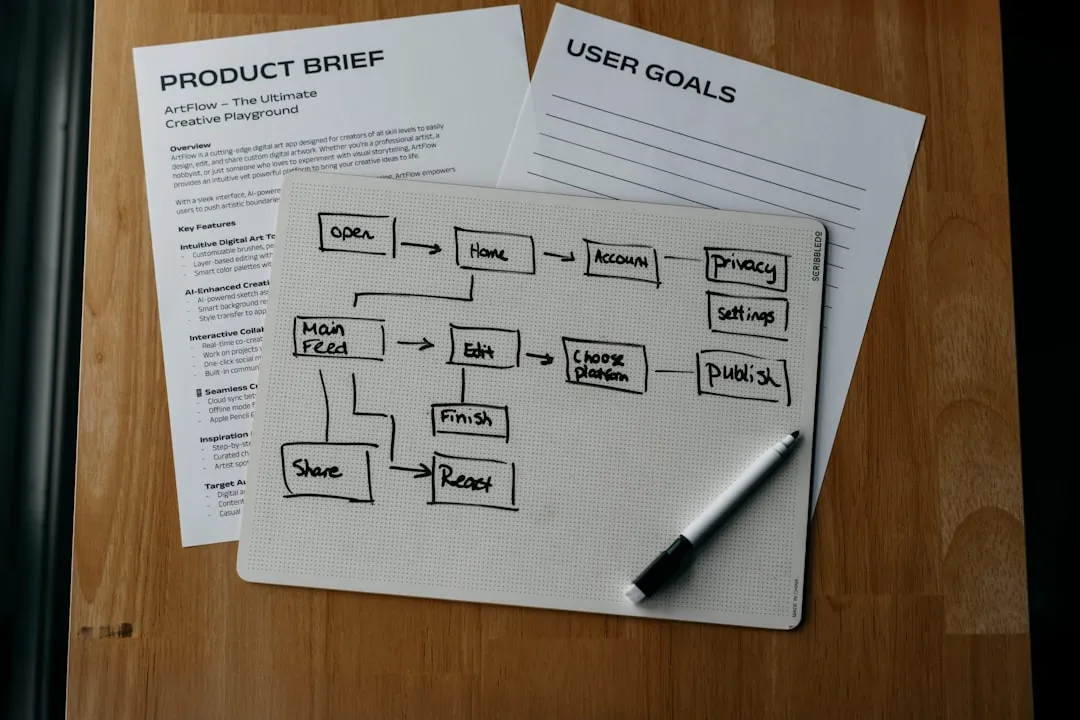
A functional creative content workflow follows five stages: idea capture, content planning, production, distribution, and optimization. Each stage has a defined entry point, output, and handoff owner. Without those three elements, work stacks up at every transition.
Tools, roles, and approval hierarchy
Tool selection matters, but role clarity matters more. On teams where dedicated roles for writers, designers, and publishers replace combined responsibilities, publish targets missed dropped significantly and quality scores improved. Start there before you add software.
Your tool stack for efficient content production needs to cover four functions:
-
Idea and brief capture: A shared intake form or idea board where requests land in one place, not in someone’s inbox.
-
Project management: A platform where tasks, owners, deadlines, and statuses are visible to the whole team.
-
Asset management: A digital asset management (DAM) system that serves as the single source of record for every file version.
-
Review and approval: A dedicated review tool where feedback is tied to specific assets and versions, not scattered across email threads.
Approval hierarchies need to be documented, not just understood. Define who can approve for each content type, what the SLA is at each stage, and who gets escalated to when something is overdue. A dysfunctional approval process leads to delayed campaigns, lost sales, and creative fatigue. Writing it down takes thirty minutes and saves weeks.
Pro Tip: Connect your content calendar, DAM, and project management platform so status updates in one system trigger changes in the others. Manual syncing is where workflows quietly fall apart.
How to build and execute the workflow step by step
Getting the workflow off the ground requires more than a new Notion board. Here is a practical sequence that works for e-commerce teams managing content across multiple platforms simultaneously.
-
Centralize idea capture. Create one intake channel for all content requests and ideas, whether from marketing, merchandising, or leadership. Every request goes through the same form with the same required fields: objective, platform, audience segment, deadline, and asset type needed.
-
Plan by theme and platform priority. Map content to campaign themes and prioritize platforms based on where your conversion data is strongest. For most brands, that means Amazon product content and Shopify landing pages before social. Schedule production in batches grouped by theme or shoot date, not by publish date.
-
Batch production to protect focus time. Content batching is one of the highest-leverage practices in efficient content production. Grouping similar tasks, all video scripts together, all product copy for a given category together, reduces context switching and lets your team reach a working rhythm.
-
Run parallel reviews, not sequential ones. Parallel review combined with centralized feedback dramatically shortens approval cycles and prevents confusion. Send assets to legal, brand, and channel owners at the same time. Use a single review surface so all comments land on the same version of the asset.
-
Use automation for routing and notifications. Set up automated triggers so that when a task status changes to “ready for review,” the assigned reviewer gets notified immediately. When all reviewers sign off, the asset automatically moves to the distribution queue. Automation connects tools into a cohesive system across the full creative lifecycle without requiring a project manager to manually push every update.
-
Apply strict version control. Every asset lives in one place. There is one current version, clearly labeled, with all previous versions archived but accessible. Feedback must be centralized on a single asset version with audit trails so the team always knows what is approved and what revision applies.
-
Repurpose deliberately at distribution. A repurpose-once, distribute-multiple workflow creates platform-specific variants from a single source piece. A product video shot for Amazon becomes a Reels cut, a Shopify hero banner, and a Walmart image sequence. This reduces editing time from hours to minutes once the source asset is approved.
The section on distribution is where most teams leave serious efficiency on the table. If your team is rebuilding assets from scratch for each platform, you are spending two to three times the production budget you need to.
Pro Tip: Build a content repurposing matrix. For every primary asset type you produce, define exactly what derivative formats it produces and for which platforms. Treat repurposing as part of the production brief, not an afterthought.
Leveraging technology and AI in your workflow
The conversation about AI in creative workflows has moved past “should we use it” and into “how do we integrate it without losing brand control.” For e-commerce marketing teams, the answer sits at the intersection of collaborative content tools and human judgment.
Integrated platforms reduce the tool-switching that eats up 20 to 30 percent of a creative team’s day. When ideation, asset management, and analytics share a single system, brand governance is easier to maintain and approval workflows trigger automatically. Adobe GenStudio demonstrates this model by integrating ideation, content management, and analytics to reduce friction in e-commerce creative pipelines.
AI specifically accelerates these workflow stages:
-
Brief generation: AI drafts briefs from intake form data, saving 30 to 60 minutes per project.
-
Content variant creation: AI generates multiple copy versions, subject line tests, or image concepts from a single source brief.
-
Compliance and quality checks: AI flags policy violations or brand guideline deviations before assets enter the review queue, reducing revision cycles.
-
Multi-platform repurposing: AI reformats and resizes assets for each channel based on defined output specs.
One concrete example: fashion campaign production reduced from weeks to hours by combining AI language models with video generation tools, with human reviewers ensuring brand consistency at the final stage. The production timeline compression was real, but so was the importance of keeping a human at the end of the chain.
The risk with AI is over-automation. Tools should handle the mechanical, repeatable steps. Your creative team should handle strategy, brand voice, and final approval. Select tools that integrate with your existing tech stack rather than requiring you to rebuild your process around them.

Pro Tip: Before adopting any new AI tool, map which specific workflow stages it will improve and define what “good output” looks like for that stage. Vague adoption without criteria leads to inconsistent results and team frustration.
Common pitfalls and how to fix them
Even well-designed workflows break down. Here is where most e-commerce content teams run into trouble, and what to do about it.
Version control chaos is the most common and most expensive failure mode. It happens when feedback arrives across Slack, email, and comment threads simultaneously. The fix is non-negotiable: all comments must land on one version, on one platform, with explicit rejection reasons tied to specific revisions. No exceptions.
Approval paralysis by committee happens when too many stakeholders have approval authority and no one has final say. Map your approval stages clearly, assign one final approver per content type, and set a hard SLA. If the SLA passes without a response, escalation is automatic.
Sustainable team workload is often the last thing teams think about and the first thing that causes quality to drop. Track capacity at the planning stage, not after burnout sets in. Use retrospectives every two weeks to surface recurring blockers.
Treating workflows as operational engines rather than impulse-driven creative acts is what separates teams that scale from teams that sprint and crash.
Metrics to track for content workflow optimization:
-
Average cycle time from brief to published asset
-
Number of revision rounds per asset type
-
SLA compliance rate by content type and stage
-
Asset reuse and repurposing rate
Run a structured retrospective monthly. Ask three questions: What slowed us down? What produced the best output? What would we change next cycle? The answers will tell you more than any analytics dashboard.
My take on what actually moves the needle
I’ve worked with enough mid-sized e-commerce marketing teams to have a clear opinion on what separates the ones that scale content efficiently from the ones that stay stuck. It’s almost never a tool problem. It’s almost always an ownership problem.
The teams that produce the most consistent, high-converting content are the ones where every asset has a single named owner from brief to publish. Not a team. One person. That person is accountable for moving the asset through every stage and escalating when something stalls.
I’ve seen brands adopt every collaborative content tool on the market and still miss deadlines because no one owned the handoff between production and review. Conversely, I’ve seen lean teams of six outperform agencies twice their size by having crystal-clear approval hierarchies and a ruthless commitment to parallel review.
The other thing I’d push back on is the idea that AI will fix a broken process. It won’t. AI accelerates what’s already working. If your brief quality is low, AI will generate low-quality variants faster. If your review process is fragmented, AI will just move bad assets through the queue more quickly. Fix the process first. Then layer in the technology.
What I’ve learned from working with e-commerce brands at scale is that the most impactful change you can make is deceptively simple. Stop treating content production as a series of one-off projects and start treating it as a repeatable production pipeline. The creative work gets better when the operational structure supports it, not the other way around.
— Dan Katona
How Nectar can sharpen your content production
If your team has the talent but lacks the operational infrastructure to produce content at the speed and quality your growth targets require, that’s exactly the problem Nectar is built to solve.

Nectar’s fully managed creative content production services combine in-house photography, videography, and design with a structured production workflow built for e-commerce scale. Whether you’re managing listings on Amazon, Walmart, or Shopify, Nectar brings the process discipline and creative firepower to close the gap between what you’re producing now and what your brand needs to compete. Explore Nectar’s full service offerings to see how integrated creative production, advertising, and analytics work together to drive profitable growth.
FAQ
What are the five stages of a creative content workflow?
The five stages are idea capture, content planning, production, distribution, and optimization. Each stage should have a defined owner, output, and handoff point to keep assets moving without bottlenecks.
How does parallel review speed up content approval?
Parallel review sends assets to all required reviewers at the same time rather than one after another. Combined with a single centralized feedback surface, this approach cuts approval cycles from weeks to days.
What is the biggest cause of version control problems in creative workflows?
Fragmented feedback across email, Slack, and multiple platforms creates conflicting revisions with no clear source of truth. Requiring all comments on a single asset version with an audit trail resolves this issue directly.
How should AI be integrated into a creative content workflow?
AI works best on mechanical, repeatable stages such as brief drafting, content variant generation, and compliance checks. Human reviewers should remain responsible for brand voice, strategy, and final approval.
How do you measure creative workflow optimization?
Track average cycle time from brief to published asset, revision rounds per asset type, SLA compliance rate, and asset repurposing rate. Monthly retrospectives using these metrics will surface the highest-impact areas to fix.
Recommended