TL;DR:
Walmart Marketplace is experiencing rapid growth driven by increased third-party GMV, expanding seller base, and fulfillment network improvements.
The platform attracts premium brands and higher-income shoppers by offering full catalogs and fast delivery options through Walmart Fulfillment Services.
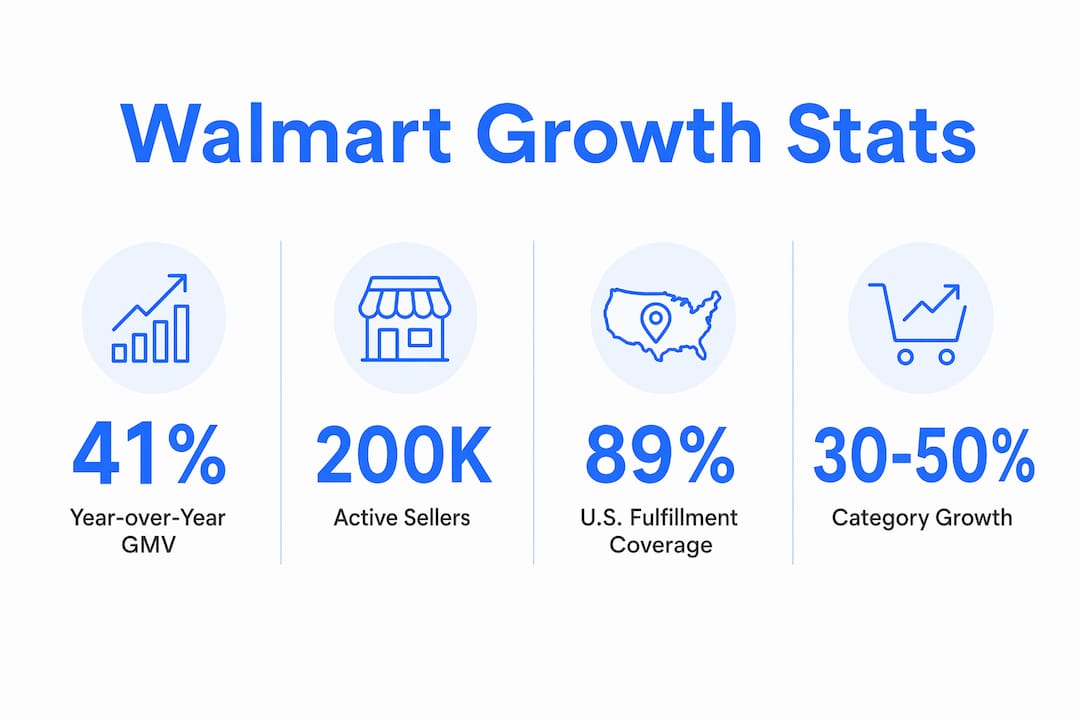
Walmart Marketplace growth is defined by a structural shift in how the world’s largest retailer competes online, with third-party GMV reaching $82 billion in fiscal 2026 and the active seller base growing 38% year over year. That scale matters because it signals Walmart is no longer playing catch-up. The platform now hosts 200,000 active sellers, covers 89% of the U.S. population through Walmart Fulfillment Services, and is actively recruiting premium brands across categories that were never part of its physical store identity. For e-commerce sellers and marketing managers, this is the most significant channel expansion since the early days of third-party selling on any major marketplace.
Why Walmart Marketplace growth is accelerating in 2026
Three forces are driving the current expansion: a larger seller base, a surge in gross merchandise volume, and a fulfillment network that finally matches the platform’s ambitions.
Third-party GMV hit $82 billion in fiscal 2026, growing 41% year over year. That rate of growth is faster than the platform has posted in years, and it reflects genuine demand from both sellers and shoppers rather than promotional inflation.
The seller base expansion tells the same story. Reaching 200,000 active sellers is a milestone that changes the platform’s competitive gravity. More sellers attract more shoppers, and more shoppers attract more sellers. That cycle is now self-sustaining in a way it was not three years ago.
Category growth is the third pillar. General merchandise categories including home, fashion, and automotive are growing 30–50% year over year, driven by an expanded SKU assortment that now exceeds 500 million items. That assortment depth gives Walmart the product breadth to compete for purchase occasions it previously could not capture.
The key drivers behind this expansion include:
-
Walmart Fulfillment Services adoption: Sellers using WFS consistently outperform those who self-fulfill on delivery speed, search ranking, and conversion rate.
-
Category diversification: High-growth verticals like health and wellness, home improvement, and automotive attract sellers with higher average order values.
-
Seller tooling improvements: The enhanced seller portal now gives brands direct control over listings, brand protection, and performance metrics.
-
Cross-border reach: Walmart recently opened Walmart.com to international customers in Mexico, expanding the addressable market for sellers already on the platform.
Pro Tip: Before listing on Walmart Marketplace, audit your catalog for SKUs that fit high-growth categories like home improvement, automotive, or health and wellness. These verticals are growing fastest and face less saturation than commodity categories.
How does Walmart’s fulfillment infrastructure support marketplace growth?
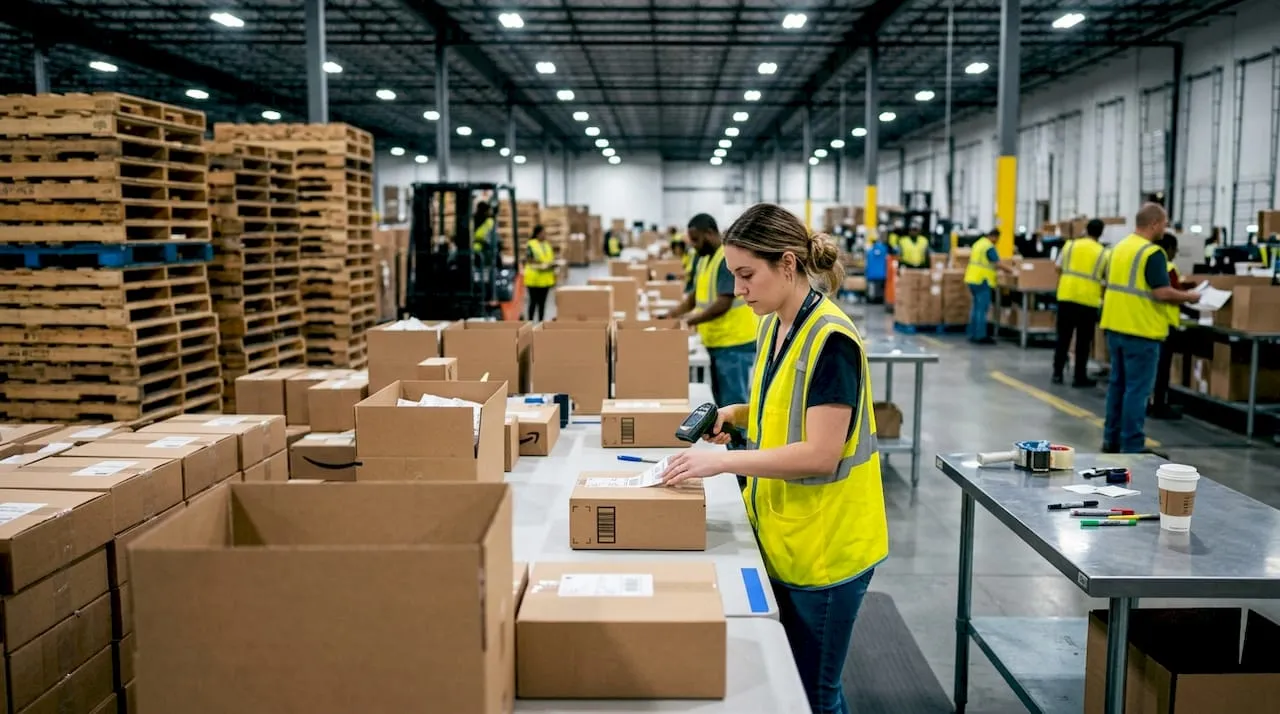
Walmart Fulfillment Services is the single biggest operational reason the marketplace is growing at this pace. The network now covers 89% of the U.S. population across 31 dedicated fulfillment centers, up from 72% coverage in 2024. That jump in coverage happened in roughly 18 months, which is an unusually fast infrastructure buildout for any retailer.
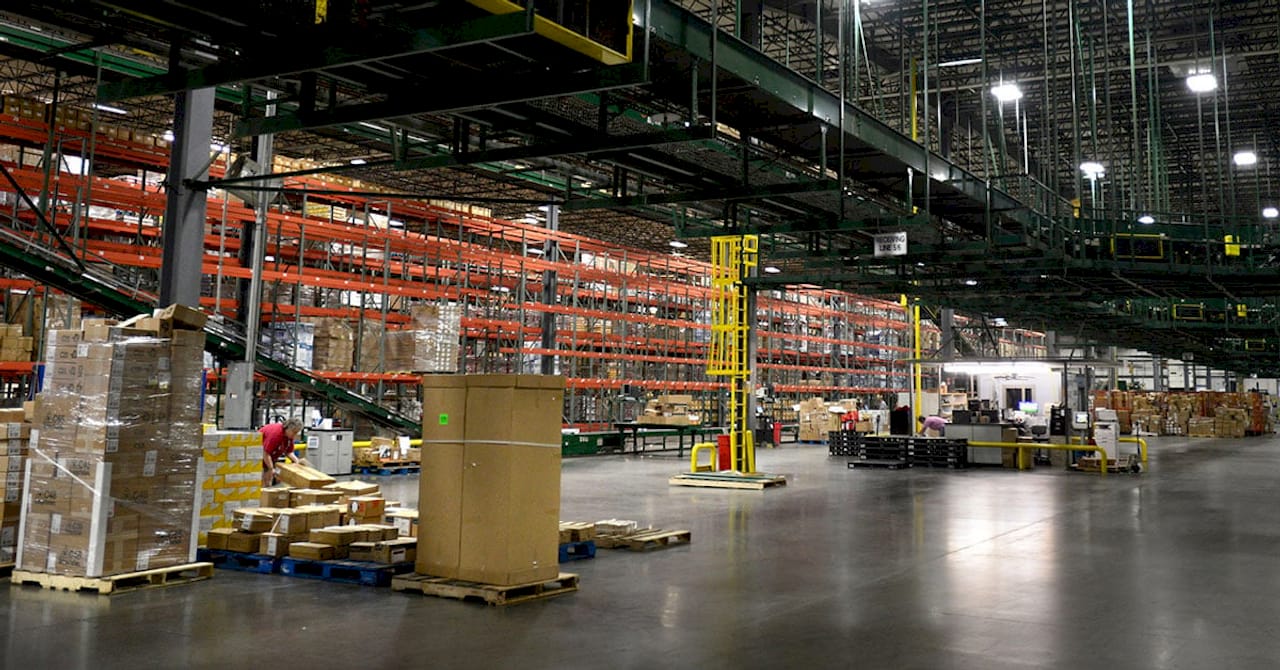
The speed improvement is measurable. Same-day and next-day shipments via WFS grew nearly 150% in recent quarters. Shoppers who receive fast delivery return more often, and that repeat behavior directly lifts seller conversion rates.
Walmart’s physical store network amplifies the fulfillment advantage in a way that pure-play e-commerce platforms cannot replicate. The halo effect from store credibility boosts marketplace listing velocity, particularly in categories like home improvement and automotive where shoppers associate Walmart with reliability. A seller listing a power tool on Walmart.com benefits from decades of consumer trust built in physical aisles.
For sellers evaluating WFS adoption, the operational case is straightforward:
-
Faster delivery unlocks the buy box. Walmart’s algorithm favors WFS listings for the buy box because they reliably meet delivery promises.
-
Seller scorecard metrics improve automatically. WFS handles shipping, returns, and customer service, which removes the most common sources of scorecard penalties.
-
Search ranking rises with WFS enrollment. Walmart’s search algorithm treats WFS enrollment as a positive signal, giving enrolled listings a visibility advantage over self-fulfilled alternatives.
-
Infrastructure investment is ongoing. With 5 new fulfillment centers opened in the last 18 months, coverage gaps are closing, meaning WFS becomes more valuable to sellers in previously underserved regions.
-
Returns handling is centralized. WFS manages returns processing, which reduces seller operational burden and keeps return-related metrics clean.
The fulfillment buildout is not a temporary investment. It is the foundation Walmart is using to make the marketplace a credible alternative for shoppers who currently default to other platforms for fast delivery.
Why is Walmart’s shift toward premium brands significant?
Walmart is deliberately using its marketplace to transition upmarket, attracting premium brands and higher-income consumers without expanding its physical footprint. That is a strategic move with long-term implications for every seller on the platform.
Physical shelves impose hard limits on what Walmart can stock. A Walmart Supercenter carries roughly 120,000 SKUs. The marketplace removes that ceiling entirely. Brands like Fender, Weber, and Stanley now list their full product catalogs on Walmart.com, including premium models that would never appear in a physical store. That catalog depth changes the shopper profile visiting the platform.
“Walmart’s marketplace is not just growing. It’s changing what Walmart is.” The platform is actively recruiting brands that signal quality to higher-income shoppers, and those shoppers are responding.
Higher-income shoppers historically avoided Walmart because the physical store experience did not match their expectations. The marketplace changes that equation. A shopper who would never walk into a Walmart store will buy a Weber grill or a Fender guitar on Walmart.com if the listing is well-executed and delivery is fast. Sellers in premium categories are the direct beneficiaries of this repositioning.
The category growth data confirms the shift. Home decor, fashion, and automotive are each growing 30–50% year over year. These are not discount categories. They attract shoppers with higher average order values and stronger brand loyalty, which means sellers in these verticals see better unit economics than in commodity segments. For brands with marketplace expansion on their roadmap, Walmart’s premium repositioning is the clearest argument for prioritizing the channel now rather than waiting.
What role do advertising and membership play in sustaining growth?
Walmart’s advertising and membership businesses are not peripheral to marketplace growth. They fund it. Walmart Connect advertising revenue grew 41% year over year, and membership fees are posting strong double-digit growth. Together, these higher-margin revenue streams offset the thin margins on core merchandise and give Walmart the capital to keep investing in fulfillment and seller tooling.
The advertising flywheel works like this: sellers spend on Walmart Connect ads to gain visibility, those ads generate revenue that funds infrastructure improvements, and better infrastructure attracts more shoppers, which makes advertising more effective. Listings that invest in ads gain organic algorithmic advantages in addition to paid placement. Ignoring Walmart Connect is not a neutral decision. It actively limits a listing’s visibility regardless of product quality or price competitiveness.
Membership adds a separate but reinforcing layer. Walmart+ members shop more frequently and spend more per visit than non-members. Sellers whose products appear in Walmart+ member searches benefit from a higher-intent audience. The membership program also supports same-day delivery economics, which ties back to the fulfillment advantage described earlier.
Key points for sellers evaluating their advertising investment on the platform:
-
Walmart Connect is not optional for growth. Sellers who treat advertising as a cost rather than a growth input consistently underperform on organic reach.
-
Ad spend and organic rank are linked. The algorithm rewards sellers who invest in the platform, creating a compounding return on advertising investment over time.
-
Membership-driven traffic is high intent. Walmart+ members are more likely to complete a purchase, which improves return on ad spend for sellers targeting that segment.
Pro Tip: Start Walmart Connect campaigns on your top three SKUs before expanding to the full catalog. Concentrated ad spend on proven products builds the performance history the algorithm rewards, and that history carries over to organic ranking.
Key takeaways
Walmart Marketplace growth is driven by a self-reinforcing system of fulfillment investment, category expansion, and advertising revenue that makes the platform increasingly difficult for serious e-commerce sellers to ignore.
Seller base and GMV scale
Third-party GMV reached $82 billion in fiscal 2026 with 200,000 active sellers. That scale creates a competitive marketplace with genuine shopper demand across diverse categories.
Fulfillment coverage is the core advantage
WFS now covers 89% of the U.S. population. Sellers using WFS gain buy box priority, better scorecard metrics, and higher search visibility automatically.
Premium brand recruitment changes the shopper mix
Walmart is actively hosting full catalogs from brands like Fender, Weber, and Stanley. This attracts higher-income shoppers who were previously outside Walmart’s core demographic.
Advertising funds the entire ecosystem
Walmart Connect’s 41% year-over-year growth funds fulfillment and seller tooling. Sellers who invest in ads receive organic algorithmic advantages that compound over time.
Category growth is concentrated in high-value verticals
Home, fashion, and automotive are each growing 30–50% year over year. Sellers in these categories benefit from both platform momentum and a higher-intent shopper base.
What I’ve learned from watching sellers win and lose on Walmart
The sellers who treat Walmart as a secondary channel where they dump their existing Amazon listings are the ones who consistently underperform. I’ve watched brands with genuinely strong products get buried on Walmart because they copied their Amazon content verbatim, skipped WFS enrollment, and ignored Walmart Connect entirely. Walmart’s algorithm is not Amazon’s algorithm. It rewards platform-native behavior, and that requires deliberate effort.
The sellers who win are the ones who optimize listings specifically for Walmart, enroll in WFS from day one, and treat their seller scorecard as a live performance dashboard rather than a compliance checkbox. They also start advertising early, even at modest budgets, because the algorithm’s memory of ad performance influences organic ranking in ways that take months to build.
The premium brand shift is the insight most sellers are missing. Walmart is not just growing. It is changing its identity, and that change creates a window for brands that position themselves correctly right now. In 12 months, the platform will be more competitive and more expensive to enter. The sellers who move early, with proper listing optimization and WFS adoption, will hold positions that are genuinely hard to displace.
The role of marketplaces in retail strategy has never been more consequential. Walmart Marketplace is no longer a hedge against Amazon dependence. For many categories, it is becoming the primary growth channel.
— Dan Katona
How Nectar helps brands capture Walmart Marketplace growth
Walmart’s growth trajectory is clear. Capturing your share of it requires more than listing products and hoping the algorithm finds them.
Nectar manages the full Walmart Marketplace growth process for mid-sized and enterprise brands, from listing optimization and WFS enrollment strategy to Walmart Connect advertising and creative production. The agency’s proprietary iDerive analytics platform gives brands the granular performance data needed to make fast, confident decisions on inventory, ad spend, and category expansion. If you are ready to treat Walmart as a primary growth channel, Nectar’s marketplace growth services are built to get you there faster and with less wasted spend.
FAQ
What is driving Walmart Marketplace’s rapid growth?
Walmart Marketplace growth is driven by a 41% year-over-year increase in third-party GMV, WFS fulfillment expansion covering 89% of the U.S. population, and aggressive recruitment of premium brands across high-growth categories like home, fashion, and automotive.
How does Walmart Fulfillment Services help sellers grow?
WFS improves seller performance by handling shipping, returns, and customer service, which directly improves seller scorecard metrics and search ranking. Same-day and next-day shipments via WFS grew nearly 150% in recent quarters.
Why is Walmart attracting premium brands to its marketplace?
Walmart uses the marketplace to host full brand catalogs without physical shelf constraints, attracting brands like Fender, Weber, and Stanley. This strategy draws higher-income shoppers who were previously outside Walmart’s core customer base.
Does advertising on Walmart Connect actually affect organic ranking?
Yes. Listings that invest in Walmart Connect advertising receive organic algorithmic advantages in addition to paid placement. Sellers who skip advertising limit their visibility regardless of product quality or pricing.
Is Walmart Marketplace worth prioritizing over other channels in 2026?
For sellers in home, fashion, health, or automotive categories, Walmart Marketplace is a primary growth opportunity. GMV hit $82 billion in fiscal 2026, and category growth rates of 30–50% year over year make early entry significantly more valuable than waiting.
Recommended
































































.webp)