Product imagery best practices for Amazon, Walmart, and Shopify
.webp)
TL;DR:
- Product imagery significantly impacts conversions, trust, and platform rankings across Amazon, Walmart, and Shopify.
- Effective strategies require tailored approaches for each channel, emphasizing white-background hero shots for marketplaces and lifestyle content for DTC brands.
Most brands treat product photography as a one-time task. Shoot it, upload it, move on. But image quality and quantity carry direct weight on conversion rates and platform scoring across Amazon, Walmart, and Shopify, and the rules are not interchangeable. What earns a top slot on Amazon can actually hurt your DTC brand story on Shopify. This guide breaks down exactly what each platform demands, how many images you need, and how to build a repeatable workflow that wins on every channel.
Key Takeaways
| Point | Details |
|---|---|
| Quality and quantity both matter | Use at least six high-quality images to boost conversions and platform scores. |
| Adapt images by channel | Marketplaces need strict white backgrounds; DTC sites thrive on lifestyle and branded imagery. |
| Diverse imagery drives more sales | Show multiple angles, close-ups, and real-life usage to win customer trust. |
| Processes prevent rework | Plan shoots and post-processing with all platforms’ rules in mind for efficiency and consistency. |
Why product imagery matters: Impact on clicks, conversions, and trust
Product images are not decoration. They are the primary selling tool for any online listing, and the data backs this up forcefully.
Over 70% of online shoppers say product images are the single most important factor when deciding whether to buy. That number should stop you in your tracks. Not price. Not reviews. Images. When a shopper cannot physically touch or try a product, the photograph does all of that work. It communicates texture, scale, quality, and trust in milliseconds.
Poor imagery creates doubt. When images are blurry, inconsistently lit, or shot at odd angles, shoppers fill that uncertainty with skepticism. That skepticism turns into cart abandonment. High-quality photos, on the other hand, signal that a brand takes quality seriously at every level, from the product itself to how it presents to the world.
Consider what poor imagery costs you in practice:
- Higher return rates because customers receive products that did not match their expectations
- Lower click-through rates on search result pages where your thumbnail competes against dozens of competitors
- Reduced eligibility for featured placement or promotional slots on Amazon and Walmart
- Weaker trust signals that push buyers toward competitor listings with superior visuals
On marketplaces specifically, image performance is not just a conversion factor. Making every image count on Amazon means understanding that the platform’s algorithm actually scores your listing based on image quality and quantity, directly influencing organic rank and Buy Box eligibility. Walmart operates similarly. The implication is straightforward: an underimaged listing is a penalized listing, even if everything else is dialed in.
“Brands that consistently hit 6 or more high-quality images per listing see measurably better conversion rates than those relying on one or two photos, regardless of product category.”
The bottom line is that imagery investment is not a creative luxury. It is a performance lever with a measurable ROI, and treating it as secondary to advertising or pricing is a costly mistake.
Key differences: Marketplace versus DTC imagery best practices
Understanding why great images matter unlocks the next question: Do you need a one-size-fits-all approach, or must you tailor imagery to each channel?
The answer is clear. You absolutely must tailor your approach. The creative strategy that maximizes conversion on Amazon can actively undermine your brand’s visual identity on Shopify, and vice versa.
Amazon and Walmart operate with strict, rigid image requirements, especially for the main hero shot. Both platforms require pure white backgrounds with no props, text overlays, or graphics in the primary image. The product must fill at least 85% of the image frame, and minimum dimensions typically start at 1000 pixels on the longest side to enable zoom functionality. These requirements exist because marketplaces prioritize visual consistency across millions of listings and want shoppers to focus on the product without distraction.
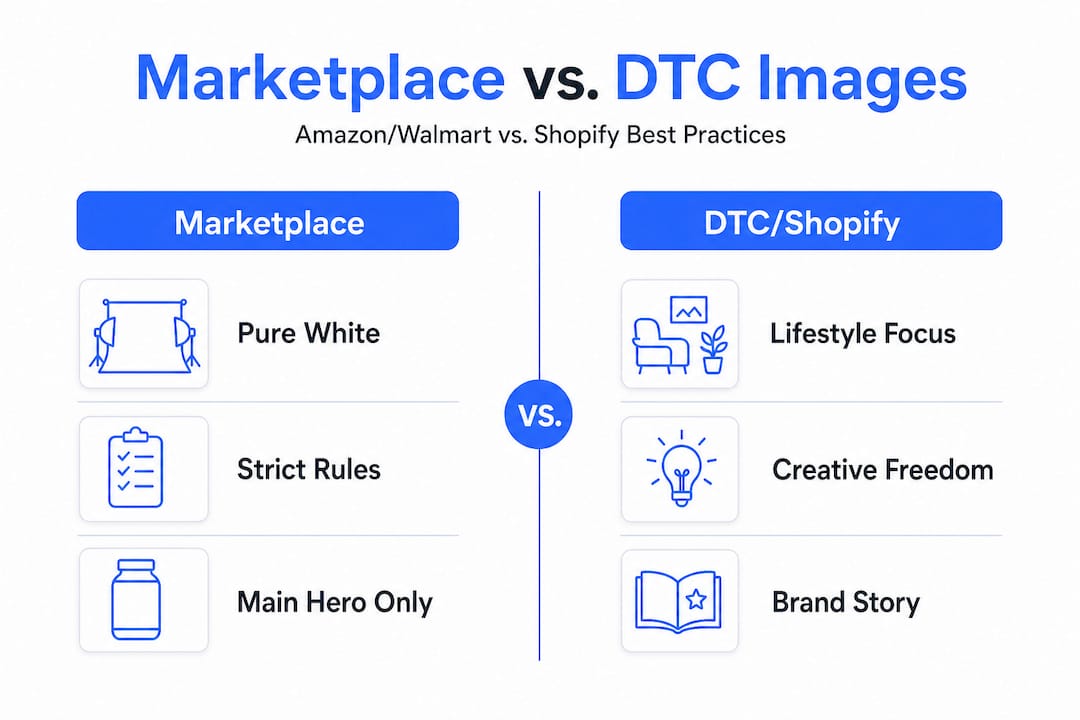
Shopify and DTC sites operate in the opposite creative space. Here, lifestyle imagery best practices and brand storytelling are what drive engagement. Mood shots, user-generated content (UGC), editorial-style photography, and brand-centric color palettes all perform exceptionally well because they build an emotional connection that a white-background shot simply cannot create.

Here is a direct comparison of what each channel demands:
| Element | Amazon and Walmart | Shopify and DTC |
|---|---|---|
| Hero background | Pure white only | Brand-specific, lifestyle, or contextual |
| Props in main image | Not allowed | Encouraged to add context |
| Text overlays | Restricted | Permitted to communicate benefits |
| Lifestyle content | Secondary images only | Primary visual storytelling tool |
| UGC integration | Limited use | High impact, especially for social proof |
| Minimum resolution | 1000px+ (zoom required) | Flexible, but 2000px+ recommended |
| Image quantity target | 7-9 images | 5-8 images depending on product complexity |
Your supplemental images on Amazon and Walmart do offer more creative flexibility. Infographics showing dimensions, comparison charts, lifestyle context shots, and detail close-ups are all fair game in secondary slots. The key is leading with a compliant hero and then building a story from there. Refer to our ecommerce photography guide for a deeper breakdown of how to structure secondary image sequences.
Pro Tip: Always build your shoot plan around the most restrictive channel’s requirements first. Shoot your white background hero shots to Amazon and Walmart spec, then add lifestyle setups and brand-centric scenes for Shopify. One shoot, fully planned in advance, can cover all channels without doubling your production budget. Your listing optimization checklist for each platform should include image spec verification before anything goes live.
The brands that win across multiple channels are the ones that build a modular image library. They have a core set of compliant marketplace assets and a separate but thematically consistent set of DTC-optimized images, all shot in a single, well-planned production session.
How many images do you need? The power of image quantity and diversity
Recognizing channel requirements, let’s talk numbers: how many images are enough, and what variety works best?
The short answer is that more is better, up to a point. Listings with six or more images consistently outperform those with fewer, and the reasons are both algorithmic and psychological. From an algorithm standpoint, platforms like Amazon assign higher content quality scores to listings that provide robust image coverage. From a shopper standpoint, multiple images reduce purchase anxiety by answering visual questions before they become objections.
Here is the recommended image quantity breakdown by platform:
| Platform | Minimum images | Optimal target | Max allowed |
|---|---|---|---|
| Amazon | 1 | 7-9 | 9 (main gallery) |
| Walmart | 1 | 6-8 | Varies by category |
| Shopify | 2 | 5-8 | Unlimited |
Quantity alone is not enough. The mix of image types matters just as much. A listing with nine near-identical angles serves no one. Diversity in your image set answers different buyer questions and moves shoppers further down the decision funnel.
Here is how to build an effective image sequence for any product:
- Hero shot on a pure white background, product centered and filling the frame. This is your click-driver in search results.
- Secondary lifestyle image showing the product in real-world use, establishing emotional relevance.
- Feature callout image using minimal text overlays and graphics to highlight two or three key product benefits or specs.
- Close-up or detail shot showing material quality, texture, finish, or craftsmanship that validates a premium price point.
- Scale reference image placing the product next to familiar objects or a human hand to communicate actual size.
- Comparison or variant image if applicable, showing available colors, sizes, or bundles.
- In-use or lifestyle scene from a different angle or context than image two, broadening the use-case story.
- Packaging or unboxing image particularly effective for gifted products or premium SKUs where the unboxing experience matters.
- Infographic or dimension diagram with measurements and materials for products where specs drive the decision.
Our case study on new imagery shows exactly how brands that followed a structured image sequence like this drove significant conversion lifts after relaunching their visual assets.
Pro Tip: Diverse imagery covering angles, use cases, scale, and benefits can raise conversions by up to 30% compared to listings relying on fewer than four images. Prioritize building a blend of hero, lifestyle, and detail shots before spending another dollar on paid advertising.
Image quantity and type requirements vary by marketplace and category, so always verify platform-specific guidelines when launching new SKUs in new categories.
Practical product imagery checklist: Elements every winning listing needs
Having set both standards and quantity, let’s bring it all together with a practical, repeatable workflow you can deploy across teams.
The biggest efficiency killer in e-commerce creative is producing assets reactively, one channel at a time, without a unified plan. Brands that approach imagery channel by channel end up with inconsistent assets, duplicated production costs, and inevitable gaps when platform requirements change.
Here is a production and QA checklist you can apply before any listing goes live:
Pre-shoot planning:
- Confirm pixel dimension requirements for every target platform
- Map out the nine image types listed above and assign a shot for each
- Identify the key product benefits and features that must appear visually
- Source props, models, or lifestyle settings needed for secondary shots
- Plan lighting conditions and background setups to accommodate all channel needs in a single session
During the shoot:
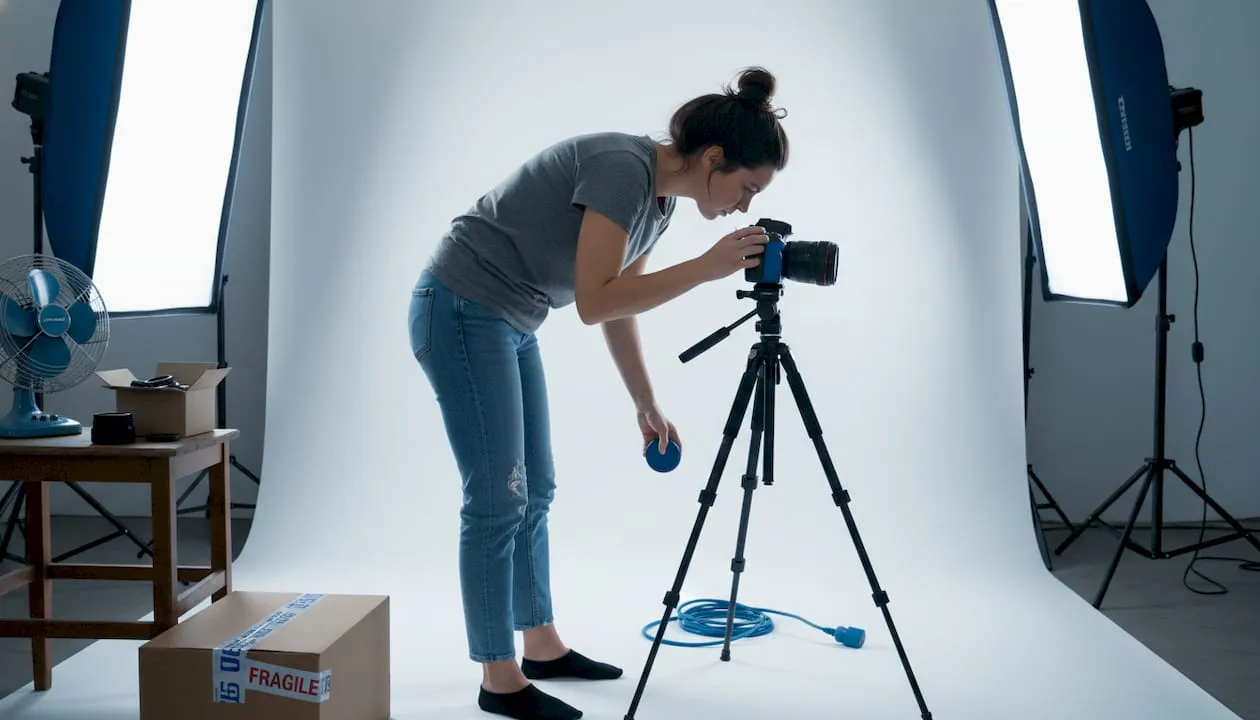
- Capture hero shots first under controlled white background lighting
- Shift to lifestyle setups without fully breaking down the white background setup
- Shoot all required angles with enough coverage for later cropping and framing
- Capture RAW files for maximum post-processing flexibility
Post-production and QA:
- Retouch hero images to ensure pure white backgrounds (RGB 255, 255, 255)
- Confirm product fills the required percentage of the frame per platform spec
- Optimize file size without sacrificing resolution, targeting under 10MB per image
- Check that color accuracy matches the physical product to reduce return risk
- Review the full image sequence as a set to ensure logical visual storytelling flow
- Verify that no restricted text, logos, or promotional graphics appear in marketplace hero slots
- Upload and preview on each platform’s live listing environment before setting to active
Pro Tip: Plan every shoot to produce assets for all channels simultaneously. A single, well-briefed two-hour studio session can generate your white background marketplace heroes, your Shopify lifestyle content, and your social media visuals in one pass. This is where working with a creative team that understands marketplace requirements pays for itself. Use our e-commerce creative checklist to standardize this process across your catalog.
After upload, do not set and forget. Designing visuals that drive sales is an ongoing process that requires periodic review of conversion data, competitive benchmarking, and iterative updates as products and platforms evolve.
Why the perfect product image is a moving target and how to stay ahead
Here is something most agencies will not tell you plainly: the product photography best practices published today will be partially obsolete within 18 months. That is not a reason to panic. It is a reason to build your creative process around iteration, not perfection.
Amazon’s algorithm has been updated repeatedly to weight image quality signals differently. Consumer visual preferences shift with social media trends. Competitors invest in better photography and raise the visual bar in your category. What looked premium two years ago can look dated today, and a listing that was converting at 12% can slip to 8% with no change to copy, pricing, or advertising.
The strict white background and pixel count rules are relatively stable. Everything else, including what lifestyle imagery resonates, which image sequences capture attention, and how much text is appropriate on infographic frames, shifts constantly. The brands we see consistently winning on Amazon, Walmart, and Shopify share one common habit: they treat their image library as a living asset, not a completed task.
Concretely, that means reviewing image performance data quarterly. It means A/B testing hero images when conversion rate drops without an obvious cause. It means monitoring competitors who are gaining share in your category and understanding what their visual strategy looks like. Brands that use data to inform these decisions, rather than gut feel or a one-time creative brief, compound their advantage over time.
Looking forward, AI-assisted image personalization is already entering the e-commerce space, allowing platforms to serve different product images to different shopper segments based on browsing behavior. UGC integration is becoming a competitive differentiator, particularly on DTC channels where authenticity outperforms polished photography in certain categories. And omnichannel image adaptation, serving the right asset in the right format and crop ratio for each touchpoint, is quickly moving from nice-to-have to standard practice.
The brands that are positioned to win understand how to boost Amazon conversion rates not as a static checklist exercise, but as an ongoing, analytics-driven discipline. The goal is not to find the perfect image once. It is to build a process that continuously finds the better image.
Take your product imagery to the next level with expert help
Product imagery that converts does not happen by accident. It requires platform-specific knowledge, professional creative execution, and a feedback loop that connects visual assets to measurable performance data.

At Nectar, our in-house creative studio produces marketplace-compliant photography and lifestyle content built specifically to drive conversion on Amazon, Shopify, and Walmart. We combine that creative firepower with our proprietary iDerive analytics platform to ensure your imagery strategy is always grounded in real performance data, not guesswork. Whether you need a full catalog refresh or channel-specific asset production, our full creative studio is equipped to execute from shoot plan to live listing, at scale.
Frequently asked questions
How many images should a product listing have on Amazon?
Aim for 6-9 high-quality images per listing to maximize conversion rates and meet Amazon’s platform content scoring criteria. The ninth slot is often used for a video thumbnail or infographic.
Do lifestyle images improve sales on Shopify?
Yes, lifestyle and UGC images make products relatable and emotionally resonant, which can meaningfully boost conversion rates on Shopify and other DTC channels where brand storytelling drives purchase intent.
What image backgrounds are required on Walmart and Amazon?
Both Walmart and Amazon require a pure white background for the main product image, with no additional props, text overlays, or branded graphics in the primary shot.
Does image quality affect listing rank or visibility?
Yes, both quality and quantity of images are factored into marketplace content scoring systems, which directly influence product ranking, visibility in search results, and eligibility for premium placement and promotional features.
Recommended
- Nectar Blog | Ecommerce photography guide: boost clicks and conversions
- Nectar Blog | Listing optimization checklist: Boost sales on Amazon, Walmart, Shopify
- Nectar Blog | Walmart Marketplace best practices: optimize listings and sales
- Nectar Blog | Product Photography for Ecommerce: Why Quality Sells





































































.webp)