TL;DR:
Conversion rate optimization increases the percentage of website visitors completing desired actions without increasing traffic spend.
It improves revenue, lowers customer acquisition cost, and offers compounding benefits over time through targeted, data-driven changes.
Conversion rate optimization (CRO) is the practice of systematically increasing the percentage of website visitors who complete a desired action, such as a purchase, signup, or add-to-cart, without increasing traffic spend. For digital marketers and e-commerce managers, CRO is the most direct path to higher revenue from the audience you already have. A 1% lift in conversion rate on a $10 million e-commerce site adds $100,000 in revenue. That figure makes the case better than any benchmark ever could.
What is conversion rate optimization and why does it matter?
CRO is the discipline of removing friction between a visitor’s intent and a completed action. The standard industry term is conversion rate optimization, and it applies across every channel: paid search, organic SEO, email, and marketplace listings on Amazon, Walmart, and Shopify.

The math is straightforward. If 10,000 visitors land on your store each month and 2% buy, you get 200 orders. Raise that rate to 3% and you get 300 orders with zero additional ad spend. That difference compounds every single month.
CRO also improves the return on every other marketing investment. A 15% improvement in conversion rates translates to a 15% revenue increase across SEO, paid ads, and email simultaneously. That multiplier effect is why mature CRO programs regularly outperform paid media on a cost-per-revenue basis.
Trust is a conversion factor that marketers frequently underestimate. 67% of consumers stop buying if they do not trust a website. That statistic means your conversion rate is partly a measure of credibility, not just usability.
How CRO impacts e-commerce results
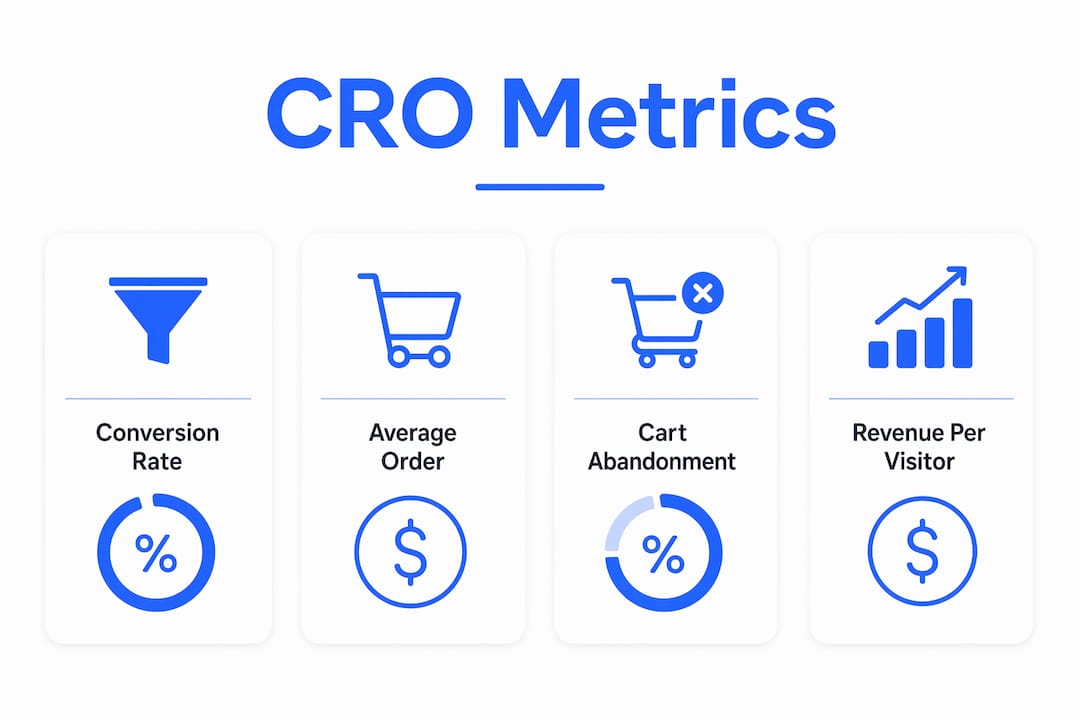
CRO touches every metric that matters to an e-commerce manager: revenue per visitor (RPV), average order value (AOV), cart abandonment rate, and customer lifetime value (LTV).
Cart abandonment is one of the highest-leverage areas. 18% of US online shoppers abandoned orders because a site forced them to create an account before checkout. Offering guest checkout is a single, low-effort fix that directly recovers lost revenue. That is the kind of high-impact, low-complexity change CRO prioritizes.
Site speed is equally consequential. 43% of sites fail the 2026 INP metric, which requires page interactivity under 200ms for optimal user experience. Slow pages push visitors out before they ever see your offer.
The benefits of conversion rate optimization extend beyond the transaction itself. Higher conversion rates lower your effective cost per acquisition (CPA), which improves profitability on every paid channel. When your performance metrics in e-commerce improve, the entire marketing funnel becomes more efficient.
-
Revenue per visitor (RPV): Total revenue divided by total visitors. This is the single number that captures both conversion rate and AOV together.
-
Cart abandonment rate: The percentage of shoppers who add items but do not complete purchase. Reducing this rate is often the fastest CRO win available.
-
Customer lifetime value (LTV): CRO improvements that reduce checkout friction tend to increase repeat purchase rates, compounding the initial revenue gain.
-
Cost per acquisition (CPA): When more visitors convert, your fixed ad spend produces more customers, lowering CPA automatically.
What are the key steps in conversion rate optimization?
Effective CRO follows a repeatable process. Skipping steps, especially the diagnostic phase, is the most common reason programs stall.
-
Audit your funnel with real data. Use analytics to map where visitors drop off. Focus on analyzing your e-commerce data rather than industry averages. Your funnel has specific leak points that benchmarks will never reveal.
-
Prioritize the biggest drop-off first. Successful CRO programs fix checkout friction and mobile responsiveness before touching minor design details. If 60% of your visitors leave the checkout page, that is where you start.
-
Form a hypothesis. State exactly what you expect to change and why. “Adding a guest checkout option will reduce checkout abandonment because account creation is a barrier” is a testable hypothesis. “Making the button bigger” is not.
-
Run a controlled A/B test. Change one variable at a time. Testing multiple changes simultaneously invalidates your conclusions because you cannot attribute the result to a specific change. One variable, one test, every time.
-
Wait for statistical significance. A/B tests for lower-traffic stores require 2–4 weeks to reach reliable statistical significance. Ending a test early because one variant looks better is a fast path to false positives and wasted resources.
-
Implement the winner and document the learning. Every test result, whether positive or negative, teaches you something about your audience. Build a test log and use it to inform the next hypothesis.
Pro Tip: Start with your product pages before anything else. Well-structured product pages with clear images, benefit-focused copy, and visible trust signals address the three biggest conversion barriers in a single fix. Nectar’s product page optimization checklist covers each element in detail.
Core CRO techniques that move the needle
Mobile optimization is not optional. More than half of e-commerce traffic arrives on mobile devices, yet most stores are designed and tested on desktop first. A checkout flow that works on a 27-inch monitor can be nearly unusable on a phone.
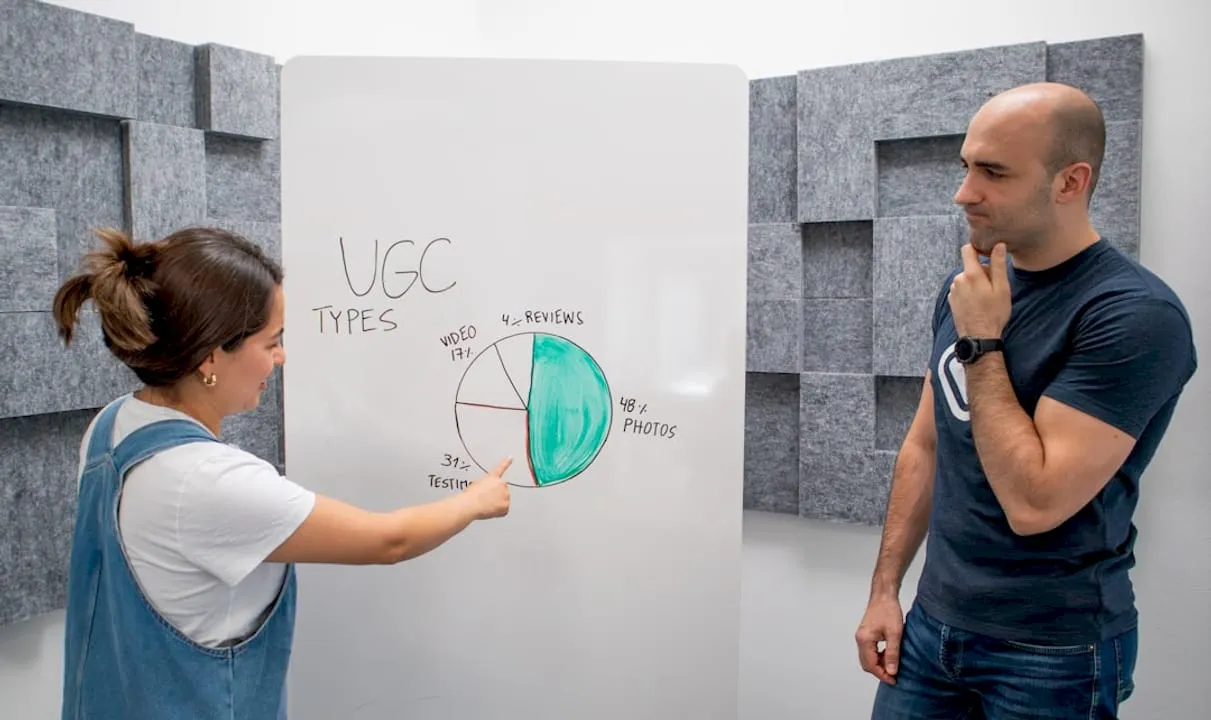
Trust signals, including customer reviews, security badges, and clear return policies, directly address the credibility gap that kills conversions. User-generated content (UGC) such as photo reviews and Q&A sections reduces purchase hesitation by showing real customers using the product. Investing in e-commerce creative that includes authentic imagery consistently outperforms stock photography in conversion tests.
Page speed optimization means compressing images, reducing third-party scripts, and meeting Core Web Vitals standards. No persuasive copy overcomes a page that takes five seconds to load.
Common CRO mistakes that kill results
Most CRO programs fail not because of bad ideas, but because of bad process. These are the mistakes that consistently waste time and budget.
-
Chasing industry benchmarks. There is no universal “good” conversion rate. A 2% rate for a luxury furniture brand and a 2% rate for a $15 phone case represent completely different business situations. Fix your own funnel’s biggest leak, not someone else’s average.
-
Testing too many variables at once. Changing headline, image, button color, and price simultaneously tells you nothing about which change drove the result. Isolated testing is the only way to build reliable knowledge.
-
Ignoring technical health. Site speed is the overlooked foundation of CRO effectiveness. Slow performance causes bounce before any design or copy element gets a chance to work.
-
Neglecting mobile UX. Testing only on desktop misses the majority of your actual traffic. Run every test on mobile first.
-
Ending tests too early. Premature conclusions based on small sample sizes produce false positives. A winning variant after three days of data is almost never a real winner.
Pro Tip: Before launching any test, calculate the minimum sample size you need for statistical significance. Free tools like Evan Miller’s A/B test calculator give you a reliable threshold before you start, not after.
How do you measure and maximize CRO return on investment?
CRO ROI is measurable, and the formula is simple. Divide the revenue gained from a conversion rate improvement by the cost of the CRO program. A program that costs $20,000 and generates $150,000 in incremental revenue delivers a 7.5x return.
Well-run CRO programs typically achieve 5–10x ROI. That range far exceeds what most paid media channels deliver on a sustained basis. The reason is compounding.
CRO improvements compound over time because they permanently raise the baseline conversion rate. Paid ads stop producing revenue the moment you stop paying. A checkout flow improvement you shipped in march continues generating revenue every month after, with no ongoing cost.
-
Calculate revenue per visitor (RPV). Divide total monthly revenue by total monthly visitors. This is your single most important CRO metric because it captures both conversion rate and order value in one number.
-
Identify your highest-traffic, lowest-converting pages. These are your best ROI opportunities. A page with 50,000 monthly visitors and a 1% conversion rate has far more upside than a page with 500 visitors and a 3% rate.
-
Prioritize tests by ease and impact. Score each test idea on a simple 1–5 scale for both potential revenue impact and implementation effort. Run high-impact, low-effort tests first.
-
Track incremental revenue, not just conversion rate. A conversion rate increase that lowers AOV can actually reduce total revenue. Always measure RPV alongside conversion rate to confirm the net effect is positive.
The compounding math is worth spelling out. A 2% monthly improvement in conversion rate, sustained over 12 months, produces a dramatically higher baseline than a single large test. Sustained programs beat one-time projects every time.
Key Takeaways
CRO delivers compounding revenue gains by permanently raising baseline conversion rates, making it the highest-ROI investment available to e-commerce managers who already have traffic.
Core insight
CRO works because it extracts more revenue from traffic you already paid for, and every improvement compounds permanently.
Fix the biggest leak first
Prioritize checkout friction and mobile UX before any design detail. These changes produce the largest revenue gains per hour of effort.
Test one variable at a time
Changing multiple elements simultaneously makes results unattributable. Isolated testing is the only way to build reliable, reusable knowledge.
Wait for statistical significance
Low-traffic stores need 2–4 weeks per test. Ending early produces false positives that waste future budget on changes that do not actually work.
Measure revenue per visitor, not just conversion rate
RPV captures both conversion rate and order value together. A conversion rate increase that lowers AOV can reduce total revenue.
CRO ROI compounds; paid media ROI does not
A checkout improvement ships once and earns forever. Paid ad spend stops producing the moment the budget runs out.
The compounding case for CRO that most marketers miss
By Dan Katona
The most common mistake I see e-commerce managers make is treating CRO as a project rather than a program. They run a few tests, see modest gains, and move on to the next initiative. That approach captures maybe 10% of the available value.
The real power of CRO is in the compounding. Every improvement you make raises the floor. The next test runs on a higher baseline. Over 12 to 18 months, a disciplined program produces results that look almost implausible compared to what a single sprint delivers.
The other thing I push back on constantly is the obsession with benchmarks. I have seen teams spend weeks debating whether their 2.4% conversion rate is “good” relative to their category average. That debate is almost always a distraction. Your funnel has specific drop-off points. Find them, fix them, and measure the result. The benchmark is irrelevant.
Start with the biggest leak. For most stores, that is the checkout page. Guest checkout, fewer form fields, visible security badges, and a clear return policy address the four most common reasons people abandon at the last step. Fix those before you touch your homepage hero image.
CRO also has to connect to unit economics. A higher conversion rate that attracts lower-quality customers, or that discounts so aggressively it kills margin, is not a win. Every test should be evaluated against contribution margin, not just top-line revenue. That discipline is what separates programs that scale from programs that plateau.
— Dan Katona
How Nectar drives profitable growth through conversion optimization
Nectar works with mid-sized and enterprise brands on Amazon, Walmart, and Shopify to turn underperforming listings into high-converting storefronts. The agency combines in-house photography, videography, and design with data-driven advertising through its proprietary iDerive analytics platform, giving brands the full-funnel visibility needed to find and fix their biggest conversion leaks.
For brands that want a managed approach to profitable e-commerce growth, Nectar handles everything from product page creative and listing optimization to retail media management and marketplace operations. The result is a program built on the same compounding logic that makes CRO the highest-ROI channel available to growing brands.
FAQ
What is conversion rate optimization in simple terms?
Conversion rate optimization is the process of increasing the percentage of website visitors who complete a desired action, such as a purchase or signup, without increasing traffic. It focuses on removing friction and improving the user experience to get more value from existing visitors.
What is a good conversion rate for e-commerce?
There is no universal good conversion rate. Managers should focus on their own funnel data and fix the biggest drop-off points rather than comparing against industry averages, which vary widely by category, price point, and traffic source.
How long should an A/B test run?
A/B tests for lower-traffic stores require 2–4 weeks to reach statistical significance. Ending a test early based on small sample sizes produces false positives and leads to poor decisions.
What affects conversion rates the most?
Site speed, mobile usability, checkout friction, and trust signals are the four factors that most consistently affect conversion rates. Slow pages and forced account creation are among the most common and fixable causes of lost conversions.
How do you calculate CRO ROI?
Divide the incremental revenue generated by a conversion rate improvement by the total cost of the CRO program. Well-run programs typically achieve 5–10x ROI, and those gains compound permanently because the improved baseline continues generating revenue after the work is done.
Recommended