TL;DR:
Launching on Walmart Marketplace requires meeting strict application and documentation standards before starting sales.
Creating high-quality product listings and choosing the right fulfillment method are crucial for early success.
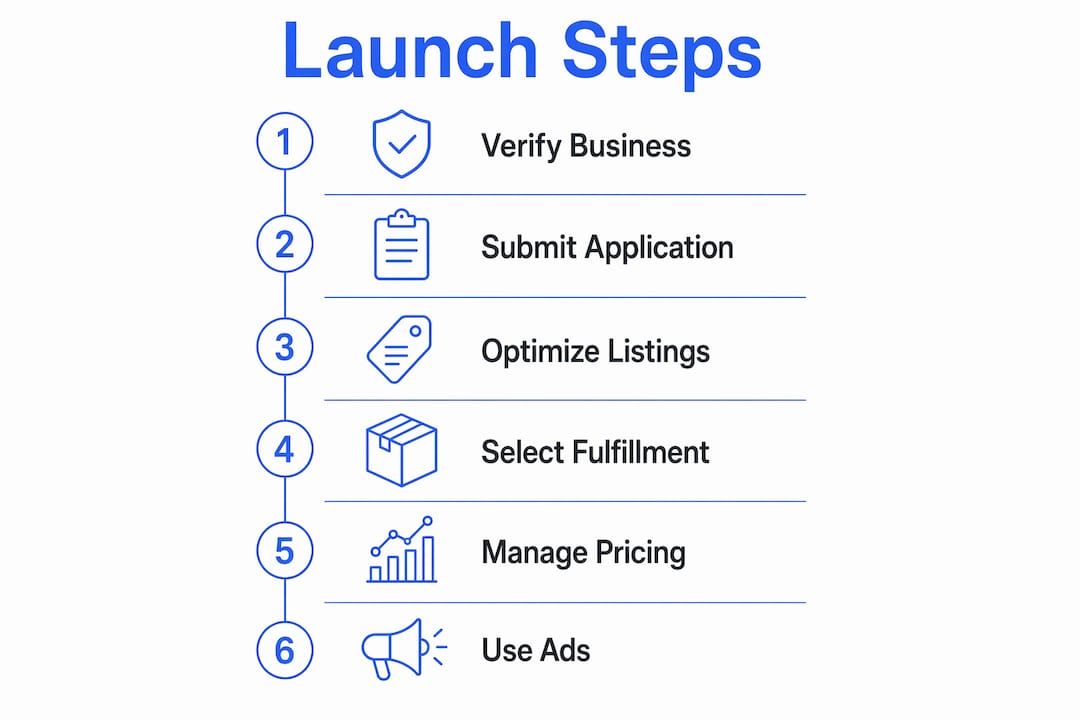
Launching on Walmart Marketplace is a structured process that requires meeting strict business verification standards, building high-quality product listings, and selecting the right fulfillment method before your first sale. Walmart operates a curated, application-based platform that prioritizes established operators over new or unproven sellers. Knowing how to launch on Walmart Marketplace the right way means understanding each gate you must pass: application approval, catalog compliance, fulfillment setup, and advertising activation. Brands that treat this as a checklist exercise miss the point. The sellers who win early are the ones who arrive operationally ready.
What are the prerequisite business and documentation requirements for Walmart Marketplace?
Walmart Marketplace is not open to everyone. The platform screens applicants for operational maturity, legal standing, and proven sales history before granting access.
The core documentation requirements are non-negotiable. Onboarding requires an Employer Identification Number (EIN), a signed W-9, and a verified physical business address. Social Security Numbers are not accepted. Walmart uses these documents to confirm your business is legitimate and legally registered in the United States.
Beyond paperwork, Walmart evaluates your track record. Applicants with proven marketplace success and quality product catalogs are prioritized. A professional ecommerce website URL and an established sales history on another marketplace significantly increase your approval odds. Sellers who apply without any prior sales record face a much steeper climb.
International sellers face additional requirements. Non-US entities must provide proof of delivery capability per Walmart standards and maintain a US-based return address. This is not optional. Walmart holds international sellers to the same customer experience standards as domestic ones.
Before you apply, confirm these items are in order:
-
A valid EIN registered to your business entity
-
A completed and signed W-9 that matches your EIN exactly
-
A verified physical US business address (no PO boxes)
-
A professional ecommerce website with active product listings
-
Documented sales history on at least one established marketplace
-
A product catalog that complies with Walmart’s prohibited items list
-
A US-based return address if you are an international seller
Pro Tip: Pull your W-9, EIN confirmation letter, and business registration documents side by side before you start the application. Every name, address, and entity type must match character for character.
How to complete the Walmart Marketplace seller application efficiently
The application lives at Walmart’s Seller Center, and the process moves faster when you prepare your materials before you open the form. Sellers who try to gather documents mid-application often introduce errors that trigger delays.
Follow these steps to move through the application cleanly:
-
Create your Seller Center account. Go to marketplace.walmart.com and start a new seller account. Use the email address tied to your business, not a personal account.
-
Enter your business information. Input your legal business name, EIN, and physical address exactly as they appear on your W-9. Any mismatch here is the most common cause of rejection.
-
Describe your product catalog. Provide your primary product categories, estimated SKU count, and average selling price. Be accurate. Walmart cross-references this against your website.
-
Upload your W-9. The document must be current, signed, and match the business details you entered in step two.
-
Provide your ecommerce history. List your active sales channels and include your website URL. A professional storefront with real product pages carries significant weight.
-
Submit and wait for review. The review period runs 2–4 weeks. Walmart’s team evaluates your application manually, so there is no shortcut.
Most rejections stem from mismatched business details, not from an unfit business. Walmart’s verification system is strict about document consistency. A business name that reads “LLC” in one field and “L.L.C.” in another can trigger a denial.
Pro Tip: Screenshot every page of your application before submitting. If Walmart requests clarification, you will know exactly what you submitted and can respond without guessing.

Common pitfalls include using a Gmail address instead of a business domain email, listing a PO box as your physical address, and submitting a W-9 that was signed more than a year ago. Each of these signals operational immaturity to Walmart’s review team.
How to optimize product listings for Walmart Marketplace launch success
A listing on Walmart Marketplace is not just a product page. It is a scored asset that directly affects your payout rate and Buy Box eligibility. Walmart introduced catalog quality enforcement starting september 1, 2026, with payouts reduced by up to 3% for listings that score below 70. That penalty comes straight off your revenue.
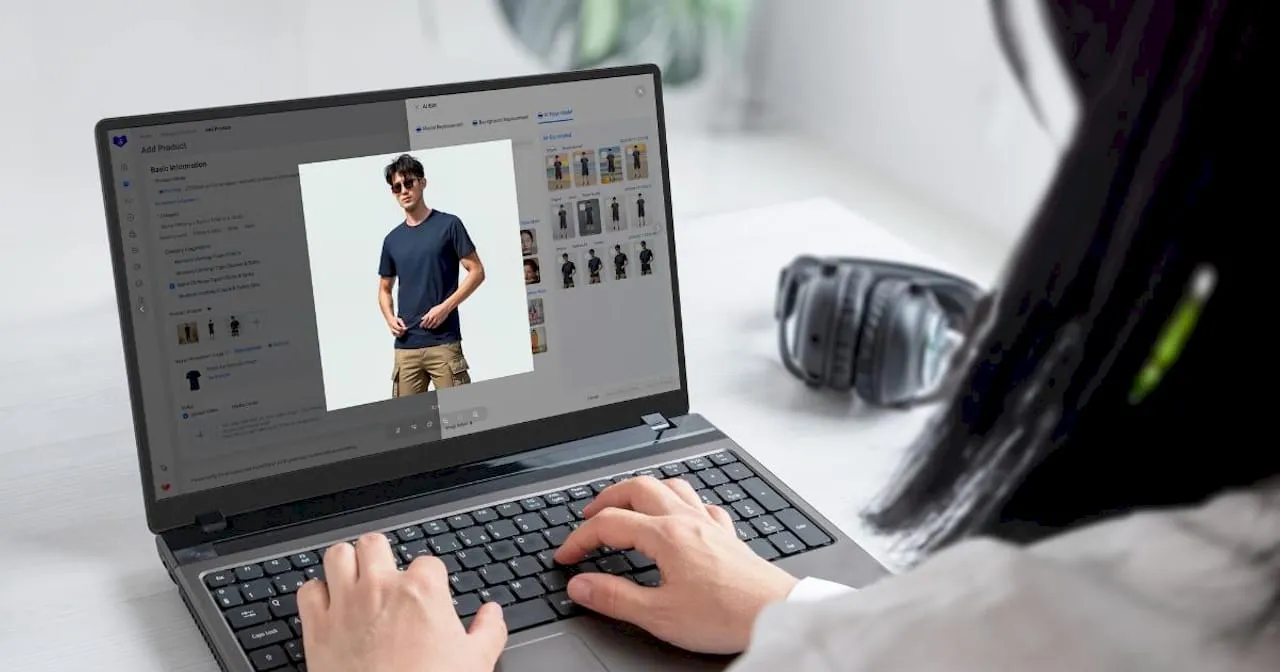
Meeting the quality threshold requires specific content elements. Walmart’s scoring system checks for:
-
At least 5 product images with clean white backgrounds and multiple angles
-
A product video demonstrating use or key features
-
Bullet points (called “key features” in Seller Center) exceeding 150 characters each
-
A complete specifications table with all relevant attributes filled in
-
A product title between 50 and 75 characters that leads with the brand name
Product titles follow a specific formula: Brand + Key Feature + Product Type + Size or Quantity. Titles that front-load keywords without following this structure tend to score lower and convert worse. Walmart’s algorithm reads title structure as a signal of catalog quality.
Descriptions should run at least 150 words and address the buyer’s primary use case directly. Generic manufacturer copy fails here. Walmart shoppers compare quickly, so your description needs to answer “why this product” in the first two sentences.
For brands managing multiple SKUs, the Walmart product listing guide for 2026 covers the full content specification in detail. Getting every attribute field populated before launch prevents quality deductions from day one.
Pro Tip: Build your listings in a spreadsheet first, then bulk upload via Walmart’s catalog ingestion tool. This lets you QA every field before anything goes live.
Choosing the right fulfillment method and pricing strategy for Walmart Marketplace
Fulfillment choice and pricing are the two variables that most directly determine whether you win the Buy Box. Walmart’s algorithm does not simply reward the lowest price. It rewards the lowest total landed cost, which includes shipping.
Walmart Fulfillment Services vs. seller-fulfilled orders
Walmart Fulfillment Services (WFS) is Walmart’s equivalent of a third-party logistics program. You send inventory to Walmart’s fulfillment centers, and Walmart handles picking, packing, and shipping. WFS listings automatically qualify for two-day shipping badges, which carry significant weight in the Buy Box algorithm.
Seller-fulfilled orders give you more control over inventory and margins, but they require you to meet Walmart’s on-time delivery and tracking requirements consistently. Missing those metrics damages your seller scorecard and can suppress your listings.
The Buy Box algorithm prioritizes total landed cost over price alone. A product listed at $20 with $5 shipping loses to a competitor listed at $22 with free shipping. WFS eliminates this problem by defaulting to free two-day delivery, which makes your landed cost calculation simpler and more competitive.
Pricing parity across channels
Walmart’s algorithm penalizes listings priced higher on Walmart.com than on other sales channels. If your Shopify store or another marketplace shows a lower price, Walmart will suppress your Buy Box eligibility. Maintaining consistent pricing across channels is not optional. It is a ranking factor.
Walmart’s 2026 fee restructure also changes the math for many sellers. Referral fees dropped to 6% in electronics and 13% in tools. Lower fees create room to price competitively on Walmart without sacrificing margin, which makes parity easier to maintain.
Pro Tip: Set up a pricing rule in your inventory management system that flags any SKU where your Walmart price exceeds your lowest active price on any other channel. Catching parity violations before Walmart does saves you from suppressed listings.
How to leverage Walmart Connect ads to boost product visibility during launch
New listings on Walmart Marketplace start with zero sales history and no organic ranking. Walmart Connect advertising fills that gap by buying visibility while your organic rank builds.
The advertising workflow for a new seller launch follows a clear sequence. Start with auto-targeting campaigns, which let Walmart’s algorithm match your products to relevant search queries automatically. Auto campaigns at 1.5x your target CPC generate data quickly and surface the keywords that actually convert for your products.
After two to three weeks of auto campaign data, shift to manual campaigns. Pull the converting search terms from your auto campaign reports and bid on them directly. This gives you control over spend efficiency while maintaining the visibility you built in the early weeks.
Walmart Connect offers three ad types worth understanding:
-
Sponsored Products: Appear in search results and product pages. The highest-volume format for new sellers and the right starting point for most launches.
-
Sponsored Brands: Display your brand logo and multiple products at the top of search results. Best used once you have at least three to five well-reviewed products in a category.
-
Display ads: Off-site placements that reach Walmart shoppers across the web. Useful for brand building but not a priority in the first 60 days of a launch.
Budget allocation for a new seller launch should weight heavily toward Sponsored Products. Spread budget too thin across all three formats and none of them generate enough data to optimize. Concentrate spend where conversion data accumulates fastest, then expand.
The Walmart Marketplace best practices guide covers how advertising performance connects to organic rank over time. Winning paid placements early accelerates the sales velocity that Walmart’s algorithm uses to assign organic positions.
Key Takeaways
Selling on Walmart Marketplace successfully requires meeting strict documentation standards, building quality listings before launch, choosing the right fulfillment method, and running targeted ads from day one.
Point | Details
-
Application requirements: Submit a matching EIN, W-9, and physical address; any mismatch triggers rejection or delay.
-
Listing quality scores: Listings scoring below 70 face up to a 3% payout reduction starting september 2026; meet the content threshold before launch.
-
Fulfillment and Buy Box: WFS wins Buy Box more consistently because it lowers total landed cost through free two-day shipping.
-
Pricing parity: Walmart suppresses Buy Box eligibility for listings priced higher than on other channels; enforce parity across all platforms.
-
Advertising sequence: Start with auto campaigns at 1.5x target CPC, harvest converting keywords, then shift to manual bidding after two to three weeks.
What I’ve learned from watching brands launch on Walmart Marketplace
Most brands underestimate how much Walmart cares about operational readiness before the first sale. The application process filters out sellers who are not ready to deliver a consistent customer experience at scale. That is not a flaw in the system. It is the point.
The brands I have seen succeed on Walmart fastest share one trait: they treated the launch like an infrastructure project, not a listing exercise. They sorted their fulfillment logistics, locked in pricing parity rules, and built their content to spec before submitting a single SKU. The brands that struggled launched with thin listings, inconsistent pricing, and no advertising budget, then wondered why their products sat invisible.
Walmart is not Amazon. The search volume is lower, the competition is thinner in many categories, and the fee structure is now more favorable in key verticals after the 2026 restructure. That combination makes Walmart a genuinely attractive channel for mid-sized brands that have already proven their product on another platform. The mistake is treating it as a secondary channel that deserves secondary effort.
My honest advice: if your catalog is not ready to score above 70 on Walmart’s quality rubric, do not launch yet. A suppressed listing at launch is harder to recover than a delayed launch with strong content. Build it right the first time.
— Dan Katona
Nectar’s approach to Walmart Marketplace growth
Brands that want to move faster on Walmart without the trial-and-error cost work with Nectar. Nectar manages the full launch process, from catalog quality audits and listing builds to Walmart Connect advertising and ongoing performance management.
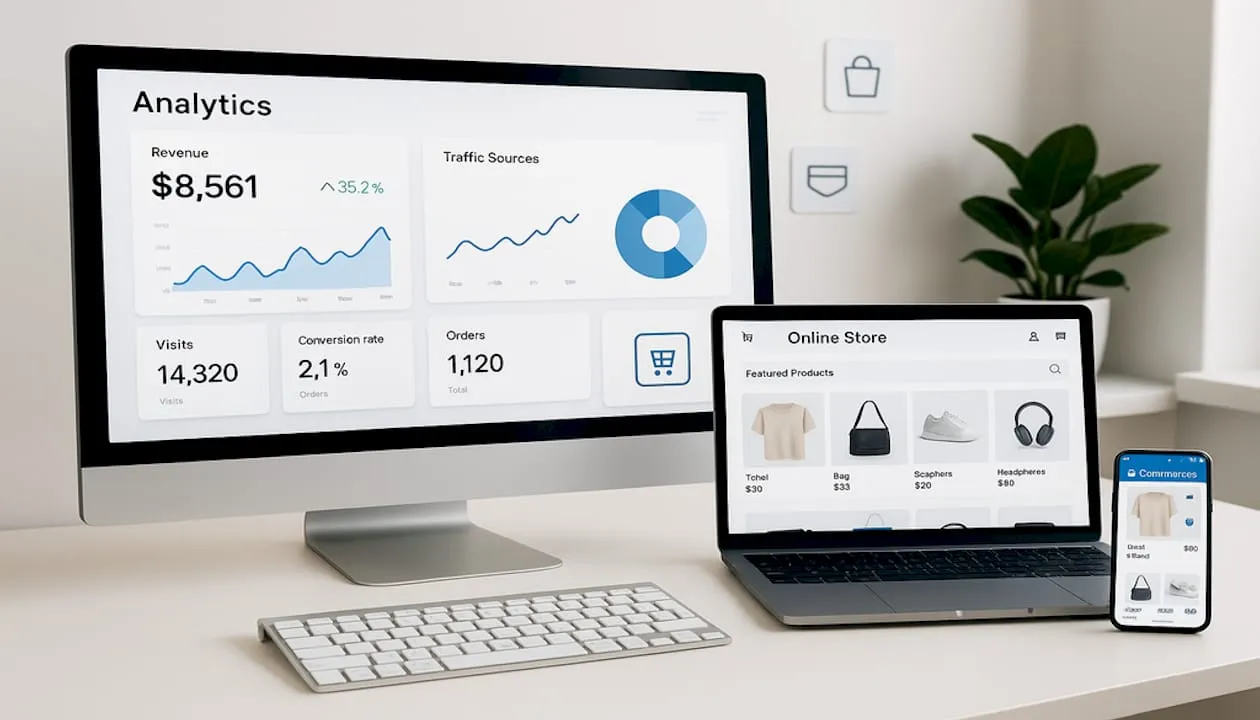
Nectar’s proprietary iDerive analytics platform tracks listing quality scores, Buy Box win rates, and ad performance in one view, so nothing falls through the cracks after launch day. For brands ready to treat Walmart as a serious growth channel, Nectar’s Walmart marketplace services cover every layer of the launch and scale process. The brands that grow fastest on Walmart are the ones that get the foundation right from the start.
FAQ
What documents do I need to sell on Walmart Marketplace?
Walmart requires a valid EIN, a signed W-9, and a verified physical US business address. Social Security Numbers are not accepted, and all documents must match exactly.
How long does Walmart Marketplace approval take?
The review process takes 2–4 weeks after you submit a complete application. Mismatched business details are the most common cause of delays.
What is the Walmart listing quality score?
Walmart’s listing quality score measures content completeness across images, video, bullet points, and specifications. Listings scoring below 70 face payout reductions of up to 3% starting september 2026.
Does Walmart penalize sellers for higher prices than other channels?
Yes. Walmart’s algorithm suppresses Buy Box eligibility for listings priced higher on Walmart.com than on competing sales channels. Price parity across all platforms is a ranking requirement.
What is the best way to advertise a new Walmart listing?
Start with Sponsored Products auto campaigns set at 1.5x your target cost-per-click. After two to three weeks, harvest converting keywords from your auto campaign data and build manual campaigns around them.
Recommended