The Role of Paid Social Ads in Retail Growth
.webp)

TL;DR:
- Organic reach has declined sharply, making paid social ads essential for visibility and brand growth. Combining creative-driven targeting with precise tracking and integrated organic efforts enables retailers to boost revenue, engagement, and customer acquisition effectively.
If you’re still counting on organic posts to carry your retail brand’s social strategy, the numbers have already moved on without you. Organic reach has fallen below 2% of a brand’s followers on major platforms, making the role of paid social ads in retail less of a competitive advantage and more of a baseline requirement. For retail marketers and brand managers, understanding how paid social fits into your full marketing mix is now the difference between growing market share and watching a competitor take it.
Key takeaways
| Point | Details |
|---|---|
| Organic reach is nearly gone | Average organic posts reach under 2% of followers, making paid social essential for visibility. |
| Paid social drives measurable revenue | Retailers using paid ads to support promotions see average revenue lifts of 30%. |
| Creative quality now drives targeting | Meta’s algorithms prioritize ad creative signals over audience selection, so your content is your targeting. |
| Clean data is non-negotiable | Pixel-only setups miss 20 to 40% of conversion events; Conversions API is the fix. |
| Paid and organic work together | Organic tests what resonates; paid scales what works. Treating them separately costs you ROI. |
The role of paid social ads in retail marketing
Paid social advertising is any ad placement you pay for on a social platform, running against specific audiences based on interests, behaviors, demographics, or purchase signals. It is not the same as boosting a post, though that is technically a form of it. The real power comes from purpose-built campaigns with defined objectives, whether that is driving traffic, generating purchases, or retargeting warm audiences who already showed intent.
For retail specifically, social media has evolved from a digital catalog into a discovery engine. Shoppers are not just scrolling past your ad. They are often encountering your brand for the first time, forming a first impression, and deciding whether to click within seconds. Paid social ads give you control over that moment in a way organic posts simply cannot.
The most commonly used paid social formats in retail include:
-
Feed ads on Facebook and Instagram, which blend into the scroll and work well for direct-response campaigns tied to specific products or promotions.
-
Stories and Reels ads that feel native to the short-form video format and generate strong engagement with lifestyle-forward creative.
-
Shoppable posts and catalog ads that pull directly from your product feed, showing personalized product recommendations based on browsing behavior.
-
Video ads designed to educate or demonstrate, especially effective for products that need context to convert.
Each format serves a different moment in the customer journey. A shoppable post targets someone already in buying mode. A brand video ad builds awareness with someone who has never heard of you. Knowing which format to deploy and when is where social advertising strategies for retailers start separating good campaigns from great ones.
Why paid social is critical for retail revenue
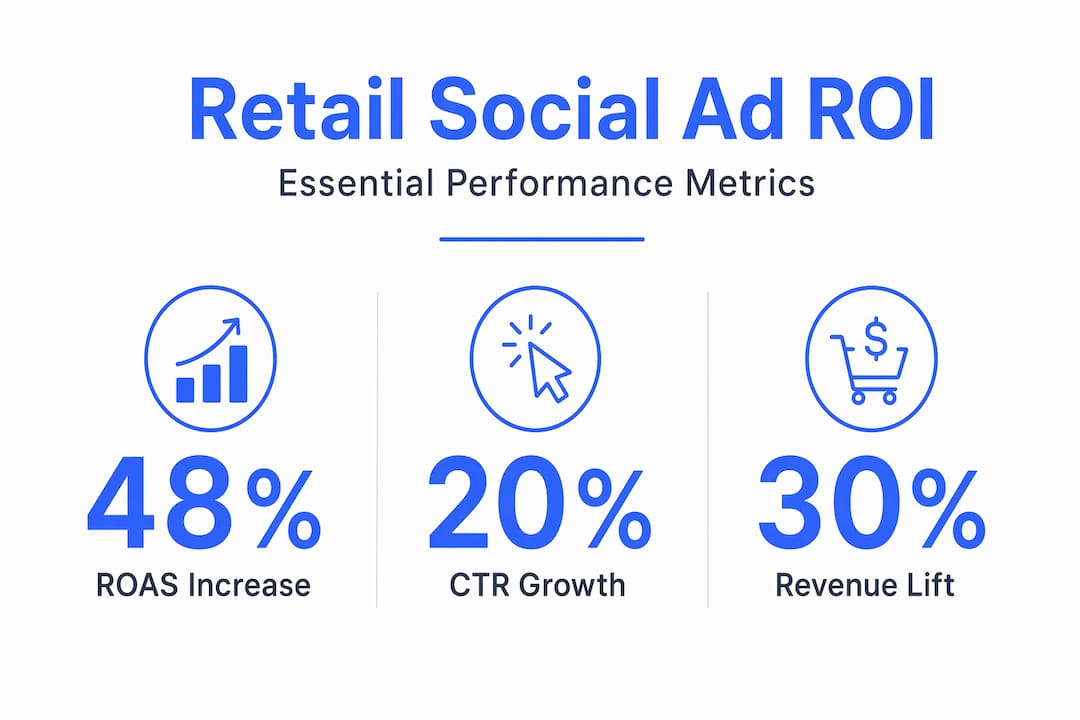
The impact of social ads in retail goes well beyond awareness. When retail stores use paid social ads to support weekly promotions, they see average revenue lifts around 30%. That is a significant number tied directly to the bottom line, not a vanity metric.

What makes that lift possible? Paid social guarantees exposure to the right audience at the right moment. Organic content only reaches the fraction of followers who happen to see it in their feed that day. A paid campaign reaches exactly the audience you define, at the exact time you choose, with the exact message you want them to see.
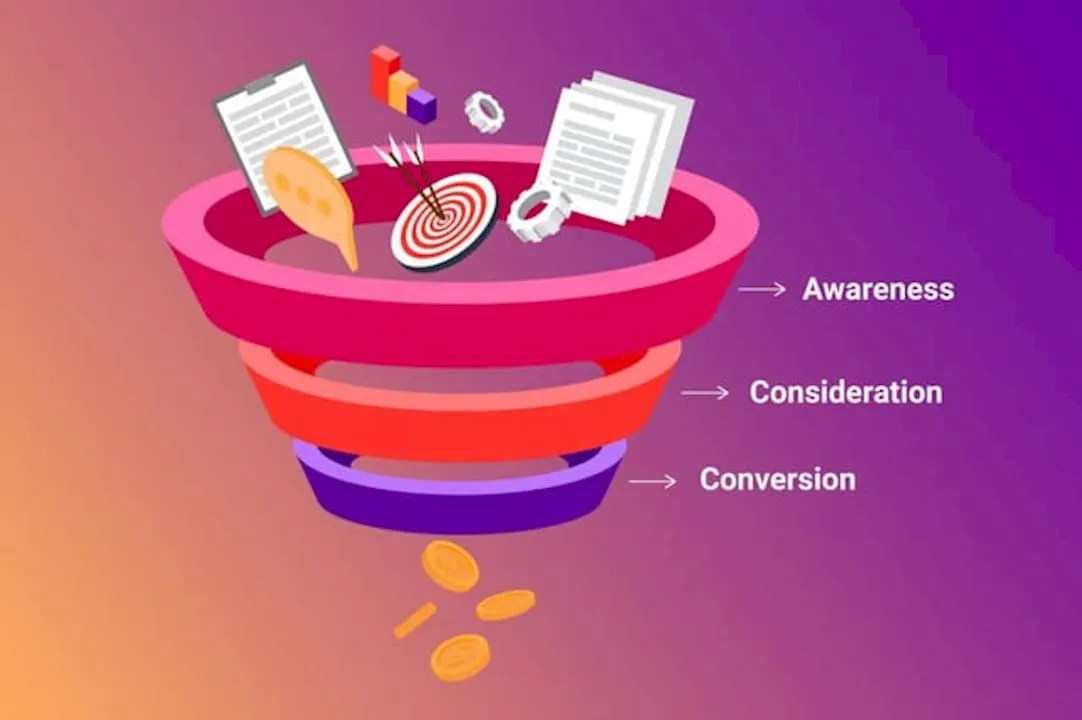
The revenue benefits of paid social media for retail marketing extend across the full funnel:
-
Top of funnel: Broad awareness campaigns introduce your brand to net-new shoppers who match your best customer profile.
-
Mid funnel: Retargeting campaigns serve product-focused ads to people who visited your site but did not purchase.
-
Bottom of funnel: Dynamic product ads re-engage cart abandoners with the exact item they left behind, often paired with a time-sensitive offer.
Retailers combining paid social with onsite display campaigns can see ROAS improve by up to 48% and CTR increase by 20% compared to display alone. That kind of performance lift makes the budget case for paid social straightforward for any brand manager trying to justify spend.
The role of digital advertising in retail is increasingly about precision. Broad spray-and-pray tactics have given way to algorithmic targeting that finds buyers faster and at lower cost. The brands winning right now are the ones treating paid social as a core revenue channel, not a supplementary one.
Best practices for retail social ads in 2026
The biggest shift in how to use social ads in retail over the past two years is where the targeting intelligence now lives. It is no longer in your hands. Meta’s algorithms prioritize creative signals over manual audience selection, which means your ad creative is now doing the targeting work. The implication is significant: a weak creative pointed at a perfect audience will underperform a strong creative pointed at a broad one.
Move from interest stacking to broad targeting
Meta Advantage+ and similar AI-driven tools are built to find buyers within a broad audience, often outperforming complex, manually stacked interest layers. If you are still building five-plus audience segments per campaign and testing them against each other, you are likely diluting the data the algorithm needs to learn. Consolidated campaign structures let the machine optimize faster and with better signal quality.
Get your tracking right before scaling
Pixel-only tracking misses 20 to 40% of conversion events due to iOS privacy changes and browser restrictions. If you are making budget decisions based on incomplete data, you are flying blind. The fix is implementing Meta’s Conversions API, which sends server-side conversion data directly to the platform, independent of browser limitations. This improves data quality, reduces costs per mille, and gives the algorithm accurate purchase signals to optimize against. For a deeper look at how data-driven ad decisions translate to better outcomes across channels, the mechanics apply broadly.
Invest in creator-led content
Ad fatigue is real. Static brand photography and polished product shots are no longer enough to stop a scroll. Retail brands integrating creator-led content achieve 3 to 4.5 times higher engagement than traditional branded assets. Creators provide authentic storytelling that feels native to the platform, which is exactly what the algorithm rewards. You do not need to work with mega-influencers. Micro-creators with engaged niche audiences often deliver better performance per dollar.
Retarget with precision
Dedicated retargeting for cart abandoners can increase sales by 20% within the first month of activation. Warm audiences, people who have visited your site, watched a video, or engaged with your content, convert at dramatically higher rates than cold audiences. Segment your retargeting by recency and behavior, and tailor the message accordingly. A seven-day cart abandoner needs a different ad than someone who browsed a category page three weeks ago.
Pro Tip: When reviewing ad creative performance, sort by cost per purchase rather than CTR alone. A high-CTR ad that does not convert is wasting budget. The metric that matters is what actually drives revenue.
Integrating paid and organic social for retail
Paid and organic social are not competing strategies. They are two parts of one system, and the brands treating them as separate silos are leaving measurable ROI on the table. Combining paid and organic social creates synergy that accelerates both short-term revenue and long-term brand trust.
Here is how to think about the integration in practice:
-
Let organic surface your winners. Post consistently across formats and track which content generates the highest engagement rate organically. High engagement signals genuine audience resonance, and that is your data for what to put paid dollars behind.
-
Use paid to scale proven content. Once you identify which organic posts resonate, run them as paid ads to audiences beyond your current followers. You are not guessing on creative. You already have proof it works.
-
Apply social SEO to all content. Optimizing captions and product descriptions with relevant keywords for product discovery improves both organic reach and paid ad relevance scores. Better relevance scores lower your cost per click.
-
Measure combined returns. Build a reporting view that shows paid and organic performance together. This gives you a true picture of how each drives the other, and where incremental investment in paid amplifies organic momentum.
Pro Tip: Run a monthly content audit comparing your top five organic posts against your current paid ad creative. If the paid creative does not reflect what is already resonating with your audience, it is worth refreshing before increasing spend.
Real results from paid social in retail
The best practices for retail social ads are not theoretical. Real campaigns are producing measurable results that validate the investment.
Retailers using hyper-local targeting in paid social campaigns have driven significant foot traffic and online conversions by serving geo-targeted ads within specific radius zones around physical store locations. When those ads are paired with personalized messaging tied to local events or promotions, CTR improves substantially compared to generic national campaigns.
A few data points worth anchoring to:
-
Retargeting warm audiences consistently delivers better ROAS than cold targeting, which is why every retail brand should prioritize audience warm-up sequences before heavy spend.
-
Retail-powered social campaigns that combine first-party purchase data with social targeting show the highest efficiency, often reaching shoppers who are already in an active buying cycle.
-
Creator content campaigns that use authentic product demonstrations rather than polished brand films generate stronger purchase intent signals, particularly among younger demographics on platforms like TikTok and Instagram Reels.
The success stories using social ads that stand out share a common thread. They build the campaign around clean data, strong creative, and disciplined audience structure. The retailers seeing the best results are not spending more than their competitors. They are spending smarter.
My honest take on where most retailers go wrong
I’ve worked with enough retail brands to see the same mistakes repeat across budget sizes and categories. The single most common one is over-engineering the campaign structure. Marketers build out sprawling account setups with dozens of ad sets, each with a slightly different audience, convinced that more control means better results. What it actually does is fragment the data and starve each ad set of the conversion volume the algorithm needs to learn.
The algorithm learns from conversion data, and when that data is spread too thin across too many ad sets, none of them optimize properly. I’ve seen brands cut their active ad sets in half and watch their cost per purchase drop by 30% in two weeks. Simple wins.
The other thing I see regularly is a disconnect between the paid and organic teams. One side is testing messaging and creative that is working in organic. The other side is running paid ads with different creative built in a vacuum. They are not talking to each other, and the campaign suffers for it.
My advice is to treat your paid social and organic social as one content strategy with two distribution methods. One builds trust over time. The other converts at scale. Neither works as well alone as they do together.
— Dan
How Thinknectar helps retail brands scale with paid social
At Thinknectar, we work directly with mid-sized and enterprise retail brands that are serious about growing e-commerce revenue through paid social and retail media. The challenge we solve most often is not a lack of budget. It is a lack of connected strategy between creative quality, tracking accuracy, and campaign structure.
Our team combines in-house creative production with data-driven campaign management, powered by our proprietary iDerive analytics platform that ties paid social performance back to actual revenue outcomes. If you are ready to stop guessing and start scaling with confidence, explore our retail marketing services to see how we build full-funnel paid social programs that convert. For brands running on Shopify, our Shopify growth solutions are specifically built to integrate paid social campaigns with your storefront for maximum conversion efficiency.
FAQ
What is the role of paid social ads in retail?
Paid social ads give retail brands guaranteed, targeted reach in social feeds where organic posts reach less than 2% of followers. They drive traffic, conversions, and brand visibility at scale across the full customer journey.
How do paid social ads improve retail e-commerce sales?
Retailers using paid social to support promotions see average revenue lifts of 30%. Dynamic retargeting, shoppable ads, and creator content campaigns all contribute to measurable sales increases.
What are the best practices for retail social ads in 2026?
The highest-performing retail social campaigns use broad AI-driven targeting, server-side conversion tracking via Conversions API, creator-led creative, and consolidated campaign structures rather than fragmented ad sets.
How does paid social work with organic social for retailers?
Organic social identifies which content resonates with your audience, and paid social amplifies that proven content to larger audiences. Running both as a unified strategy accelerates both short-term conversions and long-term brand authority.
What formats work best for paid social ads in retail?
Feed ads, shoppable posts, video ads, and Stories or Reels formats each serve a different stage of the purchase journey. The most effective retail campaigns layer multiple formats based on where the shopper is in their decision process.
Recommended