Top advertising channels for e-commerce brands in 2025
.webp)

TL;DR:
Effective 2025 advertising requires a diversified, data-driven channel mix aligned with funnel stages.
Retail media, especially Amazon, offers high-conversion opportunities at the purchase point.
Continuous creative testing and real-time performance tracking are crucial for success across social, search, and retail channels.
Ad budgets are under more scrutiny than ever, and the platforms that delivered strong returns two years ago may be quietly draining your margin today. The e-commerce advertising landscape in 2025 is not just competitive; it’s structurally different, with retail media networks surging, social video reshaping purchase behavior, and search costs climbing faster than conversion rates in many categories. For marketing executives managing mid-sized to enterprise brands, the question is no longer “should we advertise on multiple channels?” It’s “how do we allocate intelligently across the right mix and adjust fast enough to stay ahead?”
Key Takeaways
| Point | Details |
|---|---|
| No one-size-fits-all channel | Winning e-commerce brands blend search, social, video, and retail media based on campaign objectives. |
| Amazon leads retail media | Amazon’s dominance and scale make it a conversion powerhouse, especially for established sellers. |
| Data-driven agility is key | Continuous testing and rapid adjustment to channel performance underpins successful 2025 strategies. |
| Creative matters on social/video | Meta, TikTok, and YouTube demand rapid creative iteration for maximum impact. |
How to choose the right advertising channels in 2025
Before committing budget to any platform, you need a consistent evaluation framework. Without one, channel selection becomes reactive, shaped by vendor pitches and competitor FOMO rather than your brand’s actual data.
Here are the four criteria that matter most for e-commerce brands in 2025:
-
Audience intent: Is the platform capturing buyers who are actively searching for your product, or are you interrupting them mid-scroll? High-intent channels convert faster but typically cost more per click.
-
Channel reach and scale: Some platforms offer massive volume but limited targeting precision. Others offer tight audience control with smaller scale. Know which constraint you’re working within.
-
ROI predictability: How reliably can you forecast return on ad spend (ROAS) on this channel? Channels with longer attribution windows or heavy creative dependence carry more variance.
-
Creative opportunity: Does the platform reward your existing creative assets, or does it demand a completely different format, style, and production investment?
The channel mix also needs to match your funnel priorities. If you’re launching a new product, you need reach and awareness first. If you’re defending market share in a mature category, bottom-funnel efficiency and retargeting are your priority. Channel performance data confirms what experienced e-commerce teams already know: search excels in high-intent bottom-funnel with reliable ROI but rising CPCs, social platforms like Meta and TikTok drive awareness and impulse purchases with creative testing as the key variable, YouTube is growing through connected TV (CTV) screens, and retail media through Amazon and others is surging for e-commerce with high conversion rates but increased competition during peak seasons.
Pro Tip: Build your channel mix around funnel stages, not platform popularity. Map each dollar to a specific objective: awareness, consideration, or conversion. Then measure performance at that stage rather than blending all metrics into a single ROAS number. For a deeper look at how to structure this thinking, structuring ecommerce ad budgets is worth reviewing before your next planning cycle.
Google Ads: Search remains the high-intent engine
Having established evaluation criteria, let’s dive into the highest-spend and most critical channels, beginning with Google Ads.
Google Ads continues to command the largest share of any single platform in the global advertising mix. In 2025, Google holds 27% of global ad spend, a position that reflects its unmatched ability to connect advertisers with buyers who are actively looking to purchase. For e-commerce brands, that intent signal is invaluable.
Why Google Ads still works for e-commerce:
-
Intent-based targeting: Shopping and search campaigns capture buyers at the exact moment of product discovery or purchase decision. No other platform matches this at scale.
-
Data granularity: Google’s reporting infrastructure gives you keyword-level, device-level, and audience-level performance data that enables precise optimization.
-
Scalability: Whether you’re spending $10,000 or $1 million per month, Google’s auction system scales with your budget and category volume.
-
Ecosystem integration: Google Shopping, Performance Max, and YouTube ads all operate within the same ecosystem, enabling cross-channel coordination within one platform.
The challenges are real, though. CPCs in competitive categories like consumer electronics, beauty, and home goods have risen significantly over the past two years. Ad fatigue is a growing concern for brands that rely on static creative without regular refresh cycles. Google’s automation through Performance Max campaigns has also created a tension between machine-driven optimization and the granular control that experienced e-commerce marketers prefer.
The answer is not to reduce Google investment but to operate it more intelligently. Advanced Google Ads bidding strategies like target ROAS, enhanced CPC, and portfolio bid strategies allow you to maintain efficiency even as auction competition increases. Pairing smart bidding with disciplined creative testing, strong negative keyword lists, and segmented campaign structures keeps your cost per acquisition (CPA) from drifting upward unchecked. The brands that increase ecommerce ROI on Google are the ones treating it as a precision instrument, not a set-it-and-forget-it channel.
Meta, TikTok & YouTube: Social and video command attention
After search, social and video platforms are capturing a growing share of both ad budgets and shopper attention. The numbers tell a clear story: Meta holds 22%, TikTok 15%, and YouTube 13% of global ad spend in 2025. Together, these three platforms account for half of all global ad investment, and for good reason.
Each platform serves a distinct role in the e-commerce funnel:
-
Meta (Facebook and Instagram): Best for retargeting, lookalike audience expansion, and catalog-based dynamic ads. Meta’s pixel-based tracking and large user base make it the most reliable social platform for mid-funnel conversion and retargeting warm audiences.
-
TikTok: Dominates upper-funnel awareness and impulse-driven discovery, especially for brands targeting consumers under 40. TikTok’s algorithm rewards content quality over follower count, which means smaller brands can compete with larger ones through authentic, engaging creative.
-
YouTube: Growing rapidly through CTV placements, YouTube now reaches audiences in living rooms alongside traditional television. For brands with strong video assets, YouTube offers both awareness scale and measurable performance through action-oriented ad formats.
“The brands winning on social and video in 2025 are not the ones with the biggest production budgets. They’re the ones with the fastest creative iteration cycles. Testing 10 creative variants per week beats spending 10x on a single polished campaign.”
The critical variable across all three platforms is creative velocity. Algorithms on Meta, TikTok, and YouTube all favor fresh, engaging content. Brands that treat creative as a one-time investment rather than an ongoing operational function will see performance decay within weeks. Your 2025 ecommerce marketing strategy should include a dedicated creative testing budget and a clear process for identifying winning formats and scaling them quickly.
The practical implication for marketing executives: do not evaluate social and video platforms purely on direct ROAS. These channels build the awareness and brand affinity that makes your Google search and retail media campaigns more efficient downstream. A shopper who saw your TikTok ad last week is far more likely to click your Amazon Sponsored Product ad today.
Retail media: Amazon and emerging marketplaces drive e-commerce ROI
With social and video platforms explored, let’s turn to the explosive growth area in 2025: retail media networks driven by players like Amazon and Walmart.

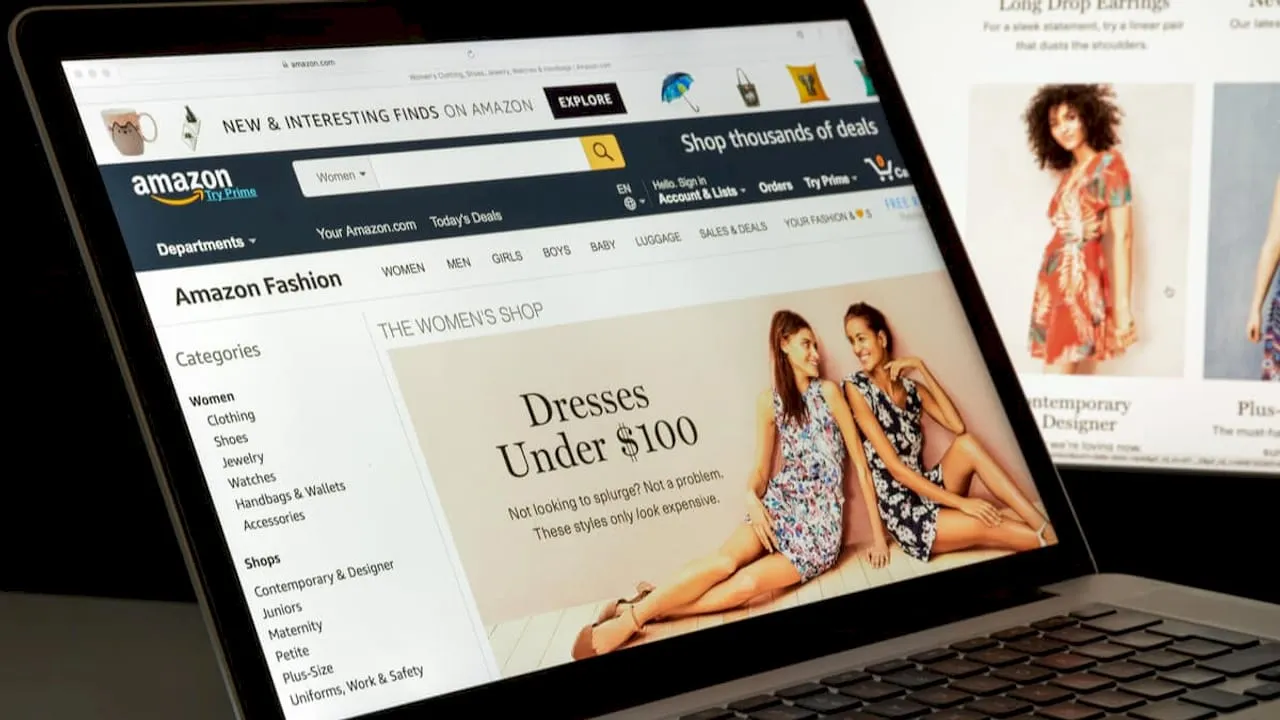
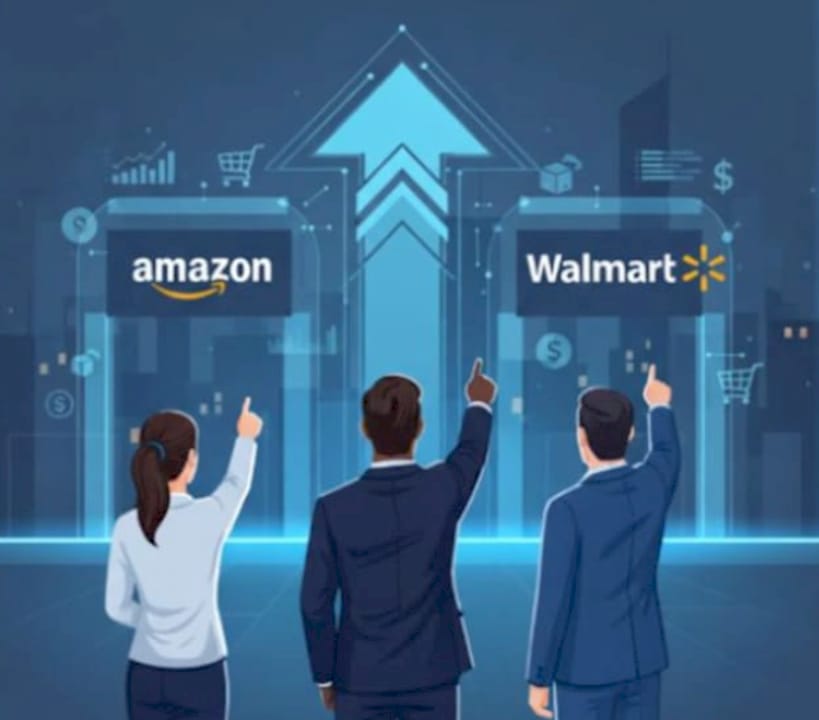
Retail media is the fastest-growing segment of digital advertising, and Amazon sits firmly at the center of it. In the first half of 2025, Amazon dominated retail media with $618 million in spend from 9,542 advertisers, roughly double Walmart’s retail media revenue in the same period. Amazon’s heavy reliance on OnSite Display formats reflects a deliberate strategy to capture lower-funnel shoppers at the point of purchase decision.
Why does retail media perform so well for e-commerce? Because the ads appear where buying decisions are made. A shopper on Amazon is not being interrupted; they are already in purchase mode. That context difference explains why retail media consistently delivers higher conversion rates than equivalent spend on social or even search.
Here’s how the major retail media players compare:
| Platform | Strengths | Best for | Key consideration |
|---|---|---|---|
| Amazon Ads | Scale, purchase intent, rich data | Established brands, broad categories | High competition, rising CPCs in peak seasons |
| Walmart Connect | Growing audience, less competition | CPG, grocery, household goods | Smaller scale than Amazon |
| Target Roundel | Premium shopper demographics | Beauty, home, apparel | Limited self-serve access |
| Instacart Ads | Grocery-specific intent | Food, beverage, household | Narrow category focus |
For brands already selling on Amazon, advertising there is not optional; it’s table stakes. Learn more about how Amazon advertising for brand growth compounds over time through improved organic rank and brand visibility. For brands exploring Walmart’s growing marketplace, Walmart ad solutions offer a meaningful opportunity to reach a distinct shopper demographic with less auction competition than Amazon currently faces.
The key decision factor for retail media investment is your product’s competitive landscape on the platform. If your category has 50 competing brands all running Sponsored Products, your cost per click will reflect that. Brands with strong organic rank, excellent listing content, and high review counts get more from every retail media dollar because the ad drives to a listing that converts.
2025 channel comparison: Strengths, weaknesses, and best-fit scenarios
To bring it all together, let’s compare the top advertising channels side by side and give clear scenarios for best use.
Global ad spend shares in 2025 break down as follows: Google Ads 27%, Meta 22%, TikTok 15%, YouTube 13%, LinkedIn 8%, Amazon Ads 7%, and others 8%. Understanding where the money flows helps you benchmark your own allocation against industry norms and identify where underinvestment might be costing you reach or conversion.
| Channel | Primary strength | Key weakness | Best-fit scenario |
|---|---|---|---|
| Google Ads | High-intent search capture | Rising CPCs, automation complexity | Bottom-funnel, high-consideration purchases |
| Meta | Retargeting, lookalike audiences | Privacy changes, creative fatigue | Mid-funnel conversion, catalog retargeting |
| TikTok | Viral reach, impulse discovery | Short creative lifespan, younger skew | New product launches, trend-driven categories |
| YouTube | Video storytelling, CTV reach | Longer sales cycle, view-through attribution | Brand building, complex product explanation |
| Amazon Ads | Purchase-intent context | Competition, peak-season cost spikes | Direct conversion, defending category share |
| Walmart Connect | Lower competition, CPG strength | Smaller scale | CPG brands, household goods |
How should you prioritize? Follow this sequence based on your current business stage:
-
Establish retail media first if you sell on Amazon or Walmart. The conversion efficiency justifies early investment, and strong performance here funds expansion elsewhere.
-
Layer in Google Search to capture branded and category search demand. This protects your brand from competitors and captures high-intent buyers regardless of where they discovered you.
-
Invest in Meta retargeting once you have sufficient site traffic and customer data. Retargeting warm audiences is consistently one of the highest-ROAS tactics available.
-
Add TikTok and YouTube for reach and awareness as your budget scales. These channels build the top-of-funnel demand that makes all your lower-funnel channels more efficient over time.
For brands managing multi-channel campaigns, advertising attribution for e-commerce is the discipline that ties it all together. Without a clear attribution model, you will systematically underfund awareness channels and over-rely on last-click conversion channels, which creates a fragile strategy that collapses when your retargeting audiences shrink.
Why channel diversification, not channel picking, will determine winners in 2025
Here’s the uncomfortable reality that most channel comparison articles avoid: the brands obsessing over which single channel is “best” are asking the wrong question entirely.
Channel performance in e-commerce is more volatile today than at any point in the past decade. iOS privacy changes reshaped Meta’s targeting precision. TikTok’s regulatory uncertainty creates real budget risk. Google’s automation is shifting control away from advertisers. Amazon’s auction costs spike unpredictably during Q4. Any brand that has concentrated 70% or more of its ad budget in a single channel has experienced at least one quarter where that channel underperformed and there was no safety net.
The brands we see consistently outperforming their categories are not the ones who found the single best channel. They are the ones who built a dynamic portfolio approach: allocating budget across channels based on real-time performance data, shifting investment when signals change, and maintaining enough presence on each platform to keep their audience data and algorithm relationships active.
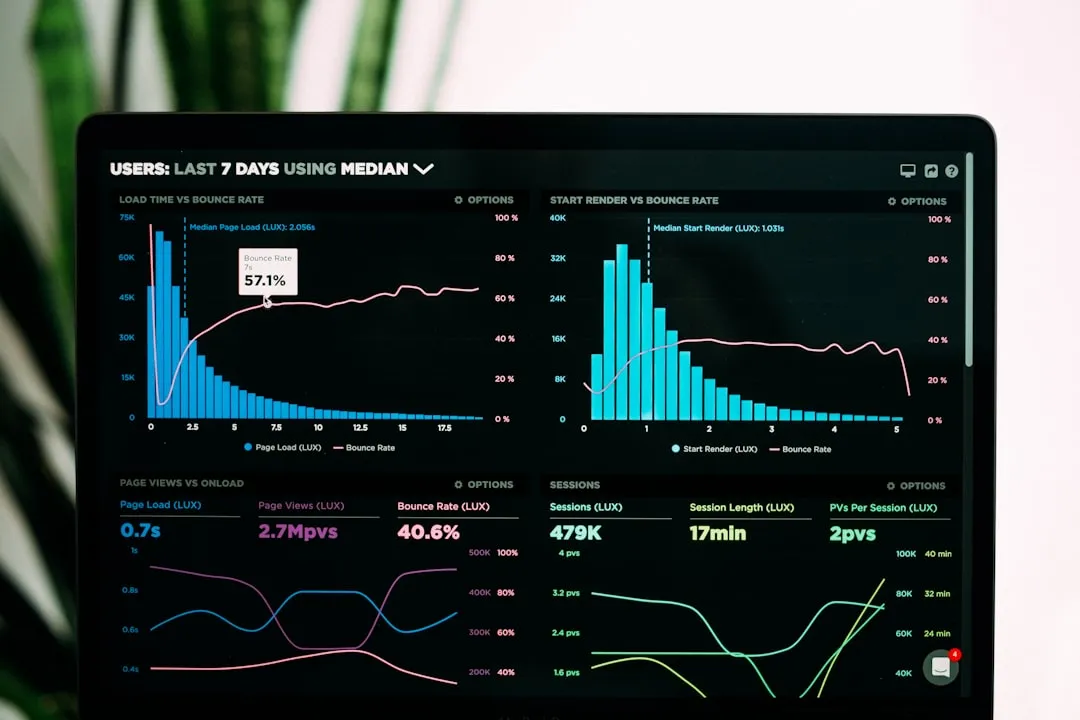
This requires more than a good media plan. It requires the analytical infrastructure to see cross-channel performance clearly. Leveraging ecommerce data for ROI means building dashboards that show you not just last-click ROAS by channel, but contribution margin, customer lifetime value by acquisition source, and incrementality. Without that layer of insight, you are making channel allocation decisions based on incomplete information.
The practical implication: build your channel strategy to be resilient, not optimal. An optimal single-channel strategy is brittle. A diversified, data-informed portfolio is durable.
Unlock smarter ad strategy with Nectar’s e-commerce growth specialists
Navigating the complexity of multi-channel advertising across Amazon, Google, Meta, TikTok, and retail media networks simultaneously is not a part-time job. It requires specialized expertise, the right data infrastructure, and creative capabilities that can keep pace with platform demands.
Nectar’s fully managed approach gives mid-sized and enterprise e-commerce brands exactly that. From Amazon growth solutions that combine Sponsored Ads management with listing optimization and creative production, to full-funnel strategy across Walmart and Shopify, Nectar operates as a true growth partner rather than a vendor. Powered by the proprietary iDerive analytics platform, every channel decision is grounded in granular performance data rather than guesswork. If you’re ready to build a channel mix that scales profitably, explore Nectar’s brand growth services and connect with a specialist who understands your category.
Frequently asked questions
What is the best advertising channel for e-commerce brands in 2025?
There’s no single best channel. Brands should blend Google and Meta for reach and retargeting with Amazon retail media for conversion, selecting the mix based on campaign goals, funnel stage, and audience behavior.
How much of global ad spend did Amazon control in 2025?
Amazon captured 7% of global ad spend and dominated retail media with over $618 million in the first half of 2025 alone, roughly double Walmart’s retail media revenue in the same period.
Which channels work best for upper-funnel brand awareness in 2025?
TikTok, YouTube, and Meta are the strongest upper-funnel awareness platforms, with TikTok at 15% and YouTube at 13% of global ad spend reflecting the massive investment brands are making in social and video discovery.
Are rising costs making Google Ads less attractive in 2025?
Rising CPCs are a real challenge, but Google’s high-intent targeting still makes it essential for capturing bottom-funnel demand. The answer is smarter bidding and creative strategy, not abandoning the channel.
Recommended






















































.webp)