Full-funnel management: 15-20% higher ROI for e-commerce
.webp)
TL;DR:
Full-funnel management connects all customer journey stages for higher ROI.
Siloed efforts and poor handoffs cause significant drop-offs in conversions.
AI enhances personalization but depends on integrated, high-quality data inputs.
Brands that obsess over bottom-funnel conversions often hit a ceiling they can’t explain. Pipeline dries up, new customer acquisition costs spike, and ROAS fluctuates despite constant bid adjustments. The reason is almost always the same: they’re optimizing one stage while ignoring the rest. Full-funnel strategies yield 15-20% higher marketing ROI compared to siloed, single-stage approaches, yet most mid-sized and enterprise brands still under-invest in awareness and consideration. This guide breaks down exactly what full-funnel management means, how modern customer journeys actually behave, and the operational frameworks that high-growth e-commerce brands use to scale profitably in 2026.
Key Takeaways
| Point | Details |
|---|---|
| Complete journey focus | Full-funnel management addresses every stage from awareness to retention, driving growth and ROI. |
| Integrated strategy | Mixing brand and performance tactics across channels ensures sustainable pipeline and customer value. |
| Iterative measurement | Unified attribution and stage-specific KPIs are crucial for continuous optimization. |
| Modern tech advantage | Using AI and digital tools smartly can boost orchestration but demands high-quality data. |
What is full-funnel management?
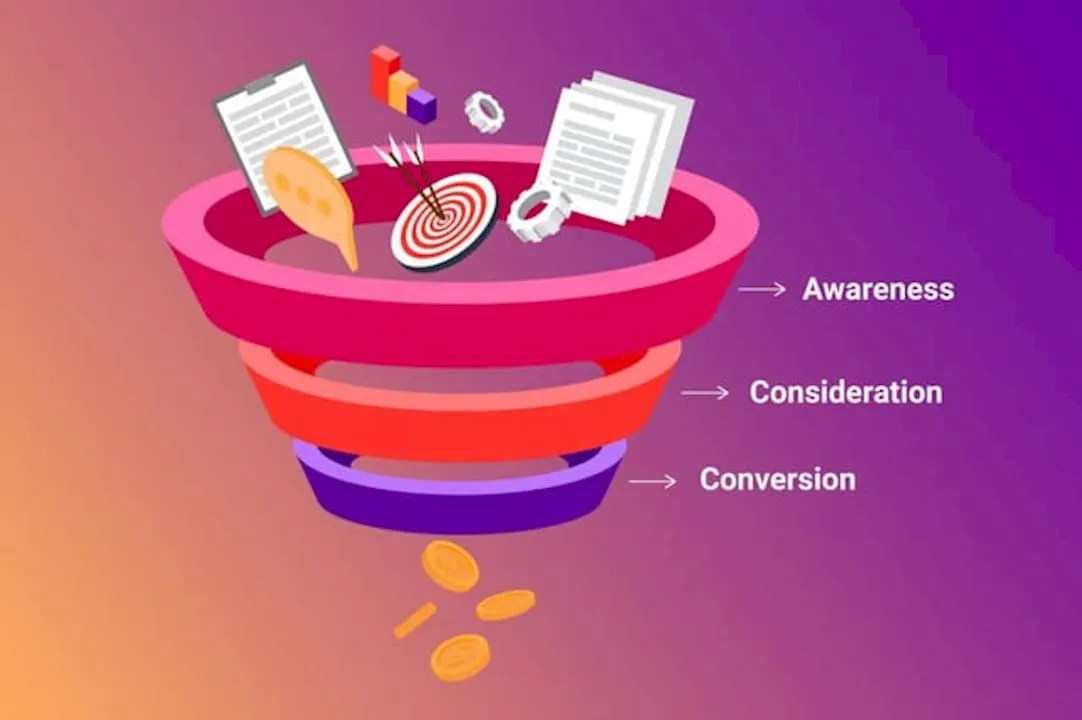
Full-funnel management addresses the entire customer journey, from the moment a potential buyer first hears about your brand to the point where they become a repeat customer and advocate. It’s not a campaign type or a media channel. It’s an operating philosophy that connects brand-building activity with performance marketing through a unified strategy and shared measurement framework.
The funnel breaks into four stages:
-
TOFU (Top of Funnel): Awareness. Think display ads, video content, influencer partnerships, and SEO-driven editorial. The goal is reach and relevance.
-
MOFU (Middle of Funnel): Consideration. Retargeting, comparison content, email nurture sequences, and product detail page optimization all belong here.
-
BOFU (Bottom of Funnel): Conversion. Sponsored product ads, promotional offers, and checkout optimization. This is where most brands focus their entire budget.
-
Retention: Loyalty programs, post-purchase email flows, and subscription mechanics. Often the highest-ROI stage, and the most neglected.
| Funnel stage | Brand-building tactics | Performance tactics |
|---|---|---|
| TOFU | Video ads, PR, organic social | DSP awareness campaigns |
| MOFU | Blog content, webinars, UGC | Retargeting, sponsored brands |
| BOFU | Product storytelling, reviews | Sponsored products, promo codes |
| Retention | Community, loyalty emails | Win-back campaigns, upsell flows |
The core principles that hold this together are channel integration, unified measurement across every touchpoint, and iterative testing at every stage. You can explore optimization principles that apply across both brand and performance channels to see how leading teams connect these disciplines. Our retail media overview also shows how retail-specific channels fit into a broader full-funnel architecture.
“Brands that treat each funnel stage as a separate, isolated effort consistently underperform against those that build connected, cross-stage systems.” This is why channel integration is non-negotiable.
How the modern customer journey works
Building on the fundamentals, it’s essential to understand how real customer behavior complicates the perfect funnel model. Buyers don’t move neatly from awareness to purchase. They research on TikTok, compare on Amazon, check Reddit, get retargeted on Instagram, and then convert via Google Shopping. The path is non-linear, multi-device, and deeply personal.
Handoff gaps between stages cause most drop-offs, and this is where brands lose enormous value without realizing it. A shopper sees your awareness ad, visits your site, leaves without converting, and then receives zero relevant follow-up because your retargeting audiences aren’t properly segmented. That’s a broken handoff.
Common pitfalls in customer journey management include:
-
Inconsistent messaging across channels, making the brand feel fragmented
-
No mid-funnel nurture content, forcing buyers to jump from awareness straight to conversion
-
Retargeting audiences that are too broad, spending budget on low-intent visitors
-
Siloed teams where paid media, email, and SEO operate without shared data or goals
-
No retention strategy after the first purchase, leaving repeat revenue on the table
Email alone averages $36 to $42 ROI per $1 spent, yet brands over-invested in BOFU paid media often neglect owned channels entirely. That’s a significant missed opportunity. For brands looking to rebuild their pipeline from the ground up, our lead generation tips cover owned-channel strategies that compound over time.

Pro Tip: Audit your funnel handoffs quarterly. Map the specific touchpoints between each stage, then use A/B testing to identify exactly where conversion rates drop. A 5% improvement in handoff efficiency often outperforms a 20% increase in top-funnel spend.
Core pillars of e-commerce full-funnel management
Now that you see where most customer journeys break down, let’s explore the operational building blocks for fixing those gaps. Stage-specific KPIs, balanced budget allocation, and unified attribution are core methodologies that separate high-growth brands from those stuck in single-digit ROAS loops.
-
Map funnel stages to customer questions. At TOFU, buyers ask “Does this brand solve my problem?” At MOFU, they ask “Why this product over competitors?” At BOFU, they ask “Is this the right time and price?” Your content, ads, and messaging should answer each question directly.
-
Assign stage-specific KPIs. Awareness: reach, video completion rate, branded search lift. Consideration: add-to-cart rate, time on site, email open rate. Conversion: purchase conversion rate, cost per acquisition. Retention: repeat purchase rate, customer lifetime value, net promoter score.
-
Allocate budgets with intention. Large brands typically direct roughly 58% of media spend toward upper-funnel awareness, with about 22% in retail media. Most brands do the opposite and then wonder why pipeline shrinks.
-
Integrate multi-channel attribution. Marketing Mix Modeling (MMM) and Multi-Touch Attribution (MTA) together give a fuller picture than last-click alone. Break the silo between your paid, owned, and earned data.
| Approach | Traditional | Full-funnel orchestration |
|---|---|---|
| Budget focus | BOFU-heavy | Distributed across all stages |
| KPIs | ROAS, CPA | Pipeline, LTV, new-to-brand |
| Attribution | Last-click | MMM + MTA combined |
| Team structure | Siloed by channel | Cross-functional, shared goals |
| Measurement cycle | Monthly | Continuous, iterative |
For a structured starting point, our full-funnel checklist walks through stage-by-stage setup. And if you want to understand why data-driven marketing benefits compound over time, that resource ties directly into why unified measurement matters.
Pro Tip: Stop reporting ROAS as your primary success metric across all stages. Pipeline velocity, new-to-brand customer share, and 90-day LTV tell you far more about whether your funnel is actually working. Explore growth benchmarks to see how top performers structure their measurement frameworks.
Strategic applications and AI-driven trends (2026)
Understanding the foundational pillars paves the way to real-world application, and these are evolving fast with new tech and channels. The brands winning in 2026 aren’t just running smarter campaigns. They’re building systems.
Owned channels remain the highest-ROI investment for most e-commerce brands. Email automation, SMS flows, and SEO-driven content are controllable, compoundable, and less susceptible to platform algorithm changes. Our resource on email automation ROI shows how these flows connect directly to retention metrics. Layer in retail media strategically, particularly for product discovery and new-to-brand acquisition, where retail media budgets now reach 22% of total media investment for many enterprise brands.
AI is reshaping how brands manage the funnel, but it cuts both ways. On the opportunity side, AI tools now enable real-time audience segmentation, predictive personalization, and automated budget pacing across channels. The risk: if your underlying data is fragmented or siloed, AI will amplify those gaps, not fix them. It’s classic garbage in, garbage out.
Top mistakes brands make right now:
-
Neglecting retention in favor of constant new customer acquisition, despite retention being significantly cheaper
-
Siloed data where ad platforms, CRM, and analytics tools never share signals
-
Over-optimizing at BOFU to the point where upper and mid-funnel investment collapses
-
Trusting AI outputs without interrogating the quality of input data
Brands investing 30% or more year over year in full-funnel programs are seeing a 5.4% ROAS uplift compared to those holding spend flat. The compounding effect of consistent cross-funnel investment is real. Understanding advertising attribution tips is critical for making sure that uplift is correctly measured and credited across channels.

Why most brands misunderstand full-funnel management (and how to get it right)
With practical tactics clarified, let’s step back and challenge some deeply held assumptions about what full-funnel actually means in practice.
Most brands believe they’ve addressed the funnel simply because they run ads at multiple stages. But running a display campaign and a sponsored product campaign in the same month isn’t full-funnel management. It’s siloed execution wearing a full-funnel costume. Winners invest in a full-funnel, cross-functional approach and avoid siloed metrics, which means connecting marketing, sales, data, and customer experience teams around shared goals, not just shared dashboards.
The most overlooked part of the funnel is retention. Retaining an existing customer costs significantly less than acquiring a new one, yet most brands’ full-funnel conversations stop at conversion. Loyalty, post-purchase experience, and advocacy are legitimate funnel stages with measurable ROI.
Elite operators we work with do something specific: they dedicate one quarter per year to purely cross-stage, cross-team initiatives. Not individual channel sprints. They measure pipeline lift and new-to-brand share, not just conversion volume. They also treat full-funnel management as a cultural practice, not a quarterly campaign. The e-commerce growth checklist is a useful operational tool for structuring those cross-stage initiatives with your team.
Unlock e-commerce growth with expert full-funnel management
Putting full-funnel management into practice requires more than strategy. It requires the right team, tools, and channel expertise working together across every stage. Nectar’s fully managed approach is built for exactly this.
From awareness-stage creative to performance-driven conversion campaigns, Nectar manages the entire funnel across Amazon, Walmart, and Shopify optimization with a single, unified analytics layer. Our proprietary iDerive platform connects data from every channel so nothing falls through the cracks. Whether you need a full audit, a new channel strategy, or hands-on execution, our brand growth services are built to move fast. Explore how our marketplace expansion solutions help brands scale across platforms without losing full-funnel visibility.
Frequently asked questions
What are the key stages of a full-funnel marketing strategy?
The main stages are Top-of-Funnel awareness, Mid-Funnel consideration, Bottom-of-Funnel conversion, and post-purchase retention or loyalty. Each stage requires distinct tactics, KPIs, and messaging.
How does full-funnel management improve ROI?
Brands using full-funnel management see 15 to 20 percent higher marketing ROI by aligning channels, budgets, and measurement across every stage of the customer journey rather than over-investing at a single stage.
Does full-funnel management require bigger budgets?
Not necessarily. Small budgets can prioritize owned channels like email and SEO, while larger brands diversify investment across paid, owned, and earned media at every stage.
How does AI impact full-funnel marketing in 2026?
AI enables better orchestration and personalization across the funnel but requires structured, high-quality data to function correctly. Fragmented data inputs lead to amplified inefficiencies, not improvements.
Recommended
-
Nectar Blog | Full funnel marketing checklist for e-commerce growth in 2026
-
Nectar | Case Study -Growing Amazon Sales Through Full-funnel Advertising and Premium Content
-
Nectar Blog | Top benefits of data-driven marketing for e-commerce ROI
-
Nectar Blog | How to Leverage Ecommerce Data for Higher ROI in 2026




















































.webp)