{
"@type": "Article",
"image": {
"url": "https://csuxjmfbwmkxiegfpljm.supabase.co/storage/v1/object/public/blog-images/organization-10884/1776308617846_Marketer-creating-branded-marketplace-listing.jpeg",
"@type": "ImageObject",
"caption": "Marketer creating branded marketplace listing"
},
"author": {
"url": "https://thinknectar.com",
"name": "Thinknectar",
"@type": "Organization"
},
"@context": "https://schema.org",
"headline": "Branded content: boost listings & cut returns by 30%",
"publisher": {
"url": "https://thinknectar.com",
"name": "Thinknectar",
"@type": "Organization"
},
"inLanguage": "en-US",
"articleBody": "Learn how branded content reduces returns by up to 30% and boosts conversions across Amazon, Walmart, and Shopify. A strategic guide for brand managers.",
"description": "Learn how branded content reduces returns by up to 30% and boosts conversions across Amazon, Walmart, and Shopify. A strategic guide for brand managers.",
"datePublished": "2026-04-16T03:03:41.938Z"
}
Branded content: boost listings & cut returns by 30%
.webp)

TL;DR:
Poor branded content increases return rates and erodes trust in marketplace listings.
Top brands use systematic A/B testing and compliance management to optimize content performance.
Ongoing monitoring and iteration are crucial for maintaining brand equity and maximizing margins.
Poor branded content is quietly draining your margins. Return rates climb 15-30% when product listings carry inaccurate, generic, or inconsistent content, and that’s before you factor in suppressed listings and eroded trust. For brand managers running mid-sized or enterprise operations across Amazon, Walmart, or Shopify, this isn’t a design problem. It’s a revenue problem. This guide breaks down how leading brands use branded content strategically, not cosmetically, to protect margins, reduce returns, and convert more browsers into buyers.
Key Takeaways
| Point | Details |
|---|---|
| Branded content reduces returns | Listings with well-crafted branded content can reduce return rates by 15-30% by improving clarity and setting accurate expectations. |
| Compliance and consistency are vital | Failure to align content with platform guidelines or maintain brand control can result in suppression and lost equity. |
| Modular storytelling boosts results | Combining visuals, proof points, and a clear brand narrative drives higher conversions and session engagement. |
| Continuous testing beats one-time fixes | Regularly A/B testing branded modules ensures lasting, compounding improvements over time. |
Why branded content is mission-critical for marketplace listings
Branded content in the context of online marketplaces means more than a polished logo or a clean product photo. It’s the full ecosystem of visuals, copy, storytelling modules, and structured information that communicates your brand’s value at every scroll. Think lifestyle imagery that shows the product in use, benefit-driven copy that speaks to the buyer’s actual need, and comparison tables that eliminate doubt before it becomes a return.
The contrast with basic, SEO-focused listings is stark. A keyword-stuffed title and a white-background image might get you indexed, but they won’t close the sale or build loyalty. Branded content differentiates brands beyond basic optimization in a fee-intensive landscape where standing out is the only path to sustainable margin.
And the margin pressure is real. Marketplace fees exceed 45% when you combine commission, fulfillment, and advertising costs. At that level, every percentage point of conversion rate improvement or return reduction is worth fighting for. Branded content is one of the few levers entirely within your control.
Here’s what’s actually at stake when branded content is weak or inconsistent:
-
Trust gaps: Shoppers can’t touch or try your product, so visual storytelling is the only proxy for physical experience
-
Reseller drift: Unauthorized sellers overwrite your content with their own, stripping brand equity and confusing buyers
-
Listing suppression: Non-compliant or thin content triggers algorithmic penalties that remove your product from search
-
Higher returns: Buyers who receive a product that doesn’t match their expectation, built by your listing, return it
“Branded content isn’t a luxury tier of optimization. It’s the foundation that determines whether your listing earns trust or loses it at first glance.”
If you want to optimize product listings that actually perform, branded content is where the work begins. The brands winning on marketplace shelves today are the ones treating every listing as a branded storefront, not a product data sheet.
How top brands build high-impact branded content modules
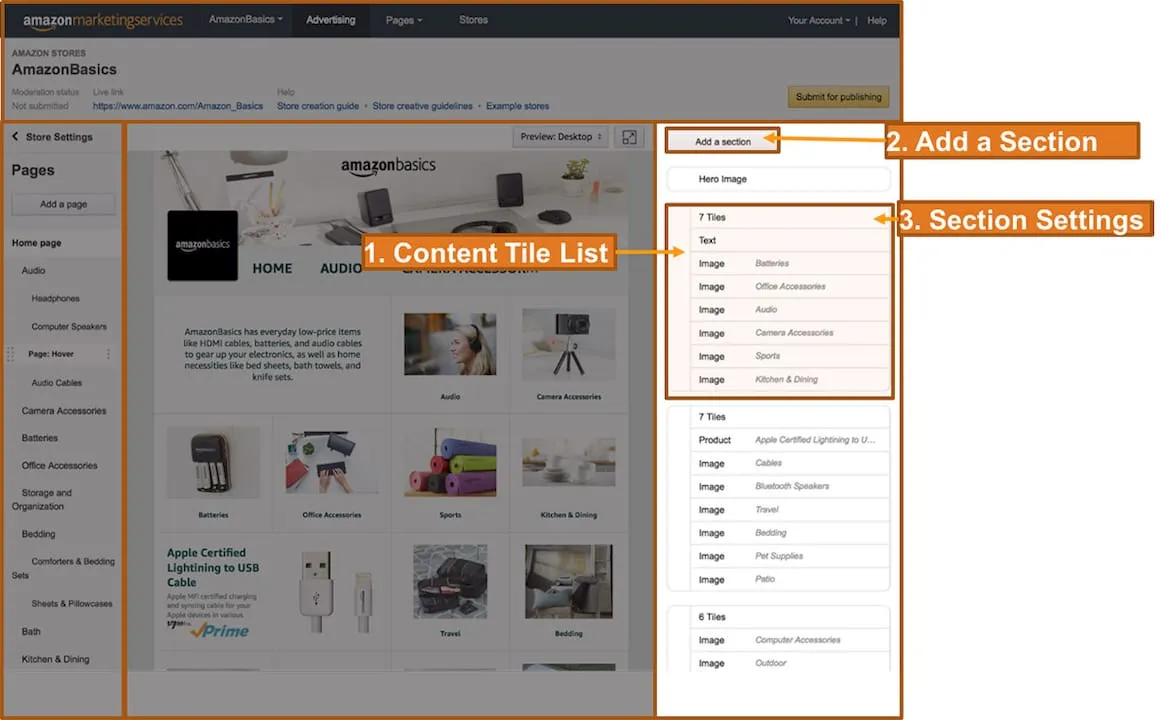
Building effective branded content starts inside platforms like Amazon Seller Central, where the A+ Content Manager gives enrolled brands access to a library of modular assets. Accessing A+ Content Manager means working with hero banners, lifestyle images, comparison tables, and brand story modules, all of which need to be mobile-first and compliant with platform rules.
Here’s a practical build sequence that top brands follow:
-
Hook: Lead with a hero banner that communicates your core value proposition in under three seconds
-
Benefits: Use lifestyle images paired with short, scannable copy to show the product solving a real problem
-
Proof: Incorporate social proof signals, certifications, or awards where guidelines allow
-
Use cases: Show the product across different contexts, users, or scenarios to broaden relevance
-
Comparison: Add a comparison table that positions your product against alternatives or your own product line
Mobile-first design isn’t optional. Over 60% of marketplace browsing happens on mobile, and modules that look great on desktop often collapse or crop badly on a phone screen. Always preview every module in mobile view before publishing.
Compliance mistakes are costly and common. The table below shows the most frequent errors and how to avoid them:
| Common mistake | Why it matters | How to fix it |
|---|---|---|
| Low-resolution images | Triggers suppression, looks unprofessional | Use minimum 1000px on the longest side |
| Keyword stuffing in modules | Violates guidelines, can suppress listing | Write for humans, not crawlers |
| Promotional pricing claims | Prohibited in most A+ modules | Remove price references entirely |
| Inconsistent brand voice | Confuses buyers, weakens trust | Create a brand style guide and enforce it |
| Ignoring mobile preview | Modules break on small screens | Test every module on mobile before publishing |
Pro Tip: Use your listing optimization checklist before every content upload. Catching compliance issues before submission saves days of back-and-forth with platform support teams.
The brands that build the strongest branded content treat it as a system, not a one-time project. Modular assets can be refreshed seasonally, tested iteratively, and adapted across marketplaces without rebuilding from scratch.
Uplift and measurement: How branded content drives conversion and trust
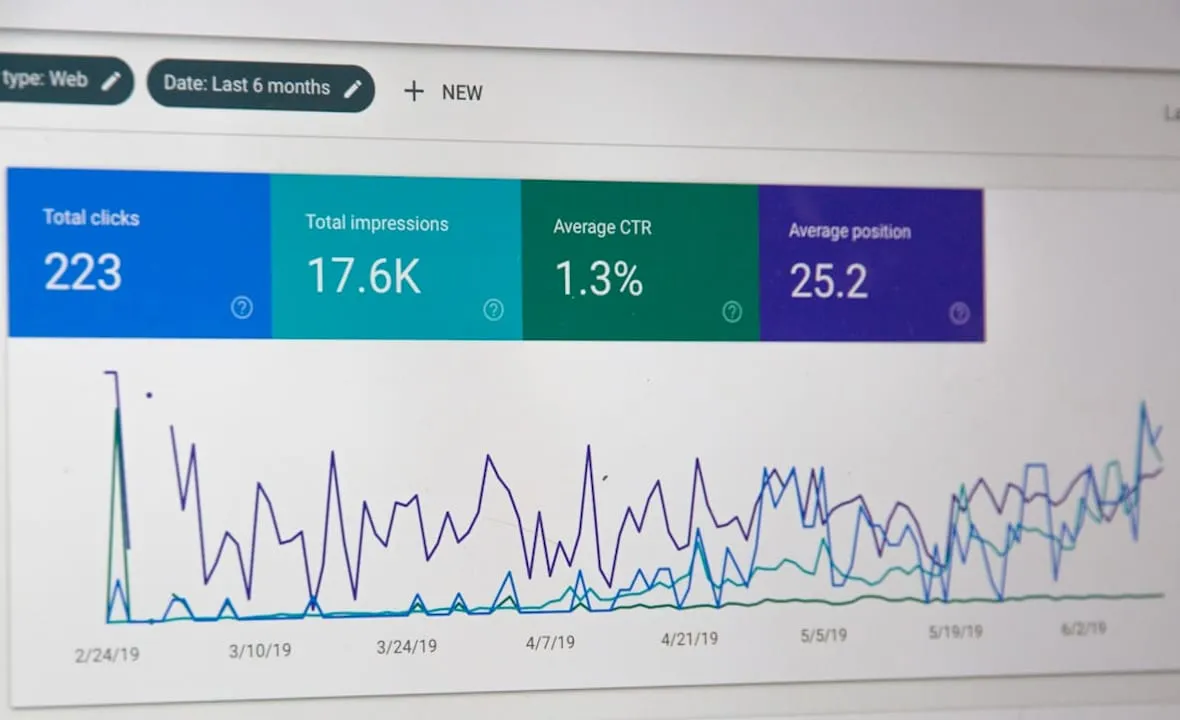
The business case for branded content isn’t theoretical. The metrics are measurable, trackable, and directly tied to revenue. The three numbers that matter most are conversion rate, unit session percentage, and return rate.
Unit session percentage is your most honest conversion signal on Amazon. It measures the percentage of sessions that result in a purchase. Benchmark unit session % at above 10% as a baseline for healthy branded content performance. Listings with strong A+ content consistently outperform those without it on this metric.
Return rates tell you whether your content is setting accurate expectations. Returns in high-risk categories can reach 25-30% when content is weak or inaccurate. Strong branded content, especially detailed use-case imagery and honest comparison tables, closes the expectation gap before the purchase.

Here’s a before-and-after comparison of what branded content improvements typically deliver:
| Metric | Before branded content | After branded content |
|---|---|---|
| Unit session % | 4-6% | 10-15% |
| Return rate | 18-25% | 8-12% |
| Repeat purchase rate | Low | Measurably higher |
| Listing suppression risk | High | Low |

A/B testing is the engine that keeps these numbers moving in the right direction. Amazon’s Manage Your Experiments tool lets you run A/B testing in ecommerce directly on live listings, comparing hero images, titles, and A+ modules against each other with statistically valid results.
The role of split testing goes beyond picking a winning image. It builds a body of evidence about what your specific audience responds to, which is data no competitor can replicate. Pair that with advertising to drive conversions and you create a feedback loop where paid traffic validates organic content decisions.
Pro Tip: Run A/B tests for a minimum of two weeks and at least 1,000 sessions per variant before drawing conclusions. Shorter tests produce misleading results that can send your content strategy in the wrong direction.
Branded content also influences SEO indirectly. Listings with higher engagement, lower bounce, and stronger conversion signals get rewarded by marketplace algorithms with better organic placement. It’s a compounding effect that builds over time.
Expert strategies and pitfalls: Protecting brand equity at scale
Brand Registry is the non-negotiable starting point. Brand Registry is required for full access to A+ Content Manager and other advanced tools, and without it, you have limited ability to control what appears on your listings. Enrollment requires a registered trademark, so start that process early if you haven’t already.
Once you’re enrolled, the real work is ongoing monitoring. Resellers are the silent killers of brand equity. They overwrite your carefully built content with their own versions, introduce inaccurate product descriptions, and create a fragmented buyer experience that drives returns and kills trust. Omnichannel consistency is essential to prevent brand equity erosion from unaudited reseller content.
Here are the expert practices that protect your brand at scale:
-
Audit listings weekly: Set up alerts or use a monitoring tool to catch unauthorized content changes within 24-48 hours
-
Lock down high-return categories: Fashion, electronics, and supplements are especially vulnerable. Use detailed size guides, material specs, and usage instructions to reduce expectation gaps
-
Maintain a master content library: Keep approved assets in a centralized location so any update can be deployed consistently across all marketplaces
-
Integrate brand storytelling in ecommerce into compliance workflows: Story-driven content can coexist with platform guidelines when you know the rules
-
Train your team on platform-specific rules: What’s allowed on Amazon may differ from Walmart or Shopify. Treat each platform as its own compliance environment
Pro Tip: Build a brand storytelling online guide into your onboarding process for any agency, freelancer, or internal team member touching your listings. Consistency starts with documentation.
High-return categories deserve special attention. In fashion, for example, visual compliance means showing the product on multiple body types, with accurate color representation and detailed fit notes. A single misleading image can generate hundreds of returns and tank your seller metrics.
Our perspective: The real difference makers in branded content listings
Most brands invest in branded content once, celebrate the lift, and move on. That’s the mistake. The brands that consistently outperform their category aren’t the ones with the best launch assets. They’re the ones running continuous experiments, auditing reseller drift every week, and treating their listing as a living product.
Conventional wisdom says great photography wins. We’d push back on that. Photography is table stakes. The real edge comes from the art of A/B testing your content systematically, learning what your specific audience responds to, and iterating faster than your competitors can copy you.
We’ve seen brands with average photography outperform competitors with stunning visuals simply because they tested relentlessly and kept their compliance record clean. Suppressed listings and reseller drift are silent margin killers that most brand managers don’t catch until the damage is done.
Iterative testing, omnichannel story alignment, and proactive change management deliver greater compounding returns than any single content refresh. Set-and-forget is not a strategy. It’s a slow leak.
Work with experts to maximize your branded content impact
Building branded content that consistently converts, stays compliant, and scales across Amazon, Walmart, and Shopify requires more than good design. It requires a system.
At Nectar, we combine in-house photography, videography, and design with data-driven strategy to transform underperforming listings into high-converting storefronts. Our Amazon Growth & Optimization service covers everything from A+ Content creation to Brand Registry management and reseller monitoring. Pair that with our ecommerce creative services and you get a fully integrated approach that drives measurable results. If your listings aren’t working as hard as your ad spend, let’s fix that.
Frequently asked questions
What is branded content in online marketplace listings?
Branded content refers to visuals, text, and storytelling tailored by a brand to differentiate its product listings, strengthen trust, and drive conversions on platforms like Amazon and Walmart. It uses modules like lifestyle images and brand story sections to create a cohesive buyer experience.
How does branded content affect product returns?
Listings with inaccurate, generic, or inconsistent branded content can drive return rates up 15-30%, especially in high-touch categories like fashion and electronics. Accurate, detailed content sets the right expectations before purchase.
What are the compliance risks with branded listing content?
Non-compliance with marketplace guidelines, such as using low-resolution images or prohibited claims, can lead to listing suppression or rejection. Suppression triggers include keyword repetition, special characters, and pricing claims inside A+ modules.
What metrics show the impact of branded content?
Key metrics include conversion rate, unit session percentage, and reduced return rates compared to baseline listings. Benchmark success via unit session percentage, aiming for above 10% as a sign of healthy content performance.
Do all sellers need Brand Registry for branded content?
Yes, enrolling in Brand Registry is required to create and control advanced branded content modules on most major marketplaces. Brand Registry is necessary for A+ Content Manager access and full listing control.
Recommended
.png)