Why Use Enhanced Brand Content to Sell More
.webp)

TL;DR:
Using enhanced brand content significantly increases Amazon listing conversions, reduces returns, and strengthens brand trust.
It involves rich modules like images, comparison charts, and videos that communicate product value and answer shopper objections effectively.
Most brands treating their Amazon listings like digital brochures are leaving real money on the table. The question of why use enhanced brand content goes well beyond aesthetics. Listings with A+ Content convert at measurably higher rates, reduce returns, and build the kind of brand trust that standard bullet points simply cannot create. If you manage product pages for a mid-sized or enterprise brand and you have not yet invested in enhanced brand content, this guide explains exactly what you are missing, how it works, and what it takes to do it right.
Key takeaways
| Point | Details |
|---|---|
| Conversion lift is measurable | Basic A+ Content drives up to 8% more sales; Premium can deliver up to 20% higher sales. |
| Returns drop with better content | Detailed visuals and comparison charts set accurate expectations, reducing costly returns. |
| Brand consistency compounds | Consistent visual identity across listings increases revenue by up to 33% over time. |
| Video is a purchase driver | Shoppers who watch product videos are 3.6x more likely to buy. |
| Content reduces ad dependency | Strong organic listings built with enhanced content lower long-term reliance on paid traffic. |
Why use enhanced brand content on marketplace listings
Enhanced brand content, now formally called A+ Content on Amazon, is a suite of rich content tools available to brand-registered sellers. It replaces the standard product description with modular layouts that include high-resolution lifestyle images, formatted text blocks, comparison charts, brand story sections, and, at the Premium tier, video modules and interactive hotspots.
The gap between a text-only listing and a fully built A+ Content page is not cosmetic. It is the difference between a product that looks like a generic commodity and one that communicates value, builds confidence, and answers the shopper’s unspoken questions before they click away.
Here is what the enhanced content toolkit actually includes:
-
Image and text modules: Side-by-side layouts that pair lifestyle or studio photography with concise, benefit-focused copy
-
Brand Story module: A dedicated section that introduces your company, mission, and values, which connects consumers with brand purpose and inspires loyalty
-
Comparison charts: Tables that let you highlight how your product stacks up against other items in your own catalog, reducing shopper hesitation
-
Premium interactive hotspots: Clickable image callouts that highlight specific product features directly on the photo
-
Video modules (Premium): Embedded video that plays within the listing without redirecting the shopper
Pro Tip: Brand Registry is the gateway to all of this. If your brand is not enrolled, start there before anything else. Enrollment is free and unlocks not just A+ Content but also Stores, Sponsored Brands ads, and Brand Analytics.
The mechanics are straightforward. You build content inside Seller Central using Amazon’s drag-and-drop module system, submit for review, and Amazon typically approves within seven business days. What matters is not the process but what you build inside it.
The real benefits of enhanced brand content
The business case for enhanced brand content is not theoretical. It is backed by conversion data that most brand managers find surprising when they first encounter it.
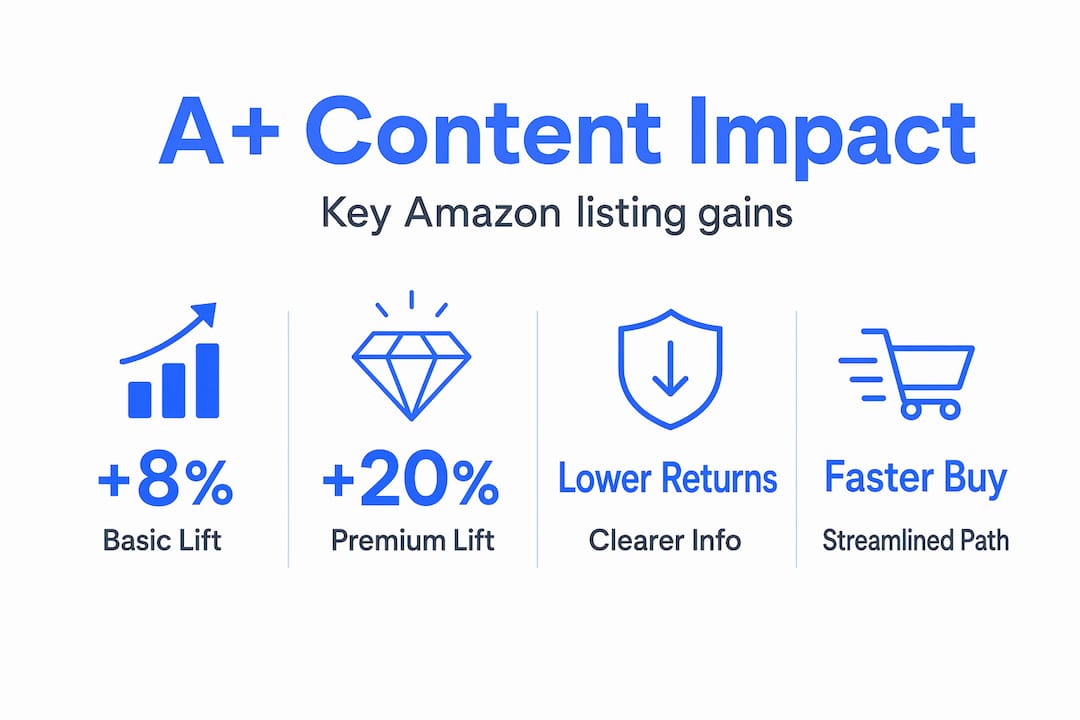
Basic A+ Content drives up to an 8% increase in sales, while Premium A+ Content can push that figure up to 20%. Those are not outlier results. They reflect the fundamental shift in shopper psychology that happens when a listing gives people everything they need to say yes.
“Enhanced brand content is no longer optional on marketplaces like Amazon; it is a critical driver of conversion and brand differentiation.” — SalesDuo, 2026
Beyond conversion rates, the benefits stack in ways that compound over time:
-
Fewer returns: Enhanced brand content reduces returns by setting clear product expectations through detailed imagery and comparison charts. When shoppers know exactly what they are buying, the post-purchase disappointment rate drops.
-
Stronger brand trust: Listings that look professionally built signal that the brand behind them is credible. A polished A+ layout functions as social proof without requiring a single review.
-
Higher shopper engagement: Shoppers spend more time on listings with rich visual content, and that dwell time correlates with purchase confidence.
-
Video-driven purchases: Customers who watch product videos are 3.6 times more likely to purchase. That single data point justifies the investment in a video module for any meaningful SKU.
The brands that see the strongest results from enhanced brand content treat it as a conversion tool, not a design exercise. Every image, headline, and module should answer a specific objection or reinforce a specific purchase reason. When you frame the content that way, the ROI becomes much easier to defend internally. For a deeper look at how branded content ties to sustained revenue growth, the Thinknectar breakdown on branded content for growth is worth reading alongside this guide.
Best practices for creating effective enhanced content
Knowing the features available to you is one thing. Knowing how to use them well is where most brands either win or stall. Here is a practical sequence for building enhanced brand content that actually performs:
-
Lead with your strongest visual. The first image module sets the tone for everything that follows. Use a lifestyle shot that shows the product in use in a context your buyer recognizes. Generic white-background shots belong in the main image gallery, not in A+ Content.
-
Write for the scanner, not the reader. Your copy blocks should be short. Three to five lines per module is enough. Use bolded feature names followed by one-sentence benefit statements. People skim A+ Content before they read it.
-
Use comparison charts strategically. Do not just compare your product to your own catalog items out of obligation. Build the chart to answer the single most common pre-purchase question your category generates.
-
Incorporate video at Premium tier. Premium A+ Content features interactive hotspots and comparison charts that increase shopper engagement, and video is the module that moves the needle most for complex or high-consideration products.
-
Align everything to your brand voice. Your A+ Content should sound and look like the rest of your marketing. Inconsistent tone or visuals break trust. If your brand is warm and approachable on social media but your listing copy reads like a technical manual, shoppers notice.
-
Test, then iterate. Amazon’s Manage Your Experiments tool lets brand-registered sellers run A/B tests on A+ Content. Use it. Even small headline or image changes can produce measurable lift. Treat your listings like landing pages, not static product cards.
Pro Tip: Start with your three to five highest-revenue or highest-traffic ASINs. Perfect the A+ Content there first, measure the impact after 60 to 90 days, and then scale that template logic across the rest of your catalog. Scaling a bad template is worse than moving slowly.
Common mistakes to avoid: over-crowding modules with text, using images that look great on desktop but are illegible on mobile, and treating the Brand Story module as filler. That module is one of the few places on a marketplace listing where you control the full narrative about your company. Use it deliberately.

How enhanced content fits into your broader strategy
A single well-built A+ Content page is valuable. A catalog of consistently built, brand-aligned listings is a strategic asset. Understanding the full role of enhanced brand content means seeing it as part of your marketing infrastructure, not a one-time project.
Consistent brand presentation across channels increases revenue by up to 33%. That figure applies directly to your marketplace presence. When your A+ Content, your Amazon Store, your social channels, and your website all reflect the same visual identity and messaging, each touchpoint reinforces the others.
Here is where enhanced brand content fits inside a larger e-commerce strategy:
-
Search visibility: While A+ Content copy is not indexed by Amazon’s search algorithm for keyword ranking, the engagement signals it drives (session time, reduced bounce to competitors, conversion rate) do influence where your listings rank over time. Pairing strong A+ Content with solid keyword optimization is covered in the Thinknectar guide to Amazon SEO best practices.
-
Brand equity building: Brands that invest in enhanced brand content build stronger trust and storytelling resonance with customers. That trust compounds. Repeat purchasers and brand-loyal customers are significantly cheaper to retain than new customers are to acquire.
-
Paid ad efficiency: When your listing converts better organically, your cost-per-acquisition on paid traffic drops. You are buying the same clicks but getting more orders from them. SEO-aligned content reduces reliance on paid media by building organic traffic and trust over time.
-
Multichannel reinforcement: The visual and messaging standards you establish for A+ Content translate directly to your Walmart listings, your Shopify product pages, and your email campaigns. You build it once and the brand standards ripple outward.
E-commerce brands with clear brand identity achieve higher conversion rates and stronger commercial authority. Without that foundation, even well-funded advertising produces noise rather than revenue.
How to plan, build, and launch your A+ Content
Getting enhanced brand content live is a process you can manage systematically. Here is how to approach it:
-
Audit your current listings. Score each ASIN by revenue, traffic, and current conversion rate. This tells you where enhanced content will generate the fastest payback.
-
Set specific goals. “Better listings” is not a goal. “Increase conversion rate from 8% to 11% on our top 10 ASINs within 90 days” is a goal you can measure.
-
Gather your assets. You need lifestyle photography, studio shots showing product dimensions and features, brand logo files, and copy that reflects your brand voice. If you do not have these, the creative production step comes before the content build. See the range of content types for brand growth to understand which assets carry the most weight.
-
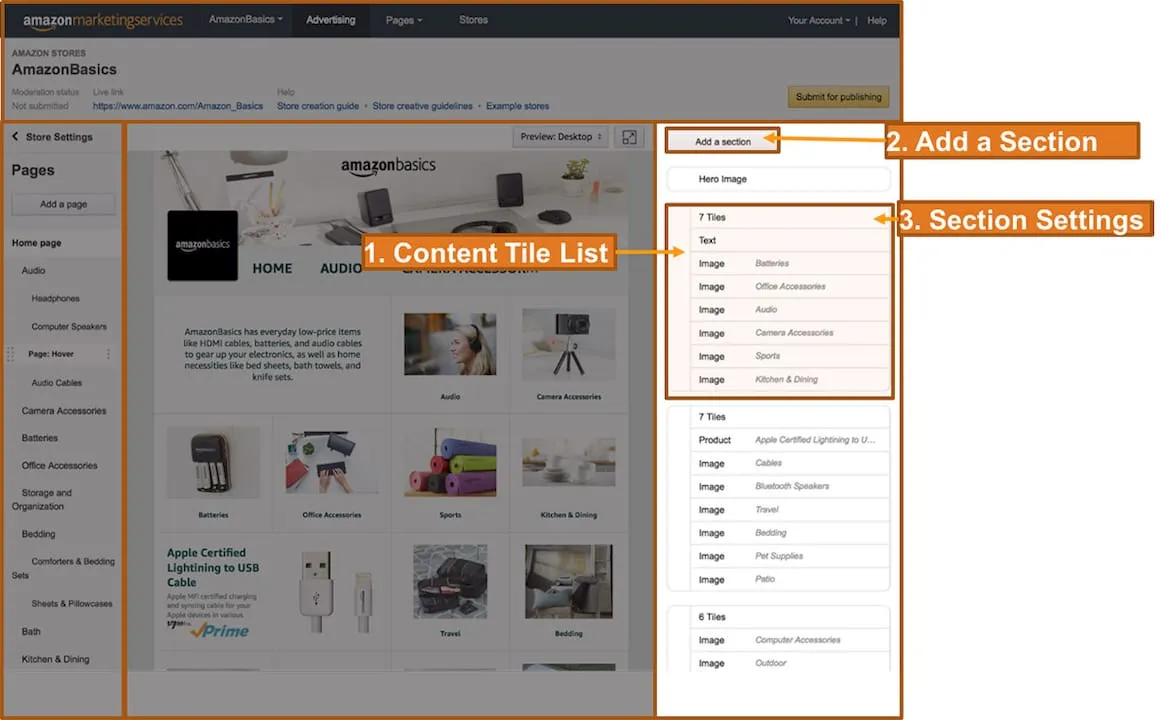
Build inside Seller Central. Use the A+ Content Manager under the Advertising tab. Select your modules, upload assets, write copy, preview on both desktop and mobile, and submit. Amazon reviews content for guideline compliance before it goes live.
-
Measure the impact. Pull conversion rate data from Brand Analytics before and after launch. Give each listing at least 30 days of post-launch data before drawing conclusions, and use Manage Your Experiments to test variations.
-
Scale across your catalog. Once you have a performing template, replicate the module structure and visual style across additional ASINs. Adjust the copy and imagery for each product but keep the layout logic consistent.
The brands that do this well treat A+ Content as a living asset. They update it seasonally, refresh imagery when products change, and run ongoing experiments to maintain conversion rates as market conditions shift.
My take on why this investment pays off long-term
I have worked with brands that initially pushed back hard on the idea of investing in enhanced brand content. The typical objection sounds like this: “Our product is good. The reviews prove it. Why do we need expensive content?”
What I have consistently found is that the product being good is the baseline. It is not the differentiator on a marketplace where your listing sits three pixels away from a competitor with a lower price. What shifts buyer behavior at that moment of decision is confidence. And confidence comes from the content around the product, not just the product itself.
The brands I have seen move fastest are the ones that stop treating A+ Content as a cosmetic upgrade and start treating it as a conversion engineering project. They ask: “What is the specific objection this module needs to resolve?” They test headlines the same way a landing page team would. They measure dwell time and conversion rate the way a growth team tracks any other funnel metric.
My honest take is that the brands still skipping enhanced brand content are not saving money. They are paying for that gap with every ad click that lands on a listing too thin to convert. The math on a 10% to 20% conversion lift is not subtle. Do it once with discipline and the results make the case for every future investment.
— Dan
Ready to build listings that actually convert?
Thinknectar works with mid-sized and enterprise brands to turn underperforming Amazon listings into high-converting storefronts. The team handles everything from in-house lifestyle photography and video production to full A+ Content builds, Brand Store design, and catalog-wide content strategy.
If your product listings are not working as hard as your advertising, that gap is costing you compounding revenue. Thinknectar’s Amazon growth optimization service is built specifically to close it, with creative, data, and marketplace strategy working together inside one managed program. Whether you are starting from scratch or scaling an existing catalog, the team can assess where your content is falling short and build a plan to fix it.
FAQ
What is enhanced brand content on Amazon?
Enhanced brand content, now called A+ Content, is a set of rich content modules available to brand-registered Amazon sellers. It replaces the standard product description with images, formatted text, comparison charts, and video to improve conversion and brand storytelling.
How much does enhanced brand content increase sales?
Basic A+ Content can drive up to an 8% sales increase, while Premium A+ Content can generate up to 20% higher sales compared to text-only listings.
Does enhanced brand content help with SEO on Amazon?
A+ Content copy is not directly indexed for keyword ranking, but the engagement and conversion signals it generates do influence listing performance over time. Pairing enhanced content with keyword-optimized titles and bullets produces the best results.
Can enhanced brand content reduce product returns?
Yes. Clear comparison charts, detailed lifestyle images, and feature callouts set accurate product expectations, which lowers return rates by reducing post-purchase disappointment.
Who can use A+ Content on Amazon?
Any seller enrolled in Amazon Brand Registry can access basic A+ Content at no additional cost. Premium A+ Content, which includes video modules and interactive hotspots, is available to sellers who meet Amazon’s program eligibility requirements.
Recommended
































































.webp)