TL;DR:
- Most successful D2C brands own their customer relationships and focus on retention and community engagement. They often launch with limited products, use social media as a testing environment, and diversify channels to sustain growth. These brands exhibit deep customer obsession and strategic channel expansion to build lasting business models.
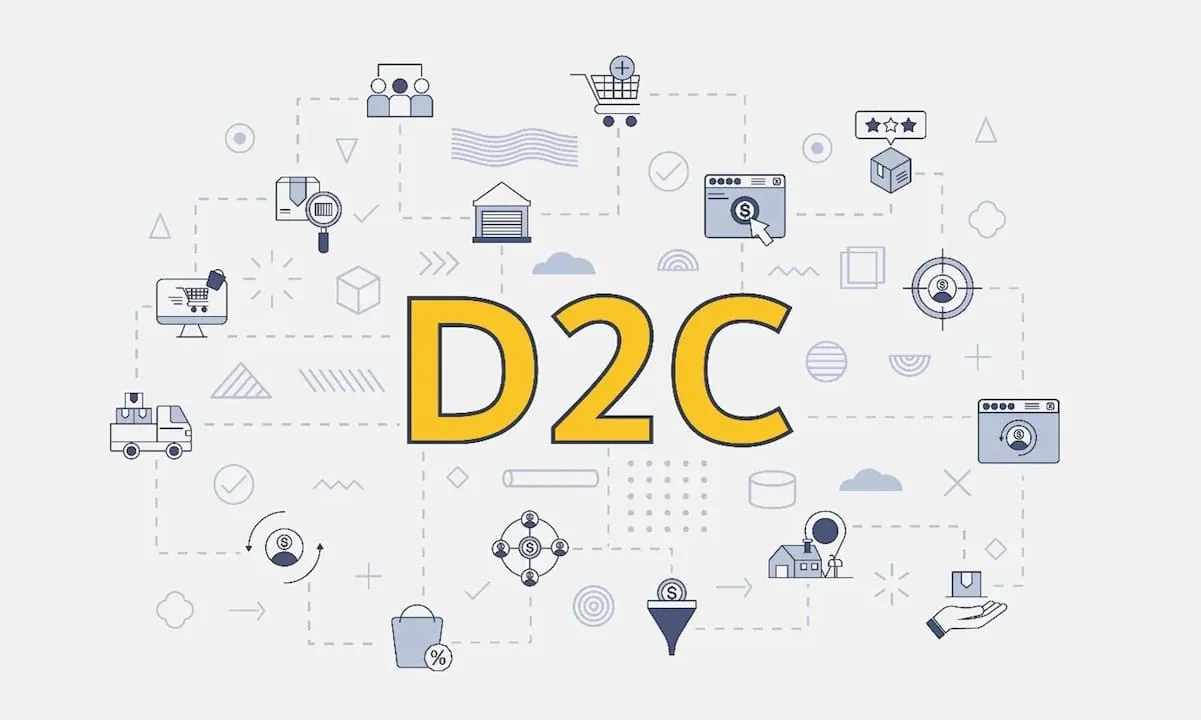
Direct-to-consumer (D2C) brands are companies that sell products directly to customers, cutting out retailers, wholesalers, and distributors entirely. Over 89% of U.S. consumers have shopped directly from a brand recently, with 40% citing better pricing as their primary reason. That statistic tells you everything about why the D2C model keeps attracting entrepreneurs and marketers. The best examples of D2C brands share a common thread: they own the customer relationship, control the brand experience, and use data from every transaction to grow smarter. This article breaks down what those brands do differently and what you can take from their playbooks.
What makes the most successful D2C brands stand out?
The top direct to consumer brands do not succeed by accident. They share a set of structural and behavioral traits that separate them from brands still dependent on retail middlemen.
-
Subscription revenue as a foundation. Subscription models create predictable cash flow and force brands to earn customer loyalty every month. AG1 generates $600 million in annual revenue at a $79 per month price point, almost entirely through subscriptions. That kind of revenue stability is nearly impossible to build through one-time purchases alone.
-
Product scarcity and SKU discipline. Launching with fewer products forces clarity. Rhode launched with just three SKUs and built a 440,000-person waitlist before expanding. Focused product lines reduce operational complexity and sharpen brand identity.
-
Community and social media as growth engines. Successful D2C brands treat social media as a testing lab, not just an ad channel. TikTok, in particular, lets brands test content organically before spending on paid promotion.
-
Omnichannel presence, not just ecommerce. The most durable D2C brands eventually add physical retail or wholesale. Rising customer acquisition costs online make a single-channel approach increasingly expensive to sustain.
Pro Tip: Before spending on paid ads, post 20 organic pieces of content on TikTok and measure which formats generate saves and shares. Those formats become your paid ad creative.
Top examples of D2C brands by industry
The following brands illustrate how D2C strategies vary by category and what each model teaches entrepreneurs about building a direct relationship with customers.
1. Rhode (skincare)
Rhode launched in 2022 with three products and a waitlist of 440,000 people. Hailey Bieber’s brand reached a $1 billion valuation in three years, making it one of the fastest D2C exits in beauty history. The lesson is not celebrity. The lesson is product scarcity combined with a clear aesthetic identity that photographs well on social media. Rhode did not try to be a full skincare line. It owned one specific look and one specific feeling.
2. AG1 (wellness supplements)
AG1 is the clearest example of a subscription D2C brand done right. The brand sells one core product at $79 per month and has built a business generating $600 million annually. AG1 invests heavily in podcast advertising and long-form content to justify the price point. Its retention architecture, meaning the systems it uses to keep subscribers from canceling, is as important as its acquisition strategy.
3. Feel Goods (supplements)
Feel Goods built an eight-figure supplement brand using TikTok as its primary growth channel. The brand generated over 100 million organic impressions before scaling paid advertising. What makes Feel Goods a useful case study is its willingness to post content that flopped publicly and use those failures to refine its messaging. TikTok served as a free product and content testing lab. That approach cut paid media waste significantly.
4. Warby Parker (eyewear)
Warby Parker started as a pure ecommerce brand and now operates over 300 physical stores. Its stores are not showrooms. They are service hubs where customers get eye exams, and 75% of in-store visitors make a purchase. Eye exam services drove 44% year-over-year growth in that category. Warby Parker shows that physical retail works when it delivers a service that ecommerce cannot replicate.

5. Grüns (wellness)
Grüns reached a $500 million valuation in two years by focusing on retention rather than raw acquisition volume. The brand built systems to keep customers subscribed longer, which increased lifetime value without requiring constant new customer spending. Grüns is a useful example for any entrepreneur who thinks growth only comes from acquiring more customers.
6. Figs (medical apparel)
Figs grew to $3 billion in revenue with only $10 million in outside capital. The founders sold scrubs directly from the trunk of a car to understand exactly what healthcare workers wanted. That direct customer engagement gave Figs product-market fit that competitors with bigger budgets could not match. Figs is proof that obsessive customer understanding beats large marketing budgets.
7. Allbirds (footwear)
Allbirds built its brand on sustainable materials and a direct ecommerce model. The brand later expanded into physical retail but has since pulled back from stores to refocus on profitability. Allbirds and Warby Parker took two very different paths after their initial D2C success. Allbirds shows that physical expansion only works when the unit economics support it.
How D2C brands effectively scale their business models
Scaling a D2C brand requires more than increasing ad spend. The brands that grow sustainably use a combination of product discipline, community feedback, and channel diversification.
-
Launch with fewer products. Rhode’s three-SKU launch is the clearest modern example of how product scarcity drives focus. Fewer products mean cleaner operations, stronger brand identity, and easier customer decisions. Entrepreneurs who launch with 20 products dilute attention and inventory capital.
-
Use social media as a testing platform before paid media. Feel Goods’ TikTok strategy proves that organic content is a low-cost way to identify what resonates with customers. Brands that skip organic testing and go straight to paid ads often spend heavily on creative that does not convert.
-
Build retention systems before scaling acquisition. Grüns reached a $500 million valuation by prioritizing customer retention over volume. Every dollar spent on keeping an existing customer is worth more than the same dollar spent on acquiring a new one, especially as digital ad costs rise.
-
Add physical retail as a service channel, not a showroom. Warby Parker’s 300-store expansion worked because each store offered eye exams. The service created a reason to visit that ecommerce could not provide. Brands that open stores purely for brand awareness rarely see the conversion rates that justify the cost.
-
Create community feedback loops. Brands like Feel Goods and Figs built product development processes around direct customer input. That feedback shortens the cycle between identifying a problem and shipping a solution.
Pro Tip: Set up a simple post-purchase survey asking one question: “What almost stopped you from buying?” The answers reveal friction points that no analytics dashboard will show you.
Key features of D2C business models compared
Not every D2C model fits every business. The right structure depends on your product category, margin profile, and customer behavior.
Subscription model
Subscription D2C brands generate predictable revenue and maximize lifetime value. They work best for consumable products that customers use regularly, like supplements, skincare, or pet food. The downside is that churn management becomes a full-time operational priority. Brands like AG1 and Grüns invest heavily in cancel-flow experiences and loyalty programs to protect their subscriber base.
Scarcity and limited SKU model
Brands like Rhode use product scarcity to create demand before supply exists. This model works well for lifestyle and beauty brands where desire and exclusivity drive purchase decisions. The risk is that scarcity can frustrate customers if waitlists drag on too long without delivery.
Omnichannel model
Mature D2C brands often add wholesale or physical retail to reduce dependence on digital advertising. Warby Parker’s store network is the strongest example of this working at scale. This model requires more capital and operational complexity but reduces customer acquisition cost over time. You can read more about D2C channel strategy to understand when adding channels makes sense for your stage of growth.
Community-led growth model
Brands like Feel Goods and Figs built their customer base through direct engagement rather than paid media. This model is slower to scale but produces customers with higher loyalty and lower churn. It works best when the founder or team has genuine credibility in the target community.
Key takeaways
The most durable D2C brands win by owning the customer relationship, building retention systems early, and treating social media as a product testing lab before scaling paid acquisition.
| Point | Details |
|---|---|
| Product scarcity drives focus | Launching with 3–5 SKUs sharpens brand identity and reduces operational complexity. |
| Subscriptions build durable revenue | Brands like AG1 and Grüns show that retention architecture outperforms volume-based acquisition. |
| TikTok is a free testing lab | Feel Goods generated 100 million organic impressions before investing in paid ads. |
| Physical retail works as a service hub | Warby Parker’s 300 stores convert 75% of visitors by offering eye exams, not just products. |
| Customer obsession beats ad budgets | Figs reached $3 billion in revenue with $10 million in capital by understanding customers directly. |
What I’ve learned from studying D2C brand examples
The pattern I keep seeing across the best D2C brands is not a clever marketing trick. It is an almost uncomfortable level of customer obsession. Figs’ founders sold scrubs from a car trunk. Feel Goods posted TikToks that flopped publicly and kept going. Rhode built a waitlist before the product existed. None of that is glamorous. All of it is effective.
The part that most entrepreneurs miss is the retention side. Everyone wants to talk about acquisition because it feels like growth. But the brands that reach $500 million valuations in two years, like Grüns, are the ones that built systems to keep customers subscribed and engaged long after the first purchase. Acquisition gets you in the door. Retention is the business.
The other shift worth paying attention to is the move away from pure ecommerce. The D2C brands that are thriving in 2026 are not the ones that stayed online only. They are the ones that figured out when to add a physical presence or a wholesale channel without losing their direct customer relationship. That balance is harder than it sounds, and getting it wrong, as Allbirds discovered, is expensive. The brands that get it right treat every channel as a way to deepen the customer relationship, not just add a revenue stream.
If you are building a D2C brand right now, the D2C growth checklist is worth working through before you scale any channel.
— Dan Katona
How Nectar helps D2C brands grow profitably
Building a D2C brand with the right structure is one challenge. Scaling it across Amazon, Walmart, and Shopify without losing margin is another. Nectar works with mid-sized and enterprise brands to manage the full ecommerce operation, from creative production to data-driven advertising.
Nectar’s proprietary iDerive analytics platform gives brands the granular data they need to make channel decisions that actually improve profitability, not just revenue. Whether your brand needs Shopify growth management, a stronger Amazon presence, or a creative studio that produces content built to convert, Nectar’s full-service offering covers the entire funnel. Brands that work with Nectar get a managed growth partner, not just an agency running ads.
FAQ
What are D2C brands?
D2C brands sell products directly to customers without using retailers or wholesalers. They control pricing, customer data, and the full brand experience.
What are the best examples of D2C brands to study?
Rhode, AG1, Feel Goods, Warby Parker, Figs, and Grüns are among the most instructive examples. Each demonstrates a different growth model, from subscription revenue to scarcity-driven launches.
Why do D2C brands use subscription models?
Subscriptions create predictable revenue and increase customer lifetime value. AG1 generates $600 million annually through a $79 per month subscription, showing how powerful the model is for consumable products.
How do D2C brands use TikTok effectively?
Feel Goods used TikTok to generate over 100 million organic impressions before scaling paid ads. The platform works as a low-cost testing environment for content and product messaging.
When should a D2C brand add physical retail?
Physical retail makes sense when it delivers a service that ecommerce cannot. Warby Parker’s eye exam model converts 75% of in-store visitors, which justifies the cost of 300 locations.
Recommended





















































.webp)