Programmatic advertising strategy guide for e-commerce brands
.webp)

TL;DR:
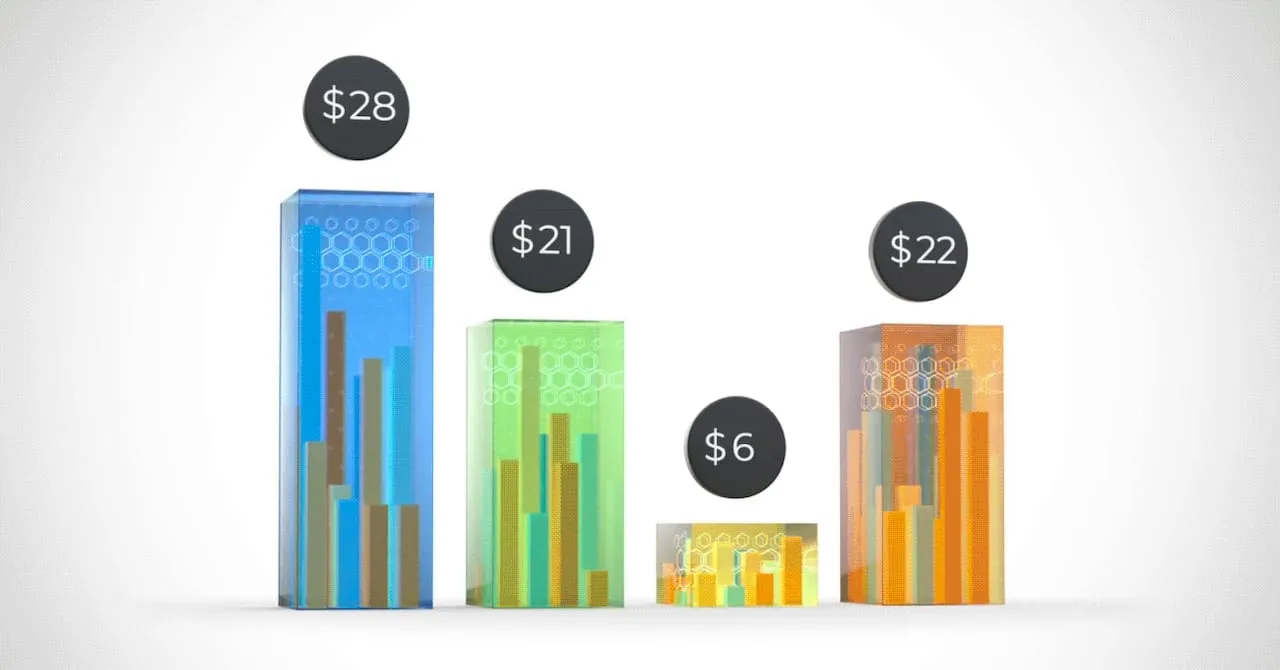
Only 36% of programmatic ad spend is effectively reaching audiences due to fraud, hidden fees, and lack of transparency.
Successful e-commerce brands actively manage, audit, and optimize their programmatic campaigns regularly.
Future trends include AI automation, privacy-safe targeting, and increased focus on quality supply paths and cross-channel measurement.
Programmatic advertising commands over 90% of all digital display spending globally, yet only 36 cents of every dollar actually works as intended. For marketing teams managing real budgets and real growth targets, that stat should land hard. The promise of hyper-targeted, automated ad buying sounds perfect for e-commerce brands scaling across channels. But the gap between that promise and the reality of wasted impressions, murky fees, and opaque supply chains is exactly what separates brands that win with programmatic from those quietly hemorrhaging budget. This guide cuts through the complexity to give you the clarity and strategy to be in the winning group.
Key Takeaways
| Point | Details |
|---|---|
| Automated ad buying | Programmatic advertising automates digital ad buying using real-time technology and data. |
| Data-driven results | Leveraging first-party data and contextual targeting increases campaign precision and effectiveness. |
| Risks and rewards | Programmatic can massively boost ROAS but exposes brands to risks like fraud and fee leaks. |
| Transparency is vital | Maximizing returns requires demanding transparency, using verification tools, and hands-on management. |
| Ongoing adaptation | Success in 2026 hinges on adapting to privacy changes and prioritizing quality signals and premium inventory. |
Defining programmatic advertising: What it is and why it matters
Programmatic advertising is the automated buying and selling of digital ad inventory using software, data, and algorithms. Instead of calling a publisher, negotiating rates, and booking placements over email, programmatic technology executes those decisions in milliseconds. The core idea is efficiency at scale, but the ecosystem is far more layered than that summary suggests.
The four building blocks you need to understand are:
-
Demand-side platforms (DSPs): Software advertisers use to bid on and buy ad inventory across multiple exchanges. Think of a DSP as your bidding command center.
-
Supply-side platforms (SSPs): The publisher’s equivalent. SSPs connect publisher inventory to the broader marketplace and help maximize revenue per impression.
-
Private marketplaces (PMPs): Invitation-only environments where publishers offer inventory to a select group of advertisers. PMPs sit between direct deals and open auctions.
-
Real-time bidding (RTB): The auction process that happens in the milliseconds between a user loading a page and the ad appearing. RTB powers the open exchange.
The landscape has shifted dramatically in recent years. With third-party cookies fading out across browsers, programmatic retail media has emerged as a particularly valuable channel for e-commerce, where first-party purchase data powers targeting without relying on legacy cookie infrastructure. Brand safety has also become a board-level concern, with ad fraud and placement next to harmful content creating real reputational risk.
“Demand transparency and full visibility; blend first-party data with contextual targeting post-cookies; prioritize PMP and direct for brand safety over RTB scale; AI optimizes but needs human oversight.”
For e-commerce brands specifically, the stakes are high. You’re operating at scale across display, video, and Connected TV. You have rich customer data sitting in your CRM. Programmatic, used correctly, connects those assets to audiences across the open web. Used carelessly, it burns budget at scale.
Programmatic advertising in action: How it works for e-commerce
Understanding the mechanics is where most brand-side marketers stop short. Let’s walk through exactly how a programmatic campaign comes to life for an e-commerce brand, from data connection to optimization.
How an e-commerce brand launches a programmatic campaign:
-
Connect your first-party data. Upload your CRM data, email lists, and purchase history into your DSP. This creates addressable audience segments, such as lapsed buyers, cart abandoners, or high-LTV customers, for retargeting.
-
Define your inventory strategy. Decide whether to start with a PMP for controlled, brand-safe environments, or go directly to open RTB for volume. Most brands benefit from layering both.
-
Set targeting parameters. Layer in contextual signals, geographic data, behavioral data, and device targeting. Post-cookie, contextual targeting is rising fast as a privacy-safe alternative.
-
Configure bidding rules. Set your target CPM (cost per thousand impressions) or CPC (cost per click) thresholds. Advanced DSPs let you set rules around frequency capping, dayparting, and audience recency.
-
Launch and monitor. Watch impression delivery, click-through rates, view-through attribution, and conversion data closely in the first 48 to 72 hours.
-
Run supply path optimization (SPO). Audit which SSPs and exchanges are delivering the best results relative to fees. Fee reduction of 15 to 30% is achievable by eliminating redundant or low-quality supply paths.
Here’s how common programmatic formats compare in practical e-commerce applications:
| Ad format | Best use case | Typical CPM range | Key advantage |
|---|---|---|---|
| Display banners | Retargeting, prospecting | $0.50 to $3.00 | Scale and reach |
| Video (pre-roll) | Brand awareness, product demos | $10 to $25 | High engagement |
| Connected TV (CTV) | Upper-funnel, competitive conquesting | $25 to $45 | Premium, unskippable |
| Native ads | Content integration, mid-funnel | $2 to $8 | High trust, low ad fatigue |
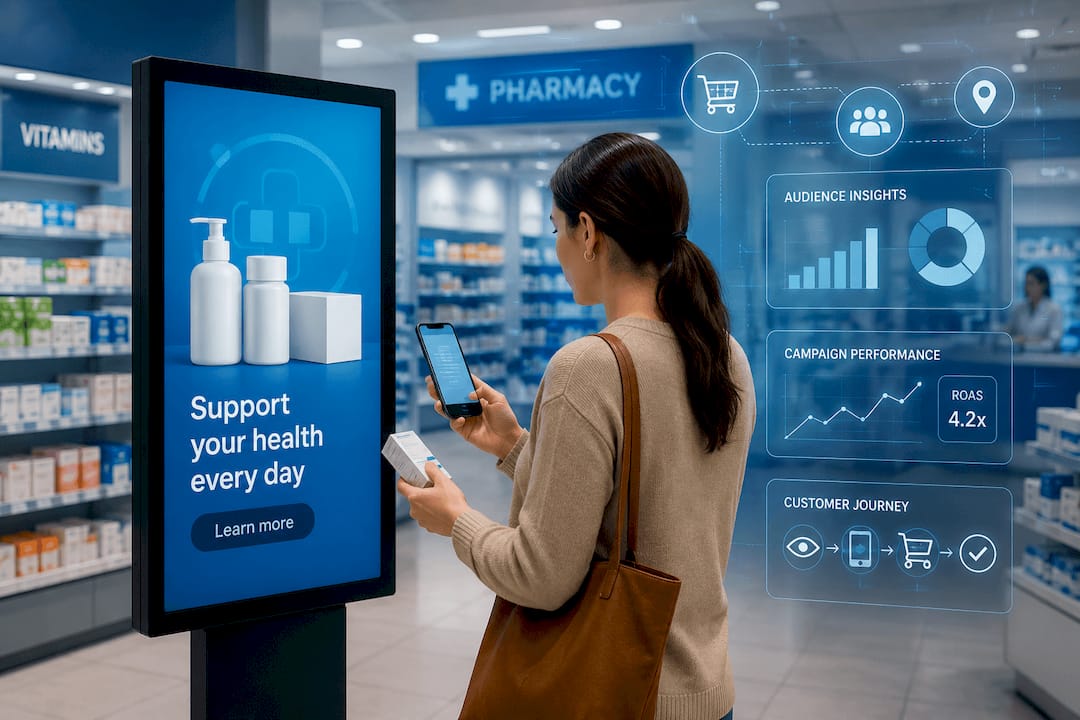
| DOOH (Digital Out-of-Home) | Local, event-driven campaigns | Varies by market | Broad reach, contextual |
Understanding data-driven marketing benefits is critical here because programmatic is only as powerful as the data fueling it. Brands that invest in clean, segmented first-party data consistently outperform those relying on third-party audience packages from the DSP.

Pro Tip: Before scaling spend to open RTB, run a 30-day PMP test with two or three premium publishers in your vertical. The quality signals you gather, including viewability rates, brand safety scores, and conversion lift, will give you a trustworthy benchmark before you move into the noisier open exchange. You can also apply the learnings from your Shopify ad workflow to structure campaign hierarchies cleanly before trafficking.
The pros and cons: Efficiency, risks, and what the data says
Let’s be direct. Programmatic advertising has genuinely powerful advantages and well-documented, persistent problems. You need to understand both sides to make informed decisions about budget allocation.
The case for programmatic:
-
Scale: Access to billions of ad impressions across thousands of publishers through a single DSP interface.
-
Precision targeting: First-party data integration allows targeting by purchase history, product affinity, lifetime value, and recency.
-
ROAS potential: Well-managed programmatic campaigns can deliver up to 3x ROAS compared to direct buying in controlled studies.
-
Speed: Campaign launch, optimization, and creative testing all happen faster than in any manual buying model.
-
Cross-channel reach: One DSP can serve display, video, CTV, native, and audio in a single campaign, creating coordinated touchpoints across a customer journey.
The case against (or at least, the serious risks):
-
Ad fraud: Click farms, bot traffic, and domain spoofing drain budgets. Industry estimates suggest fraud accounts for billions in annual wasted spend.
-
Hidden fees: The programmatic supply chain has many intermediaries. Technology fees, data fees, exchange fees, and viewability fees can consume 40 to 50% of your gross media budget before an ad reaches a real person.
-
Brand safety: Open RTB auctions can place your brand’s ads next to politically charged, violent, or objectionable content without additional controls.
-
Lack of transparency: Many DSPs provide summary-level reporting rather than log-level data, making it impossible to audit where spend actually went.
According to analysis cited by the ANA, only 36% of programmatic spend is genuinely effective. The rest is lost to inefficiencies, fraud, and fee leakage.
That number should reframe how you think about your programmatic strategy. It isn’t enough to set a campaign live and track top-line ROAS. You need to audit the quality of spend underneath that number.
For brands managing seasonal campaign optimization, the risk is even higher during peak periods when CPMs spike and fraudulent inventory floods the exchange to capture premium budgets. Strategies that work in ordinary periods can underperform dramatically when auction dynamics shift during Q4 or major promotional events.
Pro Tip: Deploy DoubleVerify or a similar third-party verification tool across all programmatic campaigns. Set minimum viewability thresholds (70% or higher) and enable fraud filtering. The modest cost is easily offset by recovering budget that would otherwise go to invalid traffic. Brands serious about boosting e-commerce ROAS treat verification tools as non-negotiable line items, not optional extras.
Here’s a direct comparison of managed and unmanaged programmatic approaches:
| Factor | Unmanaged programmatic | Well-managed programmatic |
|---|---|---|
| Transparency | Summary-level only | Log-level data access |
| Fraud protection | Minimal | Third-party verification enabled |
| Supply path | Broad, unoptimized | Audited, SPO applied |
| Brand safety | Basic keyword blocking | PMP-first with full exclusion lists |
| Effective spend | Potentially as low as 36% | Target 70% and above |
Future-proofing: 2026 trends and best practices for e-commerce success
The programmatic landscape in 2026 is defined by three forces: AI-driven automation, the accelerating growth of CTV and Digital Out-of-Home, and the decisive shift toward privacy-compliant data. These forces aren’t arriving separately. They’re colliding at once.
Key 2026 trends every e-commerce marketer should act on:
-
AI and agentic buying are here, but signal quality dominates volume. Platforms increasingly use AI to automate bid decisions, creative selection, and audience expansion. The risk is that AI amplifies bad data inputs at scale. Signal quality beats raw volume every time. Brands feeding clean, well-segmented first-party data into AI-driven DSPs will outperform those relying on broad third-party segments.
-
CTV and DOOH are the fastest-growing channels. CTV is particularly powerful for e-commerce because it combines the emotional impact of television with audience-level targeting. CTV CPMs are higher, but the attention quality, completion rates, and brand lift metrics justify the premium for awareness-stage spend.
-
Privacy-safe targeting is now a competitive advantage. With third-party cookies largely gone from major browsers and global privacy regulations tightening, brands that have invested in first-party data infrastructure are structurally ahead. Contextual targeting, where ads are matched to page content rather than user profiles, is making a significant comeback as a privacy-compliant alternative.
-
Private marketplace deals are gaining renewed relevance. As open RTB fraud rates persist, premium publishers are leaning into PMPs to offer brand-safe, verified inventory. Brands willing to pay slightly higher CPMs for PMP inventory often recoup more than the premium in avoided waste.
-
Cross-channel measurement is the new battleground. Attribution across CTV, display, social, and search remains fragmented. Brands investing in multi-touch attribution models and clean-room data partnerships are better equipped to allocate budget based on actual contribution rather than last-click bias.
“Leveraging data-driven advertising strategies is no longer optional for e-commerce brands navigating the programmatic complexity of 2026. It’s the baseline requirement.”
Pro Tip: Build a quarterly programmatic audit into your media calendar. Review supply path performance, fraud metrics, viewability scores, and fee breakdowns at minimum every 90 days. The programmatic environment shifts quickly, and a campaign that was performing well six months ago may be quietly degrading without visible signals at the surface level.

The uncomfortable truth: Why “set-it-and-forget-it” programmatic fails e-commerce brands
Here is the perspective most vendor presentations will never give you: programmatic advertising rewards brands that fight for it. Not passively. Actively.
The industry’s default posture is to sell automation as simplicity. Launch a campaign, let the algorithm optimize, check the dashboard weekly. For e-commerce brands managing real growth targets, that posture is expensive. We have seen it repeatedly: brands with significant monthly programmatic spend getting summary-level reports from DSPs, paying fees they can’t itemize, and measuring success by metrics that don’t connect to actual revenue.
The uncomfortable reality is that most brands underuse their leverage. You can negotiate contract terms that include log-level data access. You can demand fee transparency as a condition of doing business. You can insist on optimizing ad budgets with itemized supply chain breakdowns before committing to annual spend commitments. Very few brands actually do this, which is why vendors have little incentive to offer it proactively.
Automation absolutely has a role. AI-driven bidding and creative optimization can outperform manual approaches on well-structured campaigns with good data inputs. But AI optimizes within the parameters you set, not outside them. If your audience segments are stale, your exclusion lists are thin, and your supply path hasn’t been audited, the algorithm will optimize your way to mediocrity faster than any human could.
Brand safety, fee leakage, and wasted impressions don’t fix themselves. They compound. A 15% fee leakage issue becomes a budget-defining problem at scale. A brand safety incident during a peak shopping period can undo months of brand equity investment. The brands that treat programmatic as an evolving discipline, one that requires quarterly audits, active vendor negotiation, and honest attribution analysis, consistently outperform those treating it as a set-and-forget tool. Programmatic isn’t a machine you turn on. It’s a skill you build.
Drive profitable growth with expert-led programmatic strategies
Knowing what to do with programmatic is one thing. Executing it with the rigor, data infrastructure, and channel expertise to actually move the revenue needle is another.
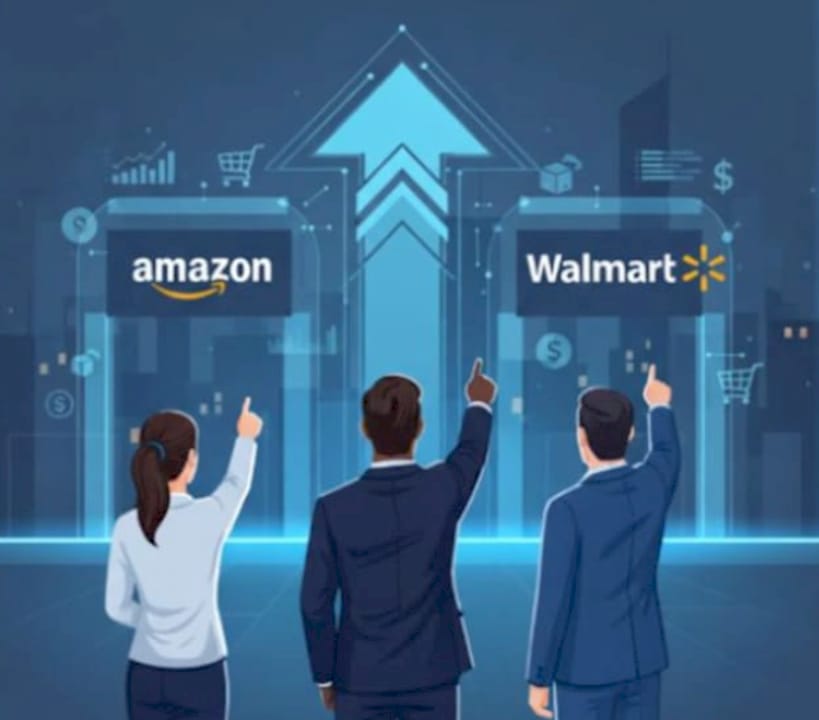
Nectar partners with mid-sized and enterprise e-commerce brands to build programmatic strategies that are fully transparent, actively managed, and directly tied to revenue outcomes. From Amazon advertising services that leverage DSP-level audience targeting to full-funnel brand growth services across Shopify and Walmart, we bring the data infrastructure and hands-on expertise that turns programmatic spend into measurable growth. See how our approach delivered real results in our DSP ad case study, and explore what a managed programmatic strategy could look like for your brand.
Frequently asked questions
What is the key difference between programmatic and direct ad buying?
Programmatic uses automated technology and data to buy ads in real time through auctions, while direct buying involves negotiations and fixed placements agreed person-to-person. Direct deals typically offer more transparency and brand safety, while programmatic offers greater scale and targeting flexibility.
Why do some e-commerce brands get poor results from programmatic ads?
Poor results most commonly stem from hidden fees reducing effective spend, ad fraud consuming impressions, and over-reliance on automation without active performance oversight. Only 36% of spend is efficient under typical conditions, which means hands-on management directly impacts campaign outcomes.
What are the biggest programmatic trends for e-commerce in 2026?
AI-driven and agentic buying, fast growth in CTV and DOOH channels, and a decisive industry shift toward first-party and contextual data are the defining trends. Signal quality and privacy compliance now separate high-performing brands from the rest.
How can e-commerce brands maximize efficiency in programmatic campaigns?
Start with private marketplaces for controlled scale, apply supply path optimization to reduce fee leakage by 15 to 30%, and deploy third-party verification tools like DoubleVerify. Demanding log-level transparency from your DSP partner ensures you can audit where every dollar actually goes.
Recommended























































.webp)