The Role of Creative Assets in Conversion: 2026 Guide
.webp)

TL;DR:
- Research shows that creative quality accounts for nearly half of ad performance variability, making it the most controllable factor in campaigns. Effective assets, such as logos and autoplay-muted videos, significantly boost conversions, especially when tailored to each platform and format. Building structured testing and continuous refresh systems improves ROAS and sustains long-term creative performance.
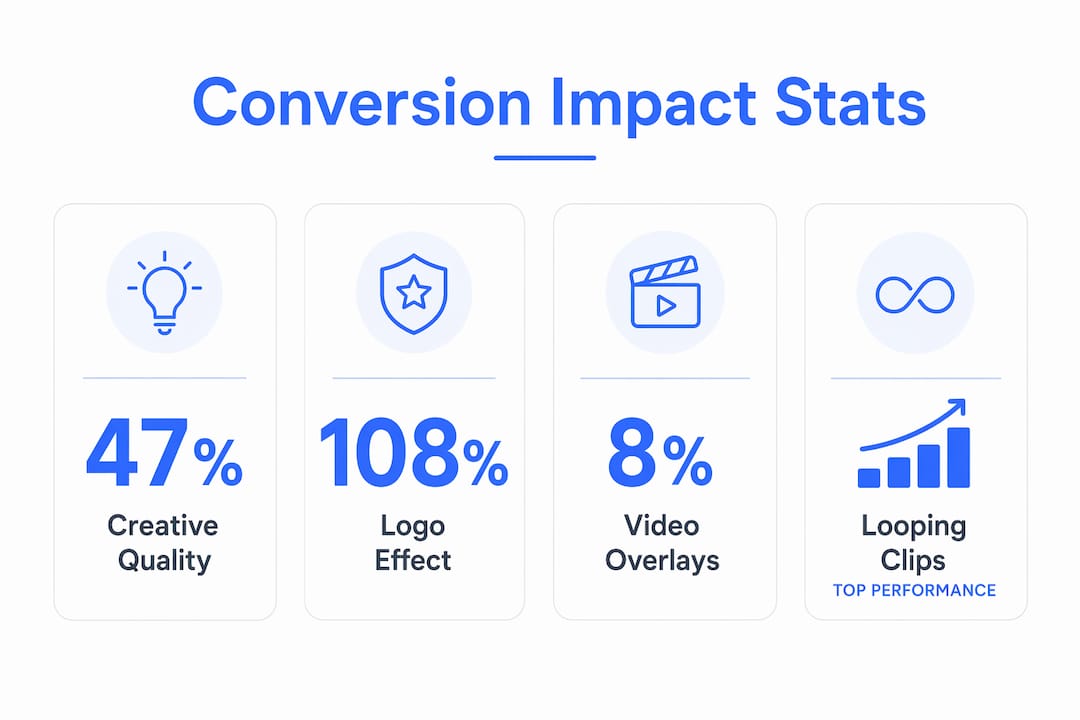
Most e-commerce marketers spend the bulk of their energy on targeting parameters, bidding strategies, and audience segmentation. The assumption is that getting in front of the right person at the right time does most of the heavy lifting. The data disagrees. Research shows that creative quality accounts for 47% of ad performance variability, and the role of creative assets in conversion is far more decisive than most brand managers realize. This guide breaks down exactly what the 2026 research reveals, which asset types move the needle most, and how to build the systems that sustain results.
Key takeaways
Point | Details
-
Creative drives nearly half of performance | Creative quality accounts for 47% of ad performance variability, making it the single largest controllable factor in your campaign results.
-
Logo presence doubles conversion | Images with a brand logo generate over 100% higher conversion rates than equivalent images without one.
-
Video format specifics matter enormously | Autoplay-muted short clips lift add-to-cart rates by a median 34%; long-form or modal videos do the opposite.
-
Overlay text works differently by format | Text overlays on video boost conversions, while the same tactic on static images reduces them by 13% on average.
-
Systematic testing beats intuition | Structured creative testing frameworks deliver approximately 28% higher ROAS compared to ad-hoc approaches.
What creative assets actually are
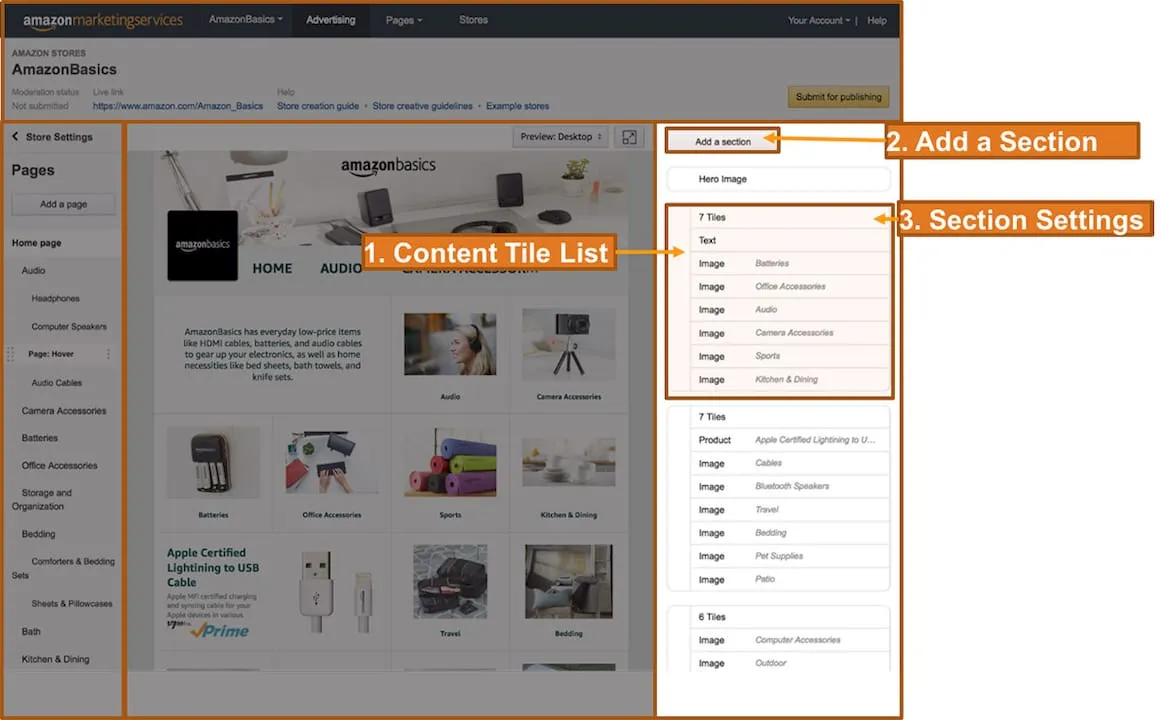
The phrase “creative assets” gets used loosely, so it helps to define the territory precisely. In the industry, these are more formally called creative executions or ad creatives, and they encompass every visual or audio element a potential buyer interacts with before clicking or converting. For e-commerce teams, understanding creative services in e-commerce starts with knowing the full scope of what falls into this category.
The main asset types
Static images are the workhorse of most product listings and paid social campaigns. These include hero shots, lifestyle photography, infographic-style assets, and comparison images. The format is familiar, but execution details like lighting, background, and logo placement still produce wildly different conversion outcomes.
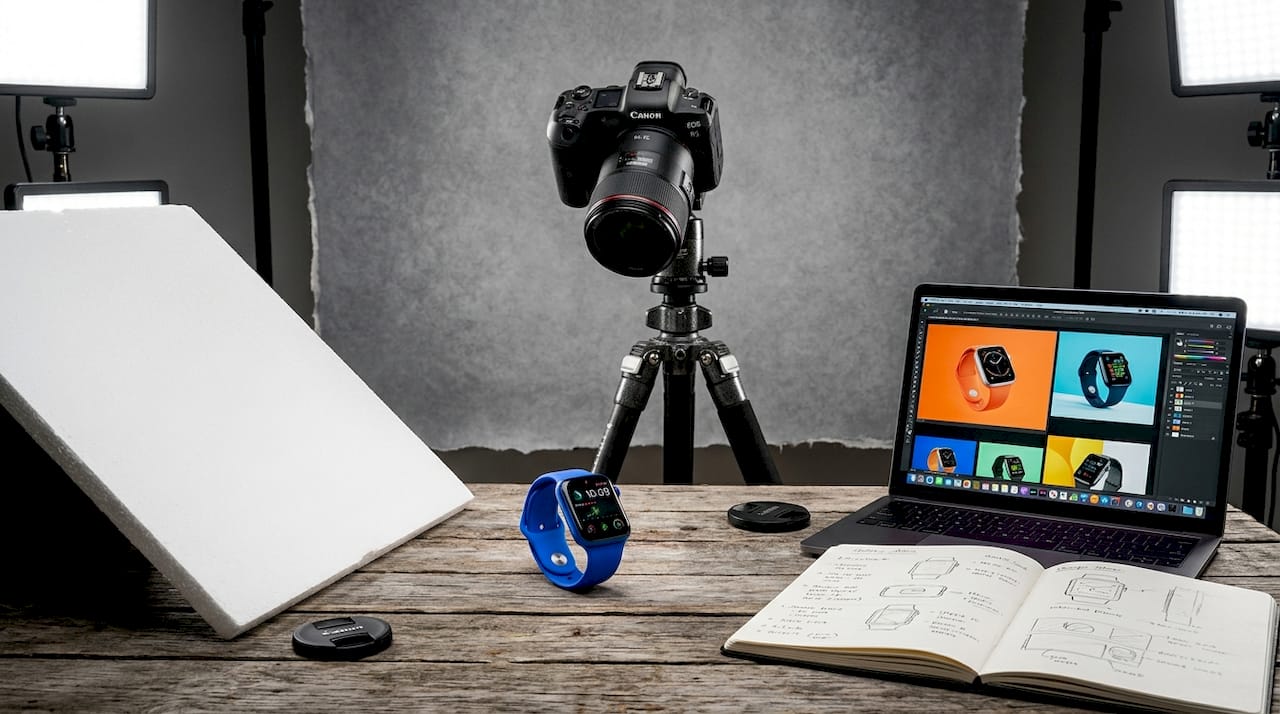
Video assets now span a wide range of formats: short-form autoplay clips embedded in product carousels, longer brand story videos, tutorial content, and user-generated clips. Each has a distinct role at different stages of the purchase funnel.
Overlays and graphic elements include text callouts, price banners, urgency indicators, and promotional badges layered on top of base images or video. These design elements in marketing can help or hurt depending on where and how they are applied.
Logos and brand marks function as standalone trust signals. Whether embedded in a corner of a product image or displayed as a watermark on video, their presence carries measurable weight.
Why format diversity matters
Running the same image resized across Instagram, Amazon product listings, and Reddit feeds is one of the most common silent conversion killers in e-commerce. Each platform has specific format constraints and audience behaviors that demand purpose-built assets. Treating creative like device-specific products with real adaptation to format constraints avoids conversion losses from lazy asset reuse. Aspect ratio alone changes how much of a mobile screen your creative occupies, and mobile-optimized 4:5 aspect ratio ads drive higher conversion rates than other ratios when tested across in-feed placements.
The data on creative assets and conversion rates
The 2026 research on creative assets for conversion contains some genuinely surprising findings that should change how you allocate your production budget.
What a logo actually does
Analyzing nearly 150,000 unique in-feed ads, Reddit’s 2026 Creative Best Practices report found that images with a brand logo saw 108% higher average conversion rates compared to images without one. That is not a marginal uplift. It means your unbranded product photography is potentially leaving half your conversions on the table before a single targeting parameter is even considered.
Video’s outsized impact on product pages
A May 2026 commerce intelligence study by Loop Returns found that product pages with autoplay-muted video in the primary image carousel generated a median 34% lift in add-to-cart rate versus static photography. Video on product pages has shifted from novelty to expectation, and shoppers who encounter only static images on a competitor’s listing will often perceive it as lower quality by comparison alone.
The key modifier here is autoplay-muted. Videos that require a click to play or that blast audio on load create friction and actually suppress conversion. Long-form videos, mandatory audio, and modal windows reduce conversion effectiveness compared to short, silent, looping clips inline on the page.
The overlay paradox
One of the more counterintuitive findings from the 2026 data involves overlay text. Overlay text on video assets was associated with +8.2% higher average conversion rates, while the same treatment on static images reduced conversion rates by 13%. The exception for images was urgency-driven overlays tied to specific promotions or deadlines, which performed differently than generic callouts.
This is a perfect illustration of why creative impact depends on format context, not just content. The overlay text is the same element. The outcome is the opposite depending on whether it sits on a video or a photo.
Pro Tip: When planning creative production, build format-specific overlay versions from the start rather than applying the same text layer across all asset types. A video callout is not a free conversion lift on your image.
Building a creative testing system
Knowing which asset attributes matter is half the equation. The other half is building a structured process to test them at scale. Structured creative testing leads to approximately 28% higher ROAS, and the difference between teams that achieve this and those that do not usually comes down to process, not budget.
The testing hierarchy that works
Meta’s recommended approach is a 10-5-2 pipeline: run ten creative concepts simultaneously, identify the five that pass early attention thresholds, then invest further in the two that demonstrate conversion intent. The key is separating diagnostic stages from monetization stages. Many teams kill a creative because it has weak conversion data, when the real problem is it never had strong enough hook performance to send qualified traffic to that second stage. Testing hooks and testing converters should be two distinct steps.
Here is a practical framework for structuring your creative testing cycles:
-
Define your testing hierarchy. Start with concepts (the core idea or angle), then test formats within winning concepts, then optimize execution details like color, copy, and overlay within winning formats.
-
Set clear passing thresholds before launch. Decide in advance what click-through rate or thumb-stop rate qualifies a creative to advance to conversion testing. Without this, you will make subjective decisions under pressure.
-
Rotate based on time, not just performance. Creative fatigue typically occurs every two to four weeks in active campaigns, meaning even high-performing assets need refreshing on a predictable schedule.
-
Retire, don’t just pause. Archive underperforming assets with performance notes attached. Patterns in retired assets teach you more about your audience than patterns in winners.
-
Tie asset IDs to performance data. Every asset in your library should have a traceable performance history. End-to-end creative workflows improve brand consistency and directly correlate asset usage rates with measurable engagement and conversion outcomes.
Pro Tip: Use creative brainstorming frameworks to generate at least three distinct conceptual angles per campaign before producing a single asset. Teams that explore multiple ideas upfront consistently outperform those that pursue a single creative direction.
Choosing the right format for each funnel stage
Not every creative format does the same job. The mistake most brand managers make is treating all formats as interchangeable and measuring them all against the same conversion metric.
When static images win
Static product photography remains the fastest-loading and most predictable format for performance. On Amazon listings, clean hero images with white backgrounds and embedded logos continue to outperform complex lifestyle shots in direct add-to-cart tests. For remarketing audiences who already know your brand, static images with a direct price or offer callout often convert better than video because the decision stage requires clarity, not education.
Where video takes over
For new audiences, video marketing in e-commerce performs best when it front-loads the product benefit in the first two seconds and loops naturally without an explicit end point. Short autoplay-muted clips on product pages address the “how does this actually work?” question that static images cannot answer, which is why they lift add-to-cart rates so significantly. Detailed execution guidance for videography in e-commerce shows that trust and conversion lift are highest when video demonstrates the product in context rather than presenting it as a studio object.
Overlays and UGC as trust accelerators
Urgency overlays, when they communicate something real (limited stock, a genuine deadline), add conversion value at the decision stage. Applied gratuitously, they train shoppers to ignore them.
User-generated content plays a different role entirely. UGC does not win on production quality. It wins on believability. A shaky phone-recorded unboxing video from a real customer often outperforms a polished studio production at the consideration stage because it removes the credibility gap between brand claims and real experience. The format signals authenticity in a way that art-directed photography simply cannot.
Best practices for sustained creative performance
Effective creative strategies do not come from one well-timed campaign. They come from systems built to produce, test, and refresh creative assets continuously.
-
Cross-team integration is non-negotiable. When your creative team, media buyers, and analytics function work in silos, you get beautiful assets that no one has tested and winning data that never informs the next shoot. Build shared performance reviews into your production calendar.
-
Prioritize creative intelligence tools. Creative intelligence platforms enable modular assembly and real-time selection of creative variants by audience segment, which means you can maximize conversion without proportionally increasing production workload. Measuring which assets contribute to conversion improvements leads to better investment decisions over time.
-
Maintain brand consistency within creative variety. Freshness and recognizability are not in conflict. Consistent logo placement, color palette, and visual style across varied concepts means your audience builds brand recognition from asset one while still encountering new creative hooks.
-
Watch for the silent killers. Overloaded image overlays, off-ratio assets deployed to mobile placements, and product videos buried below the fold on a product page all suppress conversion without triggering any obvious alert. Audit your live assets against format best practices at least once per quarter.
Pro Tip: Closing the loop between production and performance is the highest-leverage improvement most teams can make. Linking creative output to analytics turns your asset library into an intelligence system rather than a storage folder.
My honest take after years in the trenches
I spent the first two years of my career in e-commerce advertising convinced that our targeting was the primary lever. We would obsess over audience segments, bidding models, and placement strategies while treating creative as the thing we needed “a little more time” to get right. Then we ran a structured creative test that swapped a single element, the logo placement on a hero image, and saw conversion rates jump by over 90% with identical media settings. That result changed everything for me.
What I have learned since is that creative is not a support function to media. It is the variable with the most leverage and the least consistent attention. Most brand managers I have worked with know their CPMs and their ROAS cold but cannot tell you which of their five product images actually converts. That gap is where performance is lost.
The complexity of managing creative assets for conversion is real. Running a 10-asset test across three formats on two platforms generates more data than most teams know how to synthesize. But the answer is not to simplify your creative program. The answer is to build better systems and partner with people who have the tools to close that loop. Brands that treat creative as an ongoing asset system rather than a campaign deliverable sustain their conversion lifts through algorithm shifts, seasonality, and competitive pressure. The ones that do not end up relaunching the same problem every quarter.
— Dan Katona
How Nectar turns creative into measurable growth
If the research in this article reflects gaps in your current approach, you are not alone. Most mid-sized brands have the product and the ambition but lack the systems to connect creative quality to conversion performance at scale.
Nectar’s fully managed services cover the entire creative-to-conversion pipeline, from in-house photography and videography to data-driven paid advertising and full-funnel marketplace management. For brands selling on Amazon, Nectar’s Amazon growth optimization ties creative asset decisions directly to listing performance data through the proprietary iDerive analytics platform, so you always know which assets are earning their place. If you are ready to stop guessing and start building creative systems that compound, Nectar has the infrastructure to get you there.
FAQ
How much does creative quality affect ad conversion rates?
Creative quality accounts for 47% of ad performance variability according to Meta’s internal research, making it the single largest controllable factor in most e-commerce campaigns.
Does adding a logo to product images really improve conversions?
Yes. Images with a brand logo generated 108% higher conversion rates on average compared to images without one, based on analysis of nearly 150,000 in-feed ads.
What type of video works best on product pages?
Short, autoplay-muted, looping clips embedded inline in the product image carousel generate the highest lift, producing a median 34% increase in add-to-cart rates versus static images alone.
Should you use text overlays on every creative asset?
No. Text overlays on video improve conversions by about 8%, but the same overlays on static images reduce conversion rates by 13% on average unless they communicate a specific, time-sensitive offer.
How often should e-commerce brands refresh their creative assets?
Creative fatigue typically sets in every two to four weeks in active campaigns, so brands should plan regular asset refreshes on that cadence rather than waiting for performance to visibly decline.
Recommended
.png)