1P, 3P, or Hybrid: Which Amazon Selling Model Is Best for You?
.webp)

Every Amazon "guru" has a slogan about which selling model wins. The real answer depends on your unit economics, your velocity, and your organization — not on what's best for the person giving the advice. Here's the 6-factor framework we use to decide.
Key Takeaways
- There is no universal answer. 1P, 3P, and hybrid each win for different brands — and often for different SKUs within the same catalog.
- Decide with data, not dogma. Run the 6-factor framework: unit economics, velocity, organizational competency, consignment fit, cash flow, and market share.
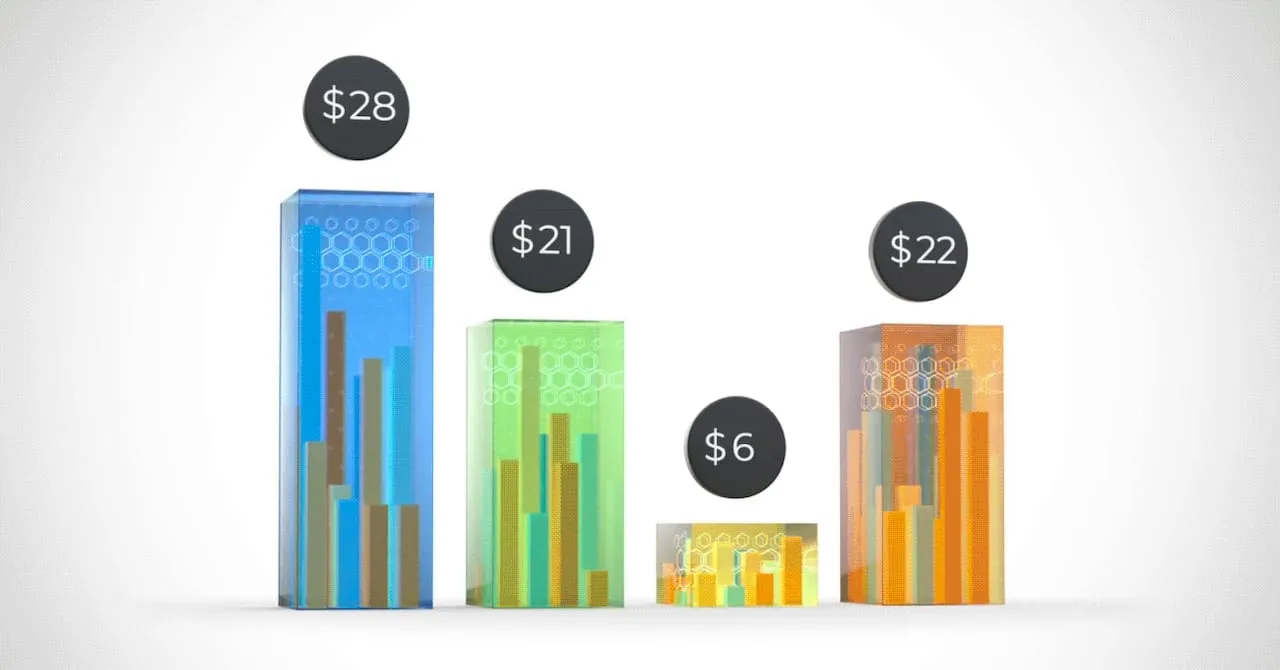
- Compare margin dollars, not margin percentages. A 37% margin on a $60 wholesale price is $22; a 38% margin on a $100 retail price is $38.
- Hybrid is increasingly the smart play. Split the catalog by SKU to capture 1P's scale and 3P's control at the same time.
- It's easy to get into 1P and hard to get out. Plan any Vendor Central commitment as a long-term contract, because it is one.
- If you transition, protect the engine. Parallel ad coverage, signal porting, and a phased budget shift prevent a revenue dip.
🎥 Watch the Full Session: Want to see the complete breakdown? You can check out the full recording for our webinar session here: 1P, 3P, or Hybrid: Which Amazon Selling Model Is Best for You?.
Third-party sellers now account for 69% of Amazon's total GMV in 2025, up from 60% in 2019, according to Marketplace Pulse. And since late 2024, Amazon has been actively moving smaller vendors off Vendor Central, terminating 1P accounts for many brands generating under $5–10M annually, per Feedvisor. But here's the catch: the loudest advice in the industry — "go 3P" — is often driven by the self-interest of whoever's giving it. 1P still makes sense for a meaningful set of brands, and hybrid makes sense for more brands every year.
At Nectar, we've worked with 300–400 brands across 1P, 3P, and hybrid models, and the 1P vs 3P question comes up in nearly every engagement. The pattern is consistent: brands that pick a model based on a slogan underperform. The brands that win treat the selling model as a financial decision — they run the numbers per SKU, per channel, and revisit them as fees and market conditions shift. The right answer isn't a slogan. It's a decision you make by analyzing your own business.
Key Amazon Selling Model Stats:
- 69%: of Amazon's total GMV came from third-party sellers in 2025 — Marketplace Pulse
- 62%: of units sold on Amazon came from 3P sellers in Q4 2024, an all-time high — Marketplace Pulse
- $5–10M: the annual revenue threshold below which Amazon began terminating Vendor Central accounts in late 2024 — Feedvisor
1P & 3P, in Plain English
Before the framework, the definitions — because the two models are structurally different businesses.
What Is 1P (Vendor Central)?
1P (first-party) means you sell wholesale to Amazon via purchase orders (POs) through Vendor Central, and Amazon is the retailer of record. Amazon owns the Buy Box, sets the retail price, and handles fulfillment, customer service, and returns end-to-end. You get "Ships from / Sold by Amazon" credibility and simpler operations — in exchange for giving up pricing control.
One myth worth killing: 1P is not going anywhere. Amazon has been shedding smaller vendors and concentrating on larger brands, but Vendor Central remains a core channel — and so do its frustrations. PO quantities and timing will never be as predictable as you want. That comes with the territory of working with a gorilla.
What Is 3P (Seller Central)?
3P (third-party) means you are the seller of record through Seller Central. You set the list price and sell directly to the shopper. You own the Buy Box and your inventory, typically fulfilled through FBA (Fulfillment by Amazon) — effectively a consignment model. You get more control and margin upside, and you carry the operational and inventory load.
How 1P & 3P Actually Differ
| Dimension | 1P — Vendor Central | 3P — Seller Central |
|---|---|---|
| Who sets price | Amazon controls retail price | You control retail price |
| Margin | Wholesale cost, co-op fees & chargebacks | Higher gross margin; you pay FBA & referral fees |
| Cash flow | PO-based; Amazon pays on terms (typically Net 60–90) | You fund inventory; faster payouts (typically 2–4 weeks) |
| Fulfillment | Amazon handles it end-to-end | You manage inventory via FBA/FBM |
| Buy Box | Amazon owns it | Your offer wins it |
| Advertising | Full AMS/DSP suite | Full ad suite + Brand Registry control |
| Ops burden | Lower — hands-off | Higher — hands-on |
The single biggest structural difference is pricing. On 1P, you cannot easily adjust your price, and Amazon can remove the Buy Box entirely if it's not making a profit on your product — meaning your product simply stops selling. That will never happen on 3P.
"The right selling model depends on your unit economics, your velocity, and your organization — not on what's best for the person giving the advice." — Jason Landro, Co-CEO at Nectar
When 1P (Vendor Central) Makes Sense
Despite the "go 3P" chorus, 1P is the right call in specific conditions:
- High, predictable velocity. Fast-moving, commoditized SKUs where Amazon's buying scale keeps shelves full and orders flowing. If you're selling thousands or tens of thousands of units, sometimes less is more.
- You want operational simplicity. No fulfillment, customer service, or returns to run — useful for lean teams or brands new to Amazon.
- Retail credibility matters. "Ships from / Sold by Amazon" can lift conversion in certain categories — typically lower-price-point consumables where shoppers are less brand-loyal. Don't make the decision on this factor alone; the lift is hard to measure.
- Cash flow & inventory risk are constraints. Amazon owns the inventory and takes the demand-forecasting risk off your books. A large PO landing off your balance sheet is genuinely valuable.
- 3P rates aren't cost-efficient for your products. Big, bulky, or fragile items can be very expensive on FBA. We've seen products where the fulfillment fee alone was 35% of the retail price. Low-ASP products (around $15) also frequently pencil out better on 1P once shipping and referral fees stack up.
One caution from our partner roster: if your products are highly seasonal, 1P alone should scare you. If POs don't arrive on your timeline, you go out of stock at exactly the wrong moment — the worst outcome on Amazon. Seasonal 1P brands should run a 3P backup store (FBA or FBM) as a safety net.
Pro tip: It's easier to go from 3P to 1P than the reverse. Whatever contract terms you negotiate entering Vendor Central become the baseline for every future negotiation — and fees only go up from there.
When 3P (Seller Central) Makes Sense
- You need pricing & margin control. Set your own price, protect MAP (Minimum Advertised Price), and capture full retail margin instead of a wholesale cost. If Amazon's retail pricing is straining relationships with Walmart, Target, or your DTC channel, 3P is how you get control back.
- Agility and speed to market. Launch products, run promotions, and adjust assortment in days — not on vendor negotiation cycles. Product launches rarely line up with Amazon's annual terms calendar.
- You want to own the customer & data. Direct access to shopper data, Brand Registry, your storefront, and richer advertising control. That data compounds into better merchandising decisions.
- Your org can run the operation. You have — or can build, in-house or via a partner — the competency to manage FBA, service, and inventory as a consignment model.
Pricing deserves the last word here. When you need to pass through cost increases — tariffs, cost of goods, taxes — 1P makes it painful. Moving a product from a $22 ASP (average selling price) to $24 on Vendor Central is a fight; on Seller Central it's a settings change. Who doesn't want pricing and margin control? It's one of the most important levers you have in business.
Want help pressure-testing your model against your P&L? Talk to our Amazon team.
The Rise of the Hybrid Model
You don't have to pick one model for the whole catalog. A hybrid Amazon selling model splits the catalog by what each ASIN needs — capturing 1P's scale and 3P's control at the same time.
| Keep on 1P | Move to 3P | |
|---|---|---|
| SKU profile | High-velocity, thin-margin commodity SKUs | High-margin & premium items |
| Fulfillment logic | Items where Amazon's fulfillment scale wins | New launches needing speed & test-and-learn |
| Pricing logic | Products you don't need to control pricing on | Gated, brand-controlled, or price-sensitive lines |
Why it works: hybrid balances scale, control, and cash flow; protects margin without losing volume; and reduces single-channel risk and stockout exposure. If Amazon's POs go quiet or a negotiation turns hostile, your 3P store keeps revenue flowing.
Hybrid does add complexity. You'll run two advertising accounts — one for 1P, one for 3P. Amazon's vendor team won't love your 3P store, since it's revenue off their book, so manage that relationship deliberately. And keep clean lanes: you generally don't want 1P and 3P offers competing on the same ASIN. If price points match, 1P takes the Buy Box by default. The point of hybrid isn't duplicating offers — it's routing each SKU to the model where it's most profitable.
The 1P vs 3P Decision Framework
The 1P vs 3P Decision Framework is Nectar's 6-factor evaluation for choosing an Amazon selling model, covering unit economics, velocity, organizational competency, consignment fit, cash flow & inventory risk, and market conditions. We weight each factor per brand and per product grouping — because a couple of percentage points on millions of dollars makes all the difference.
1 — Unit Economics
Compare true net margin per channel — wholesale margin, co-op fees, chargebacks, FBA fees, referral fees, storage, and returns. This is where every evaluation starts.
2 — Selling / Unit Velocity
How fast does the SKU move? High predictable velocity favors 1P; seasonal or launch-phase velocity favors 3P's nimbleness.
3 — Organizational Competency
Can your team run the model you're choosing, day to day — returns, customer service, inventory cases? If you already have that muscle, 3P's upside is cheap to unlock.
4 — Consignment Fit
Can the business operate within a 3P/FBA consignment model — funding inventory that sits in Amazon's warehouses before it sells?
5 — Cash Flow & Inventory Risk
Who funds and carries the inventory, and can your balance sheet absorb it? A 1P PO clears inventory off your books on day one; a 3P position can mean funding 90 days of inventory before payout.
6 — Market Conditions & Share
How does each model affect your price, rank, and market share in your category — especially in price-sensitive categories where Amazon's buying power moves volume?
What You Actually Keep on a $100 Sale
Here's an illustrative breakdown of where the money goes in each model on a $100 retail unit with $30 COGS (cost of goods sold), advertising excluded:
| 1P — Vendor Central | 3P — Seller Central | ||
|---|---|---|---|
| Wholesale revenue | $60 | Retail revenue | $100 |
| Product COGS | −$30 | Product COGS | −$30 |
| Co-op & allowances | −$6 | Referral fee (~15%) | −$15 |
| Chargebacks & freight | −$2 | FBA fulfillment | −$9 |
| Storage, returns & misc | −$8 | ||
| Net per $100 retail | $22 | Net per $100 retail | $38 |
Illustrative — actual fees vary by category, product size, and season.
Two traps hide in this table.
Trap 1: percentages lie. The 1P column is a 37% margin on its $60 wholesale base; the 3P column is 38% on $100 retail. Finance teams see "same margin percentage" and call it a wash — and 1P P&Ls often look more attractive on a percentage basis because of the lower denominator. In dollars, it's $22 versus $38 — a massive delta. Margin percentage is misleading. Margin dollars pay the bills.
Trap 2: 3P fees vary wildly. That ~15% referral fee is a rule of thumb (it drops to 8% in some categories like footwear). FBA fees scale with size and weight — we've seen fulfillment run 35% of retail on low-price items. And storage looks cheap until aged inventory triggers long-term storage surcharges, which can roughly 10× the fee and quietly destroy margins on slow sellers. Keep a clean house in FBA.
On the 1P side, budget for co-op fees of roughly 20–22% all-in as a planning assumption until you have negotiated numbers, plus 1–2% for chargebacks and shortages. And know that 1P has its own inventory trap: if Amazon's aged inventory doesn't sell through, Amazon will withhold future POs — including on your new product lines — until you spend ad dollars clearing stock they ordered.
For the 3P side of your math, Amazon's FBA revenue calculator projects per-unit profitability from your product dimensions and price. This is exactly the modeling iDerive, Nectar's commerce intelligence platform, runs across full catalogs — combined sales and ad data, P&L, and channel-mix analysis.
When to Switch Models
Transition considerations run in both directions. Whether you're moving 1P to 3P or 3P to 1P, the diligence is the same: catalog and listing control, inventory and cash-flow handoff, advertising and rank continuity, and team readiness.
When to Move From 1P to 3P
This is the more common direction. The triggers:
- Margin is getting squeezed. CRaP-outs ("Can't Realize a Profit" delistings), rising co-op accruals, chargebacks, and annual terms negotiations eroding profitability faster than volume can offset. Amazon typically takes another point or two every contract year.
- You need pricing control back. Amazon's retail pricing is breaking MAP, straining other retailer relationships, or racing your DTC channel to the bottom.
- POs are unreliable or shrinking. Inconsistent ordering, cold ASINs, or reduced buys capping growth — and you can forecast demand better than Amazon is buying it.
In our experience, moving 1P to 3P carries very little business risk when Amazon's vendor team is aware and has blessed the transition — there's a lot to gain and little to lose. Even Subscribe & Save subscriptions, the biggest worry for consumables brands, transfer to your 3P account through Brand Analytics with no subscriber loss.
When to Move From 3P to 1P
The less-discussed direction, and the riskier one:
- Category standing. You've grown meaningfully — on or off Amazon — and rank among the top three, five, or 10 sellers in your category.
- Accelerated growth. Upfront demand planning, a vendor manager relationship, and retail programs unavailable to sellers would let you scale faster than going it alone.
- Pricing & volume. Amazon's buying scale and pricing authority can win share in price-sensitive categories where you're capped as a seller.
Case in point: We've seen a brand go under after transitioning 3P to 1P. The market dropped prices, Amazon's pricing didn't follow competitively for the brand's economics, velocity collapsed, and the brand lost its category leadership. Pricing control is a survival lever — give it up carefully.
How to Transition Without Missing a Beat
Done right, your shopper should never notice the switch — sales, rank, and marketplace presence hold steady while ownership changes behind the scenes.
Segment the Catalog by Readiness
- Transition-ready. Amazon inventory is low and FBA is ready. Cancel remaining POs, activate Seller offers, capture the Buy Box fast.
- Catalog migration. Listing authority still sits with Vendor. Migrate catalog control to Seller Central before offers compete.
- Advertising-ready. Seller offer is active and Buy Box–competitive. Turn on Sponsored Products and shift ad budget over.
- Sell-through first. Overstocked on 1P. Use vendor promos and ads to deplete Amazon's inventory, then hand off to Seller — otherwise your 3P offer competes with (and loses to) their 1P position.
You'll need Amazon vendor approval for the transition. Internally, Amazon's seller and vendor teams meet to align — and that internal green light alone can take anywhere from 4 weeks to 6 months.
The Advertising Handoff
- Parallel ad coverage. Run 1P and 3P ads simultaneously for ~2 weeks so there's no demand gap while ownership shifts. Ad costs run higher briefly; that's the insurance premium.
- Signal porting. Export Vendor Central search-term and advertised-product reports; rebuild winning keywords and audiences in Seller Central. That data doesn't follow you automatically.
- Rank & revenue defense. Protect top non-branded terms with aggressive exact match; lean on Sponsored Brands, which isn't Buy Box–dependent.
- Phased budget shift. Move Sponsored Products first as 3P wins the Buy Box; migrate Sponsored Brands & Display last.
The most important discipline: track which products' Buy Box has flipped, and make sure the right ad account is advertising them. Losing sight of that is how brands lose advertising momentum mid-transition.
Case in point: We've watched a brand lose roughly $3M in top-line sales to out-of-stocks during a poorly forecasted transition. That outcome is entirely preventable — it's an operations and planning failure, not an inherent transition risk.
Planning a model switch? Get a transition plan from our team before you cancel a single PO.
The 90-Day Transition Timeline
Expect a 90-day journey start to finish — and buffer another 30–60 days for case escalations, because you hope for the best and prepare for the worst. Set performance expectations up front: a 4–8 week algorithm learning period, a 60–90 day performance ramp, and ACoS (Advertising Cost of Sales) running +20–40% during the ramp.
- Days 1–30 · Foundation: Export all Vendor Central ad data and document keywords. Open Seller Central and build FBA listings. Launch first campaigns; monitor the Buy Box daily.
- Days 31–60 · Ramp: Scale Seller ad budgets to ~50%. Activate Top-of-Search modifiers. Watch 1P inventory depletion closely.
- Days 61–90 · Scale: Reallocate to the highest incremental drivers. Add Sponsored Brands Video & Display. Run an AMC (Amazon Marketing Cloud) path-to-purchase and incrementality review.
How Nectar Helps
At Nectar, we run these evaluations and transitions weekly across our partner roster — account management (catalog, forecasting, profitability, promotions & PO strategy across 1P, 3P & hybrid), retail media built to defend rank through any transition, creative services, digital marketing to drive outside traffic to new listings, and iDerive Analytics to model the right channel mix on combined sales and ad data.
If you don't know where to start, start with the financial analysis: what does my profitability look like on 3P versus 1P, and how much would I save or spend in each model? That's the first step every time a partner says "we want to change."
Glossary
- 1P (First-Party): Selling wholesale to Amazon via Vendor Central; Amazon is the retailer of record.
- 3P (Third-Party): Selling directly to shoppers via Seller Central; you are the seller of record.
- ACoS (Advertising Cost of Sales): Ad spend divided by ad-attributed sales; the inverse of ROAS.
- AMC (Amazon Marketing Cloud): Amazon's clean-room analytics platform for cross-funnel attribution and incrementality analysis.
- ASIN (Amazon Standard Identification Number): Amazon's unique product identifier.
- ASP (Average Selling Price): The average retail price a product sells for.
- Born to Run: A Vendor Central program that lets vendors push initial inventory into Amazon for new products.
- Buy Box: The "Add to Cart" purchase position on a listing; only one offer wins it at a time.
- COGS (Cost of Goods Sold): The direct cost to produce or acquire the product.
- Co-op fees: Negotiated Vendor Central allowances for marketing, damages, and freight, typically 20–22% all-in.
- CRaP (Can't Realize a Profit): Amazon's internal flag for items it loses money selling; often delisted or de-prioritized.
- DSP (Demand-Side Platform): Amazon's programmatic display advertising platform, on and off Amazon.
- FBA (Fulfillment by Amazon): Amazon stores, picks, packs, and ships your 3P inventory for per-unit and storage fees.
- FBM (Fulfilled by Merchant): You fulfill 3P orders from your own warehouse.
- MAP (Minimum Advertised Price): The lowest price a brand permits retailers to advertise.
- PO (Purchase Order): Amazon's wholesale order to a 1P vendor.
- Vendor Central: Amazon's 1P portal for wholesale suppliers.
- Seller Central: Amazon's 3P portal for marketplace sellers.
Frequently Asked Questions
What Is the Difference Between 1P and 3P on Amazon?
1P means you sell wholesale to Amazon through Vendor Central, and Amazon sets the retail price, owns the Buy Box, and handles fulfillment. 3P means you sell directly to shoppers through Seller Central — you set the price, own the Buy Box and inventory, and carry the operational load, typically through FBA. The structural difference is control: 3P gives you pricing and margin control; 1P gives you operational simplicity and Amazon-carried inventory risk.
Is 1P or 3P More Profitable?
It depends on the product. On an illustrative $100 retail unit, 3P nets roughly $38 versus $22 on 1P — but FBA fulfillment can consume up to 35% of retail on low-price or heavy items, flipping the math toward 1P. Compare margin dollars per channel, not margin percentages, and model each SKU individually. See the full breakdown above.
What Is a Hybrid Amazon Selling Model?
A hybrid model runs 1P and 3P simultaneously, splitting the catalog by SKU. High-velocity, thin-margin commodity items stay on 1P where Amazon's scale wins; high-margin, premium, or price-sensitive items move to 3P where you control price. Hybrid balances scale, control, and cash flow while reducing single-channel risk and stockout exposure.
Does Running 1P and 3P Together Hurt Your Buy Box?
Not if you do it right. Keep clean lanes — avoid running 1P and 3P offers on the same ASIN, since 1P wins the Buy Box by default at equal prices. Route different SKUs to different models rather than duplicating offers, and run each channel's advertising from its own account so campaigns don't compete against each other.
Can You Push Inventory Into Vendor Central Without a PO?
Yes — Born to Run is the one lever that lets vendors trigger inventory into Vendor Central for new products. It comes with caveats: not every product is eligible, and brands are sometimes unable to enroll items they'd hoped to. If your product qualifies, it's a strong launch tool; if not, a 3P launch path is the fallback.
Can Amazon Block You From Moving to 3P?
Amazon's vendor team can resist a transition, but you have recourse. One path is working with an authorized reseller to sell your products while you wind down 1P, then opening your own Seller Central store. You give up margin to the reseller and it's not the preferred route — but it's a card brands can play.
How Long Does a 1P to 3P Transition Take?
Plan for a 90-day operational journey, plus a 30–60 day buffer for case escalations. Before that clock starts, Amazon's internal vendor and seller teams must align and approve the transition, which can take anywhere from 4 weeks to 6 months. Expect a 4–8 week algorithm learning period and ACoS running +20–40% during the ramp.
What Happens to Subscribe & Save Subscribers When You Leave 1P?
They transfer. Subscribe & Save subscriptions are managed within Brand Analytics and can be moved to your 3P account with no loss of subscribers — which removes one of the biggest transition concerns for consumables brands.
Should You Match Price on 1P If Other Retailers Drop Theirs?
Amazon won't always match — if matching makes your product unprofitable for Amazon, it may pull the Buy Box and stop selling (and advertising) the item instead. Amazon's systems actively scrape competitor prices, including different pack sizes. Persistent price conflicts on 1P damage velocity over time and need to be resolved at the source: aligned pricing across your retail partners.
Pick the Model Your Numbers Support
There is no universal answer to 1P vs 3P — only the answer your unit economics, velocity, and organization support. Run the framework, compare margin dollars per SKU, and if you transition, protect the engine with parallel coverage and a phased handoff. We do this math with partners every week.
Related Reading
- Your Next Stage of Growth on Amazon Runs Through DSP — Why full-funnel DSP is the growth lever after your Sponsored Ads plateau.
- Nectar Case Studies — How partners across 1P, 3P, and hybrid models grew profitably with Nectar.
- iDerive Analytics — The commerce intelligence platform behind Nectar's channel-mix and profitability modeling.












.png)