TL;DR:
AI-generated search summaries now answer questions before users click, causing a significant shift in SEO focus.
Brands must prioritize earning citations inside AI answers through structured content, entity trust, and community presence to maintain visibility.
SEO in 2025 is defined by a single structural shift: AI-generated summaries now answer queries before users ever click a result. The SEO trends in 2025 that matter most center on earning citations inside those AI answers, not just ranking in the ten blue links below them. AI Overviews appear in roughly 16% of U.S. search queries, a figure that doubled from early 2025 levels. That scale changes the game for every digital marketer who still measures success purely by organic position.
What are AI Overviews and how do they reshape SEO in 2025?
AI Overviews are Google’s AI-generated answer blocks that appear at the top of search results pages, synthesizing information from multiple sources before showing any organic links. They pull from indexed content, structured data, and entity signals to produce a direct answer. For users, the experience feels complete. For SEO professionals, it represents a fundamental change in how traffic flows.
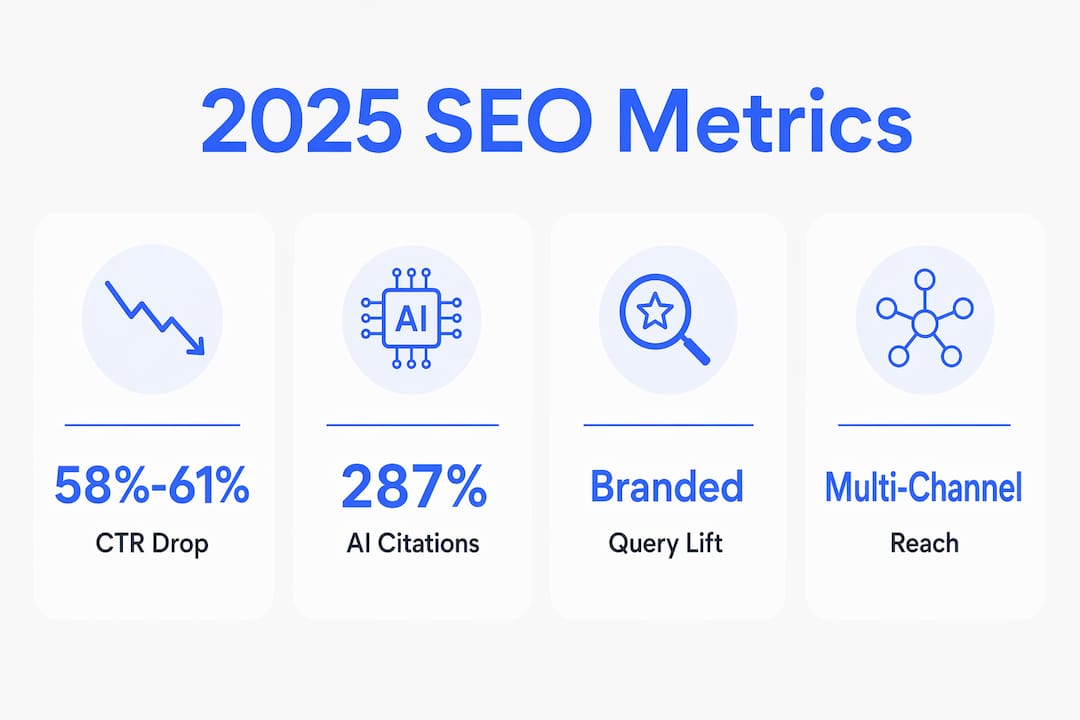
The CTR impact is severe for informational queries. Top-ranking organic results on informational queries see a 58% to 61% decline in click-through rates when an AI Overview is present. That means a page ranking in position one can lose more than half its expected traffic simply because Google answered the question above it.
The picture is more nuanced for commercial and transactional queries. Users in decision-making mode still prefer to click through for verification, so product and commercial queries maintain better CTR resilience. This distinction matters when you prioritize which content types to protect and which to restructure for AI citation instead.
Google still dominates search by a wide margin. Google maintains roughly 90% of global search volume and sends 345 times more traffic than ChatGPT and similar AI tools combined. That statistic should end any conversation about abandoning Google-focused SEO entirely. The platform is not shrinking. Its interface is just changing.
Key behavioral shifts driven by AI Overviews include:
-
Users consume answers directly on the results page without clicking
-
Branded queries and navigational searches remain largely unaffected
-
Informational and how-to content faces the steepest CTR losses
-
AI-cited sources gain brand exposure even without a click
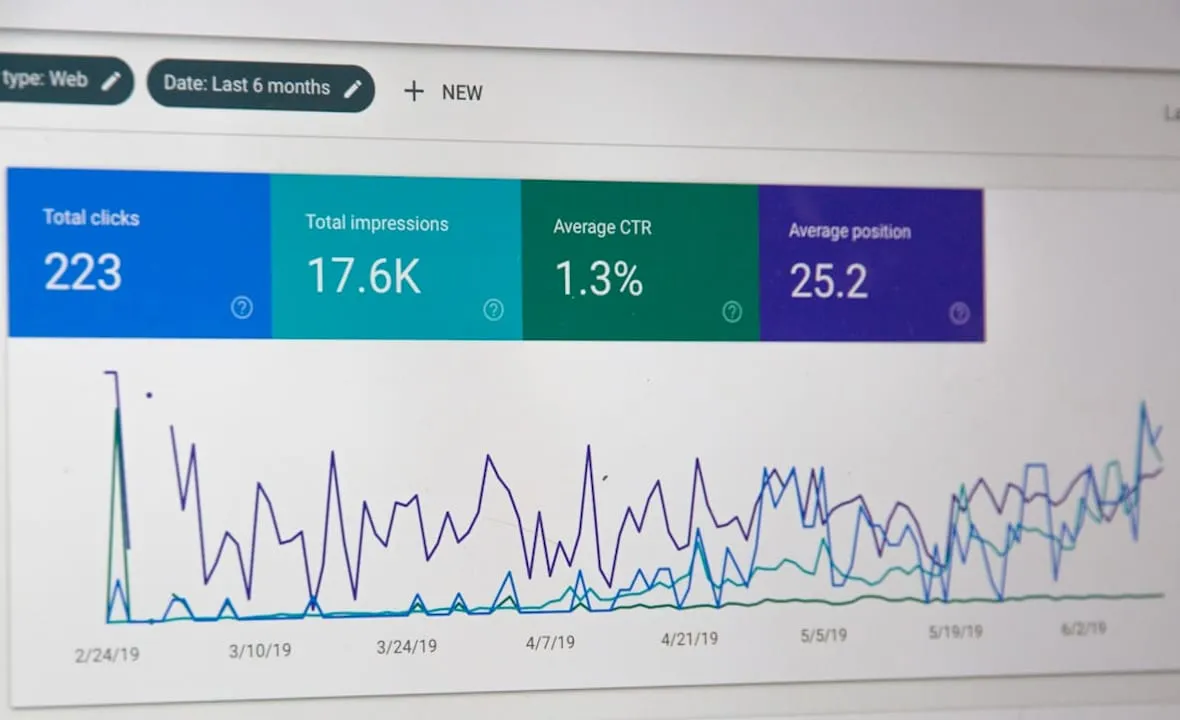
Pro Tip: Audit your top informational pages for AI Overview appearances using Google Search Console’s search type filters. Pages losing impressions but gaining zero-click exposure need a citation strategy, not just a ranking strategy.
Why citation and entity trust have replaced traditional ranking as SEO priorities
The SEO discipline is shifting from a click economy to a visibility economy. E-E-A-T (Experience, Expertise, Authoritativeness, and Trustworthiness) now functions as the gatekeeper for search presence, not just a ranking signal. Google’s AI systems use E-E-A-T signals to decide which sources deserve citation inside AI Overviews. A page that ranks well but lacks clear entity signals may get skipped entirely.
Answer Engine Optimization (AEO) is the parallel discipline that addresses this gap. AEO focuses on making content machine-readable and citation-worthy, rather than just keyword-relevant. SEO and AEO work best as complementary layers, not competing strategies. Traditional SEO earns the ranking. AEO earns the citation inside the AI summary.
“Brands investing in real expertise, original research, and topical depth gain the strongest visibility in the AI-generated search landscape. The question is no longer just ‘can Google find my content?’ It’s ‘will Google’s AI trust my content enough to quote it?’”
The signals that drive AI citation differ from classic ranking factors. Here is how the two frameworks compare:
Traditional ranking signals:
-
Backlink quantity and domain authority
-
Keyword density and on-page optimization
-
Page speed and Core Web Vitals
-
Internal linking structure
Citation-based visibility signals:
-
Schema markup and structured data (FAQ, HowTo, Article schemas)
-
Named entity clarity (who wrote it, what organization, what topic cluster)
-
Brand mentions across community platforms like Reddit
-
Direct answer formatting with clear headings and lists
-
Original data, research, or expert quotes that AI models can attribute
Community-driven platforms like Reddit have seen a 287% growth in AI citations, making brand presence in those channels a real SEO asset. That number signals a clear directive: your brand’s credibility in third-party conversations now feeds directly into AI-generated answers about your category.
How can SEO professionals adapt their content strategy for 2025?
Adapting to the future of SEO requires restructuring how content is written, organized, and measured. The core principle is simple: AI models treat structured, direct-answer content as their primary source material. Headings, bullet lists, FAQ sections, and answer-first paragraphs are not just user experience choices. They are citation signals.
A practical content framework for AI citation looks like this:
-
Lead with the answer. State the direct answer in the first sentence of every section. AI systems extract the first clear claim they find.
-
Use explicit heading structures. H2 and H3 headings that mirror user questions give AI models clean extraction points.
-
Include original data or named sources. AI systems favor content with attributable facts over generic claims.
-
Add FAQ sections to every major page. FAQ schema is one of the most reliably cited structured data formats.
-
Write short, declarative paragraphs. Three to five sentences per paragraph reduces ambiguity for both human readers and AI parsers.
Topical authority still matters enormously. A single well-optimized page rarely earns AI citation on its own. Brands that build deep content clusters around a topic, covering subtopics comprehensively, signal to Google’s AI that they are the authoritative source on that subject. For ecommerce marketing in 2025, this means owning the full content ecosystem around your product category, not just your product pages.
Hybrid AI workflows are now standard practice for high-output SEO teams. AI tools handle first drafts, keyword clustering, and content gap analysis. Human experts add original insight, proprietary data, and editorial judgment. The output is faster and more consistent, but the human layer is what earns the E-E-A-T signals that drive citation.

Measurement must evolve alongside content strategy. Zero-click outcomes for informational queries are now the norm, which makes traditional CTR a misleading success metric. New KPIs to track include AI citation share, branded query lift, and direct traffic growth as proxies for AI-driven brand awareness.
Pro Tip: Set up a branded query tracking report in Google Search Console. A rising volume of branded searches often signals that AI Overview citations are building awareness, even when organic CTR appears flat.
How does multi-channel search affect SEO trends in 2025?
Search no longer begins and ends with Google. The SEO trends forecast for 2025 includes a clear diversification of discovery channels, and brands that ignore this shift face real pipeline risk.
Social platforms have become primary search tools for younger audiences. Gen Z and Millennials regularly use TikTok and Instagram to discover products, brands, and how-to content. These platforms function as visual search engines with their own ranking logic, favoring engagement signals, recency, and creator authority over traditional backlinks.
Voice search continues to grow as a distinct optimization challenge. Voice search is already transforming ecommerce by shifting query patterns toward conversational, long-form questions. Optimizing for voice means writing content that answers spoken questions naturally, not just typed keywords.
Emerging AI browsers and answer engines are broadening discovery channels beyond Google optimization entirely. Tools like Perplexity and AI-powered browser features pull from indexed content but apply their own citation logic. Brands that structure content for AI readability gain visibility across all of these platforms simultaneously.
The practical implications for your SEO pipeline include:
-
Publish short-form video content on TikTok and Instagram with keyword-rich captions
-
Optimize product pages for conversational voice queries using natural language
-
Audit your brand’s presence on Reddit, Quora, and niche forums where AI systems pull citations
-
Track referral traffic from AI-powered tools separately from organic Google traffic
For a deeper look at how these AI-driven SEO shifts are reshaping retail specifically, the retail-focused breakdown covers the commercial implications in detail.
Key Takeaways
SEO in 2025 requires earning AI citations through structured, authoritative content, not just ranking for keywords in traditional organic results.
Point
Details
AI Overviews cut CTR sharply
Informational queries lose 58%–61% of organic clicks when an AI Overview appears above results.
AEO runs parallel to SEO
Build schema markup, entity clarity, and direct-answer formatting alongside traditional on-page optimization.
Community signals drive citations
Brand mentions on Reddit and similar platforms now feed directly into AI-generated answers about your category.
New KPIs replace old ones
Track AI citation share and branded query lift instead of relying solely on CTR and position data.
Multi-channel search is mandatory
Optimize for TikTok, voice, and AI browsers alongside Google to reduce discovery pipeline risk.
SEO in 2025 is a trust problem, not a traffic problem
I have spent years watching SEO teams chase position one as if it were the finish line. The data in 2025 makes that framing obsolete. Ranking first on an informational query and losing 60% of your expected clicks to an AI Overview is not a win. It is a warning.
The teams I see adapting fastest are not the ones with the biggest link-building budgets. They are the ones treating their content as a knowledge asset that AI systems need to trust. That means publishing original research, building genuine topical depth, and showing up in the community conversations where AI models go to verify claims.
The uncomfortable truth is that most brands have spent years optimizing for algorithms and not for authority. Those two things used to overlap. In 2025, they diverge sharply. An algorithm can be gamed. Authority cannot. The brands that invest in real expertise and transparent sourcing now will be the ones that AI systems cite by default in two years.
My advice is to stop asking “where do we rank?” and start asking “where do we get cited?” Those are different questions with very different answers, and the second one is the one that will define your search visibility for the next decade.
— Dan Katona
How Nectar helps brands win in the AI-driven search era
The shift to AI-powered search changes what brands need from their digital partners. Visibility now depends on structured content, entity clarity, and full-funnel presence across Amazon, Walmart, and Shopify, not just keyword rankings.
Nectar builds the content infrastructure and data-driven advertising strategies that position brands for citation-worthy authority. From structured product listings and schema-ready content to retail media management across major platforms, Nectar’s team handles the full execution. The proprietary iDerive analytics platform tracks the metrics that matter in 2025, including branded query lift and AI-driven visibility, so you can see exactly where your brand stands in the new search economy.
FAQ
What are AI Overviews in Google search?
AI Overviews are AI-generated answer blocks that appear at the top of Google search results, synthesizing information from multiple sources before showing organic links. They currently appear in roughly 16% of U.S. search queries.
How do AI Overviews affect organic click-through rates?
Top-ranking organic results on informational queries see a 58% to 61% drop in CTR when an AI Overview is present. Commercial and product queries maintain better click-through resilience.
What is Answer Engine Optimization (AEO)?
AEO is the practice of structuring content to earn citations inside AI-generated answers, using schema markup, entity clarity, and direct-answer formatting alongside traditional SEO tactics.
How will SEO change for ecommerce brands in 2025?
Ecommerce SEO in 2025 requires optimizing product and category pages for AI citation, building topical authority across content clusters, and maintaining brand presence on community platforms that AI systems use as citation sources.
What new KPIs should SEO professionals track in 2025?
Track AI citation share, branded query lift, and direct traffic growth alongside traditional metrics. Zero-click outcomes for informational queries make CTR alone an unreliable measure of SEO performance.
Recommended











.png)