What Is Retention Marketing? A 2026 Guide for E-Commerce
.webp)

TL;DR:
- Retention marketing focuses on engaging existing customers through personalized strategies to increase loyalty and profitability. It offers a cost-effective advantage by boosting customer lifetime value and reduces churn with multi-channel, behavior-based campaigns. Emphasizing proactive retention efforts significantly accelerates long-term growth and revenue stability for e-commerce brands.
Retention marketing is defined as the practice of engaging existing customers through targeted, personalized strategies to increase loyalty, repeat purchases, and long-term profitability. A 5% increase in retention can boost profits by 25% to 95% depending on the industry. That number alone explains why brands on Amazon, Shopify, and Walmart are shifting budget away from pure acquisition and toward keeping the customers they already have. Tools like Braze, platforms like Klaviyo, and analytics systems like Nectar’s proprietary iDerive give e-commerce teams the data infrastructure to act on this shift with precision.
What is retention marketing and why does it matter?
Retention marketing is the strategic discipline of nurturing existing customer relationships to maximize lifetime value, reduce churn, and generate compounding revenue growth. It is not a single tactic. It is a full-funnel commitment to making every post-purchase interaction count.

The financial case is direct. Acquiring a new customer costs 5 to 25 times more than retaining one. Every dollar you spend on retention works harder because the audience already knows your brand, has already converted once, and is statistically far more likely to convert again. Return shoppers are 9x more likely to convert than first-time buyers, which means your retention list is your highest-performing segment by default.
The importance of retention marketing extends beyond cost savings. Customer-obsessed companies report 41% faster revenue growth and 49% faster profit growth than their peers. That gap is not explained by better ads or bigger budgets. It is explained by a systematic focus on keeping customers engaged after the first sale.
For e-commerce brands specifically, the window for retention is narrow. 5% of customer churn happens within the first 30 days, which means the post-purchase experience is not a nice-to-have. It is the most critical phase of the customer relationship.
How does retention marketing differ from acquisition marketing?
Acquisition marketing targets people who have never bought from you. Retention marketing targets people who already have. The distinction sounds simple, but the operational differences are significant.

Acquisition campaigns optimize for conversion rate and cost per acquisition. Retention campaigns optimize for customer lifetime value, repeat purchase rate, and churn rate. These are different metrics that require different creative, different channels, and different timing logic.
Here is where the two approaches diverge most clearly:
- Audience: Acquisition targets cold prospects through paid social, search, and display. Retention targets warm customers through email, SMS, push notifications, and loyalty programs.
- Goal: Acquisition fills the top of the funnel. Retention deepens the relationship and increases the average revenue per user over time.
- Cost efficiency: Retention is structurally cheaper because you are not paying to introduce your brand to a stranger.
- Measurement: Acquisition measures click-through rates and first-purchase conversion. Retention measures 90-day repeat rate, net promoter score, and churn velocity.
The most important insight here is that retention acts as a force multiplier on acquisition spend. Every customer you retain raises the lifetime value of your acquisition cohorts, which means your cost per acquisition effectively drops without changing a single ad. Brands that treat retention as a separate silo miss this compounding dynamic entirely.
Sustainable growth requires both. Acquisition brings new customers in. Retention makes sure they stay long enough to become profitable. Running acquisition without retention is like filling a leaking bucket.
What are the most effective retention marketing strategies in 2026?
The best retention marketing strategies in 2026 combine behavioral data, multi-channel delivery, and lifecycle timing to create experiences that feel personal rather than automated. Here are the tactics with the strongest documented impact.
-
Structured onboarding sequences. A 5 to 7 touch onboarding flow reduces first-month churn by 15% to 20%. Single welcome emails do not build habits. A sequenced series that educates, reassures, and prompts the next action does. Map your onboarding to the specific behaviors that predict long-term retention in your category.
-
Behavior-based segmentation. Behavior-based segmentation outperforms traditional demographic segmentation by 2 to 3 times on retention metrics. Sending the same email to a customer who bought twice last month and one who has not opened in 90 days is a waste of both. Segment by purchase frequency, product category, and engagement recency.
-
Win-back flows. Win-back campaigns recover 5% to 12% of customers who would otherwise churn permanently. The most effective structure is three emails sent at 30, 45, and 60 days of inactivity, each escalating in offer or urgency. These campaigns consistently deliver the highest ROI in email marketing stacks.
-
Multi-channel delivery. Adding SMS to email campaigns produces 28% higher retention versus email alone. Brands that add up to six channels see an average 56% uplift in 90-day retention for each new channel added. SMS, push notifications, and in-app messaging each reach customers at different moments in their day.
-
Post-purchase education. Post-purchase education emails improve repeat purchase rates by 20% to 30%. Teaching customers how to get more value from what they already bought reduces buyer’s remorse, increases product satisfaction, and creates a natural bridge to the next purchase.
-
Loyalty programs. Points-based and tiered loyalty programs create a structural incentive to return. The most effective programs tie rewards to behaviors beyond purchase, including reviews, referrals, and social sharing, to deepen engagement across the customer relationship.
“Retention marketing shifts the mindset from transactions to compounding lifetime relationships.” This is the foundational principle that separates brands with 30% repeat purchase rates from those stuck at 10%.
Pro Tip: Before building a loyalty program, map your repeat purchase data by product category. Some categories naturally drive repurchase without incentives. Focus loyalty investment on categories where customers have a genuine reason to defect to a competitor.
For a deeper look at how these tactics apply specifically to your platform, Nectar’s e-commerce retention strategies guide breaks down execution by channel and brand size.
How can data and AI improve retention marketing outcomes?
Data and AI improve retention marketing by replacing reactive responses with proactive interventions. The difference between a brand that retains 40% of customers and one that retains 65% is almost always a data infrastructure problem, not a creative one.
Predictive churn scoring enables marketers to intervene 15 to 30 days before a customer fully disengages. Mid-market platforms now offer this natively, which means you do not need an enterprise data science team to act on churn signals. You need a platform that surfaces them and a flow that responds automatically.
The practical benefits of AI-driven retention include:
- Dynamic segmentation that updates in real time as customer behavior changes, rather than static lists built once a quarter.
- Personalized product recommendations triggered by browsing and purchase history, which outperform generic “you might also like” blocks by a wide margin.
- Send-time optimization that delivers messages when individual customers are most likely to open, not when your marketing calendar says to send.
- Churn probability scoring that ranks your customer list by risk level so you can allocate win-back budget to the customers most worth saving.
Pro Tip: Do not build your retention data strategy around email open rates alone. iOS privacy changes have made open rates unreliable. Use click rate, purchase frequency, and days since last order as your primary health metrics.
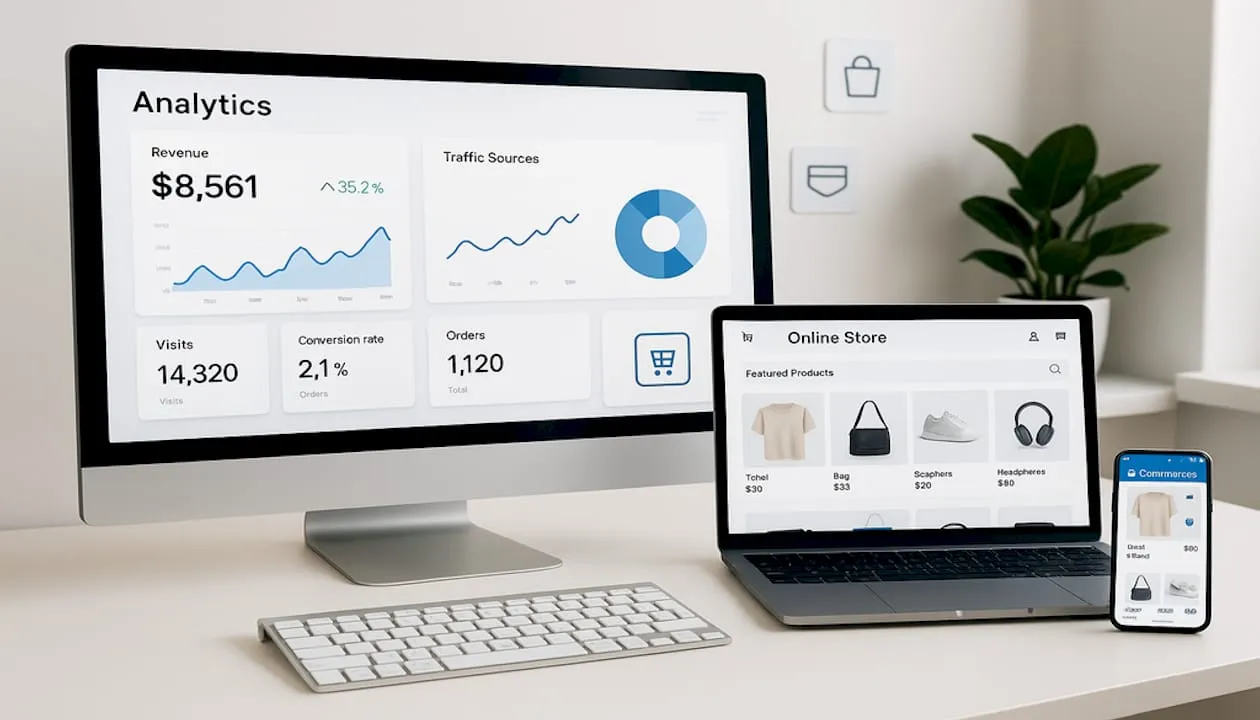
Nectar’s iDerive analytics platform applies this kind of lifecycle behavioral data across Amazon, Walmart, and Shopify simultaneously, giving brands a single view of customer health across every channel they sell on. You can read more about applying this kind of analysis in Nectar’s guide to leveraging e-commerce data for higher ROI.
What are practical examples of successful retention marketing campaigns?
Retention marketing examples from high-performing e-commerce brands share a common structure: they are triggered by behavior, delivered across multiple channels, and timed to the customer’s lifecycle stage rather than the brand’s promotional calendar.
Here are four campaign types with documented outcomes:
- Onboarding flow for a supplement brand: A 6-email sequence delivered over 21 days, covering product usage, expected results, and community access, reduced 30-day churn by 18% and increased 90-day repeat purchase rate by 24%.
- Win-back campaign for an apparel retailer: Three emails at 30, 45, and 60 days of inactivity, with the final email offering a 15% discount, recovered 8% of lapsed customers. The campaign paid for itself within the first week of deployment.
- Loyalty program for a home goods brand: A tiered program that rewarded purchases, reviews, and referrals increased average order frequency from 1.8 to 2.6 purchases per year within 12 months of launch.
- SMS plus email for a beauty brand: Adding SMS to an existing email retention program produced a 31% lift in 90-day retention and a 19% increase in average order value among the multi-channel segment.
Industry benchmarks give useful context here. E-commerce brands with structured retention programs typically see repeat purchase rates between 25% and 40%, compared to 10% to 15% for brands with no formal retention strategy. The gap compounds over time because retained customers also refer new customers at higher rates.
The importance of retention marketing becomes most visible when you model the revenue difference between a 20% and a 35% repeat purchase rate over a 12-month period. For a brand doing $5 million in annual revenue, that 15-point difference can represent $750,000 or more in incremental revenue without a single new customer acquired.
Pro Tip: Segment your win-back campaigns by reason for lapse when possible. A customer who stopped buying after a bad product experience needs a different message than one who simply got distracted. Exit surveys and churn signals from Stripe or your payment processor can help identify the difference.
For a detailed breakdown of how to build brand loyalty through these kinds of campaigns, Nectar’s blog covers the mechanics by platform and customer segment.
Key takeaways
Retention marketing is the highest-ROI growth lever available to e-commerce brands because it compounds acquisition value, reduces churn cost, and builds the repeat purchase behavior that drives long-term profitability.
Point | Details
- Retention beats acquisition on cost: Retaining a customer costs 5 to 25 times less than acquiring a new one, making every retention dollar structurally more efficient.
- Behavior-based segmentation wins: Targeting by purchase behavior and engagement recency outperforms demographic targeting by 2 to 3 times on retention metrics.
- Onboarding is the highest-leverage window: A structured 5 to 7 touch sequence reduces first-month churn by 15% to 20%, which is where most retention is won or lost.
- Multi-channel delivery compounds results: Adding SMS to email produces 28% higher retention, and each additional channel up to six adds further uplift.
- Win-back flows have the highest email ROI: Three-email sequences at 30, 45, and 60 days of inactivity recover 5% to 12% of churned customers at minimal cost.
Why retention marketing is the growth lever most brands underinvest in
Most brands I work with treat retention as a cleanup operation. They run acquisition hard, watch churn climb, and then scramble to build a loyalty program or send a win-back email six months too late. That reactive posture is the single most expensive mistake in e-commerce marketing.
The brands that grow fastest are not the ones with the best ads. They are the ones that treat retention proactively as a primary growth driver from day one. They build onboarding sequences before they need them. They set up churn scoring before they see the drop. They integrate SMS before their email list fatigues.
What I have seen consistently is that the mindset shift matters more than the tools. When a team starts thinking about customer relationships as compounding assets rather than one-time transactions, their entire marketing calendar changes. They stop asking “what should we promote this week?” and start asking “what does this customer need to see right now to stay engaged?”
The AI and predictive analytics tools available in 2026 make proactive retention more accessible than ever. Platforms like Braze and Klaviyo have built churn scoring and behavioral triggers into their standard feature sets. The barrier is not technology. It is organizational will to prioritize retention alongside acquisition in budget, headcount, and strategy.
My honest advice: calculate your current 90-day repeat purchase rate today. If it is below 25%, you have a retention problem that no amount of acquisition spend will fix. Start there.
— Dan Katona
How Nectar helps e-commerce brands build retention that compounds
Retention marketing works best when creative, data, and channel strategy operate as a single system rather than three separate workstreams. Nectar builds exactly that for mid-sized and enterprise brands on Amazon, Shopify, and Walmart. From behavior-triggered email and SMS flows to post-purchase creative and full-funnel analytics through iDerive, Nectar’s team manages the entire retention infrastructure so your brand captures the repeat revenue it has already earned. If your repeat purchase rate is not where it should be, explore Nectar’s growth services to see how a managed retention program can change the trajectory of your business.
FAQ
What is retention marketing in simple terms?
Retention marketing is the practice of keeping existing customers engaged and buying again through personalized, behavior-driven campaigns. It focuses on loyalty, repeat purchases, and lifetime value rather than attracting new customers.
How does retention marketing improve profitability?
A 5% increase in customer retention can boost profits by 25% to 95%, because retained customers buy more frequently, cost less to convert, and refer new customers at higher rates than first-time buyers.
What are the most effective retention techniques for e-commerce?
The most effective retention techniques include structured onboarding sequences, behavior-based segmentation, win-back email flows, multi-channel campaigns combining email and SMS, and post-purchase education programs that drive repeat purchases.
How do I know if my retention marketing is working?
Track 90-day repeat purchase rate, customer lifetime value, and churn rate by cohort. Brands with strong retention programs typically achieve repeat purchase rates between 25% and 40%, compared to 10% to 15% without a formal strategy.
How does AI improve retention marketing?
AI improves retention marketing through predictive churn scoring, which identifies at-risk customers 15 to 30 days before they disengage, and through dynamic segmentation and send-time optimization that make every message more relevant and timely.
Recommended























































.webp)