Retail Media vs. Brand Media: How to Untangle the Budget Fight in 2026
.webp)
.png)
Retail media isn't competing with brand media for a slot in the mix — it's competing for the same pocket. Here's the 3-phase framework Nectar and Edify use to realign budgets around objectives, not last year's sales split.
Key Takeaways
- Retail media and brand media compete for the same pocket. Treat them as one budget allocated against business objectives, not two budgets defended by separate teams.
- The org chart didn't move. Measurement did. The structural excuse for keeping budgets siloed expired when walled gardens started breaking down.
- Allocate by objective, not sales split. Last year's revenue mix is not a plan for next year's investment.
- Set one North Star KPI across teams. Household penetration or market share beats channel-level ROAS as the metric everyone optimizes to.
- Amazon Marketing Cloud (AMC) is free. Most brands still don't use it. Natural-language querying removed the SQL excuse — the gap now is knowing what to ask.
- Measure contribution margin, not reported ROAS. Reported retail media ROAS and modeled brand media reach aren't comparable; incrementality is.
🎥 Watch the Full Session: Want to see the complete breakdown? You can check out the full recording for our webinar session here: Retail Media vs. Brand Media: Untangling the Budget Fight.
Global retail media spend is forecast at $202 billion in 2026, growing 14.3% year over year — faster than every legacy channel and effectively tied with Search for growth rate, per the WARC Media Global Advertising Forecast (October 2026). But here's the catch: in most brands we audit, retail media is funded out of trade, run by ecommerce, judged by marketing — and nobody designed it that way. It accumulated.
At Nectar, we've managed retail media and brand media programs across more than 120 brands, representing over $250M in annual ad spend and $3B+ in marketplace sales. The pattern is consistent: the structural fight between retail media and brand media isn't a strategy problem. It's a plumbing problem. And the plumbing is finally fixable.
Key Budget Reality Stats:
- $202B: Global retail media spend forecast for 2026, growing 14.3% YoY — WARC Media Global Advertising Forecast
- ~70%: Share of in-store sales influenced by digital touchpoints — Forrester research
- 40–70%: Typical retail media network margin on ad dollars, vs. 2–8% on grocery product sales — brand-side benchmark
The 3-Phase Framework: Diagnose, Reallocate, Measure
The Retail Media–Brand Media Realignment Framework is Nectar's 3-phase diagnostic for diagnosing why budget fights happen and how to resolve them in favor of the business. The three phases are sequential: you can't reallocate (Phase 2) without diagnosing how the money moves today (Phase 1), and reallocation only compounds if you measure across channels, not within them (Phase 3).
Most brands jump straight to Phase 2 or Phase 3 without finishing Phase 1 — and then wonder why the realignment doesn't stick.
Phase 1: Diagnose the Fight
The fight exists because retail media grew into orgs that weren't designed to receive it. Before changing anything, map what you actually have.
Why Every Org Answers This Differently
There's no standard answer to "who owns retail media," and that's the point. Even inside global enterprise brands, ownership varies by region, by category, and by which team happened to run that first sponsored product ad 10 or 15 years ago.
"Whoever dipped their hand in their pocket to pay for that first sponsored product ad on Amazon, maybe 10, 15 years ago — now they're probably the team that owns a giant retail media budget." — Josh Clarkson, Founder of Edify and former Global Retail Media Lead at Mars
That accident of history is why most retail media budgets sit in trade, run through shopper marketing or ecommerce, and get judged on media KPIs none of those functions were set up to deliver on. It's funded by one function, run by another, judged by a third. Nobody designed it that way. It accumulated.
Two Types of Companies — Which One Are You?
The brands we work with fall into two camps:
| Type | Posture | Budget Moves |
|---|---|---|
| Type One: Assumes It Has Won | Biggest brand in the category. The process stays the process. Measurement gets evaluated, then shelved. | Once a year, in planning |
| Type Two: Assumes a Shelf Life | Rebuilds when the measurement improves. Treats org structure as a variable, not a constraint. Willing to be wrong in public about last year's split. | Whenever the data changes |
If your retail media budget has never moved mid-year, you're probably Type One. The rest of this guide is written for Type Two — and for Type One teams who already know they want to change and need the structural case to take upstairs.
Audit How Retail Media Gets Funded Today
Before you argue about where retail media should sit, map where it actually sits today. Pull a 90-day invoice list for every retail media network. Then ask three questions:
- Which P&L line funds each invoice? Trade terms, advertising, consumer promotions, or something else. Half of the finance team won't be able to tell you.
- Which function approved it? Media, marketing, ecommerce, sales, trade and shopper, or a committee.
- Which function is judged on the outcome? This is almost never the same as the first two answers. That gap is the fight.
Pro tip: Ask each retail partner which contract their media sits under. Half won't know. That answer alone tells you whether they're being managed as a trade partner, a media partner, or both.
Want help running that audit? Talk to our retail media team.
Phase 2: Reallocate by Objective, Not Sales Split
Once you know how the money moves today, the next question isn't "where should retail media sit?" — it's "what are we trying to accomplish, and what spend serves that?"
Allocate by Objective, Not Last Year's Sales Split
The default is to split brand marketing from retail/trade marketing, give the major retailers the biggest share, and let the long tail scrap over what's left. The split follows last year's sales mix.
The problem: last year's sales mix is not a plan. It's a reflection of last year's choices. Objective-first allocation flips the question. Instead of "how much does Amazon get this year?", you ask what you're trying to accomplish with each retailer — launching a new SKU, driving store visits, maximizing Subscribe & Save, defending a category share loss — and allocate against that.
"You need to look at where the best place is to put your investment. Sometimes people in marketing and media might say it's not in retail media at all. Actually, it'd be better to put it in a more traditional digital marketing platform." — Josh Clarkson, Founder of Edify
The practical implication: your retail partners aren't competing against each other for your retail media budget. They're competing against Meta, Google, Pinterest, and TikTok for the same marketing dollars. Score them that way.
Set One North Star KPI Across Teams
Objective-first allocation only holds if every team is pointed at the same destination. The fastest way to kill the realignment is to leave sub-metrics in place that reward teams for optimizing their own channel at the expense of the business.
One cross-industry example: at Red Bull, every team — field sales, account management, marketing, supply chain — worked toward two universal metrics internally shorthanded as "brand love" and "can love." The real KPIs behind them were brand awareness and household penetration. Different teams had different sub-KPIs underneath, but every function was framed around the same North Stars.
Universal KPI patterns that travel across functions:
- Household penetration (for CPG and consumables)
- Market share within the category
- Contribution margin after ads
- New-to-brand (NTB) customer acquisition cost
Pro tip: Before you argue about budget allocation, settle the North Star. If marketing, sales, ecommerce, and trade can't agree on the single metric the business is being measured on, you're going to have a budget fight every quarter, forever.
Align Compensation to the North Star
If a sales team is comped on channel-level revenue, they will spend channel-level budget in whatever way grows channel-level revenue — even when that's demonstrably worse for the business. People act on their self-interest, and compensation is the loudest signal of what you actually want.
The step change here is harder than any media reallocation: you have to rewrite comp plans so the people spending the budget are rewarded for the outcome the business cares about, not the subtotal of the line they own. Few enterprise orgs do this well. The ones that do pull away.
Treat Retailers as Both Trade Partners AND Media Partners
Retail media networks ask to be treated as media partners, but almost all of them are still set up inside your org as trade partners. That's not a complaint — it's a planning constraint. Brand media dollars often can't reach a retailer without rework, because the contract, invoicing, and ownership all sit on the trade side.
There's a second angle most brands underweight: the retail media network's economics. The average grocery retailer makes 2–8% selling grocery products. Their retail media business makes 40–70% on advertising dollars. That math means your retail partner is often making more margin on your ad spend than on your product sell-through — a lever worth understanding before the next joint business plan conversation.
Evaluate every retail media network on two axes:
- Return on investment: Media performance, incrementality, and halo across your other channels.
- Return on relationship: What unlocks on the commercial side — feature space, promotional calendar access, assortment conversations — when you invest in the media side.
Sometimes the right call is to invest with a partner whose media offer isn't best-in-class, because the commercial return makes the whole relationship profitable. Sometimes the right call is the reverse. Both are fine. Pretending they're the same thing is not.
Want help structuring a joint business plan that treats both sides honestly? Talk to our team.
Phase 3: Measure the Halo Across Channels
Phase 2's reallocation only compounds if you measure what you're actually doing. The last few years changed what's measurable — the org chart is the only reason that change hasn't landed yet.
Why Walled Gardens Are Breaking Down
Historically, you could measure Amazon with Amazon data, measure your DTC site with your DTC data, and pay an expensive modeling firm to approximate how your upper-funnel media moved in-store sales. Everything else was opinion.
That's shifting. Clean rooms let advertisers query first-party data in a privacy-safe environment, aggregate it across retailers and publishers, and finally see the halo across channels. In Nectar's view, this is the single biggest unlock in retail media since the category existed — and it's why the budget conversation has to change too.
Key benchmark: Roughly 70% of U.S. retail sales are influenced by digital touchpoints before purchase, per Forrester research. The fight over "online vs. in-store" budget misses that most "in-store" sales were already shaped online.
Why Amazon Marketing Cloud (AMC) Is Underutilized
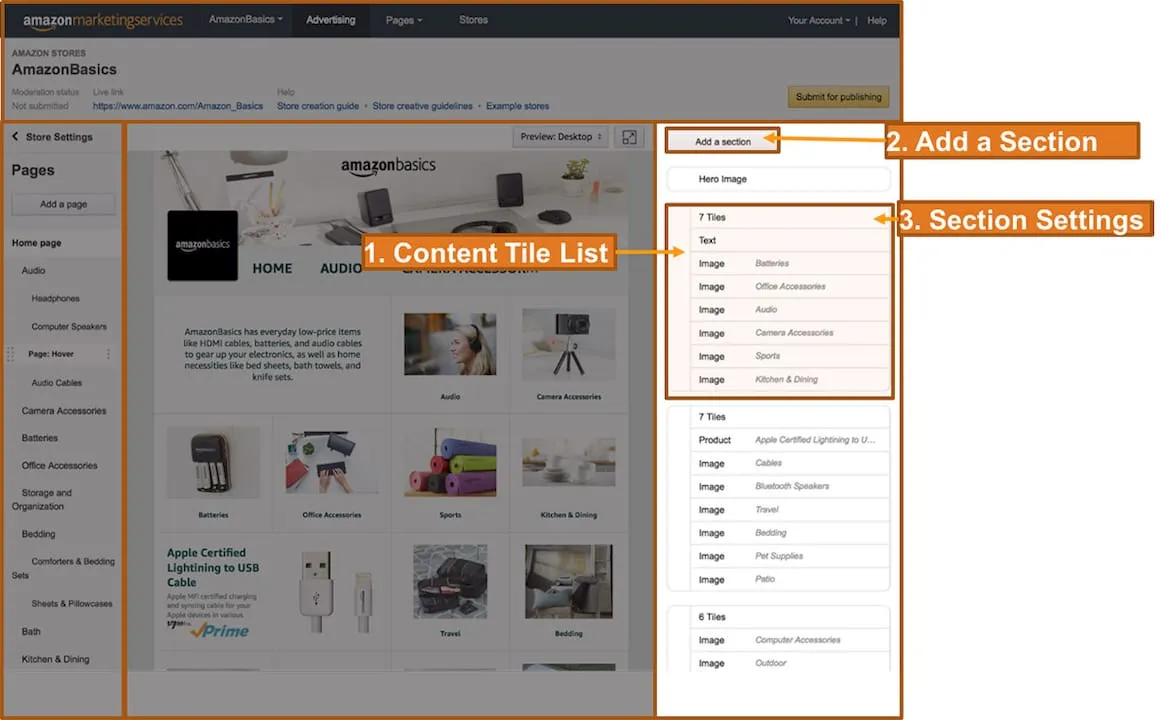
Amazon Marketing Cloud (AMC) is a clean room that lets brands query cross-channel attribution, build custom audiences, and run incrementality analyses on Amazon traffic — including off-Amazon exposure uploaded as third-party data. It's free to any account running Sponsored Ads. It no longer requires SQL — natural-language querying removed the technical barrier.
And most brands still don't use it.
The high-leverage plays inside AMC:
- Direction of travel analysis — Amazon first then your site, or your site first then Amazon. See which, by SKU and audience.
- Audience indexing — Which audiences index highest against your buyers, and which index lowest and should be cut from your DSP targeting entirely.
- Loyalty segmentation — Customers grouped by most loyal, least loyal, and about-to-churn. Behavioral characteristics attached to each.
- First-party data matching — Upload a DTC or offline customer file and match it to paid media behavior inside the clean room, with the data anonymized on both sides.
Pro tip: If your top competitors are using AMC and you aren't, the measurement gap widens every quarter. Ask your agency or your Amazon account team to stand up an AMC instance and run one path-to-purchase analysis before planning closes.
Case in Point — DTC Beauty Brand on Amazon
A DTC-first beauty brand we worked with was nervous about leaning into Amazon acquisition, worried it would cannibalize their direct site. AMC path-to-purchase analysis showed the opposite: a meaningful share of buyers were discovering the brand on Amazon with a limited assortment, then coming back to the DTC site for the second and third order, because the DTC assortment was broader and replenishment was easier there.
Amazon was the acquisition channel. DTC was the retention channel. A higher acquisition cost on Amazon was fine, because payback landed on repeat orders that cost nothing to acquire.
The harder half of the lesson: once those buyers came direct, the brand stopped advertising to them inside Amazon — but the Amazon team's compensation was still tied to Amazon revenue, not blended LTV. The measurement unlocked the right strategy; the comp plan then had to catch up.
Ask Better Questions, Not More Questions
Getting the data stopped being the hard part. Knowing what to ask for is.
| What Gets Asked | What to Ask Instead | What Comes Back |
|---|---|---|
| What's our ROAS on retail media? | How is our retail media driving growth online and in-store, measured by market share, customer lifetime, and marketing efficiency ratio? | A real indicator of incrementality |
| Should we spend more on retail media or brand marketing? | How is our media mix between retail and brand performing, and how is each impacting the bottom of the funnel? | Where you should focus your spend |
| How did the brand campaign perform? | What traffic and sales lift did we see on each channel, if any, as a result of the brand campaign? | A full-funnel view of brand marketing, not just top of funnel |
Pro tip: Write the three decisions you need to make before planning closes. Query against those and nothing else. Interesting isn't a decision.
Retail Media vs. Brand Media: What Actually Differs
The two aren't opposites, and they're not interchangeable. Compare them on the dimensions that decide where a dollar lands.
| Dimension | Retail Media | Brand Media |
|---|---|---|
| Primary objective | Conversion, category share, in-aisle intercept | Awareness, consideration, household penetration |
| Data signal | First-party retailer purchase data | Platform-modeled audiences (Meta, Google, CTV) |
| Audience targeting | Buys into a category, buys the brand, lapsed buyer, cross-category | Interest-based, lookalike, demographic |
| Measurement default | Reported ROAS, attributed sales | Reach, frequency, brand lift |
| Right-fit categories | Low household penetration, big share-shift opportunity | High household penetration, scale maintenance |
| Funded from | Trade terms, shopper marketing, sometimes advertising | Advertising, brand marketing |
| Common failure mode | Over-attribution; retargeting people who'd buy anyway | Under-attribution; invisible lift to in-store sales |
When to lean into retail media: Your brand or category has low household penetration, there's a defined set of in-category buyers to steal from, or you need to defend share inside a specific retailer. The retailer's first-party data is the unlock you can't replicate on Meta.
When to lean into brand media: Your category is at or near full household penetration (think confectionery at 99%, toilet paper at 98%), and the job is maintenance — gently reminding everyone that you make the product. Retail media's targeting advantage shrinks when almost everyone is already a buyer.
Your Pre-Planning Checklist: 5 Questions to Answer Before Budgets Lock
Send these five to every team involved in the budget conversation — media, brand, trade, shopper, ecommerce, finance — and come back with numbers, not reassurance.
- 1. How is retail media impacting online and in-store sales? Measure beyond the channel you're spending on to understand the holistic impact.
- 2. How is brand marketing impacting online and in-store sales? Decides what's even possible before allocation.
- 3. Where are we getting the best overall return on our marketing investments? Combine the answers to 1 and 2 to identify what's working best.
- 4. What are our key objectives for next year as they relate to retail sales and marketing? Marry marketing strategy to the macro-level objectives, not channel subtotals.
- 5. How should we reallocate or harmonize ad spend to maximize results against the answer to 4? Tie marketing into sales holistically, not channel-by-channel.
If any team answers one of these with "we don't currently measure that," you've found the Phase 3 priority list.
Glossary
- Retail Media: Paid media on or powered by a retailer's platform and first-party data (e.g., Amazon Ads, Walmart Connect, Target Roundel). Sometimes called shopper media or on-site media.
- Brand Media: Awareness and consideration media bought through traditional platforms (Meta, Google, YouTube, CTV, OOH) that doesn't rely on a specific retailer's data.
- AMC (Amazon Marketing Cloud): Amazon's clean-room analytics platform for cross-channel attribution, audience building, and incrementality analysis. Free to any account running Sponsored Ads.
- DSP (Demand-Side Platform): Amazon's programmatic display platform; reaches shoppers on and off Amazon properties.
- NTB (New-to-Brand): A buyer who has not purchased from your brand on Amazon in the prior 12 months.
- ROAS: Ad-attributed sales divided by ad spend at the campaign or aggregate level.
- TACOS: Ad spend divided by total sales (organic + ad-attributed) — a blended efficiency metric.
- Halo Effect: The lift a given channel's spend creates on sales in other channels, including offline.
- Walled Garden: A platform (historically Amazon, Meta, Google) that kept its first-party data inside its own measurement system, limiting cross-platform attribution.
- Clean Room: A privacy-safe environment where anonymized first-party data from multiple sources can be matched and queried without exposing individual records.
- Retail Media–Brand Media Realignment Framework: Nectar's 3-phase framework for diagnosing budget misalignment, reallocating by objective, and measuring halo across channels.
Frequently Asked Questions
What Is the Difference Between Retail Media and Brand Media?
Retail media is paid media bought on or powered by a retailer's first-party data — Amazon Ads, Walmart Connect, Target Roundel, Kroger Precision Marketing. It's optimized for conversion inside a specific retailer. Brand media is awareness and consideration spend bought on general platforms like Meta, Google, YouTube, and CTV. They aren't substitutes; they do different jobs. The budget fight starts because they're often funded, run, and judged by different teams inside the same org.
Which Team Should Own Retail Media?
There's no universal answer — ownership varies by category, region, and legacy structure. What matters more than which team owns it is that whichever team funds it, runs it, and is judged on it is the same team — or that the three functions share a universal KPI. In most enterprise orgs we work with, retail media is still funded out of trade and judged by marketing, which is the structural source of the budget fight.
Is Retail Media Cannibalizing My Brand Marketing Budget?
The honest answer: possibly. Retail media and brand media compete for the same pocket because there's a finite total. If retail media spend is growing without a proportional increase in business outcomes — household penetration, market share, contribution margin — you're reallocating, not expanding. The right question isn't "which should get more?" but "which combination maximizes the North Star objective?" Measure both against the same business metric, not against their own channel KPIs.
How Do I Measure Retail Media's Halo on In-Store Sales?
The gold standard is a clean room (Amazon Marketing Cloud for Amazon-centric brands, Kroger's 84.51 or Walmart's Luminate for others) combined with media mix modeling. Clean rooms let you match anonymized first-party retailer data to your own DTC or offline customer file, so the direction of travel between channels becomes visible. Media mix modeling then quantifies the halo at the market level. Most brands do neither; the ones that do the first well are usually two years ahead of their category.
Is Amazon Marketing Cloud (AMC) Really Free?
Yes. AMC is free to any brand running Amazon Sponsored Ads. It used to require SQL knowledge, which kept adoption low; natural-language querying and templated reports have removed that barrier. The limiting factor now is knowing which questions to ask and what to do with the answers. Most agencies with retail media depth can stand up an AMC instance and run a path-to-purchase or audience indexing analysis in a matter of days.
Should I Spend More on Retail Media or Brand Media?
The answer depends on category penetration. If your brand is in a high-penetration category (e.g., confectionery at 99% household penetration), retail media's targeting advantage is small — brand media typically works harder. If your brand or category has low penetration and a clear set of in-category buyers to steal from, retail media's first-party data is the unlock. Decide on the North Star first (household penetration vs. share vs. profit), then allocate against it.
Where Should I Start If Our Retail Media Budget Has Never Moved Mid-Year?
Start with Phase 1. Pull a 90-day invoice list for every retail media network, map which P&L funds each one, who approved it, and which function is judged on the outcome. The gaps between those three answers are the fight. Then settle the North Star KPI across teams before you touch allocation — reallocating budget while comp plans still reward channel-level revenue is how realignments quietly reverse within two quarters.
Should I Compare Retail Media ROAS to Brand Media Reach?
No — the comparison isn't meaningful. Reported retail media ROAS is attributed and often inflated by retargeting people who would have bought anyway. Modeled brand media reach is a top-of-funnel estimate that doesn't translate directly to sales. The honest comparison is at the business layer: incremental contribution margin, NTB customer acquisition, or market share lift — the KPIs both channels are ultimately there to serve.
Realign Your Retail Media and Brand Media Budgets
The brands that pull ahead don't spend more. They stop defending last year's budget split and start allocating against the objective. If you want a second set of eyes on where your retail media and brand media are fighting each other — and where they could be compounding — our team runs this framework on brands of every size.
About the Nectar Team
Nectar is a performance marketing agency scaling brands on Amazon and across the broader marketplace stack. We harmonize profit-first ad strategy with high-converting creative — and bring together channel account managers, ad buyers, strategists, data analysts, and an in-house creative studio of photographers, videographers, designers, and copywriters to grow every part of our partners' ecommerce businesses.
Related Reading
- How to Scale Amazon Ads in 2026 Like the Top Brands — Nectar's 10-lever audit for reclaiming wasted spend, diversifying format mix, and measuring what grows the business.
- Amazon Marketing Cloud Incrementality Analysis — How Nectar uses AMC for cross-funnel attribution and NTB audience building.
- iDerive Advertising & Incrementality Analytics — Trend ROAS, TACOS, and ad-attributed vs. organic sales over time.
- Strategic Consulting & Audits — When and how to run the realignment framework with Nectar support.