Content compliance matters because non-compliant content creates legal, commercial, and reputational risk, while compliant content protects revenue and trust. The FTC requires that advertising claims be truthful and substantiated, and enterprise teams are already feeling the strain of enforcing that standard at scale: nearly 47% of enterprise marketers point to approval workflows as their biggest bottleneck. Nectar has seen the commercial upside firsthand, helping one client cut returns by roughly 30% by pairing better creative with tighter compliance controls.
The impacts break down into three buckets:
Key Takeaways
Content compliance protects revenue and trust because it prevents the returns, fines, and approval delays that come from unsubstantiated or inaccurate content.
PointDetailsApproval delays cost timeNearly 47% of enterprise marketers cite approval workflows as their top bottleneck.Returns tie to content errorsInaccurate product descriptions are a documented driver of ecommerce returns.Compliance work pays offNectar’s branded-content project reduced returns by roughly 30% for one client.Move compliance upstreamBuild claim libraries and disclosures into the brief stage, not the final review.Prove it with audit trailsPIM and CMS records with role-based permissions support legal readiness.
What Content Compliance Actually Means
Content compliance is the practice of making sure marketing and product content meets legal, regulatory, contractual, and platform requirements before it reaches a shopper. That is a different job than content quality. Quality asks whether copy is polished and persuasive. Compliance asks whether it is accurate, disclosed properly, and defensible if challenged.
The domains it typically covers include:
A product page that lists the wrong material or an outdated ingredient count is a compliance failure even if the writing is excellent. Same goes for a paid influencer post without a clear disclosure of the relationship. What separates compliant organizations from the rest is that they can prove it: audit trails, retention records, and version history inside a PIM or CMS system that shows who approved what, and when.
Core Reasons Content Compliance Matters for Marketing and Ecommerce
Compliance is not a brake on growth. It is one of the more reliable levers for protecting it. Four reasons stand out.
Close to 47% of enterprise marketers cite the approval process itself as their top bottleneck, not the creative work. That delay compounds across every campaign and every new market a brand enters, turning a governance gap into a real drag on time-to-market.
The through-line here is simple: compliance failures show up on the P&L as returns, wasted ad spend on suppressed listings, and slower campaign cadence. Fixing the process fixes the numbers.
What Non-Compliance Actually Costs You
The risks are not abstract. They show up as fines, lawsuits, higher operating costs, and customers who quietly stop buying.
The FTC’s rules of the road are consistent: advertising must be truthful, not misleading, and backed by competent evidence, and any endorsement or paid relationship needs a disclosure that’s clear and conspicuous, not buried in a bio or a hashtag string.
Consider two common scenarios. A brand’s ingredient list changes for a reformulated product, but a reseller’s page still shows the old formula months later, generating complaints and returns nobody at headquarters even sees coming. Or an influencer posts a sponsored review without disclosing payment, and the FTC’s native advertising standards become the basis for an inquiry. Neither started as a crisis. Both became one because nobody was watching the downstream channel.
How to Build Content Compliance Into Your Workflow
Compliance works best as a system, not a checkpoint. Here’s a practical sequence:
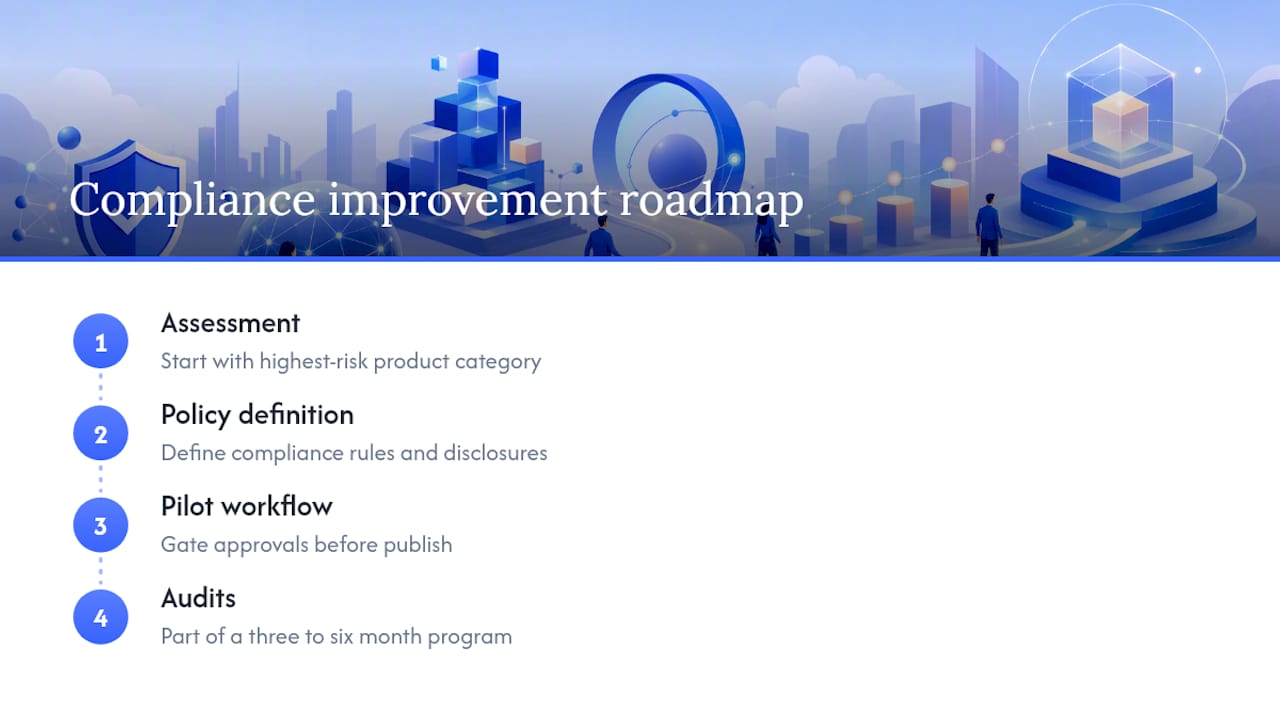
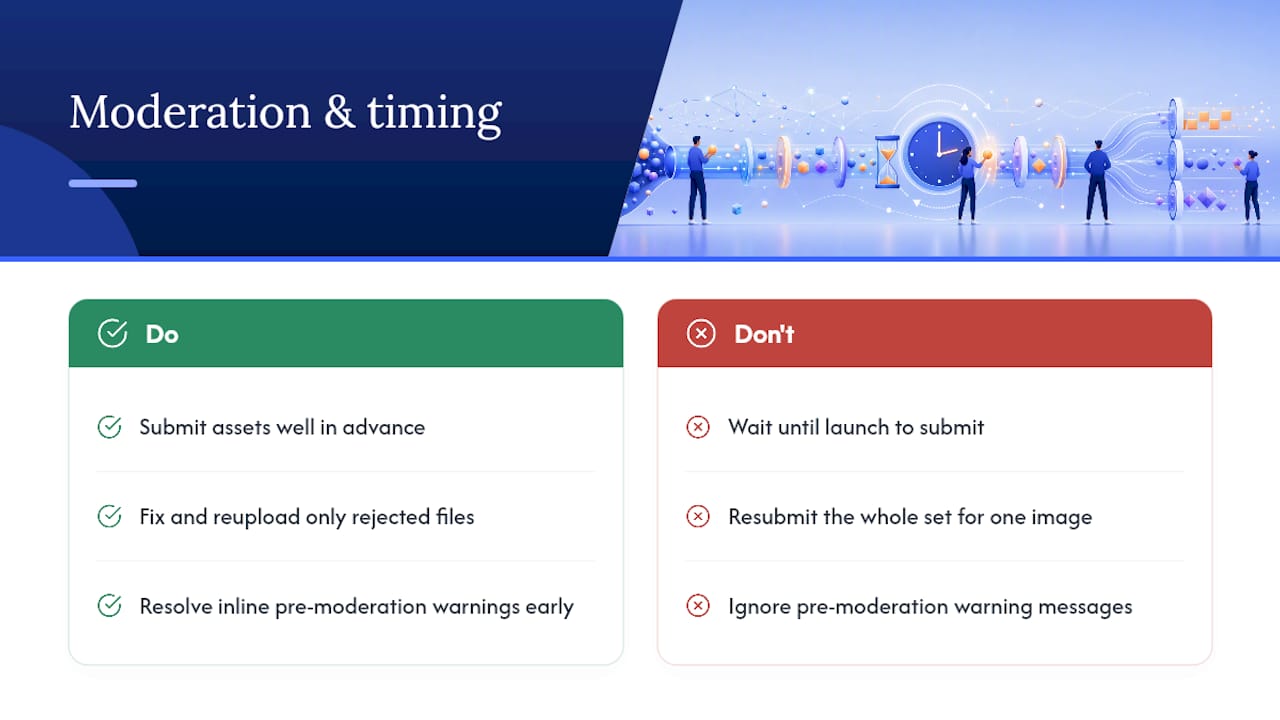
Realistically, most teams move through this in phases: an assessment (two to four weeks), policy and role definition (another month), a pilot workflow on one product line or region (four to eight weeks), then a ramp with regular audits. Effort scales with ambition. Light fixes are mostly templates and clearer briefs. Medium effort adds PIM/CMS controls and automated validation. Heavy investment means enterprise platforms with full integrations across teams and regions. Start with a pilot on your highest-return or highest-risk category, not your whole catalog.
Pro Tip: Build a standing library of pre-approved claims and disclosures for your most common product types. Reviewers spend less time re-litigating the same phrase, and the review surface for new content shrinks fast.

Tools and Roles That Make Compliance Work at Scale
No single tool solves this. A workable stack usually includes a PIM for product-data accuracy, a CMS with approval gates for marketing copy, automated monitoring for things like missing alt text or unapproved claims, a digital asset manager for licensed images and video, and a legal review workflow for high-risk claims.
Ownership matters as much as tooling:
Track three metrics to know if it’s working: error rate caught during review, time-to-publish from brief to live, and post-publish incidents like returns spikes or legal flags. If all three trend down, your catalog and compliance controls are doing their job.
What the Numbers Show: Approval Bottlenecks and a Real Case
Nearly 47% of enterprise marketers name approval workflows as their single biggest bottleneck in content production, ahead of budget or creative capacity.
The fix that consistently works is moving compliance earlier, into the brief and asset-creation stage, rather than treating it as a final gate. Nectar applied that principle on a branded-content project and helped a client reduce returns by roughly 30% by pairing sharper creative with tighter accuracy controls on product claims.
Why I prioritize compliance when scaling marketplaces
Every brand I’ve watched scale successfully treated compliance as infrastructure, not paperwork. The ones that skip it save a few days upfront and lose weeks later chasing returns, delisted products, or a legal letter nobody budgeted for. Audit your own approval chain this quarter. You’ll likely find the bottleneck everyone blames on “process” is really a missing policy.
Frequently Asked Questions
It’s the practice of making sure marketing and product content meets legal, regulatory, and platform rules, covering truth-in-advertising, disclosures, accessibility, and accurate product data.
Quality is about how well content is written or designed. Compliance is about whether it’s accurate, properly disclosed, and defensible under FTC or platform rules regardless of how polished it looks.
Unsubstantiated claims and undisclosed endorsements can trigger FTC enforcement, while inaccurate product data can lead to refund disputes and marketplace penalties.
They centralize product data, gate approvals before publish, and keep
Most teams move through assessment, policy definition, a pilot workflow, and audits over three to six months, starting with their highest-risk product category.
Ready to close the gap between your current approval process and a compliant, faster one? Nectar’s managed ecommerce services build catalog governance, creative production, and advertising strategy around the same compliance controls that helped one client cut returns by roughly 30 percent. Whether your priority is Amazon, Walmart, or your own Shopify storefront, the same principle applies: compliance built into the workflow, not bolted on at the end, is what lets you scale without the legal and commercial risk catching up to you.
This article is general information, not a substitute for advice from a qualified lawyer. Consult a qualified legal professional about your own circumstances before acting on anything here.
Sources
Recommended






































































.webp)