A strong Walmart Connect strategy starts before the first ad: get your listings retail-ready, launch Sponsored Search to capture existing demand, add Display and offsite media to build it, and judge everything on incremental sales, not just ROAS. Walmart’s retail media network reaches 150 million weekly U.S. customers across its site, app, stores and offsite channels. That reach rewards brands that plan in phases and punishes those that spread budget across every format at once.
This guide is for brand managers and ecommerce leads at mid-market and enterprise companies. It covers how the network works, how to sequence your spend, how to target and measure, and what has changed recently.
TL;DR
- Fix the basics first: complete listings, healthy inventory and competitive pricing decide whether ad spend converts.
- Start with Sponsored Search, then layer in Display and offsite media to move up the funnel.
- Use automatic campaigns to learn which search terms matter, then move winners into manual control.
- Set efficiency against break-even ROAS first, then widen the goal to total sales and new customers.
- Measure incrementality, not only attributed sales, so you know what advertising actually added.
What Walmart Connect is and why strategy matters
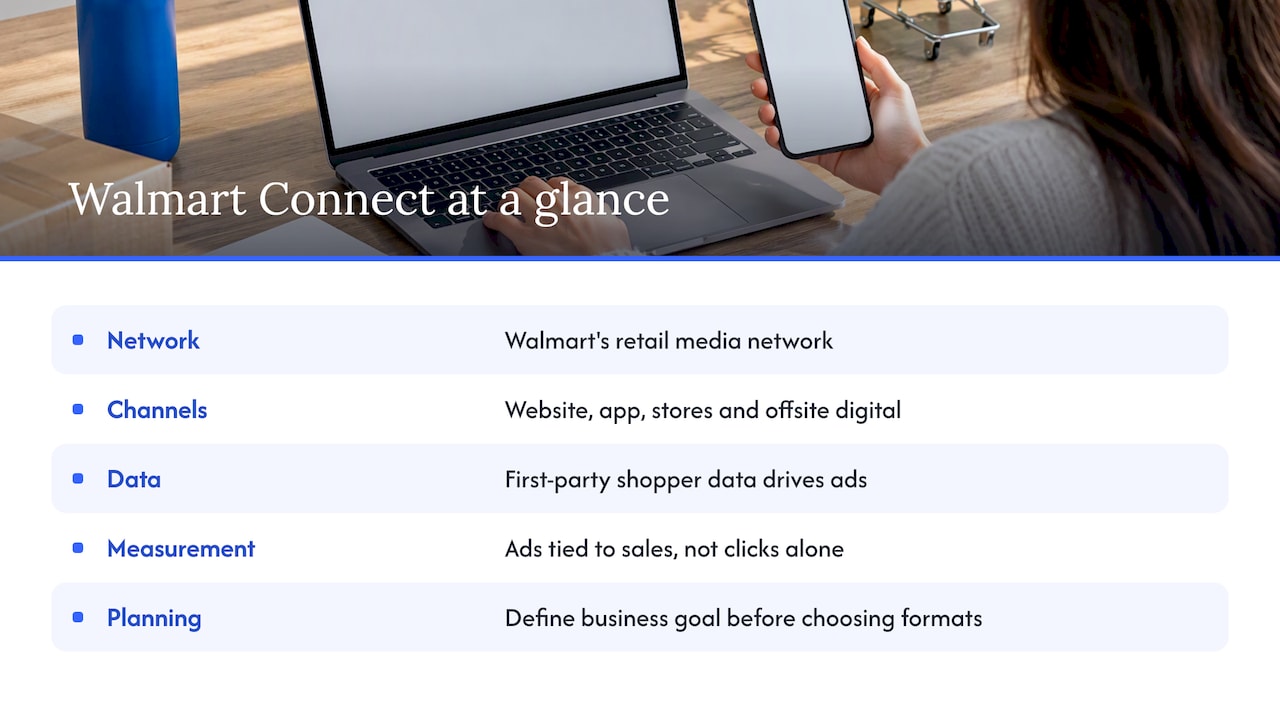
Walmart Connect is Walmart’s retail media network. It connects brands with shoppers through advertising on Walmart’s website and app, in physical stores, and on offsite digital channels, all driven by first-party shopper data. Because the same company sees the search, the purchase online and the purchase in the store, ads can be tied to real sales rather than clicks alone.
That is the opportunity. The risk is that the network offers many ways to spend. Walmart itself describes its approach around scale, full-funnel solutions and measurement signals, and says it is aligning technology and capabilities across Walmart Connect U.S., Walmart Connect International and Sam’s Club. A brand without a plan ends up buying whatever is easiest to launch, not whatever grows the business.
Walmart leadership has also said its advertising business grows alongside e-commerce: as more customers become addressable online, the advertising platform scales. The same remarks describe a shift toward goal-based solutions, such as growing household penetration or building the basket, rather than simply selling ad units. For you, that means defining the business goal first and picking formats second.
Step 1: Get retail-ready before you spend
Advertising sends traffic to your product page. If the page is thin, out of stock or priced out of range, the click is wasted. Before launching, check four things:
- Content: titles, images, descriptions and attributes are complete and accurate. Our guides on the Walmart product listing process and on adding and optimizing rich media cover the details.
- Availability: you can keep top ad-supported items in stock through promotions. Running out mid-campaign wastes budget and can hurt your position.
- Price: compare your price to the same item elsewhere. Shoppers at Walmart are price aware.
- Catalog structure: variants and bundles are set up so ads point at the right item.
If your marketplace foundation needs work, start with our Walmart Marketplace best practices. It is the least glamorous part of the strategy and often the highest return.
Step 2: Match formats to the funnel
Walmart Connect’s ad menu covers Sponsored Search (products, brands and videos), Onsite Display, Offsite Media, and in-store digital, audio and experiential ads. A simple way to organize them is by the shopper’s mindset.
Capture demand: Sponsored Search
Sponsored Search places your products when shoppers search and browse on Walmart’s site and app. It is the natural first investment because it meets people who already want what you sell. Sponsored Products promotes individual items, Sponsored Brands builds brand presence at the top of results, and Sponsored Videos adds motion.
Build consideration: Onsite Display
Display supports discovery and purchase decisions across Walmart’s digital properties. Walmart’s own guidance describes building on Sponsored Search with Display to influence discovery, consideration and purchase, then using closed-loop measurement of online and in-store purchases to refine the next round.
Extend reach: Offsite media
Offsite media carries Walmart audiences to other websites, social networks, streaming and audio. It lets you reach Walmart shoppers when they are not on Walmart, which matters for launches and for categories where research happens elsewhere. Our walkthroughs on a full-funnel Walmart DSP strategy and DSP targeting setup go deeper on this layer.
Influence in store: digital, audio and experiential
In-store formats put your message near the shelf. For brands with strong store distribution, this is where online media and physical sales connect most directly, and it is where closed-loop reporting becomes especially useful.
Step 3: Build audiences from first-party signals
Walmart Connect builds audiences from purchase, browsing and search signals, enhanced with machine learning. Audience types include behavioral, predictive, in-market, retargeting, lookalike, lifestyle and life-stage segments, and they can be used onsite and offsite across different shopping mindsets.
A practical way to use them:
- Prospecting: in-market and lookalike audiences to find shoppers who resemble your best buyers.
- Conquesting by category: audiences built around category behavior, so you appear when shoppers are comparing options.
- Retargeting: shoppers who engaged with your products on Walmart’s site or app but did not buy. Walmart’s 2024 guidance positions retargeting for promotional products and rollbacks alongside complementary tactics, so pair it with a real reason to buy now.
- Life-stage and lifestyle: useful for brands whose products serve a moment, such as a new baby or a move.
Keep audience tests clean. Change one variable at a time, give each cell enough budget to read, and record what you learn so the next quarter starts smarter.
Step 4: Launch Sponsored Products the right way
Walmart’s setup guidance for a new Sponsored Products campaign is a good baseline. It recommends automatic targeting to generate initial search-term data, prioritizing 10 to 15 strong products, using Dynamic Bidding and allowing at least 30 days for actionable learning.
Building on that, here is the sequence we use as a working model:
- Seed with automatic campaigns on your best-selling, best-reviewed, in-stock items.
- Mine the search-term report after the learning window. Separate branded terms, category terms and competitor-adjacent terms.
- Graduate winners to manual campaigns with controlled bids, and add negative keywords for terms that spend without selling.
- Add Sponsored Brands and Video once the core products are converting, to widen brand presence.
- Add Display and offsite to feed the top of the funnel and retarget.
For a full operating rhythm, see our Walmart advertising workflow.
Step 5: Set goals and optimize in the right order
Walmart Connect recommends adjusting budgets, bids, keywords and products to optimize. It also advises advertisers to first establish efficiency against break-even ROAS, then broaden the goal to total sales volume.
That order is sound, and it is worth turning into a policy:
- Phase one, prove efficiency. Know your break-even ROAS from margin, fees and fulfillment costs, and hold campaigns to it.
- Phase two, scale volume. Once the core is profitable, relax targets on selected campaigns to win share, and accept a lower ROAS where the customer is worth more over time.
- Phase three, protect the base. Keep branded and high-intent terms funded so you are not leaving your own shoppers to someone else.
This is also where a profit-first mindset matters. A campaign with a pleasing ROAS can still lose money after margin, so tie every goal to contribution profit, not only revenue.
Step 6: Measure what advertising actually added
Walmart Connect offers closed-loop measurement that ties ad exposure across its digital properties and offsite channels to sales on the site and in stores. It provides attribution, incrementality, brand impact and campaign insights. Walmart leadership has also stressed incrementality and said it has multiple ways to measure sales lift across display, video and search.
Use that distinction in your reporting:
- Attributed sales tell you which ads were in the path of a purchase.
- Incremental sales tell you what would not have happened without the ads.
Branded search is the classic example: it often shows excellent attributed ROAS because many of those shoppers would have bought anyway. Reading both numbers prevents over-investing in the easy wins. Our article on retail media incrementality explains how to set up tests and read the results.
A useful scorecard for a quarterly review:
- Ad-attributed sales and ROAS, by format
- Incremental lift where a test was run
- New-to-brand customer share
- Online versus in-store sales
- Contribution profit after ad spend
What has changed recently
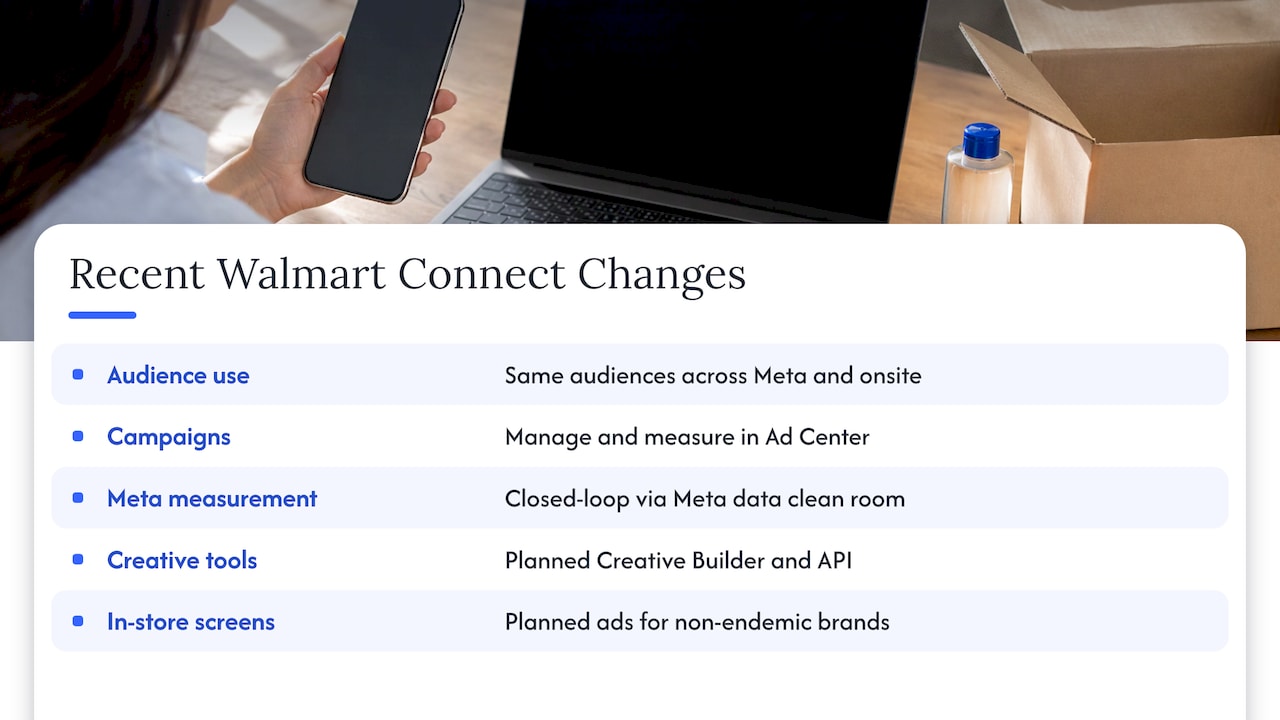
Walmart Connect keeps widening where its audiences can be used. As of April 2026, Walmart said self-serve advertisers could use the same Walmart audiences across Meta and onsite placements, manage and measure campaigns in Walmart Connect Ad Center, and use closed-loop measurement for Meta through a data clean room.
Walmart has also said it plans to let partners build and optimize creative through a self-serve Creative Builder and a Creative API. Creative volume is becoming a lever in its own right, so brands with a steady supply of tested images and video will have an edge. Walmart is also aligning technology and tools across its U.S., international and Sam’s Club advertising businesses, which points to more consistent measurement over time.
Reports have also said Walmart plans to sell in-store digital-screen ads to non-endemic brands such as financial companies, auto brands and quick-service restaurants. If you sell in aisles, expect more competition for attention in the store.
The practical takeaway: build your plan around audiences and measurement, which are portable, rather than a single placement that may change.
Perspective
Most Walmart Connect problems we see are sequencing problems, not budget problems. Brands buy display before their listings are ready, or celebrate a ROAS number that does not survive a margin check.
Our approach is profit-first. We start with the listing and inventory foundation, run search to capture demand, add display and offsite to build it, and report in business language: what it cost, what it returned, and what would have happened anyway.
That is why we built iDerive, our analytics platform, to bring marketplace and advertising data into one view. When your Walmart numbers sit next to your other channels, you can see which dollars are creating growth and move the rest.
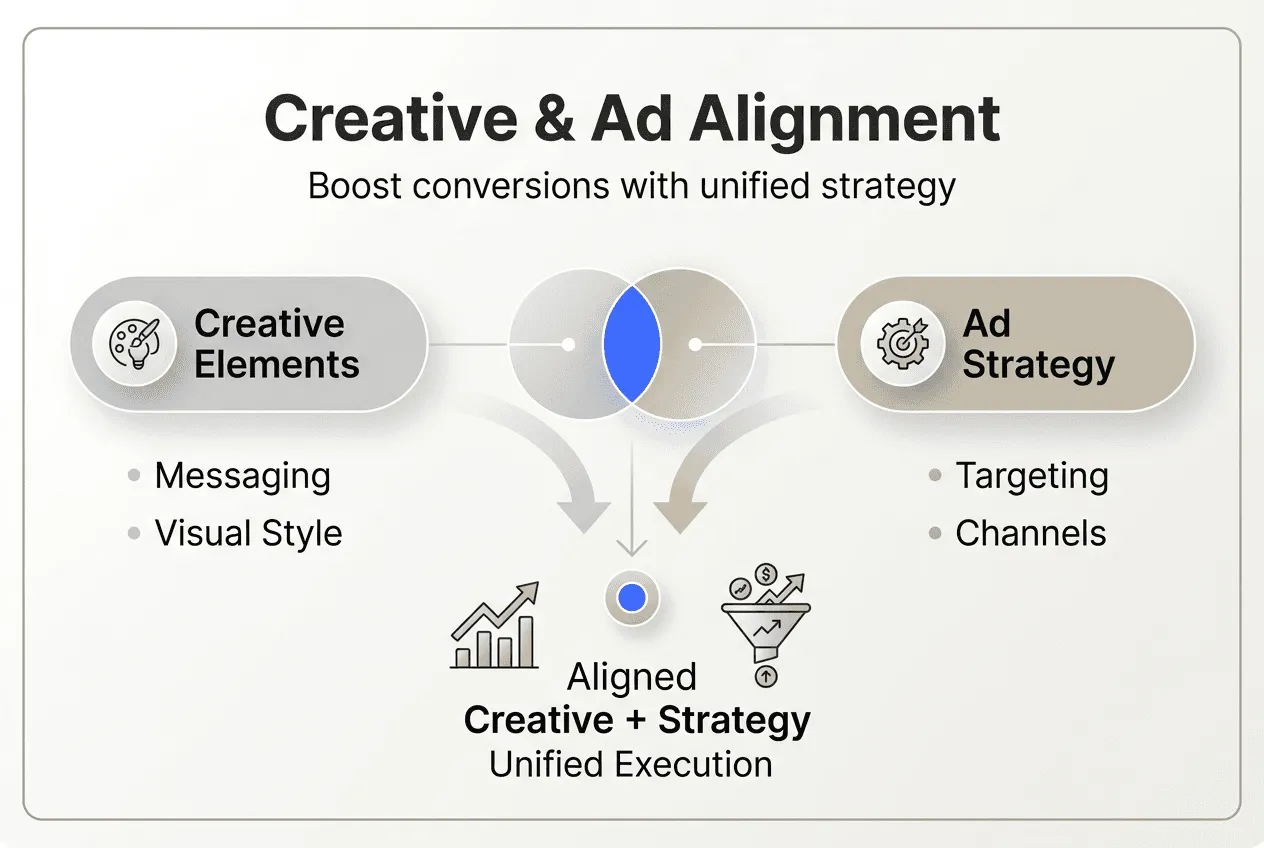
Creative belongs in the same conversation. Because we produce photography, video and A+ style content in-house, the people running your media can ask for the image or video the data says is missing, and get it quickly.
Dan Katona
How Nectar can help
We manage retail media for brands that sell on Walmart and other marketplaces, combining advertising, marketplace operations and creative under one team. See our Walmart Connect advertising management page, or read how we approach Walmart marketplace growth.

If you want one view of spend and sales across channels, our iDerive analytics platform is built for that. For the content side, our full creative studio covers product photography, video and listing content. To talk through your Walmart plan, start at thinknectar.com.
A 90-day starting plan
If you are starting from scratch or resetting, this outline keeps the work focused:
- Days 1 to 15: audit listings, inventory, pricing and content. Pick 10 to 15 priority items. Define break-even ROAS and the business goal.
- Days 15 to 45: run automatic Sponsored Products campaigns, then review search terms after the learning window. Launch a Sponsored Brands campaign for your top category terms.
- Days 45 to 75: move winning terms to manual, add negatives, and test Display or retargeting for promotional items. Refresh creative for the products getting traffic but weak conversion.
- Days 75 to 90: run a first incrementality read, compare formats, and set the next quarter’s budget by contribution profit. Decide whether offsite or social extension is worth testing.
Expect to repeat this loop. Walmart Connect rewards teams that review weekly, test deliberately and document what they learn.
FAQ
How much should I spend to start on Walmart Connect?
Walmart’s own guidance centers on a 30-day learning window and a focused set of 10 to 15 products, so budget should be enough to let those items collect data. Size it from your break-even ROAS and your category’s competition rather than a fixed number. Check Walmart Connect for current minimums on each ad type.
Should I start with Sponsored Search or Display?
Start with Sponsored Search. It reaches shoppers already looking for products like yours, and it gives you search-term data that informs everything else. Add Display once core products convert, to influence consideration and retarget.
How do I know if Walmart Connect ads are working?
Look beyond attributed ROAS. Walmart Connect offers closed-loop measurement, including incrementality, so you can compare ad-attributed sales with sales lift. Add new-to-brand share and contribution profit to see the full picture.
Can I reach Walmart shoppers outside Walmart?
Yes. Offsite media extends Walmart audiences across websites, social networks, streaming and audio, and Walmart has said self-serve advertisers can use the same audiences across Meta. Review current availability and requirements with Walmart Connect.
Do I need an agency for Walmart Connect?
Not every brand does, but mid-market and enterprise teams often benefit from a partner that combines media, marketplace operations, creative and analytics. The decision usually comes down to how many channels you run and how much testing capacity your team has.
Sources
- About Walmart Connect
- Walmart Sets the Vision for the Next Era of Global Commerce Media
- Walmart Goldman Sachs Communacopia Technology 2026 transcript
- Ad Solutions at Walmart Connect
- Moving retail media up the funnel with display advertising
- Harnessing the power of Walmart’s rich customer insights
- Easy campaign set up
- Campaign Optimization
- Omnichannel Ad Measurement and Closed-Loop Insights
- How we’re expanding retail-powered social media
- How Walmart Connect Is Putting Walmart’s Purpose in Motion
- Pitch Deck Shows Walmart Selling In-Store Ads to New Brands
Recommended