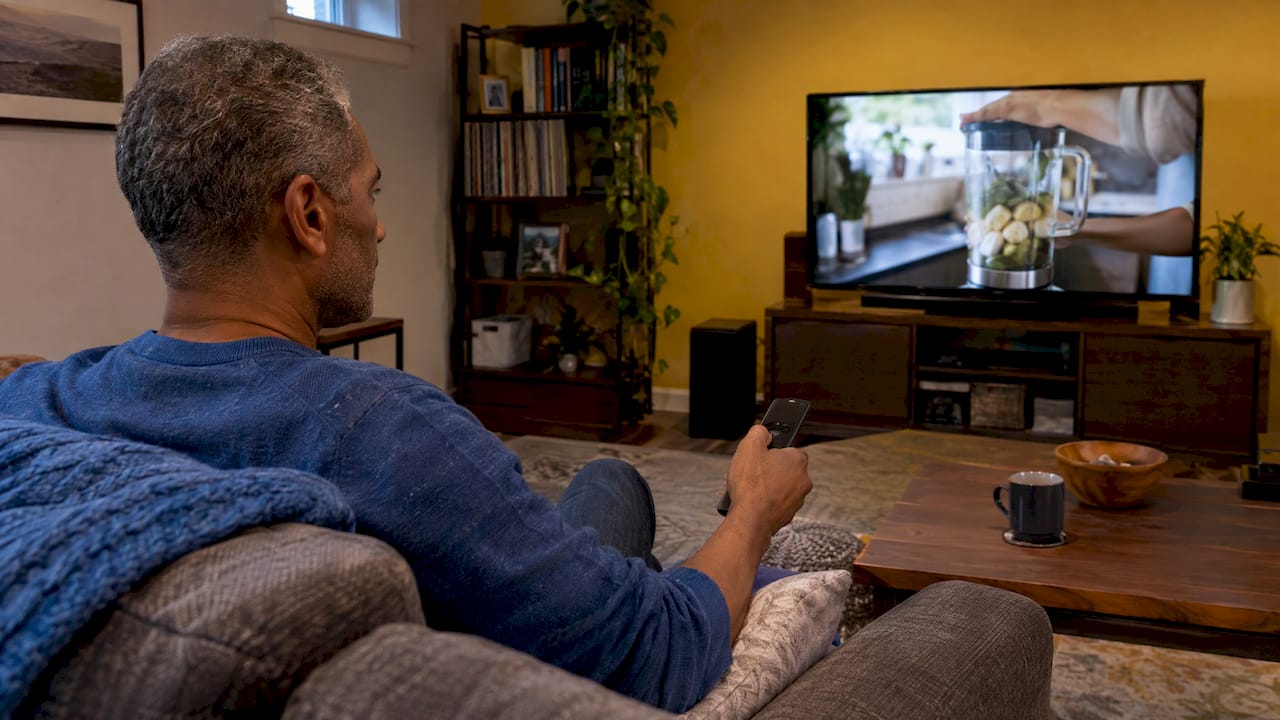
Sponsored TV is Amazon’s way of putting your brand’s video in front of shoppers on the living-room screen, then connecting that exposure to what happens in the Amazon store afterward. The product has since been folded into Amazon’s broader streaming TV offering, and the ads are bought on a CPM basis (cost per thousand impressions) rather than per click. For a mid-market or enterprise brand, the question is less “can we launch it?” and more “can we plan, produce and measure it well enough to prove it added sales?” That is the work our retail media and creative teams do together at Nectar, and the rest of this guide walks through how the format works so you can judge it for yourself.
TL;DR
- Sponsored TV is now sold under the name streaming TV: full-screen video ads that run before, during or after streaming content on connected TVs and other devices, in the same console as Sponsored Products.
- It is billed on a CPM basis with no minimum budget. Amazon’s launch guide suggests a $150 daily starting budget for small to medium businesses and bids of $10 to $15 for broad audiences and $20 to $25 for narrow ones.
- Creative must be 16:9, 6 to 45 seconds, at least 1920x1080, and cannot include click-encouraging calls to action.
- Because viewers rarely click, the payoff shows up as branded search, new-to-brand orders and detail page views, so measurement has to be planned before launch.
- Brands running several marketplaces or large catalogs get the most from pairing TV with creative production and incrementality reporting.
What Sponsored TV is, and what it is called now
Amazon’s advertising FAQ describes streaming TV ads as video ads that appear before, during or after streaming content, that cannot always be skipped and that are typically watched to completion. They run alongside content on connected TVs, publisher channels and networks, and IMDb.
The naming has shifted, which matters when you search for documentation. According to PPC Land’s November 2026 explainer, the self-service campaign type called Sponsored TV until 2026 now goes by streaming TV, and the programmatic route that used to be Amazon DSP was renamed DVA+ on September 29, 2026. Amazon’s Display, Video, and Audio page describes DVA+ as a unified campaign type that brings together what was previously created through Amazon DSP, Sponsored Display and Sponsored TV, automatically selecting streaming TV, online video, display and audio formats. Advanced settings in DVA+ are currently available to limited advertisers in the US.
In practice you have two routes to the same inventory:
- Self-service streaming TV, set up in the console where you already manage Sponsored Products.
- Programmatic streaming TV through DVA+, which adds deal types such as programmatic guaranteed and private marketplace.
How it differs from Sponsored Brands video and Sponsored Display
These formats get confused because they all involve video or display creative. Amazon’s OTT guide separates them clearly. Sponsored Brands video ads appear at the top of search results or on product detail pages inside the Amazon store. Streaming TV ads are full-screen, non-skippable video served inside premium streaming content on connected devices such as Prime Video, Twitch and third-party streaming services.
The practical difference is where the shopper is. A Sponsored Brands video reaches someone who is already shopping. A streaming TV ad reaches someone who is watching a show and may not be thinking about your category at all. That is why the two work together: TV builds familiarity, and search and product ads capture the shopper when they come looking. Amazon’s Sponsored Brands page lists cost-per-click, vCPM or fixed upfront pricing for those in-store placements, a different buying logic from TV’s CPM model.

Who can run it
Per Amazon’s announcement of the international rollout, the product is available to vendors and seller-brand owners through the advertising console and the Amazon Ads API in the US, Canada, Mexico, Brazil and the UK. The launch included REST APIs covering six resources: creatives, moderation, targeting, ad groups, ads and campaigns. For an enterprise brand with a reporting stack, that API access is how TV spend can be pulled into your own dashboards.
The ad specs page adds that brands without Amazon listings can send viewers to an external website as the landing page, which is relevant if you sell through your own D2C store as well as marketplaces.
Setting up a streaming TV campaign, step by step
Amazon’s launch and optimization guide lays out the basic flow. Here is each step with what tends to go wrong.
- Create the campaign. Log in, click Create campaign and choose streaming TV. This is the easy part. The decisions that matter come next.
- Pick the landing page. You can send viewers to a product detail page or a Brand Store. Choose an in-stock ASIN that matches the video creative. A mismatch between what the ad shows and what the page sells wastes the exposure, and a stockout on the featured item turns paid reach into lost demand. Marketplace operations (catalog, inventory, forecasting) is one of the areas we manage, so the ASIN you feature is checked against supply before the flight, not after.
- Set a daily budget. The budget can change at any time and resets at midnight. Amazon suggests $150 a day as a starting point for small to medium businesses. Larger brands usually size the flight to the reach they want, which is a media-planning question rather than a console setting.
- Choose audiences. Amazon recommends starting with three to five audiences. According to PPC Land, segments come in two families: Content Interests, built from what households watch, and In-market Categories, built from shopping behavior with up to a 30-day look-back. An ad group can hold up to 20 segments. Too many overlapping segments make it hard to see which one worked.
- Set bids. Amazon’s guide recommends $10 to $15 CPM for broad audiences and $20 to $25 for narrow, ASIN-specific ones. These are starting points. Bids that sit too low simply do not win the placements.
- Upload creative. Specs are covered in the next section. This is where most delays happen, because TV creative has different rules from search ads.
- Name the campaign for reporting. Amazon suggests naming campaigns “STV” so they can be excluded when you compare ROAS across campaign types. The reason is covered in the measurement section below.
If you would rather not run these steps in-house, our Retail Media Advertising team buys sponsored ads and DSP-style media for brands, and our Amazon Sponsored Ads management covers the Sponsored Products, Brands and Display campaigns that sit next to a TV flight.
Creative requirements that trip brands up
The Sponsored TV ad specs are strict, and TV creative is a different discipline from a main product image:
- First-party ad serving, with a maximum file size of 500MB.
- 16:9 aspect ratio and a minimum 1920x1080 frame.
- Duration of 6 to 45 seconds.
- Video bitrate of at least 4 Mbps (8 Mbps recommended), H.264 or H.265 video, with PCM or AAC audio.
- No click-encouraging call-to-action elements, because ads may serve in non-clickable environments.
That last rule catches brands repurposing social or display video. A “Shop now” button baked into the footage can fail review. The same page notes that Sponsored TV supports interactive experiences: remote-click overlays that let viewers add products to a cart or receive an email link, clickable ads on Twitch and other streaming services, and burnt-in QR codes on desktop and TV. Ads that do not meet the interactivity policy still serve, just without the interactive layer.
Because the spot has to carry the message on its own, the first three seconds and the product’s role in the story matter more than on a scrolling feed. Our full creative studio handles in-house photography, videography and design, so the cut-downs for TV, product pages and Brand Stores come from the same shoot rather than from three separate vendors.
What it costs
Amazon states in its guide that streaming TV campaigns are billed on a CPM basis with no minimum budget. The $150 daily figure is a suggested starting point, and the $10 to $15 and $20 to $25 bid ranges above set the practical price of reach.
A quick worked example: at a $20 CPM, 1,000 impressions cost $20, so a $150 day buys roughly 7,500 impressions. Whether that is enough to read a result depends on your category and how much branded search you already get. PPC Land also notes that outside guides cite much higher recommended minimums for measurable flights that Amazon’s own guide does not state, so treat a larger test budget as a planning choice rather than a platform requirement.
Budget control matters more once TV runs alongside always-on search campaigns. Our guide to Amazon budget pacing explains how to keep daily spend from starving the campaigns that capture the demand TV creates.
Measuring a channel nobody clicks
Streaming TV is judged differently from a Sponsored Products campaign. Amazon’s guide points to four signals to monitor:
- Impressions in a non-skippable environment.
- Branded searches after ad exposure.
- New-to-brand order and sales percentages.
- Product detail page views.
Amazon’s release notes for streaming TV add prebuilt Lifestyle and Lifestage audiences using first-party shopping and streaming signals, Cumulative and Household Reach metrics in the US, and remarketing segments that let you retarget TV viewers with Sponsored Display across the purchase journey.
The naming advice (“STV”) exists because the numbers do not compare directly with search. PPC Land’s analysis argues that attribution is the central issue, since the effect appears as later activity Amazon measures rather than as a click, and it also notes that Amazon’s unified reporting page still does not support streaming TV Smart mode. The takeaway for a brand: set the success metric before launch. Branded search lift, new-to-brand share and halo on existing campaigns are fair tests. Last-click ACoS is not.
This is where incrementality matters, meaning the sales that happened because of the ad and would not have happened otherwise. Our iDerive analytics platform is built for unified reporting and incrementality measurement, and our pages on advertising and incrementality analytics and Amazon Marketing Cloud analysis show how that measurement is framed. For the underlying method, see our explainer on retail media incrementality.
Where streaming TV fits in the plan
The goals Amazon’s TV format supports best are upper-funnel ones: lifting branded search, supporting a new product launch, strengthening brand recall in a crowded category, and improving conversion on the Sponsored Products and Sponsored Brands campaigns you already run. Industry guides describe the same pattern, with TV influencing shoppers before they search.
That has a planning consequence. TV amplifies whatever the listing does. A strong detail page with clear images, A+ content and healthy reviews converts the attention TV creates. A weak one wastes it. So the sequence that makes sense for most brands is:
- Get the listing, content and in-stock position right.
- Make sure search and product ads are capturing branded demand.
- Add TV with a defined test window and a measurement plan.
- Read the lift, then scale the audiences that moved branded search and new-to-brand orders.
For a wider look at how TV connects to the rest of the funnel, our posts on connected TV for ecommerce and Amazon DSP and streaming TV go further into the programmatic side.
Perspective
Brands usually ask us whether streaming TV “works.” The better question is what you are asking it to do. Treated as a standalone sales channel, it will disappoint, because the sale it influences often closes through a search or product ad days later. Treated as the top of a connected plan, it gives your search and product campaigns more shoppers who already know your name.
That is why we put creative, media and analytics under one roof. The spot, the landing page, the audience and the measurement plan all affect the result, and when they are handled by different parties, nobody owns the answer. Our approach is profit-first: we look at what the advertising added to the business, not only what it reported. That is the job iDerive was built for.
If you are weighing a first flight, start with the listing and the question you want answered, then size the media to that question.
Dan Katona
Plan a streaming TV test with Nectar
Nectar is a fully managed e-commerce agency for mid-market and enterprise brands selling on Amazon, Walmart and Shopify. For streaming TV, that means retail media buying, a creative studio for video and product page content, marketplace operations and the iDerive platform for unified reporting under one team. If you want a flight that is built around a measurable question, start with our Amazon Growth & Optimization service or reach us through thinknectar.com.

FAQ
Is Sponsored TV the same as streaming TV ads on Amazon?
It is the same self-service product under a newer name. PPC Land reports that the campaign type known as Sponsored TV until 2026 is now called streaming TV, and existing campaigns continue to run. The programmatic route is sold through DVA+.
Do I need a minimum budget?
Amazon’s guide states there is no minimum budget for self-service streaming TV, which is billed on a CPM basis. It suggests a $150 daily starting budget for small to medium businesses. Enterprise brands typically set budgets by the reach and measurement window they need.
Can viewers click on the ad?
Sometimes. Per Amazon’s ad specs, interactive options include remote-click overlays to add a product to a cart or receive an email link, clickable placements on Twitch and other services, and QR codes on desktop and TV. Creative cannot include click-encouraging calls to action, since some environments are not clickable.
Which countries is it available in?
Amazon’s announcement lists the US, Canada, Mexico, Brazil and the UK for vendors and seller-brand owners using the advertising console and API. Check Amazon Ads for the current list before planning a multi-country flight.
Sources
- FAQs - Advertising questions and resources, Amazon Ads
- Introducing Sponsored TV in Canada, Mexico, Brazil, UK, Amazon Ads
- How to launch and optimize your streaming TV campaign, Amazon Ads
- Sponsored TV ad specs, Amazon Ads
- Reach audiences and measure performance with streaming TV, Amazon Ads
- Display, Video, and Audio: Drive results outside search, Amazon Ads
- What is OTT Advertising? Beginner’s Guide, Amazon Ads
- Sponsored Brands, Amazon Ads
- STV explainer, PPC Land
Recommended